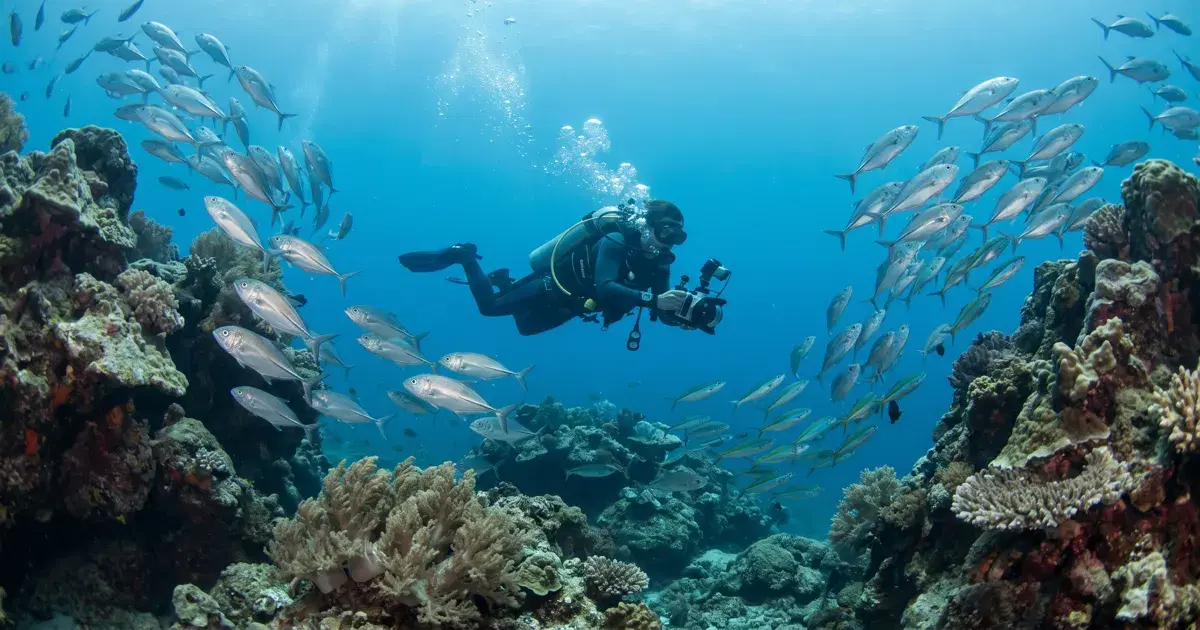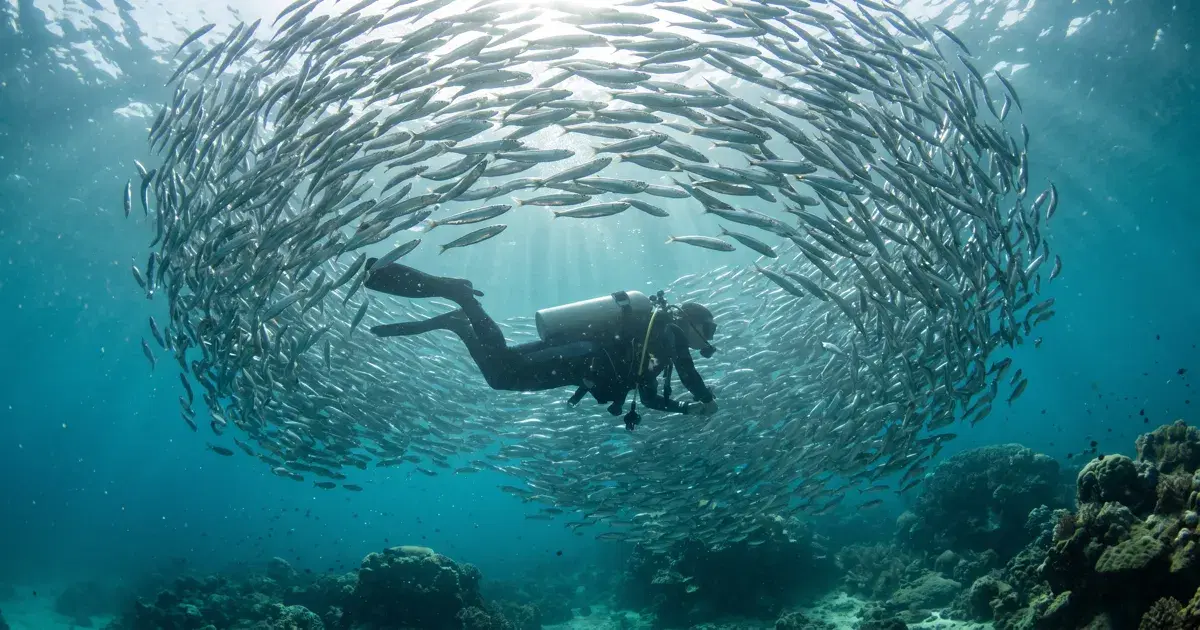
The Great Barrier Reef stretches roughly 2,300 kilometers, and no single trip covers more than a sliver of it, so picking the right handful of sites matters more here than almost anywhere else.
What's the best time of year to dive the Great Barrier Reef?
The reef is diveable year-round, and it doesn't have a hard closed season the way some destinations do. Roughly June through November is the region's dry season, when seas are calmer and visibility tends to run clearer, generally somewhere between 15 and 30 meters depending on the site and recent weather. December through May brings warmer water and occasional cyclone activity further offshore, along with a higher chance of minke whale sightings on the northern reef around June and July specifically.
How many dive sites are there on the Great Barrier Reef?
Estimates run into the thousands across the whole reef system, though most operators work a much smaller rotating set close to their home port. A handful of names come up repeatedly on any shortlist: the Cod Hole and Ribbon Reefs in the far north, the SS Yongala wreck off Townsville, and the outer reefs accessible as day trips from Cairns and Port Douglas.
Is the Great Barrier Reef good for beginner divers?
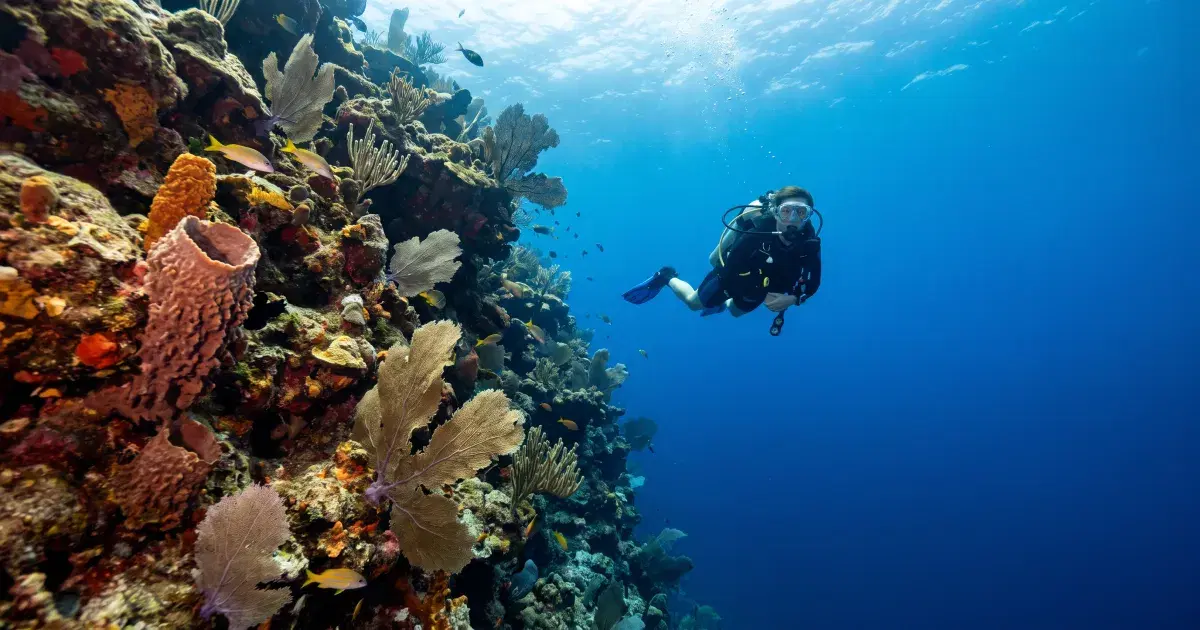
Yes, for the outer-reef day-trip sites most operators run from Cairns and Port Douglas. Coral gardens in the 5 to 18 meter range are common and well suited to Open Water divers, with calm conditions on most days. The far-northern sites and the SS Yongala wreck are a different story, better suited to Advanced divers given stronger currents and, at the Yongala, real depth and a reputation for larger pelagic life that keeps things moving fast.
Should I dive from Cairns or Port Douglas?
Cairns has the bigger operator base and the widest range of day-trip and liveaboard options, including access to the far-northern Ribbon Reefs and Cod Hole on multi-day trips. Port Douglas sits closer to the outer reef itself, which means shorter boat rides for day trips, and tends to run smaller groups. Neither is objectively better; Cairns suits divers who want maximum choice, Port Douglas suits divers who'd rather spend less time in transit.
Liveaboard vs day boat for the GBR: which should I choose?
A day boat gets you two or three dives on the accessible outer reef and gets you home the same night, which is enough for most divers with a few days to spare. A liveaboard, typically three to seven nights, reaches sites a day boat simply can't, including the far-northern Ribbon Reefs, the Cod Hole's potato cod feeding, and sometimes the SS Yongala. If minke whales or the northern reef specifically are the goal, a liveaboard during the June-July window is close to essential.
What's the difference between the northern and southern GBR?
The northern reef, accessed mainly via liveaboard out of Cairns, tends to have less dive pressure and, many divers report, noticeably better coral health than the more heavily visited central sections near Cairns and Port Douglas. The southern reef, further from the main tourist hubs, includes sites like the Yongala and gets a fraction of the visitor traffic, though it's also less convenient to reach.
Is the Great Barrier Reef dying? Is it still worth diving in 2026?
The reef has been through repeated bleaching events over the past decade, and some sections, particularly shallower reef flats, show visible damage. It isn't dying uniformly, though: many outer-reef and northern sites remain in genuinely good condition, and coral cover on parts of the reef has shown recovery in recent surveys after past bleaching events. Worth diving in 2026, yes, with the honest caveat that site selection matters more than it used to, and an operator who's upfront about current reef condition at a given site is worth more than one who isn't.
FAQ
What certification do I need to dive the Great Barrier Reef? Open Water certification covers most outer-reef day-trip sites. Deeper or more current-affected sites, including the SS Yongala, generally call for Advanced Open Water or equivalent experience.
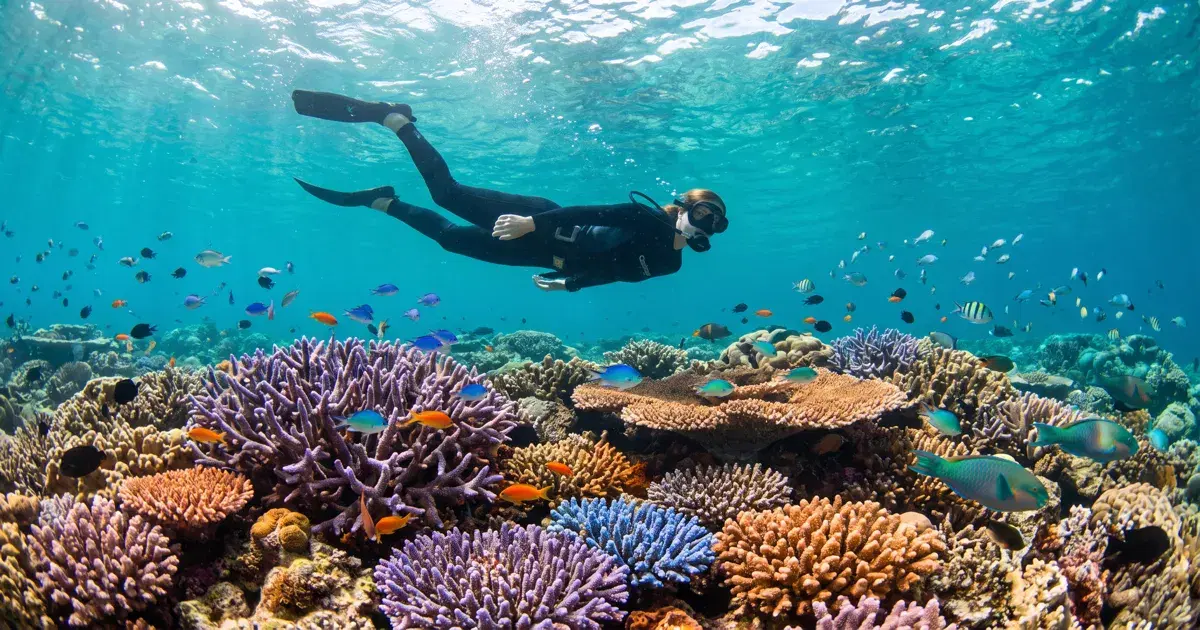
Can I see the Great Barrier Reef without diving? Yes, snorkeling and glass-bottom boat tours cover the shallower reef sections, though the depth range where a lot of the healthiest coral and larger marine life sits is diving-only.
Is the Great Barrier Reef more expensive than other Australian dive destinations? It's on the pricier end for day trips due to marine park fees and boat distances, though it's comparable to or cheaper than a liveaboard trip in destinations like Indonesia's Komodo or the Maldives once flights are factored in.