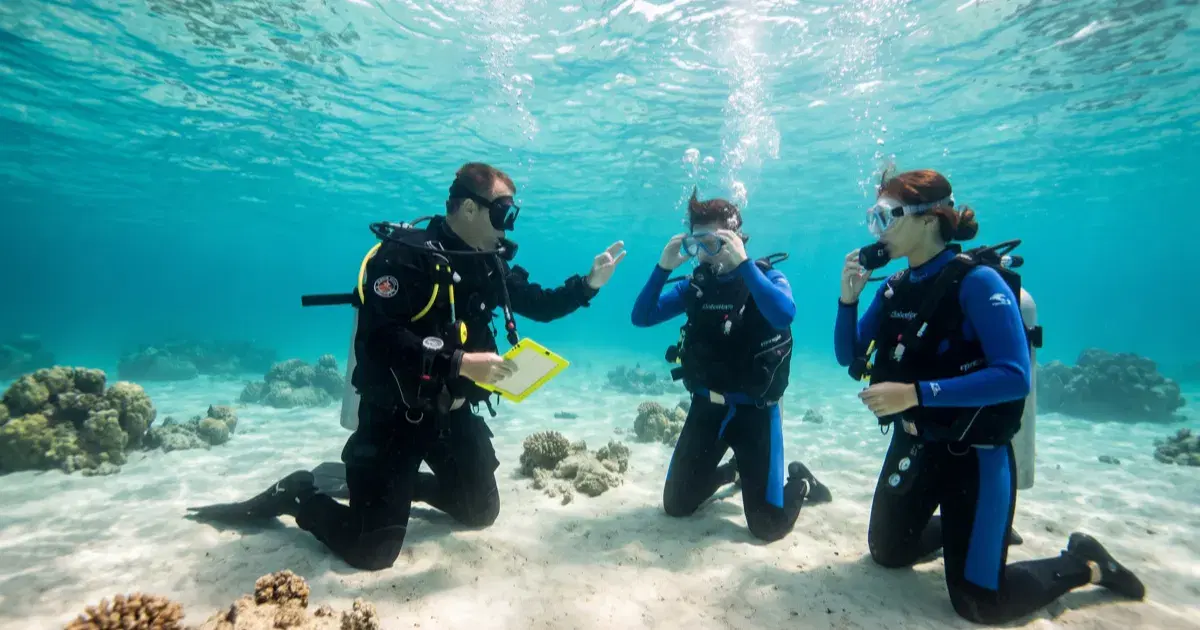
The cheapest certification is usually the one you take somewhere with low local operating costs, not the one with the lowest advertised price. Those two things aren't always the same course.
Is it cheaper to certify abroad than at home?
Often, yes, sometimes by a wide margin. Instructor wages, boat fuel, and facility costs are lower in much of Southeast Asia and Central America than in the US, UK, or Australia, and that shows up directly in course pricing. The catch: you're paying for flights and accommodation on top, so the total cost only wins out if you're already traveling to one of those regions or planning a longer trip around the certification.
Which countries offer the cheapest open water certification?
Thailand, the Philippines, Indonesia, and Honduras (specifically Utila) are consistently among the lowest-priced options for a full agency-recognized certification. Prices shift with season and local competition, so check current rates directly with a few operators rather than relying on a number that could be a year or two stale.
Are there hidden fees in cheap certification deals?
Sometimes. Watch for course materials or e-learning fees charged separately from the advertised price, certification card processing fees, and equipment rental that isn't included in a "budget" package. A genuinely cheap course states its full price upfront; one that adds several line items after you've booked usually isn't the deal it looked like.
FAQ
Does a cheaper certification mean lower-quality instruction? Not automatically. Price mostly reflects local cost of living and competition, not instructor quality. Check reviews and confirm the school is a recognized agency center (PADI, SSI, or similar) regardless of price point; that matters more than the sticker price.
Should I book my certification before I travel, or wait until I arrive? Booking in advance locks in your dates and a specific instructor, useful if you're on a tight schedule. Waiting until you arrive can sometimes get you a better rate through local negotiation or last-minute availability, but it risks not finding a slot during your trip.
Is a referral course actually cheaper than doing the full course in one location? It can be, since you split the classroom and pool sessions (often pricier at home) from the open-water dives (often cheaper abroad), but the savings depend heavily on where you do each half. Compare the split total against a single-location course before assuming it's the cheaper path.