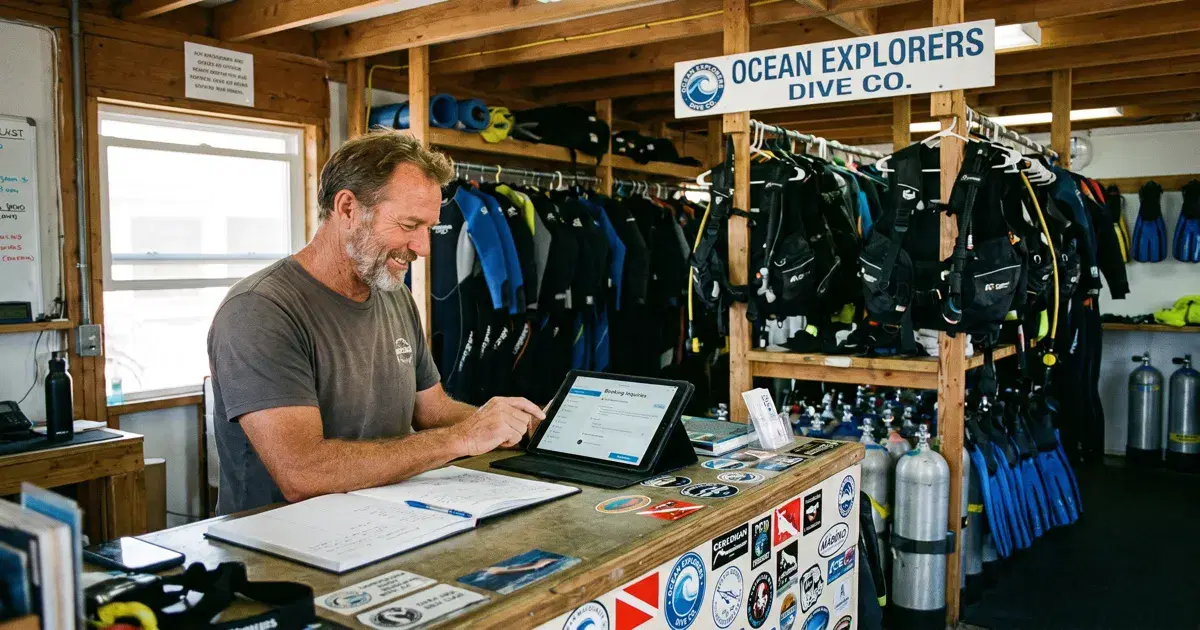
Word of mouth fills a dive shop's schedule when the shop already has a steady base of repeat divers nearby, but it does almost nothing for the diver planning a trip from another country who has never heard of you.
Does an online profile with reviews actually increase dive shop bookings?
Yes, for the traveling diver specifically. A local diver picking a shop for a weekend boat dive often relies on a friend's recommendation, but someone booking a week of diving before they've even landed in the country has no friend to ask. That diver is comparing shops by whatever they can find online: photos, reviews, response time to inquiries. A shop with a thin or outdated online presence loses that booking before the diver ever calls.
How important are verified reviews for a dive shop's bookings?
Verified reviews matter more than raw star ratings. A 4.9-star profile with three reviews reads as thin, while a 4.5-star profile with forty reviews from divers who can be shown to have actually dived with the shop reads as trustworthy, even with a few mixed comments in the mix. Unverified reviews are also easy to fake, and divers researching a trip increasingly know to look for that distinction before booking anything.
Should a dive shop list on multiple discovery platforms?
Generally yes, since different platforms reach different segments of the same traveling-diver audience, and being absent from one is an easy way to lose a booking to a competitor who is present. The tradeoff is upkeep: a profile with a stale price list or an old hero photo can actively hurt more than having no profile at all, so listing on three platforms you maintain beats listing on six you don't.
What does a strong dive shop profile actually need?
At minimum: recent, real photos (not stock underwater images), an accurate and current price list, response times fast enough that an inquiring diver doesn't book elsewhere while waiting, and enough verified reviews to signal the shop is actively operating. A shop that answers inquiries within a few hours consistently converts better than one that takes two days, even when the underlying diving is identical.
How does Diveity fit into a dive shop's booking funnel?
Diveity lists dive shops alongside the dive sites, resorts, and instructors near them, so a diver researching a destination sees your shop in the same place they're already comparing sites and planning logistics, rather than needing a separate search. Claiming and completing your shop's profile, current pricing, and photos keeps that listing accurate as the diver moves from research to booking decision. Listing itself is free; Diveity never charges for leads or inquiries.
FAQ
How fast should a dive shop respond to online inquiries? Within a few hours during business hours is a reasonable target. Divers comparing multiple shops for the same trip window often book whichever shop replies first with clear pricing.
Do negative reviews hurt dive shop bookings? Occasional negative reviews mixed into a larger set of positive ones rarely hurt bookings much; a profile with zero negative reviews at all can actually read as suspicious to an experienced online researcher. A shop's response to a negative review often matters more than the review itself.
Is it worth paying for online advertising as a small dive shop? It depends on margins and season, but a complete, accurate free profile on the discovery platforms divers already use typically returns more bookings per hour invested than a paid ad campaign, especially for shops without dedicated marketing staff.