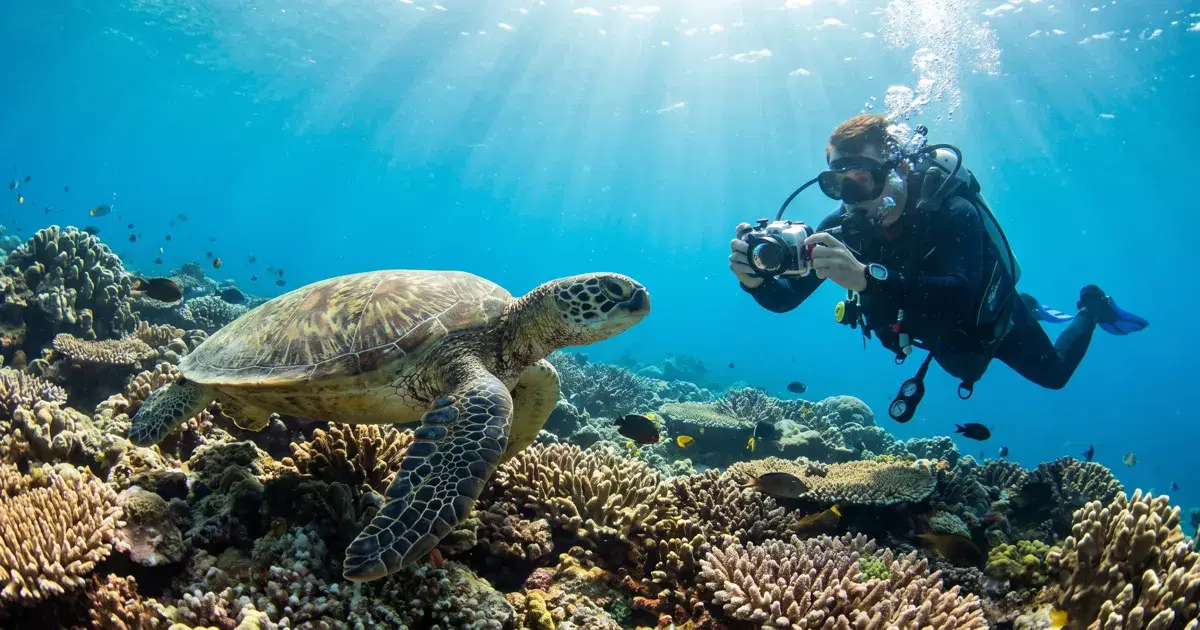
A useful marine-life sighting log captures more than a species name. Site, depth, behavior, and a photo where possible turn a private list into something searchable later, rather than a diary entry no one else can use.
What details should a marine sighting log include?
At minimum, log the species (or your best guess), depth, approximate count if it's a group, and a short behavior note (resting, feeding, cleaning station, passing by). Water conditions at the time (visibility and temperature) add useful context if you look back at the entry months later trying to remember what made the dive memorable.
A quick timestamp matters more than it seems like it should. If you see three different species within the same ten minutes at a cleaning station, noting roughly when each appeared helps you (or anyone reading the log later) reconstruct the sequence of a dive rather than a jumbled list of names. Skip the temptation to log everything after the fact from memory at the end of a multi-dive day. Details fade fast, and a turtle sighting from the morning dive can easily blur into one from the afternoon if you wait.
Can sightings be tagged to a specific dive site?
Yes, and this is where a proper logbook app earns its keep over a paper notebook. Tagging a sighting to the exact site turns your personal list into a resource other divers can search, effectively contributing to a shared picture of what lives where. Diveity ties every logged sighting to its matching entry in the dive site atlas automatically.
How do you attach a photo to a sighting log entry?
Most dive log apps let you upload a photo directly to the sighting entry, either right after the dive or later once you've reviewed your shots. Keep the file size reasonable. A full-resolution camera photo is rarely necessary for a log entry, and a compressed version loads faster and takes up less storage over time.
If you're shooting with a dedicated underwater camera rather than a phone in a housing, transferring photos the same day you dive makes the whole process much less painful. A week's worth of unsorted images from a liveaboard trip, matched only by memory to which dive they came from, is a genuinely tedious problem to solve later. Tag the photo to the dive as soon as you can, even with a rough note, and sort out the exact species ID afterward if you need help identifying something.
Why log marine life sightings at all?
Beyond the personal record, a logged sighting with a photo and location adds a small data point to a larger picture: which species show up where, and when. That's genuinely useful to other divers planning a trip to the same site, and it's a habit worth building even on dives where nothing rare turns up.
It also helps you notice your own patterns over time. A diver who logs consistently for a year or two often ends up with a genuinely useful personal record: which sites reliably show turtles, which season a particular fish shows up in, which dive center's house reef turned out better than expected. None of that survives in memory alone past a season or two.
FAQ
Does logging require ID certainty? No. Log your best guess and flag it as uncertain if you're not sure. A tentative ID with a photo is more useful than skipping the entry entirely.
Can you log an uncertain or possible ID? Yes, most apps let you mark a sighting as unconfirmed. This is normal and better than guessing with false confidence or leaving it out.
Is there a photo size limit? Reasonable limits exist on most platforms to keep load times fast, but a compressed photo attached to a log entry rarely runs into them.
Can sightings stay private? Yes, on Diveity you control whether a given sighting or your logbook overall is visible to others.
Log every sighting on Diveity
Diveity ties each sighting to the exact dive site and lets you attach a photo in seconds. Start a free logbook and browse the dive site atlas to see what's been spotted nearby.