Tulamben runs almost entirely on shore entries, which is unusual for a destination with a wreck this well known and a muck-diving reputation to match.
What's the best time of year to dive Tulamben?
Tulamben is diveable year-round, since Bali's dive season doesn't shut down the way some destinations do. The dry season, roughly April through October, generally brings better visibility, while the wetter months (November through March) can reduce visibility from runoff, though the sites remain open and diveable through both.
Why is Tulamben called Bali's shore-diving capital?
Nearly all of Tulamben's well-known sites, including the USAT Liberty wreck and the area's muck-diving spots, are entered directly from the beach rather than by boat. That shore access, combined with the concentration of notable sites within a short stretch of coastline, is what earns Tulamben its reputation as Bali's shore-diving hub.
Is Tulamben good for beginner divers?
Yes, for much of what it offers. The shallower sections of the Liberty wreck, starting around 5 meters (about 16 feet), are accessible to Open Water divers, and the muck-diving sites are generally calm, shallow, and slow-paced, well suited to newer divers still building comfort in the water. Steeper entries over loose volcanic sand and rock take a bit of getting used to, but the diving itself is beginner-friendly.
What's the USAT Liberty wreck, and is it at Tulamben?
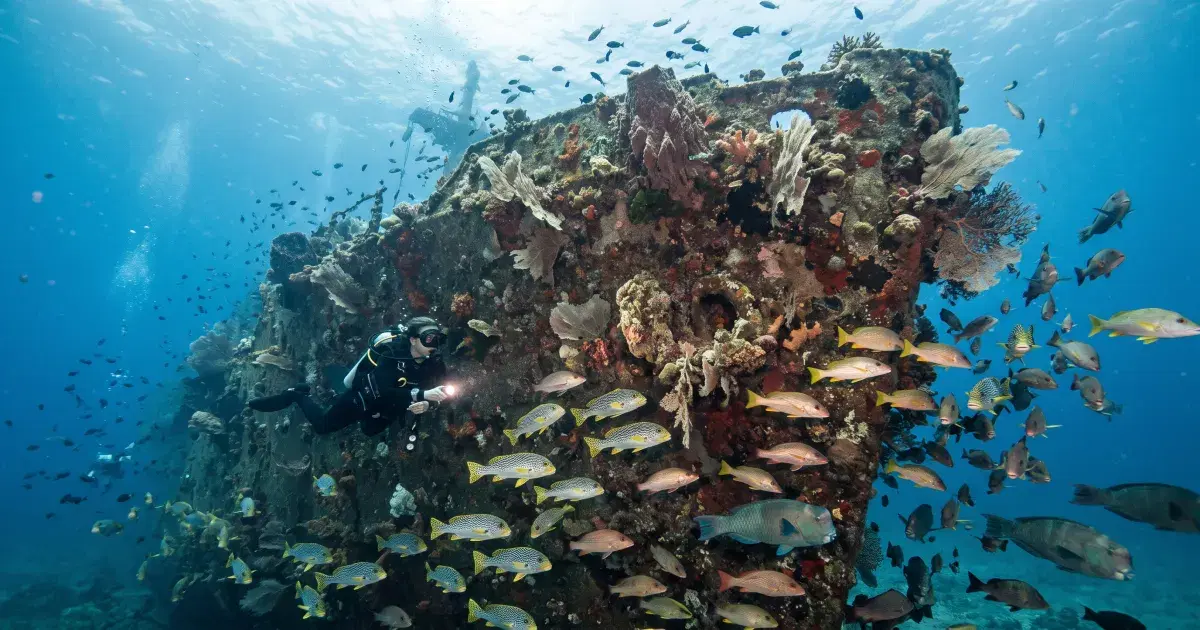
The USAT Liberty was a US Army cargo ship torpedoed during World War II and beached near Tulamben for salvage. A volcanic eruption in the 1960s shifted the wreck into the water, where it now rests just offshore, spanning roughly 5 to 30 meters (about 16 to 100 feet) in depth. It's one of the most accessible wreck dives in the world, reachable by a short walk from the beach rather than a boat trip.
Do I need a boat to dive Tulamben?
No. Nearly every major Tulamben site, including the Liberty wreck and the muck-diving areas, is a shore entry. The main physical challenge is the entry itself, over steep black volcanic sand or pebble beaches, which is easier with reef booties and a bit of local guidance on where to enter.
What marine life will I see at Tulamben's muck sites?
Tulamben's muck-diving sites are known for small, unusual critters rather than big pelagic life: ghost pipefish, a wide range of nudibranchs, mimic octopus, and frogfish are regular finds for divers and photographers willing to move slowly and look closely at the sandy substrate.
How does Tulamben compare to Amed for shore diving?
Amed, a bit further east along Bali's coast, offers a similar style of shore-based muck and reef diving, including its own smaller Japanese shipwreck, in a quieter, less developed setting than Tulamben. Tulamben's bigger draw is the Liberty wreck itself, along with a more established dive-operator scene, while Amed suits divers who want a similar experience with fewer crowds.
FAQ
How deep is the USAT Liberty wreck at Tulamben? It ranges from about 5 meters near the top of the structure down to around 30 meters at its deepest points, making parts of it accessible to Open Water divers while other sections suit more advanced or technical divers.
Is Tulamben a good base for a Bali dive trip? Yes, for divers prioritizing shore diving, the Liberty wreck, and muck-diving critters; divers wanting a wider mix of Bali's dive sites sometimes combine a Tulamben stay with time elsewhere on the island.
Do I need reef booties for Tulamben's beach entries? Reef booties are strongly recommended, since the entry points are steep, loose volcanic sand and pebble beaches rather than sandy shorelines, and proper footwear makes the entry and exit noticeably easier.