Anthias (assorted)
 KI-generiert
Bildnachweis: AI-generated illustration · Generated for Diveity; no third-party rights · Higgsfield nano_banana_pro image generation
Anthiadidae spp.
Über Anthias (assorted).
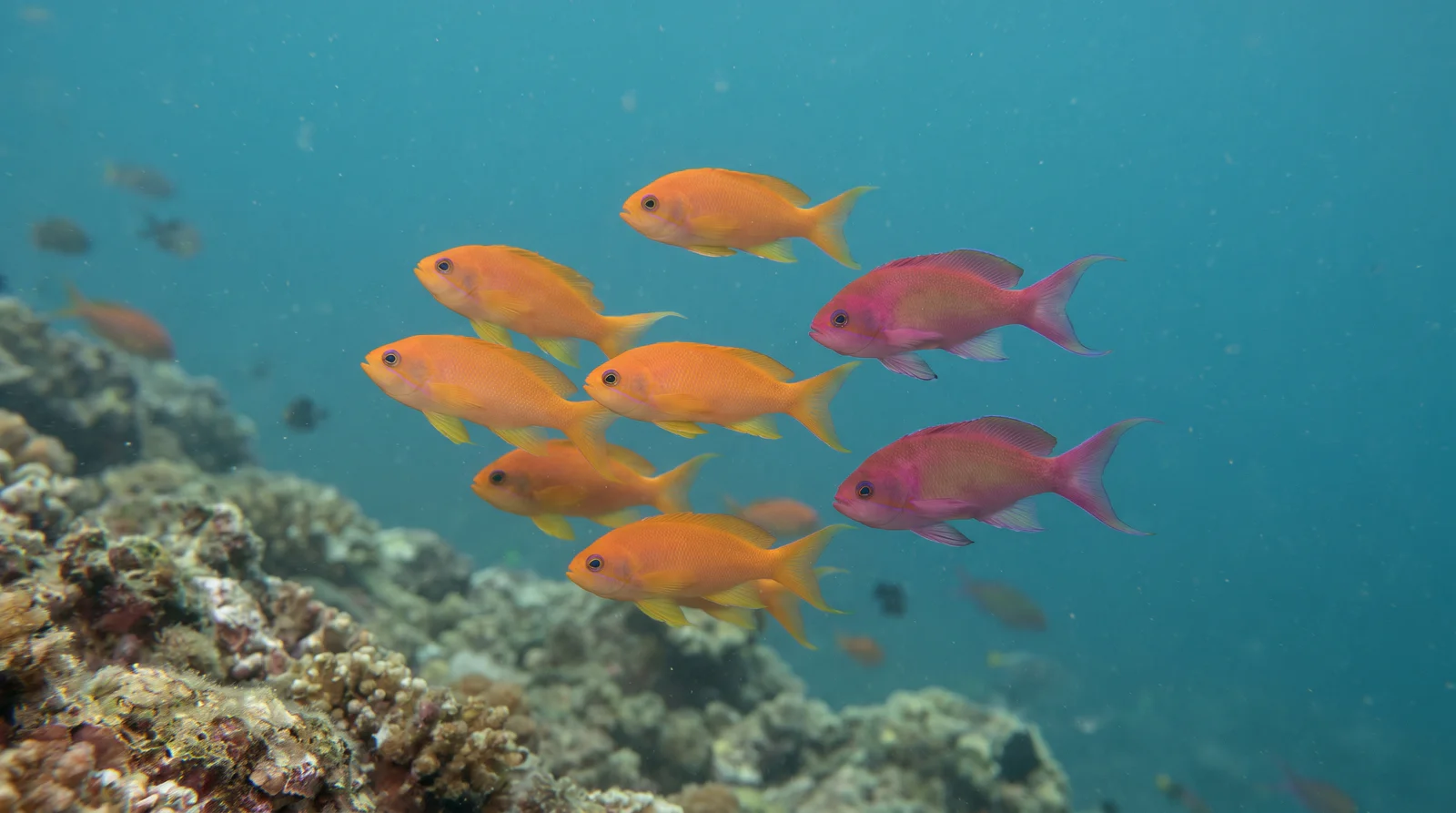
Anthias are reef fish of the family Anthiadidae. This group entry covers sightings where the species was not recorded. The World Register of Marine Species (WoRMS) lists Anthiadidae as an accepted family and treats the older name Anthiadinae as a superseded rank.
Wikipedia describes anthias as mostly small, says they are mainly zooplankton feeders, and notes that they are popular in the ornamental fish trade. It gives no single size for the group, so none is stated here.
A conservation status is not given here, because this entry covers a whole family.
Lebensraum.
Wikipedia says anthias occur in all tropical oceans and seas of the world, and names seven genera known from coral reef ecosystems.
Where Divers Find Them
In Tulamben, Bali, a 2009 Jakarta Post account of the Drop Off describes a wall decorated with sponges and black coral and says coral fish like groupers and anthias can be seen there, without saying which species.
Verhalten.
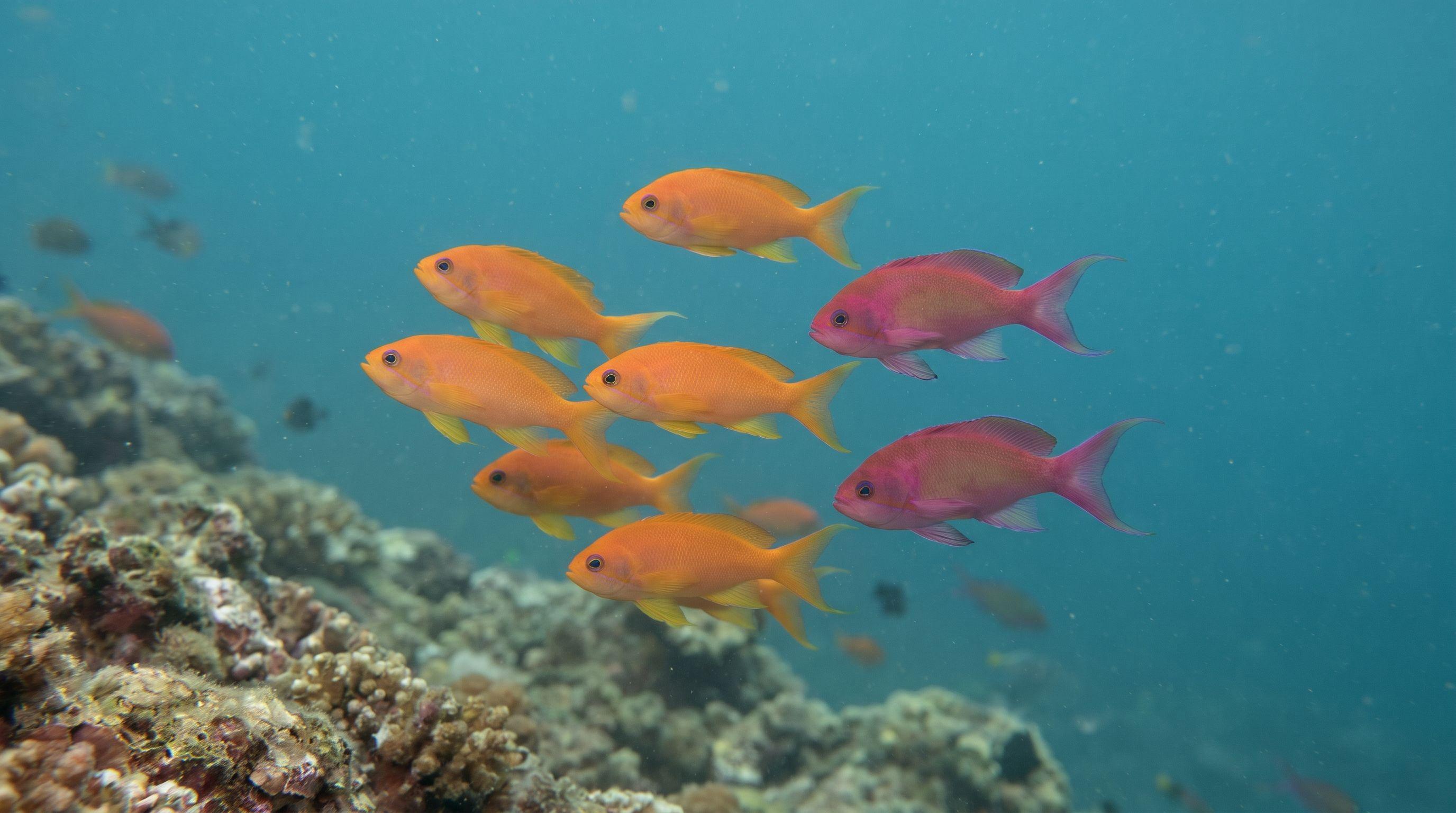
Wikipedia says anthias can shoal by the thousands, and that these schools tend to divide into smaller groups called harems: one dominant, colourful male, two to 12 females with their own hierarchy, and up to two subdominant males. Territorial males perform U-shaped swimming displays and defend an area of the reef and its harem.
It says most anthias are protogynous hermaphrodites: they are born female, and if a dominant male dies the largest female of the group will often change into a male to take its place.
Underwater Encounter Behavior
The sources cited here do not describe how anthias react to divers.
Wo man es sehen kann.
Nachweise für nusa penida · 1 Tauchplatz
Das allgemeine Verbreitungsgebiet ist kein Nachweis für das Vorkommen an einem bestimmten Tauchplatz.
Galerie.
 KI-generiert
Bildnachweis: AI-generated illustration · Generated for Diveity; no third-party rights · Higgsfield nano_banana_pro image generation