Bobtail Squid (assorted)
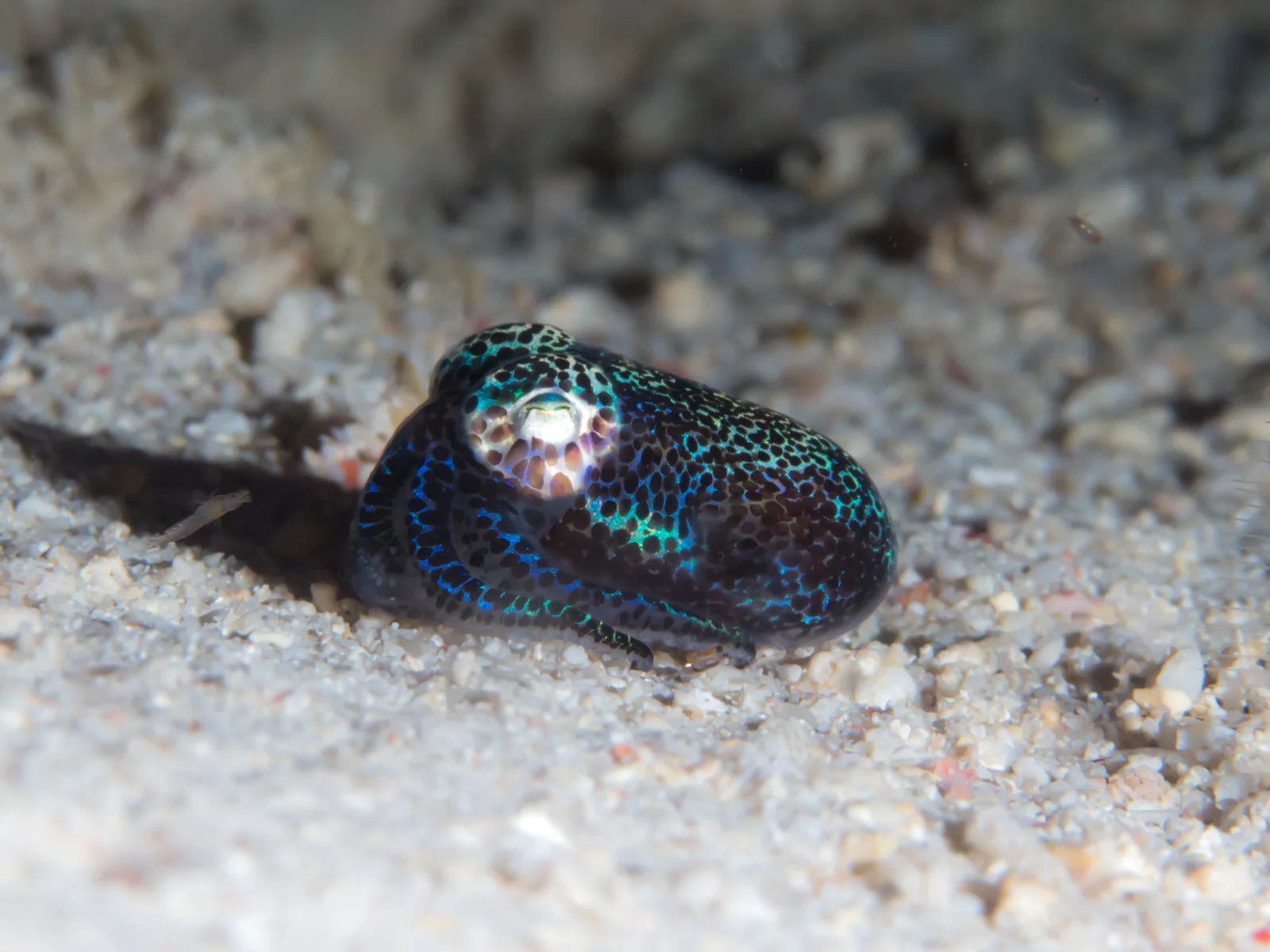
Bildnachweis: Rickard Zerpe · CC BY 2.0 · Wikimedia Commons (from Flickr)
Sepiolidae spp.
Über Bobtail Squid (assorted).
Bobtail squid (family Sepiolidae) are small, round-bodied cephalopods. This group entry covers sightings where the species was not recorded. The World Register of Marine Species (WoRMS) lists Sepiolidae as an accepted family in the order Sepiolida. The Tree of Life web project describes sepiolids as small and broad, about 1 to 10 cm in mantle length, with a rounded rear mantle and ear-like fins.
Wikipedia notes that they tend to have a rounder mantle than cuttlefish and no cuttlebone, with eight suckered arms and two tentacles, and that they are also called dumpling squid or stubby squid. It gives about seventy known species and describes their classification as controversial.
A conservation status is not given here, because this entry covers a whole family.
Lebensraum.
The Tree of Life web project says species of the subfamilies Rossiinae and Sepiolinae are benthic, living on the bottom, while those of the Heteroteuthinae are pelagic. Wikipedia describes sepiolids as living in shallow coastal waters of the Pacific and in parts of the Indian and Atlantic oceans.
Where Divers Find Them
Dive operators in Tulamben, Bali, report them on sand at night: Amed Jepun Divers names bobtail squid among the animals that emerge from the sand at Seraya Secret after dark, and Neptune Scuba Diving lists them in the sand near the USAT Liberty wreck. These are operator reports, not survey data, and how often they are seen is unknown.
Verhalten.
Wikipedia says bobtail squid can swim with the fins on their mantle or by jet propulsion. It also describes a partnership with the bioluminescent bacterium Aliivibrio fischeri, which lives in a light organ in the mantle and hides the squid's silhouette when seen from below. The Tree of Life web project says that all sepiolids, where known, lay large eggs on the bottom and that the young hatch at an advanced stage. Wikipedia adds that the eggs are covered with sand and left without parental care.
Underwater Encounter Behavior
The Tulamben reports above place encounters on night dives over sand. The sources cited here do not describe how a bobtail squid reacts to divers or dive lights.
Wo man es sehen kann.
Nachweise für indonesia · 3 Tauchplätze
Das allgemeine Verbreitungsgebiet ist kein Nachweis für das Vorkommen an einem bestimmten Tauchplatz.
Melasti
Amed
Dokumentiertes Vorkommen am Tauchplatz
Saison noch nicht dokumentiert
Quelle geprüft am 2026-11-07 · Quelle: Amed Jepun Divers · Beobachtungsdatum nicht dokumentiert
Seraya Secret
Tulamben
Dokumentiertes Vorkommen am Tauchplatz
Saison noch nicht dokumentiert
Quelle geprüft am 2026-11-05 · Quelle: Amed Jepun Divers · Beobachtungsdatum nicht dokumentiert
USAT Liberty Wreck
Tulamben
Dokumentiertes Vorkommen am Tauchplatz
Saison noch nicht dokumentiert
Quelle geprüft am 2026-11-05 · Quelle: Neptune Scuba Diving · Beobachtungsdatum nicht dokumentiert
Galerie.
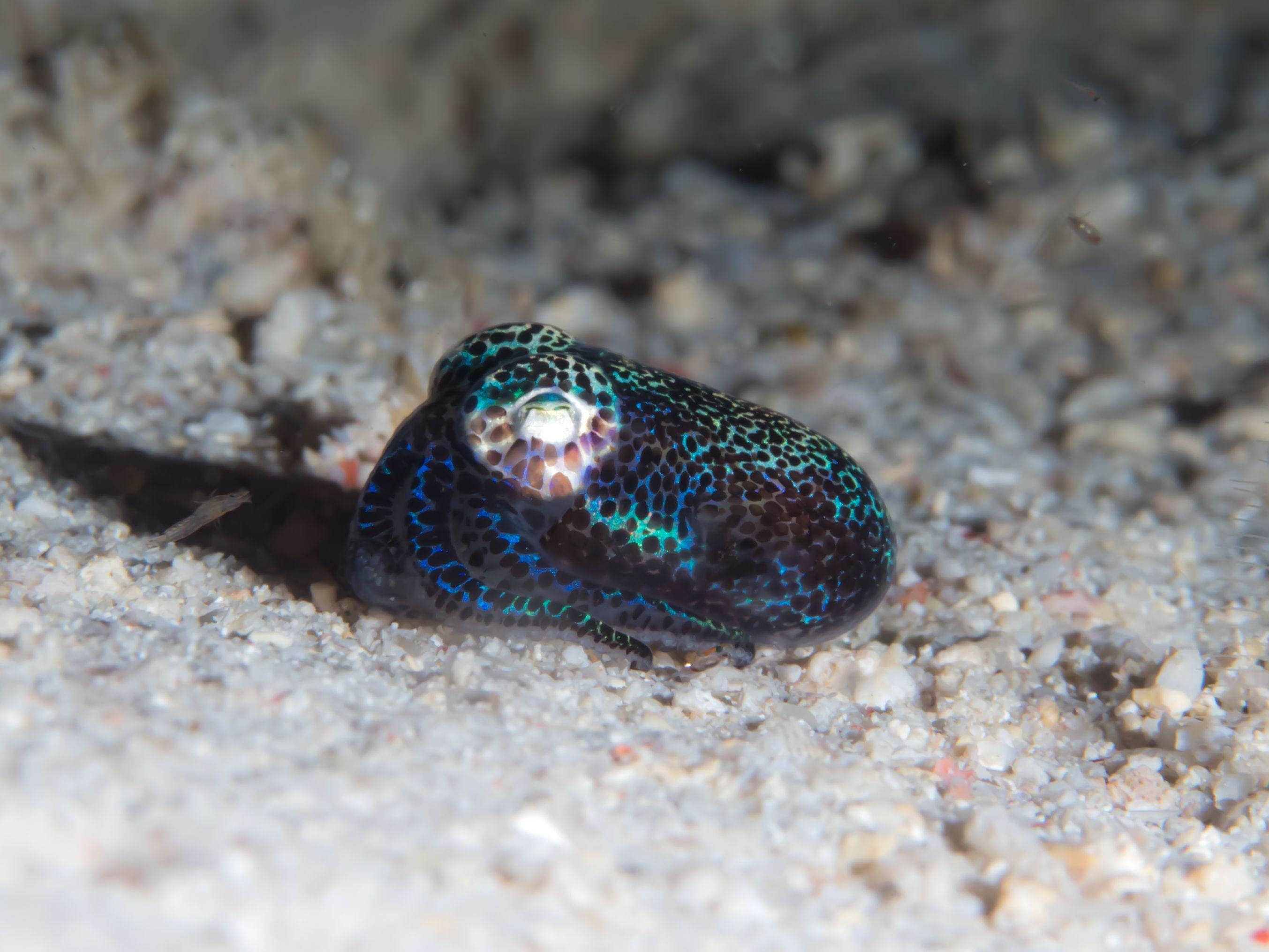
Euprymna berryi, one species of the family Sepiolidae, photographed at Romblon, Philippines. This photograph is not from Tulamben.
Bildnachweis: Rickard Zerpe · CC BY 2.0 · Wikimedia Commons (from Flickr)