Snake Eel (assorted)
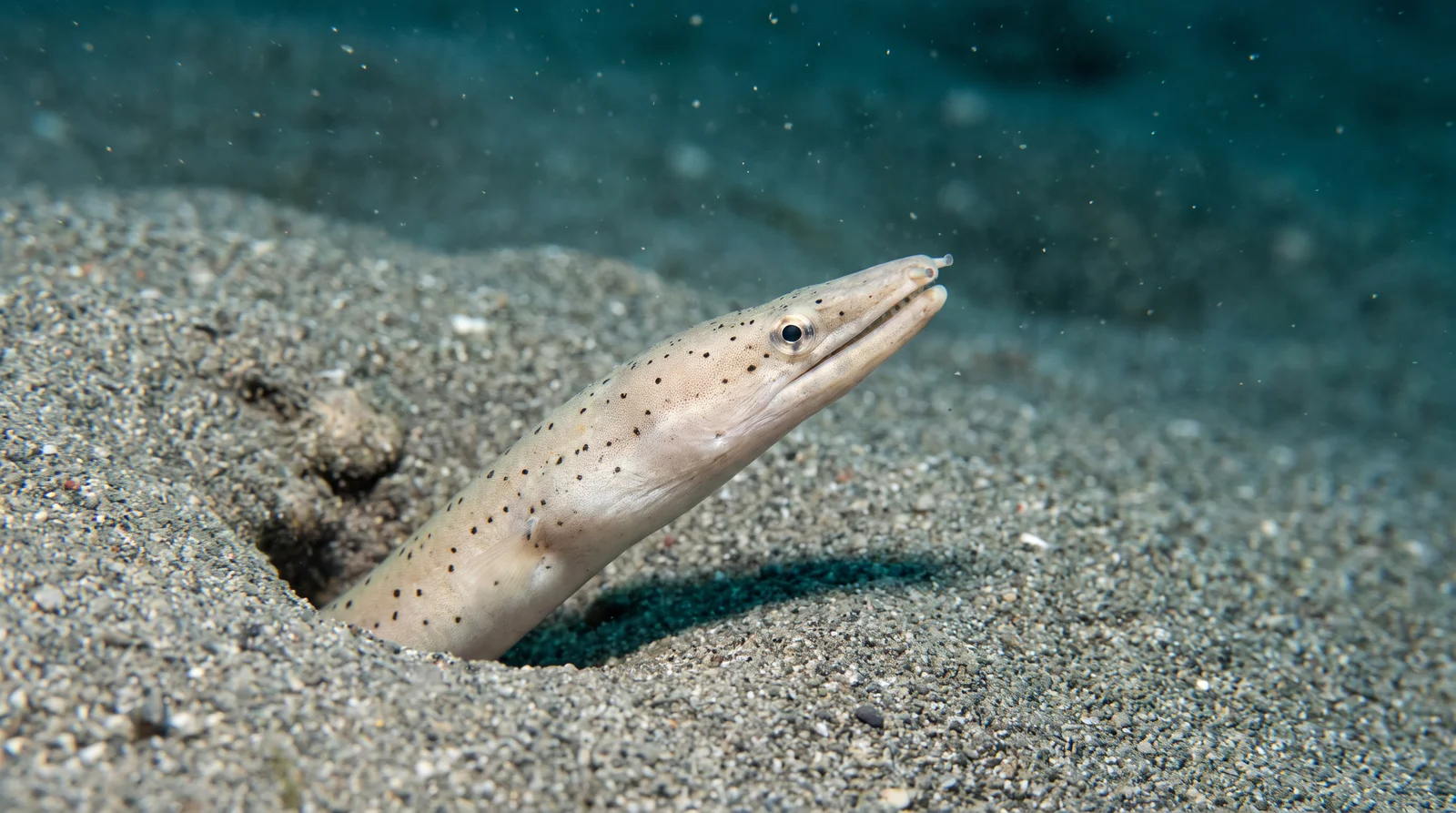 KI-generiert
Bildnachweis: AI-generated illustration · Generated for Diveity; no third-party rights · Higgsfield nano_banana_pro image generation
Ophichthidae spp.
Über Snake Eel (assorted).
Snake eels (family Ophichthidae) are long, cylindrical eels, many of which burrow. This group entry covers sightings where the species was not recorded. Diveity also has an individual page for the Spotted Snake Eel. The World Register of Marine Species (WoRMS) lists Ophichthidae as an accepted family in the eel order Anguilliformes, and FishBase counts 62 genera and 362 species.
Wikipedia gives a total length from 5 cm to 2.3 m or more, depending on the species. It says many species have no fins at all, which helps them burrow, and that they are often spotted or striped, mimicking venomous sea snakes.
A conservation status is not given here, because this entry covers a whole family.
Lebensraum.
FishBase describes the family as living in tropical to warm temperate waters, from shallow coastal waters to mid waters, on reefs, rubble, sand and muddy bottoms. Some species enter rivers, and FishBase notes that species of Ophichthus have been reported from 1,300 m.
Where Divers Find Them
Divers should look on sand and mud rather than on open reef, because FishBase says most species spend their time buried in sand. In Tulamben, Bali, Amed Jepun Divers names snake eels among the animals that emerge from the sand at Seraya Secret at night. This is an operator report, not survey data, and how often they are seen is unknown.
Verhalten.
FishBase says most species stay buried in sand and hunt small fishes and crustaceans by sense of smell. Wikipedia adds that most are bottom dwellers that hide in mud or sand to capture prey, and that some are pelagic.
Underwater Encounter Behavior
The sources cited here do not describe how snake eels react to divers. The sea-snake pattern noted above can make a snake eel look like a sea snake, so an uncertain identification is best recorded as uncertain.
Wo man es sehen kann.
Nachweise für indonesia · 2 Tauchplätze
Das allgemeine Verbreitungsgebiet ist kein Nachweis für das Vorkommen an einem bestimmten Tauchplatz.
Pyramids
Amed
Dokumentiertes Vorkommen am Tauchplatz
Saison noch nicht dokumentiert
Quelle geprüft am 2026-11-07 · Quelle: Amed Jepun Divers · Beobachtungsdatum nicht dokumentiert
Seraya Secret
Tulamben
Dokumentiertes Vorkommen am Tauchplatz
Saison noch nicht dokumentiert
Quelle geprüft am 2026-11-05 · Quelle: Amed Jepun Divers · Beobachtungsdatum nicht dokumentiert
Galerie.
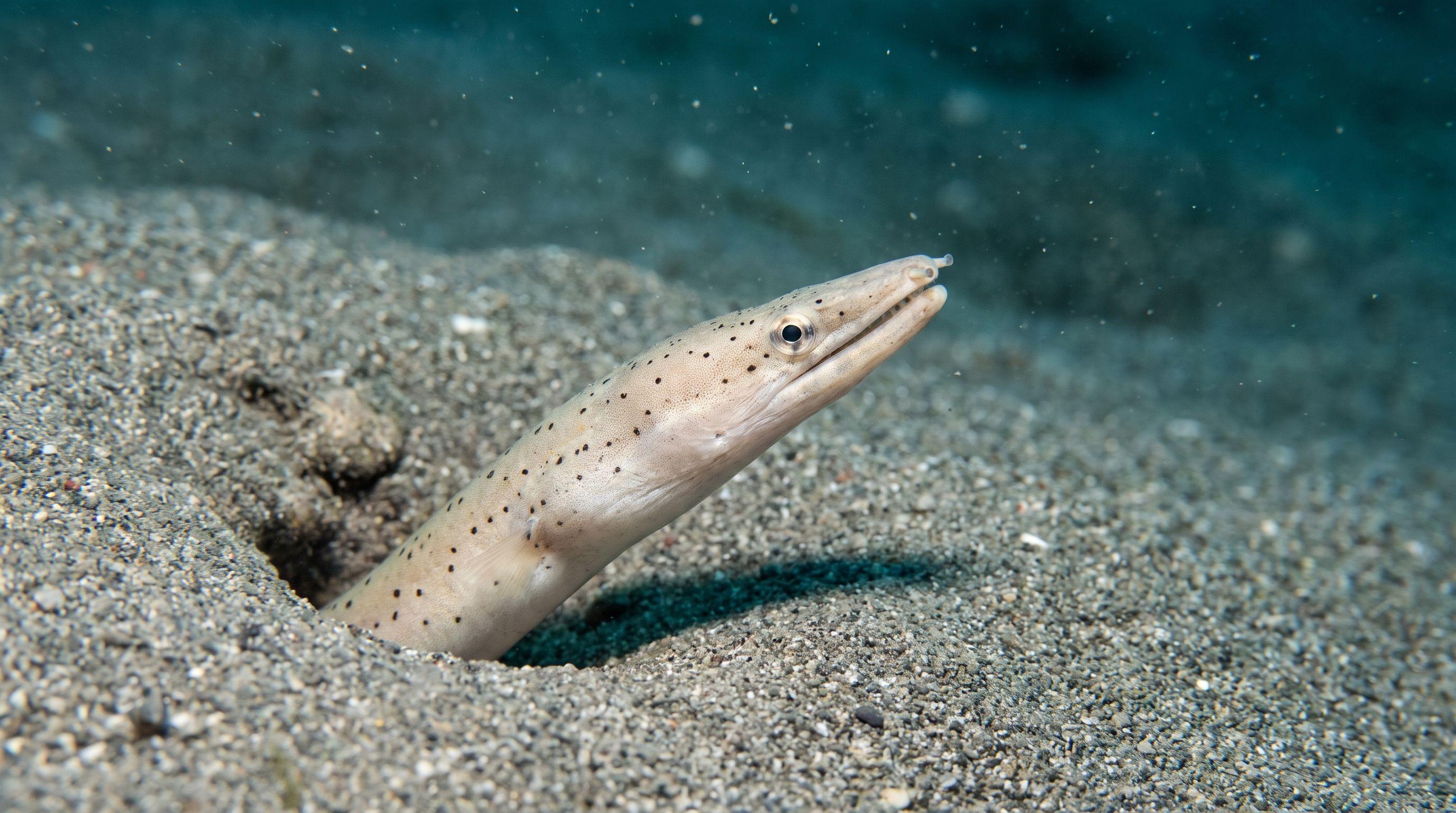 KI-generiert
Bildnachweis: AI-generated illustration · Generated for Diveity; no third-party rights · Higgsfield nano_banana_pro image generation