Snake Eel (assorted)
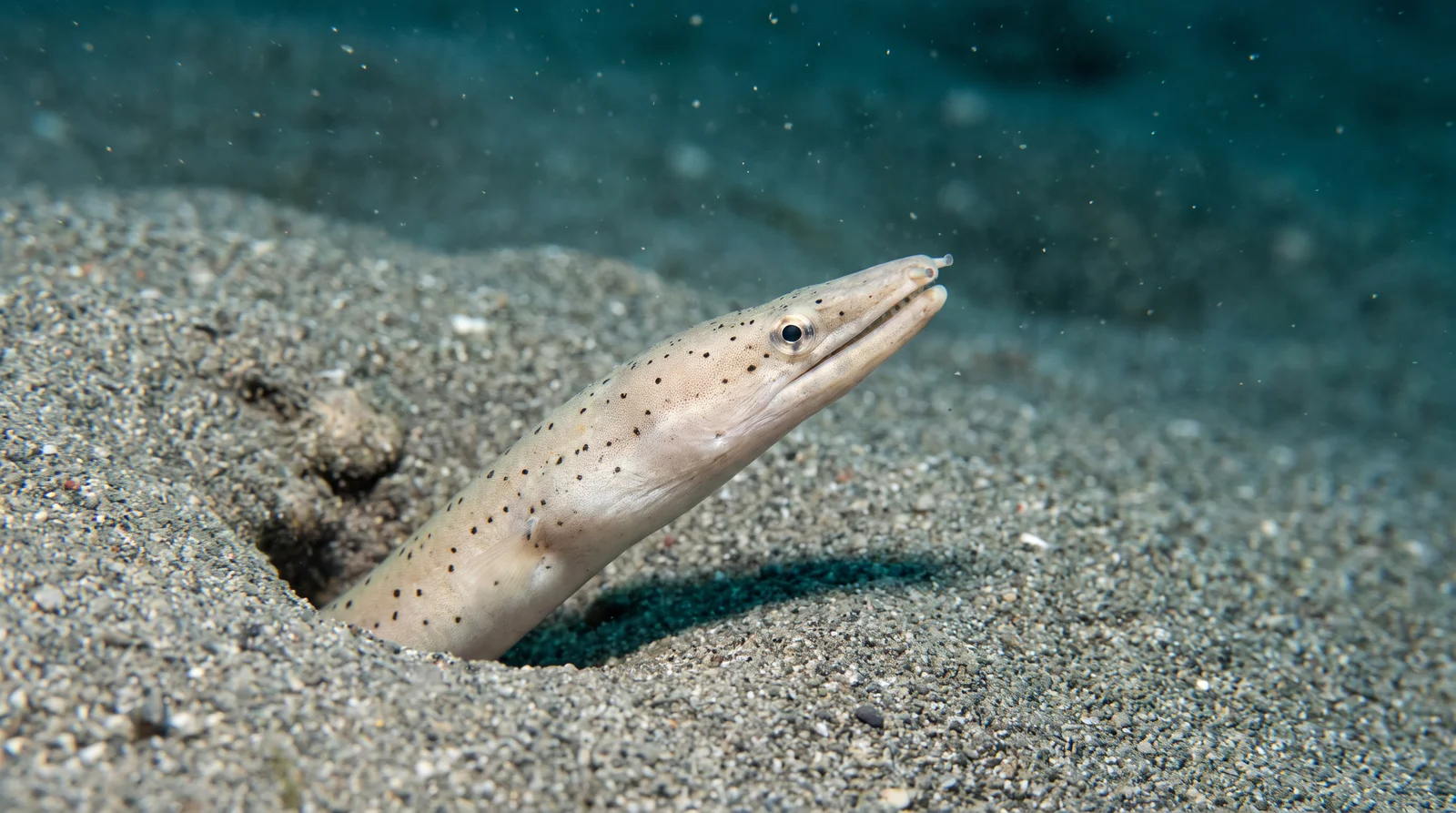 KI-generiert
Bildnachweis: AI-generated illustration · Diveity
Ophichthidae spp.
Über Snake Eel (assorted).
Snake eels (family Ophichthidae) are long, cylindrical eels, many of which burrow. This group entry covers sightings where the species was not recorded. Diveity also has an individual page for the Spotted Snake Eel. The World Register of Marine Species (WoRMS) lists Ophichthidae as an accepted family in the eel order Anguilliformes, and FishBase counts 62 genera and 362 species.
Wikipedia gives a total length from 5 cm to 2.3 m or more, depending on the species. It says many species have no fins at all, which helps them burrow, and that they are often spotted or striped, mimicking venomous sea snakes.
A conservation status is not given here, because this entry covers a whole family.
Nobody has verified this record in person; it was researched and written by an automated process from the sources named here.
Lebensraum.
FishBase describes the family as living in tropical to warm temperate waters, from shallow coastal waters to mid waters, on reefs, rubble, sand and muddy bottoms. Some species enter rivers, and FishBase notes that species of Ophichthus have been reported from 1,300 m.
Where Divers Find Them
FishBase says most species spend their time buried in sand, and Wikipedia says most hide in mud or sand, so divers are most likely to notice them on sand and mud bottoms.
Dive operators name snake eels at four Bali sites. In Tulamben, Amed Jepun Divers names them among the animals that emerge from the sand at Seraya Secret at night, and among the regular visitors at Batu Niti, which it calls a haven for macro life. In Amed, the same operator describes the sandy slopes where the Pyramids dive starts as dotted with garden eels, stingrays and snake eels. At Pemuteran Jetty, a shore muck dive, Abyss Ocean World lists snake eels among the animals to see, and Karang Divers lists moray and snake eels hunting after dark. These are operator reports, not survey data, and how often snake eels are seen at any of these sites is unknown.
Verhalten.
FishBase says most species stay buried in sand and hunt small fishes and crustaceans by sense of smell. Wikipedia adds that most are bottom dwellers that hide in mud or sand to capture prey, and that some are pelagic.
Underwater Encounter Behavior
The sources cited here do not describe how snake eels react to divers. The sea-snake pattern noted above can make a snake eel look like a sea snake, so an uncertain identification is best recorded as uncertain.
Wo man es sehen kann.
Nachweise aus allen Reisezielen · 9 Tauchplätze
Das allgemeine Verbreitungsgebiet ist kein Nachweis für das Vorkommen an einem bestimmten Tauchplatz.
Air Bajo
Lembeh Strait
Dokumentiertes Vorkommen am Tauchplatz
Saison noch nicht dokumentiert
Quelle geprüft am 2026-11-20 · Quelle: Infinite Blue Dive Travel · Beobachtungsdatum nicht dokumentiert
Batu Niti
Tulamben
Dokumentiertes Vorkommen am Tauchplatz
Saison noch nicht dokumentiert
Quelle geprüft am 2026-11-09 · Quelle: Amed Jepun Divers · Beobachtungsdatum nicht dokumentiert
Gapang House Reef
Pulau Weh
Dokumentiertes Vorkommen am Tauchplatz
Saison noch nicht dokumentiert
Quelle geprüft am 2026-11-18 · Quellen: Lumba Lumba Diving Centre und Sabang Freeport (blog) · Beobachtungsdatum nicht dokumentiert
Hairball
Lembeh Strait
Dokumentiertes Vorkommen am Tauchplatz
Saison noch nicht dokumentiert
Quelle geprüft am 2026-11-20 · Quelle: Murex Resorts · Beobachtungsdatum nicht dokumentiert
Pemuteran Jetty
Pemuteran
Dokumentiertes Vorkommen am Tauchplatz
Saison noch nicht dokumentiert
Quelle geprüft am 2026-11-14 · Quellen: Abyss Ocean World und Karang Divers · Beobachtungsdatum nicht dokumentiert
Police Pier
Lembeh Strait
Dokumentiertes Vorkommen am Tauchplatz
Saison noch nicht dokumentiert
Quelle geprüft am 2026-11-20 · Quelle: Dive The World · Beobachtungsdatum nicht dokumentiert
Pyramids
Amed
Dokumentiertes Vorkommen am Tauchplatz
Saison noch nicht dokumentiert
Quelle geprüft am 2026-11-07 · Quelle: Amed Jepun Divers · Beobachtungsdatum nicht dokumentiert
Seraya Secret
Tulamben
Dokumentiertes Vorkommen am Tauchplatz
Saison noch nicht dokumentiert
Quelle geprüft am 2026-11-05 · Quelle: Amed Jepun Divers · Beobachtungsdatum nicht dokumentiert
Teluk Kembahu (TK)
Lembeh Strait
Dokumentiertes Vorkommen am Tauchplatz
Saison noch nicht dokumentiert
Quelle geprüft am 2026-11-20 · Quelle: Infinite Blue Dive Travel · Beobachtungsdatum nicht dokumentiert
Galerie.
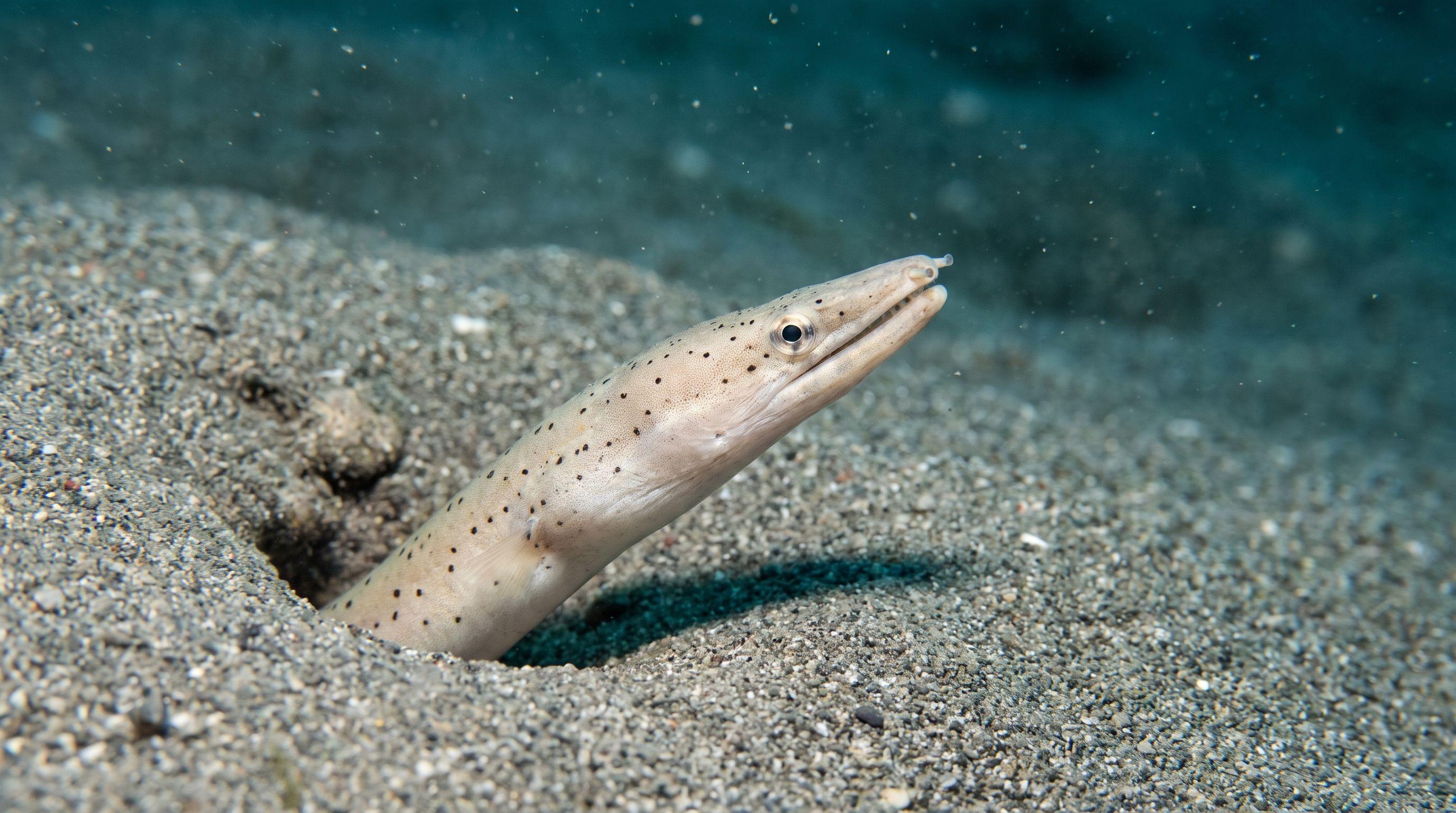 KI-generiert
Bildnachweis: AI-generated illustration · Diveity