Stingray (assorted)
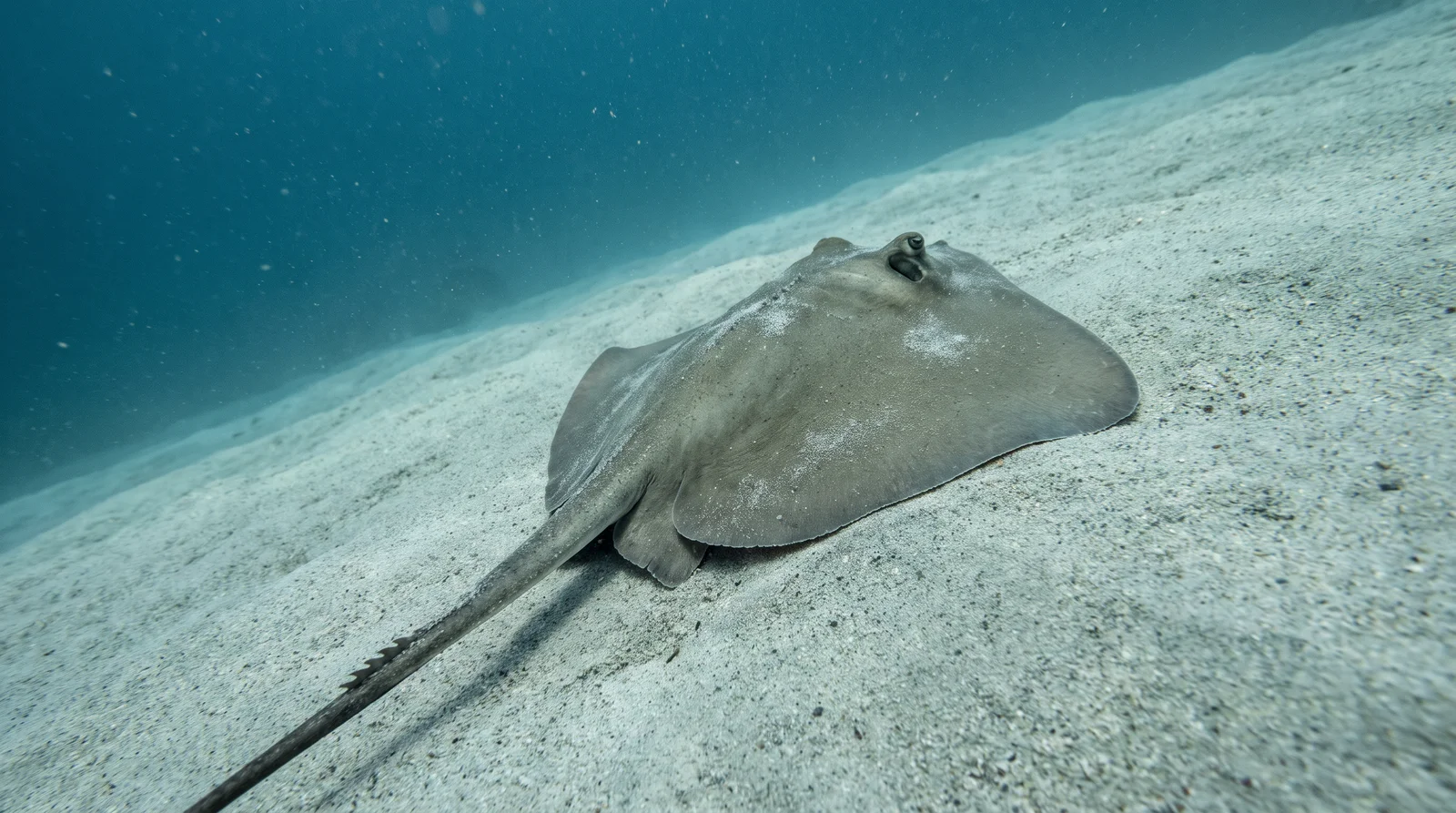 KI-generiert
Bildnachweis: AI-generated illustration · Generated for Diveity; no third-party rights · Higgsfield nano_banana_pro image generation
Myliobatoidei spp.
Über Stingray (assorted).
Stingrays are rays, a type of cartilaginous fish. This group entry covers sightings where the species was not recorded. Wikipedia classifies them in the suborder Myliobatoidei of the order Myliobatiformes and counts about 220 known species in 29 genera. The World Register of Marine Species (WoRMS) lists Myliobatiformes as an accepted order. A search of its marine records for the name Myliobatoidei returned nothing, so the suborder rests on Wikipedia alone.
Wikipedia's grouping also takes in eagle rays and manta rays, which this catalog keeps as separate entries. It gives no single size for the group, so none is stated here.
A conservation status is not given here, because this entry covers a whole group.
Lebensraum.
Wikipedia says stingrays are common in coastal tropical and subtropical marine waters throughout the world, that some species live in warmer temperate oceans or the deep ocean, and that coral reefs are favourite feeding grounds.
Where Divers Find Them
At Boga Wreck in Tulamben, Bali, Amed Jepun Divers says to look for stingrays on the sandy slope, and Scubago's site description names stingrays among the fish the wreck hosts. Neither says which species.
Verhalten.
Wikipedia says stingrays conceal themselves by agitating the sand and hiding beneath it, and that they settle on the bottom while feeding, often leaving only their eyes and tails visible. Because their eyes are on top of the body and their mouths underneath, they cannot see their prey after capture, and use smell and electroreceptors instead. It says most feed primarily on molluscs and crustaceans and occasionally on small fish, and that they bear live young.
Underwater Encounter Behavior
Wikipedia says stingrays are usually docile and curious and that their usual reaction is to flee any disturbance, though they sometimes brush their fins past a new object. It says they are not usually aggressive and ordinarily attack humans only when provoked, such as when accidentally stepped on. It describes a sting as quite painful but rarely life-threatening unless it pierces a vital area, and says certain larger species may be more aggressive and should be approached with caution, as the defensive use of the stinger may result in serious injury or death.
Wo man es sehen kann.
Nachweise aus allen Reisezielen · 5 Tauchplätze
Das allgemeine Verbreitungsgebiet ist kein Nachweis für das Vorkommen an einem bestimmten Tauchplatz.
Boga Wreck
Tulamben
Dokumentiertes Vorkommen am Tauchplatz
Saison noch nicht dokumentiert
Quelle geprüft am 2026-11-06 · Quelle: Amed Jepun Divers · Beobachtungsdatum nicht dokumentiert
Gili Selang
Amed
Dokumentiertes Vorkommen am Tauchplatz
Saison noch nicht dokumentiert
Quelle geprüft am 2026-11-07 · Quelle: Diveplanit · Beobachtungsdatum nicht dokumentiert
Kusambi
Amed
Dokumentiertes Vorkommen am Tauchplatz
Saison noch nicht dokumentiert
Quelle geprüft am 2026-11-07 · Quelle: Amed Dive Center · Beobachtungsdatum nicht dokumentiert
Manta Point Nusa Penida
Nusa Penida
Dokumentiertes Vorkommen am Tauchplatz
Saison noch nicht dokumentiert
Quelle geprüft am 2026-11-06 · Quelle: Dune Penida Dive Center (nusapenida.org) · Beobachtungsdatum nicht dokumentiert
Pyramids
Amed
Dokumentiertes Vorkommen am Tauchplatz
Saison noch nicht dokumentiert
Quelle geprüft am 2026-11-07 · Quelle: Amed Jepun Divers · Beobachtungsdatum nicht dokumentiert
Galerie.
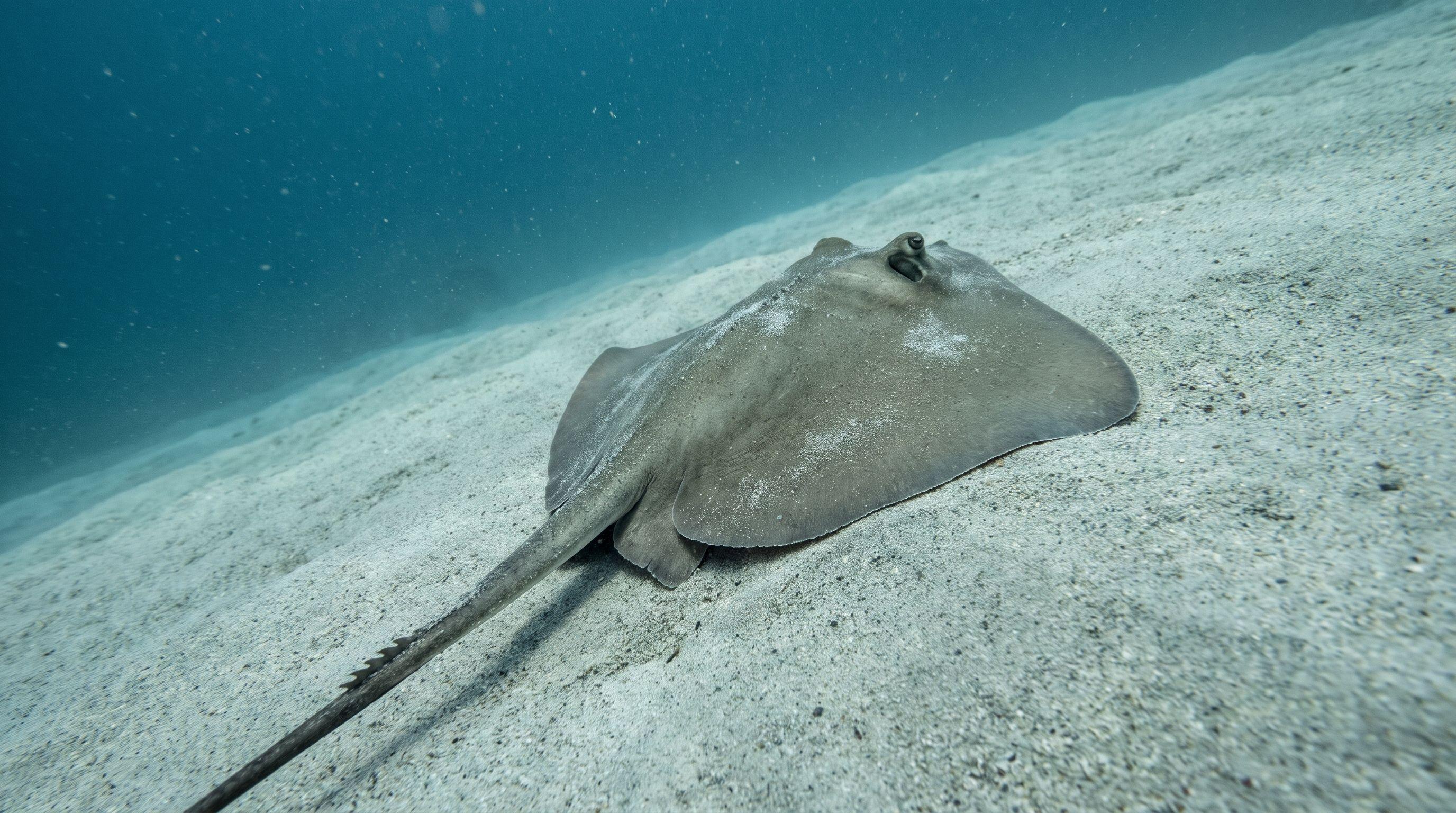 KI-generiert
Bildnachweis: AI-generated illustration · Generated for Diveity; no third-party rights · Higgsfield nano_banana_pro image generation