Stonefish (assorted)
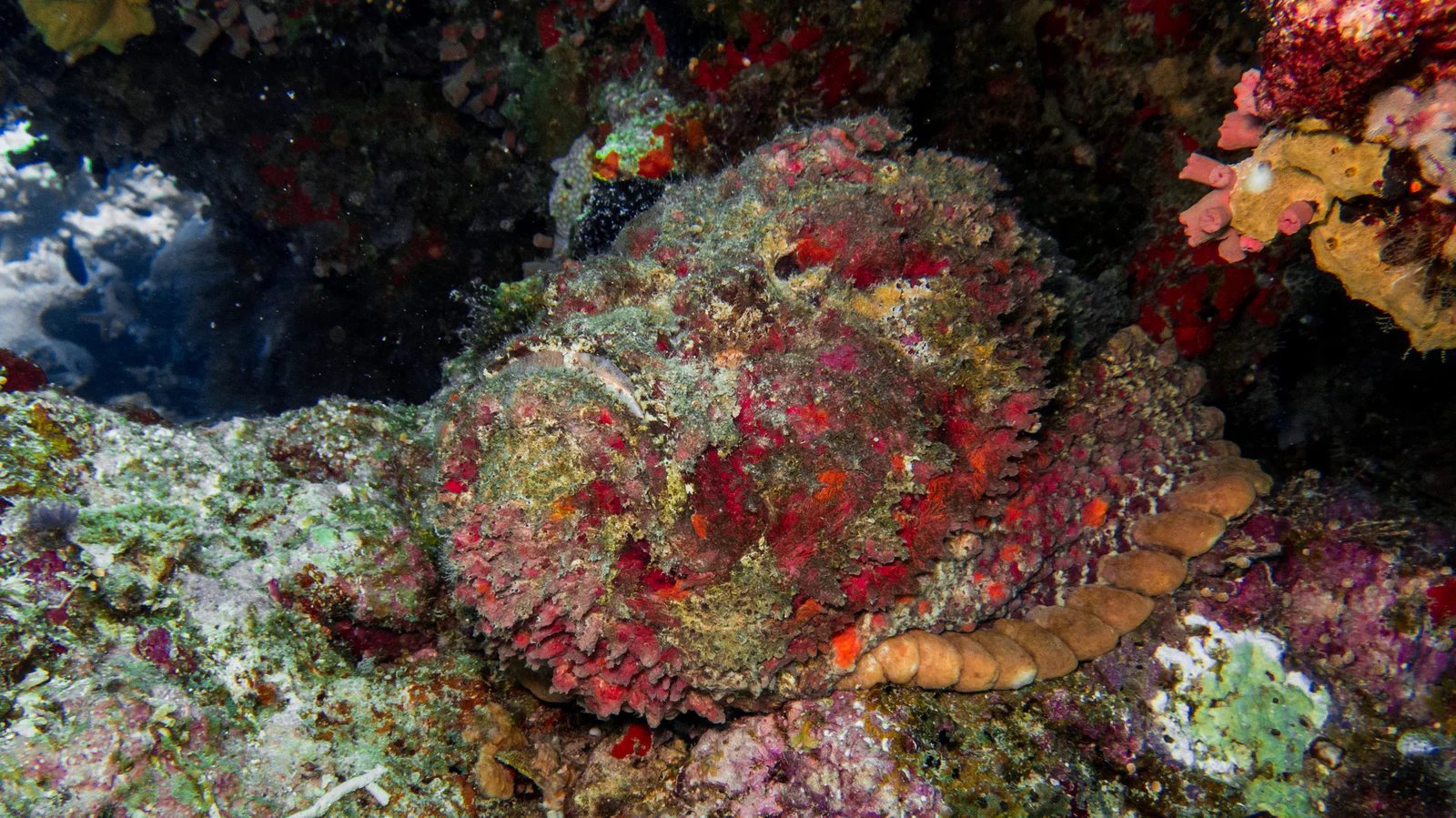
Bildnachweis: João D'Andretta · CC BY 4.0 · Wikimedia Commons (from iNaturalist), cropped by this page
Synanceia spp.
Über Stonefish (assorted).
Stonefish is a common name for the genus Synanceia, not a single species. The World Register of Marine Species (WoRMS) lists Synanceia Bloch & Schneider, 1801 as an accepted genus in the family Synanceiidae. Wikipedia and FishBase each list six species, among them the reef stonefish (Synanceia verrucosa) and the estuarine stonefish (Synanceia horrida). This group entry covers sightings where the species was not recorded; the reef stonefish has its own entry.
Wikipedia says the name comes from their grey, mottled camouflage, similar to the colour of a stone. It notes that some authorities place the stonefishes in the scorpionfish family Scorpaenidae rather than in a family of their own; this entry follows WoRMS.
A conservation status is not given here, because this entry covers a whole genus.
Lebensraum.
Wikipedia says stonefishes are found in the coastal regions of the Indo-Pacific; they are primarily marine and most live on coral reefs of the tropical Pacific and Indian oceans, though some species are known to live in rivers.
Where Divers Find Them
At Amed, Bali, Amed Jepun Divers lists stonefish at Ghost Bay and at the Japanese Shipwreck, where it says they linger on the sandy bottom with trumpetfish and crocodile flatheads. Amed Dive Center mentions huge stonefishes at Ghost Bay, and Blue Season Bali says the artificial reef there is home to large stonefish. None of them says which species, or how often.
Verhalten.
Wikipedia calls stonefishes the most venomous fish known. Potent neurotoxins are secreted from glands at the base of their needle-like dorsal fin spines, which stick up when the fish is disturbed or threatened. Wikipedia says stings can cause intense pain, respiratory weakness, damage to the cardiovascular system, convulsions and paralysis, and can be fatal to humans.
Underwater Encounter Behavior
Wikipedia says stonefishes are not easily seen, because they look like rocks or coral, and that most stings happen when someone steps on one; stings are less common when the fish is picked up. The sources cited here do not describe how stonefishes react to divers.
Wo man es sehen kann.
Nachweise aus allen Reisezielen · 10 Tauchplätze
Das allgemeine Verbreitungsgebiet ist kein Nachweis für das Vorkommen an einem bestimmten Tauchplatz.
Angel's Window
Lembeh Strait
Dokumentiertes Vorkommen am Tauchplatz
Saison noch nicht dokumentiert
Quelle geprüft am 2026-11-20 · Quelle: Starfish · Beobachtungsdatum nicht dokumentiert
Batee Meuduro
Pulau Weh
Dokumentiertes Vorkommen am Tauchplatz
Saison noch nicht dokumentiert
Quelle geprüft am 2026-11-18 · Quellen: Lumba Lumba Diving Centre und Sabang Freeport (blog) · Beobachtungsdatum nicht dokumentiert
Blue Lagoon
Padang Bai
Dokumentiertes Vorkommen am Tauchplatz
Saison noch nicht dokumentiert
Quelle geprüft am 2026-11-11 · Quellen: Bali Fun Diving, Blue Season Bali und Waterworx · Beobachtungsdatum nicht dokumentiert
Gapang House Reef
Pulau Weh
Dokumentiertes Vorkommen am Tauchplatz
Saison noch nicht dokumentiert
Quelle geprüft am 2026-11-18 · Quelle: Lumba Lumba Diving Centre · Beobachtungsdatum nicht dokumentiert
Ghost Bay
Amed
Dokumentiertes Vorkommen am Tauchplatz
Saison noch nicht dokumentiert
Quelle geprüft am 2026-11-07 · Quellen: Amed Dive Center, Amed Jepun Divers und Blue Season Bali · Beobachtungsdatum nicht dokumentiert
Hans Reef
Gili Islands
Dokumentiertes Vorkommen am Tauchplatz
Saison noch nicht dokumentiert
Quelle geprüft am 2026-11-15 · Quelle: Terumbu Divers · Beobachtungsdatum nicht dokumentiert
Japanese Shipwreck
Amed
Dokumentiertes Vorkommen am Tauchplatz
Saison noch nicht dokumentiert
Quelle geprüft am 2026-11-07 · Quelle: Amed Jepun Divers · Beobachtungsdatum nicht dokumentiert
Meno Slope
Gili Islands
Dokumentiertes Vorkommen am Tauchplatz
Saison noch nicht dokumentiert
Quelle geprüft am 2026-11-15 · Quelle: Terumbu Divers · Beobachtungsdatum nicht dokumentiert
Sachiko's Point
Bunaken National Park
Dokumentiertes Vorkommen am Tauchplatz
Saison noch nicht dokumentiert
Quelle geprüft am 2026-11-16 · Quelle: North Sulawesi Diving and Land Tour Information · Beobachtungsdatum nicht dokumentiert
Wandoka Pinnacle
Wakatobi
Dokumentiertes Vorkommen am Tauchplatz
Saison noch nicht dokumentiert
Quelle geprüft am 2026-11-26 · Quelle: Wakatobi Guide Book (FTKP Wakatobi and Swisscontact WISATA) · Beobachtungsdatum nicht dokumentiert
Galerie.
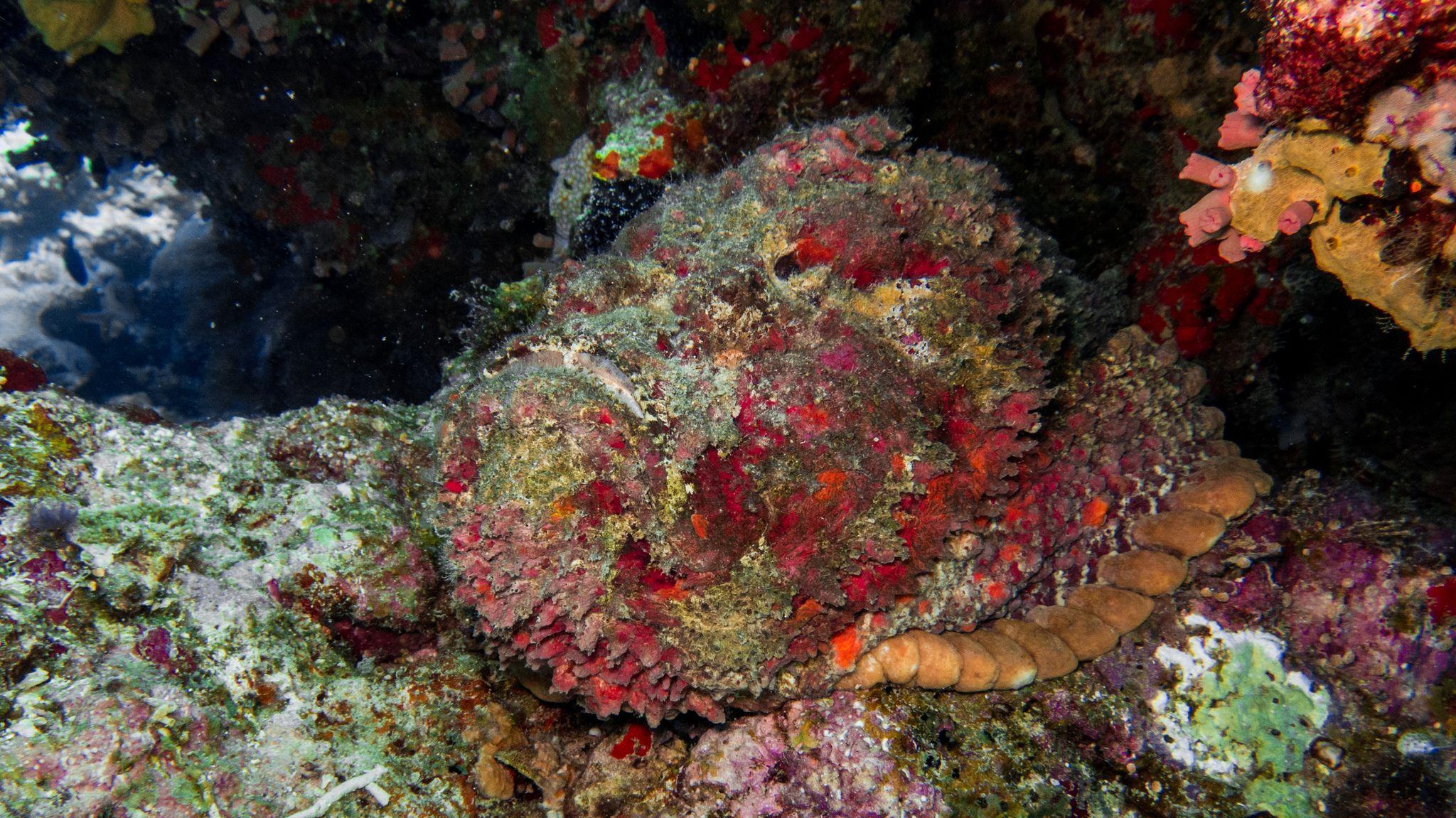
A reef stonefish (Synanceia verrucosa), one species of the stonefish genus, resting on a reef off north-east Australia, photographed on 23 December 2017. This photograph is not from Amed, and the sources for Amed's sightings do not say which species of stonefish was seen. This page's frame crops the photograph.
Bildnachweis: João D'Andretta · CC BY 4.0 · Wikimedia Commons (from iNaturalist), cropped by this page