Wobbegong (assorted)
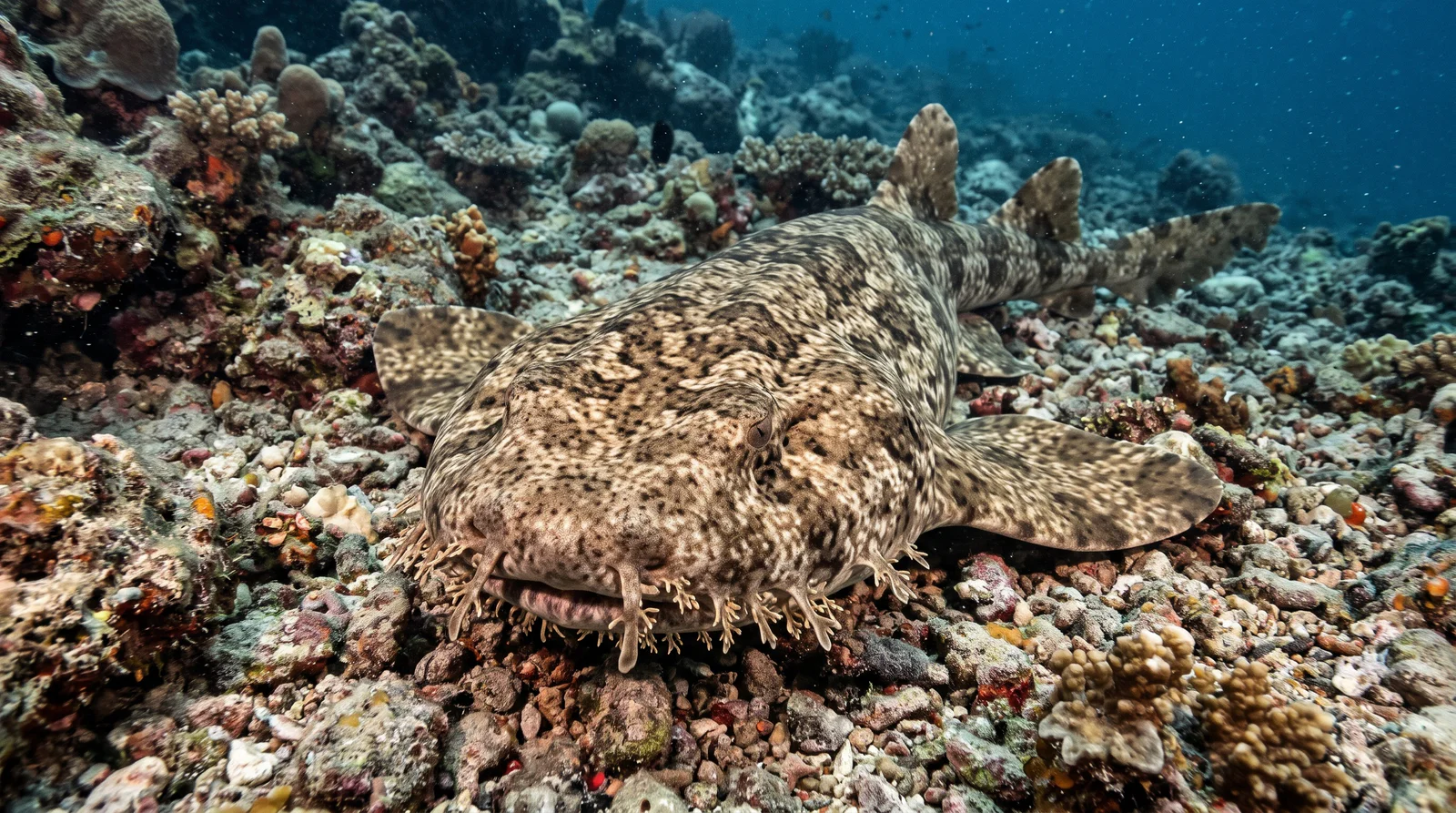 KI-generiert
Bildnachweis: AI-generated illustration · Diveity
Orectolobidae spp.
Über Wobbegong (assorted).
Wikipedia gives wobbegong as the common name of the 12 species of carpet shark in the family Orectolobidae, which the World Register of Marine Species (WoRMS) lists as an accepted family. This group entry covers sightings where the species was not recorded.
Wikipedia says their bold markings resemble a carpet, and that small, weed-like dermal lobes around the jaw improve the camouflage. Most species reach a maximum length of 1.25 m; the largest, the spotted and banded wobbegongs, reach about 3 m.
A conservation status is not given here, because this entry covers a whole group.
Lebensraum.
Wikipedia says wobbegongs live in shallow temperate and tropical waters of the western Pacific Ocean and eastern Indian Ocean, chiefly around Australia and Indonesia.
Where Divers Find Them
At Nusa Penida, Bali, Bali Aqua Penida names wobbegongs at Blue Corner and Crystal Bay, Bali Fun Diving names wobbegong sharks at Blue Corner, and Emperor Divers says wobbegong sharks are commonly spotted in the gullies and swim-throughs of Manta Bay. None of these says which species.
Verhalten.
Wikipedia calls wobbegongs bottom-dwelling sharks that spend much of their time resting on the sea floor. They are ambush predators that use their camouflage to catch smaller fish, and their diet consists of bony fish, cephalopods and chondrichthyans.
Underwater Encounter Behavior
The sources cited here do not describe how wobbegongs react to divers.
Wo man es sehen kann.
Nachweise aus allen Reisezielen · 10 Tauchplätze
Das allgemeine Verbreitungsgebiet ist kein Nachweis für das Vorkommen an einem bestimmten Tauchplatz.
Batu Jeruk
Triton Bay
Dokumentiertes Vorkommen am Tauchplatz
Saison noch nicht dokumentiert
Quelle geprüft am 2026-11-18 · Quelle: Bluewater Dive Travel · Beobachtungsdatum nicht dokumentiert
Blue Corner
Nusa Penida
Dokumentiertes Vorkommen am Tauchplatz
Saison noch nicht dokumentiert
Quelle geprüft am 2026-11-06 · Quellen: Bali Aqua Penida und Bali Fun Diving · Beobachtungsdatum nicht dokumentiert
Bo's Rainbow
Triton Bay
Dokumentiertes Vorkommen am Tauchplatz
Saison noch nicht dokumentiert
Quelle geprüft am 2026-11-18 · Quellen: Bluewater Dive Travel und Dive The World · Beobachtungsdatum nicht dokumentiert
Christmas Rock
Triton Bay
Dokumentiertes Vorkommen am Tauchplatz
Saison noch nicht dokumentiert
Quelle geprüft am 2026-11-18 · Quelle: DivePhotoGuide · Beobachtungsdatum nicht dokumentiert
Crystal Bay
Nusa Penida
Dokumentiertes Vorkommen am Tauchplatz
Saison noch nicht dokumentiert
Quelle geprüft am 2026-11-06 · Quelle: Bali Aqua Penida · Beobachtungsdatum nicht dokumentiert
Ferry Channel
Padang Bai
Dokumentiertes Vorkommen am Tauchplatz
Saison noch nicht dokumentiert
Quelle geprüft am 2026-11-11 · Quelle: Geko Dive (Cedric Saveuse, reader comment on Divezone, 2012) · Beobachtungsdatum nicht dokumentiert
Gili Mimpang
Padang Bai
Dokumentiertes Vorkommen am Tauchplatz
Saison noch nicht dokumentiert
Quelle geprüft am 2026-11-11 · Quelle: Divezone · Beobachtungsdatum nicht dokumentiert
Little Komodo
Triton Bay
Dokumentiertes Vorkommen am Tauchplatz
Saison noch nicht dokumentiert
Quelle geprüft am 2026-11-18 · Quellen: DivePhotoGuide und Triton Bay Divers · Beobachtungsdatum nicht dokumentiert
Manta Bay
Nusa Penida
Dokumentiertes Vorkommen am Tauchplatz
Saison noch nicht dokumentiert
Quelle geprüft am 2026-11-06 · Quelle: Emperor Divers · Beobachtungsdatum nicht dokumentiert
Tanjung Sari
Padang Bai
Dokumentiertes Vorkommen am Tauchplatz
Saison noch nicht dokumentiert
Quelle geprüft am 2026-11-11 · Quellen: Geko Dive (Cedric Saveuse, reader comment on Divezone, 2012) und Waterworx · Beobachtungsdatum nicht dokumentiert
Galerie.
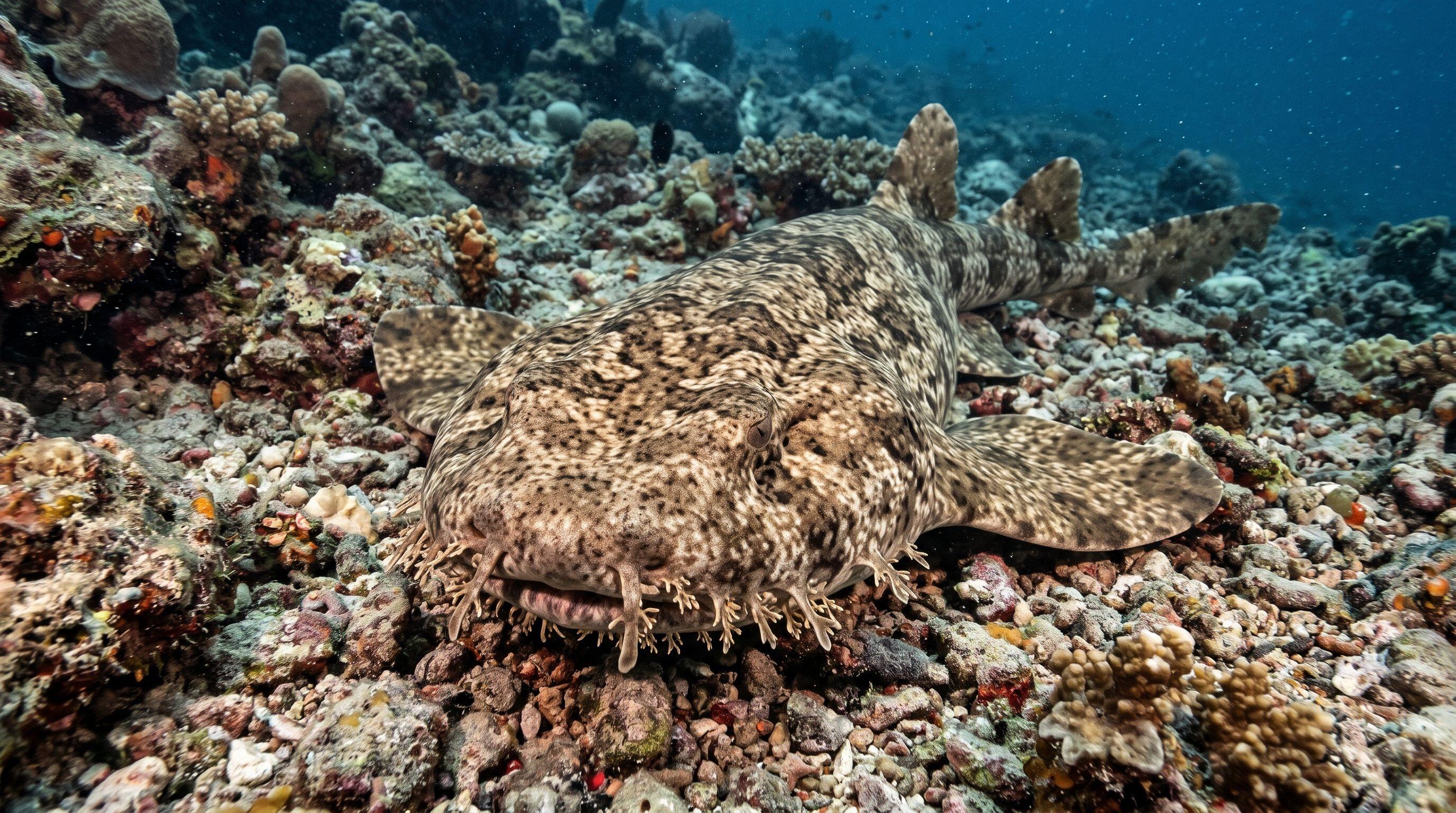 KI-generiert
Bildnachweis: AI-generated illustration · Diveity