Wall · Swim-through · Cavern
Great Blue Hole
Über diesen Tauchplatz
The Great Blue Hole, Lighthouse Reef Atoll
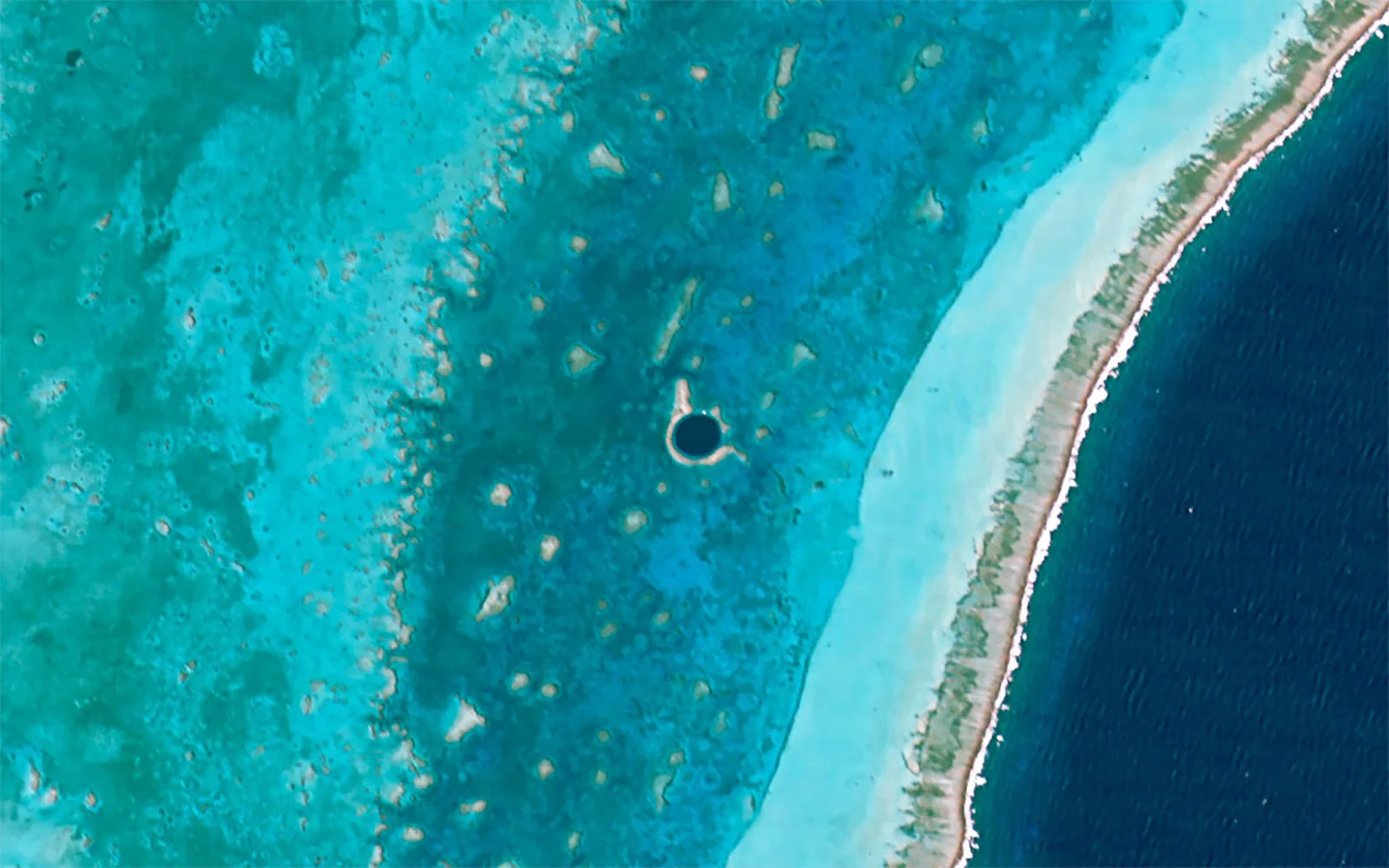
Bereiten Sie sich auf ein unvergleichliches Tauchabenteuer im Great Blue Hole vor, einem weltbekannten marinen Sinkloch, das sich nahe dem Zentrum des Lighthouse Reef Atolls befindet, etwa 70 m (43 mi) vor der Küste von Belize. Dieser ikonische Tauchplatz, Teil des UNESCO-Weltkulturerbes Belize Barrier Reef Reserve System, bietet ein wahrhaft einzigartiges geologisches Erlebnis, das Taucher aus aller Welt anzieht.
Übersicht des Tauchplatzes
Das Great Blue Hole ist ein nahezu perfekt kreisförmiges Karst-Sinkloch mit einem beeindruckenden Durchmesser von 318 m (1.043 ft) und einer Gesamttiefe von 124-125 m (407-410 ft). Seine Entstehung geht auf mehrere Phasen der Quartären Vereisung zurück, als dieses Gebiet ein freiliegendes Kalksteinhöhlensystem war. Als der globale Meeresspiegel anstieg, wurden die Höhlen überflutet und ihre Decken stürzten ein, wodurch die dramatische vertikale Kaverne entstand, die wir heute erkunden.
Freizeittauchgänge steigen typischerweise bis zu einer maximalen Tiefe von 40 m (130 ft) ab, wo Taucher die wichtigsten geologischen Wunder finden. Hier hängen massive alte Stalaktiten, einige erreichen eine Länge von 9 bis 12 m (30 bis 40 ft), von überhängenden Felsvorsprüngen und liefern greifbare Beweise für die prähistorische Vergangenheit des Lochs als trockene Höhle. Das Wasser im Loch ist im Allgemeinen ruhig mit milden Strömungen, was einen ruhigen Abstieg in dieses geologische Wunder ermöglicht.
Meeresleben und Bedingungen
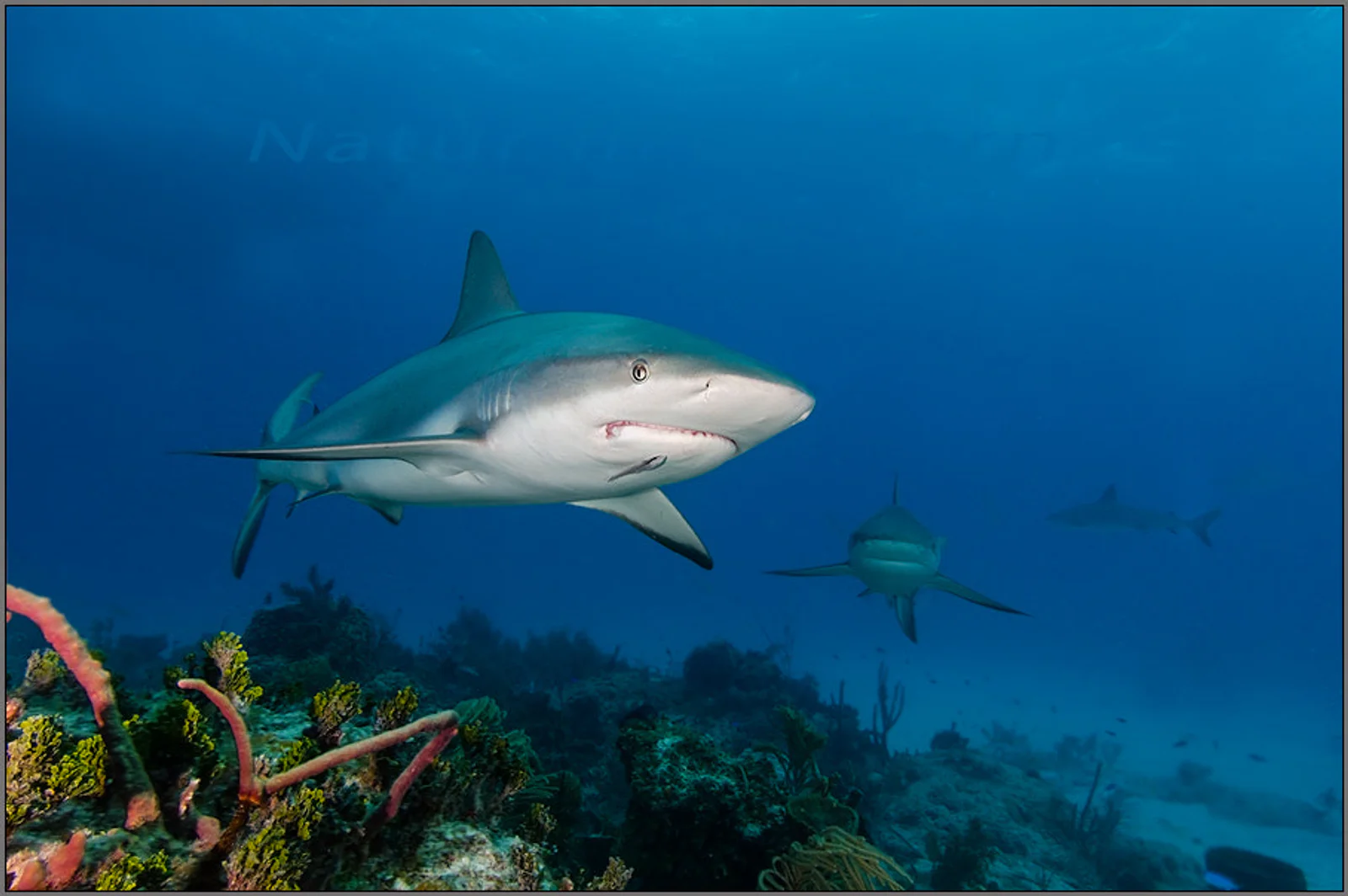
Während die tieferen Abschnitte des Great Blue Hole hauptsächlich ein geologischer Tauchgang sind, wimmeln die flacheren Bereiche und der Rand des Lochs von lebhaftem Meeresleben. Taucher können in den tieferen, dunkleren Abschnitten Karibische Riffhaie (Carcharhinus perezi) und Ammenhaie (Ginglymostoma cirratum) antreffen. Gelegentliche Sichtungen von Schwarzspitzenhaien, Bullenhaien und sogar Hammerhaien wurden ebenfalls gemeldet, insbesondere in den flacheren Bereichen. Riesenzackenbarsche sind ebenfalls dafür bekannt, das Gebiet zu bewohnen.
Am flachen Rand werden Taucher von einer gesunden Korallengemeinschaft und einer farbenfrohen Vielfalt tropischer Fische begrüßt, darunter Zackenbarsche, Eichhornfische, Kaiserfische, Falterfische und Mitternachtspapageifische. Sie könnten auch Seeanemonen, Pederson-Putzergarnelen und Neon-Grundeln entdecken.
Die Wassertemperatur an der Oberfläche liegt typischerweise zwischen 26-29°C (79-84°F). Beim Abstieg kann eine spürbare Thermokline um 27-30 m (90-100 ft) die Temperatur auf etwa 22°C (72°F) senken, wobei sie sich bei der maximalen Freizeittauchtiefe bei etwa 24-25°C (76°F) stabilisiert. Die Sicht ist oft außergewöhnlich und erreicht manchmal 60 m (200 ft) über der Schwefelwasserstoffschicht.
Ein wesentliches Merkmal des Great Blue Hole ist die Schwefelwasserstoffschicht, die sich in etwa 91 m (300 ft) Tiefe befindet. Unterhalb dieser Tiefe wird das Wasser dunkel, anoxisch und frei von Meeresleben.
Zertifizierung und Gefahren
Aufgrund der erheblichen Tiefe und der Überkopfumgebung ist eine Advanced Open Water Zertifizierung erforderlich, um im Great Blue Hole zu tauchen. Dies ist ein anspruchsvoller Tauchplatz, der eine ausgezeichnete Tarierungskontrolle und sorgfältiges Luftmanagement erfordert. Taucher müssen sich des Potenzials für Dekompressionspflicht und der Überkopfumgebung bewusst sein, die durch die höhlenartigen Formationen gegeben ist. Wir empfehlen, dass Taucher mit tiefen Tauchprofilen vertraut sind und Erfahrung unter ähnlichen Bedingungen haben.
Warum im Great Blue Hole tauchen?
Das Great Blue Hole ist mehr als nur ein Tauchgang; es ist eine Reise in die geologische Vergangenheit der Erde. Berühmt gemacht von Jacques Cousteau, der es zu seinen fünf besten Tauchplätzen weltweit zählte, fasziniert es weiterhin diejenigen, die sich in seine Tiefen wagen. Es bietet eine einzigartige Gelegenheit, kolossale Stalaktiten zu sehen, die vor Tausenden von Jahren entstanden sind, als dieses majestätische Sinkloch eine trockene Höhle war, und schafft ein jenseitiges Erlebnis wie kein anderes.
Aktuelle Bedingungen
Typische Strömungsstärke an diesem Tauchplatz
Mild
Light current that is easy to swim against. Comfortable for most certified divers.
Stärkenskala
Keine
Mild
Mäßig
Stark
Beste Reisezeit
Monatliche Bedingungen und saisonale Höhepunkte — tippe auf einen Monat
Außerhalb der Haupttauchsaison. Die Bedingungen können weniger vorhersehbar sein.
Meereslebewesen
2 Arten an diesem Tauchplatz registriert
Gefahren & Sicherheit
Beachten Sie diese potenziellen Gefahren an diesem Tauchplatz
Depth
HighRecreational profile bottoms out near 40 m with stalactite overhangs from 30 m
Decompression obligation
HighNitrogen narcosis common at the stalactite ledge — short bottom times only
Overhead environment
MediumAngled overhang at ~35 m is briefly enclosed — maintain light contact with the wall
Zertifizierung erforderlich
Ein Minimum von Advanced Open Water Zertifizierung ist erforderlich, um diesen Tauchplatz zu betauchen.
360°-Unterwasseransicht
Immersive Panoramaansicht dieses Tauchplatzes
360°-Panorama demnächst verfügbar
Immersive Unterwasseransichten werden verfügbar sein, sobald Panoramaaufnahmen hochgeladen wurden
Bewertungen
--
0 reviews
Noch keine Bewertungen. Seien Sie der Erste, der Ihre Erfahrung teilt!
Tiefenprofil
Vertikale Reichweite an diesem Tauchplatz
Minimale Tiefe
30 m
Flachster Punkt
Durchschnittliche Tiefe
38 m
Typische Tauchtiefe
Maximale Tiefe
40 m
Tiefster Punkt
Dienste in der Nähe
Alle Tauchshops ansehen →Bleiben Sie auf dem Laufenden
Erhalten Sie Updates zu Tauchplätzen und Tipps per E-Mail.
Hast du Great Blue Hole betaucht? Lass es zählen.
Füge ihn deinem Logbuch hinzu, teile deine Sichtungen und hilf 0 Tauchern, ihren nächsten Tauchgang zu planen.
Aktuelle Community-Aktivität
War das hilfreich?