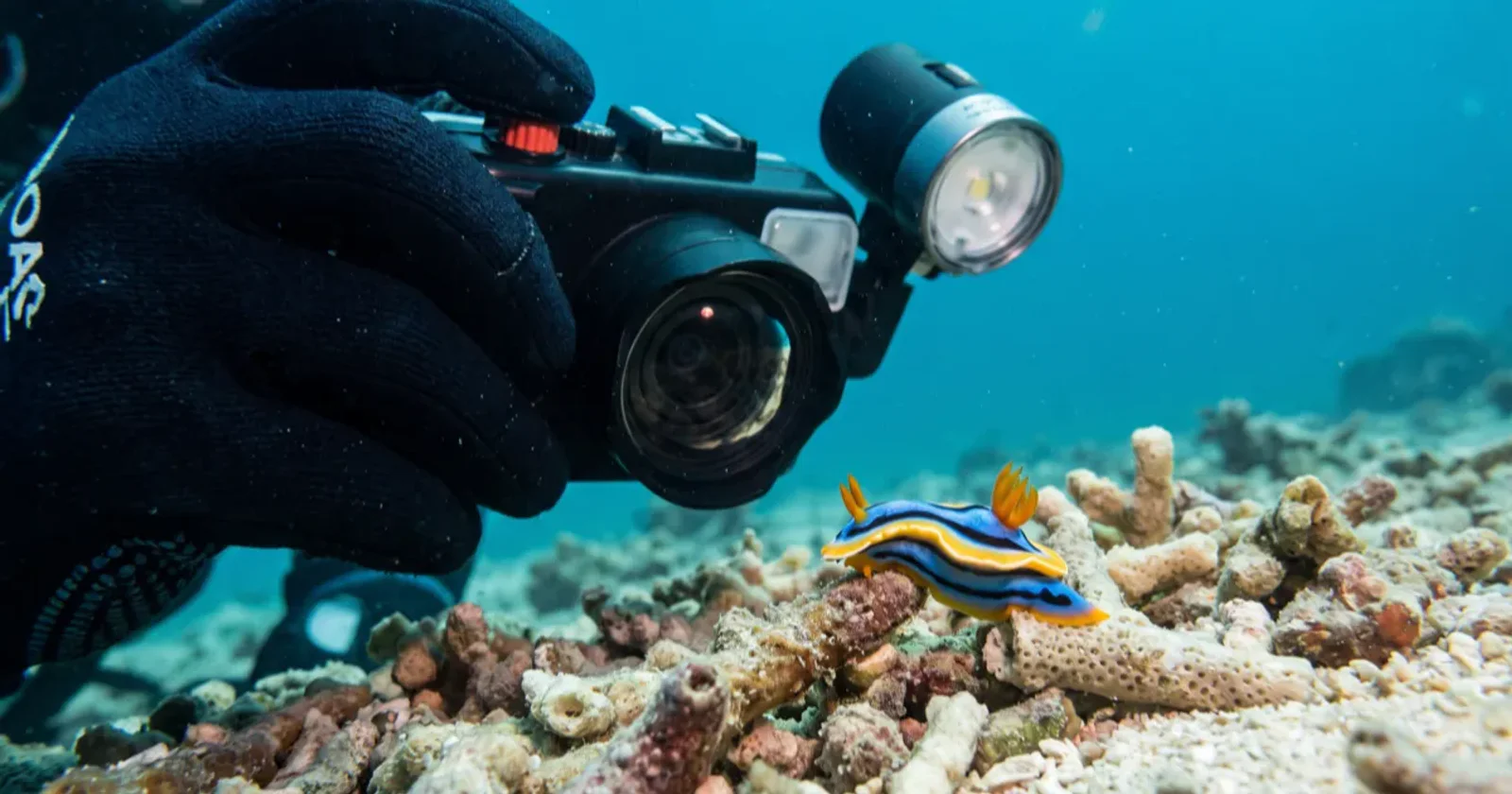
Most marine life ID apps work as post-dive reference tools, not live underwater lookups. Very few phones survive a dive without a housing, so the useful ones let you photograph a sighting, identify it topside, and log it against the dive where you saw it. That last part, tying an ID to a specific dive rather than a loose photo library, is where most apps fall short.
Do marine life ID apps work underwater, or only after the dive?
Almost entirely after the dive, unless you're carrying a housed phone or a dedicated waterproof camera. Most divers photograph an unfamiliar animal, surface, and run the ID once they're dry. A handful of apps support offline species databases you could technically consult mid-dive on a housed device, but in practice this is rare. Plan on identifying from memory and photos, not live in the water.
Can an app cross-reference sightings with your dive log?
This is where it gets useful, and where the apps split into two camps. Some are pure identification tools: point a photo at the database, get a species match, done. Others link that match back into a dive log entry, so your sighting history builds alongside your dive count instead of living in a separate app. If you already keep a digital log, an ID tool that writes straight into it saves you from re-entering the same sighting twice.
The best apps for marine life ID, compared
App | Offline capability | Dive-log integration | Community contribution | Cost |
|---|---|---|---|---|
Diveity | Reference database, sightings sync when back online | Built-in — sightings log directly to your dive record | Yes, sightings feed a shared marine species atlas | Free |
iNaturalist | Partial offline browsing | None (general nature app, not dive-specific) | Yes, large general naturalist community | Free |
Standalone fish ID guides | Full offline database on many | None | No, single-user reference only | Often paid |
Diveity's marine species pages link straight from a logged dive, so an ID becomes part of your permanent record rather than a one-off lookup. iNaturalist has the advantage of a much larger cross-species community and works well if marine life is only part of what you photograph. A dedicated offline fish guide app is still the most reliable option if you're somewhere with no signal at all and want a full regional database on the phone itself, though most don't talk to a dive log.
Can I contribute my own sightings to a shared marine atlas?
On Diveity, yes. Logged sightings feed into the platform's marine species atlas, so a rare encounter you log helps other divers know what's realistic to expect at a given site. Standalone fish ID guides generally don't support this; they're built for individual reference, not a shared record. iNaturalist does support community contribution, though it's built around all of nature, not dive sites specifically.
FAQ
What's the best free option? Diveity and iNaturalist are both free. Which one fits depends on whether you want dive-log integration (Diveity) or the broadest possible species community (iNaturalist).
Does GPS tagging work underwater? No. GPS signal doesn't penetrate water, so any location tag on an underwater photo comes from the boat's or dive site's known coordinates, not a live fix taken during the dive.
How should I photograph for accurate ID? Get close, keep the animal in focus, and try for an angle that shows any distinguishing markings, not just a silhouette. A blurry mid-distance shot is the single biggest reason an ID comes back wrong or inconclusive.
Do these apps replace a physical fish ID book? For most divers, yes, especially once an app has offline capability or a large enough database for the region you're diving. A physical book still has an edge in a handful of specialist niches with thin digital coverage, like certain nudibranch families.
Log your sightings on Diveity
Diveity's marine species atlas links directly to your dive log, so an identified sighting becomes part of the dive record instead of a separate note. Browse the marine life directory to see what's already documented. Diver accounts are free.