 Advanced
Cave · Reef · Wall · Slope
Gili Biaha
Padang Bai
Última actualización:
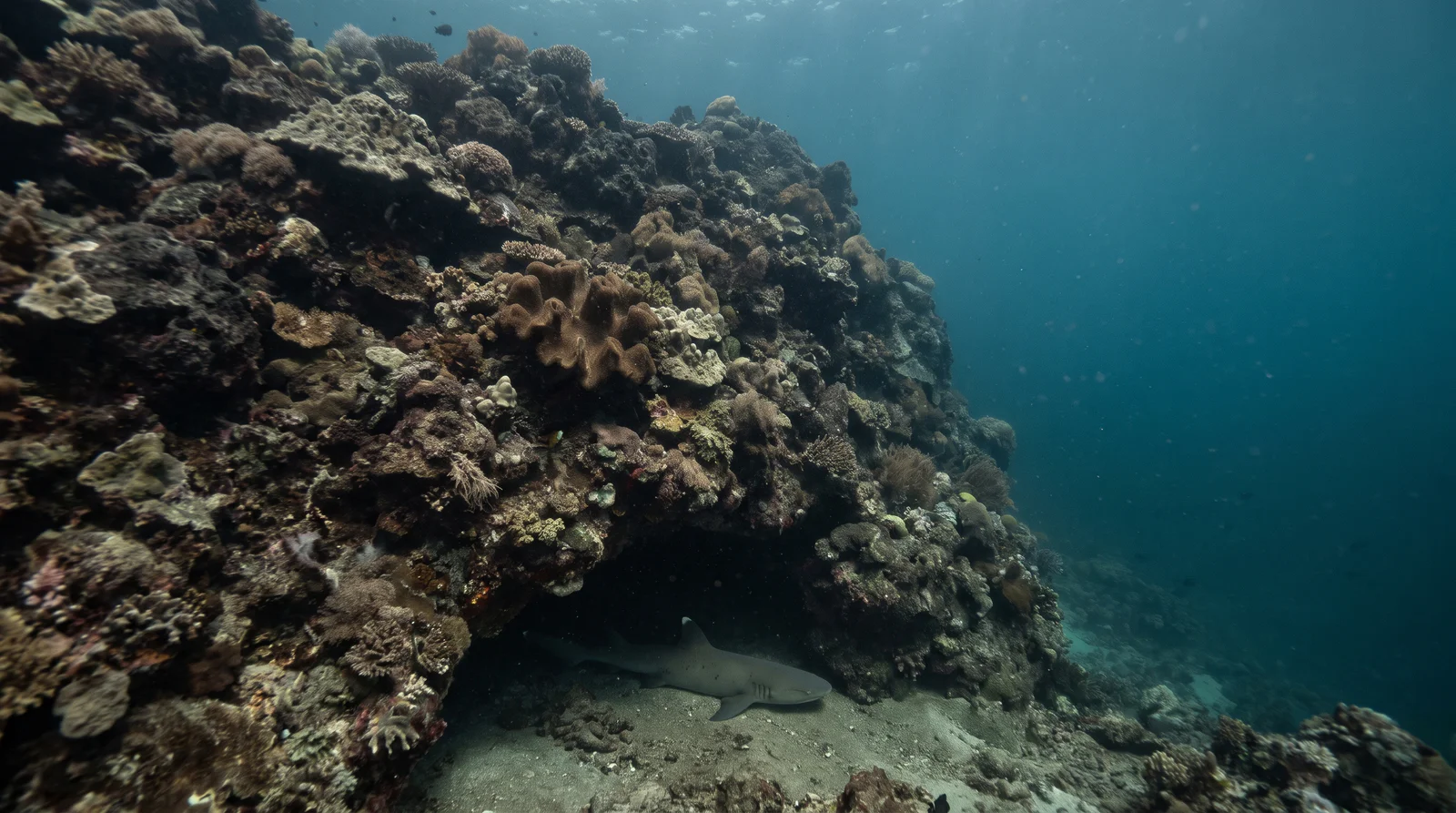
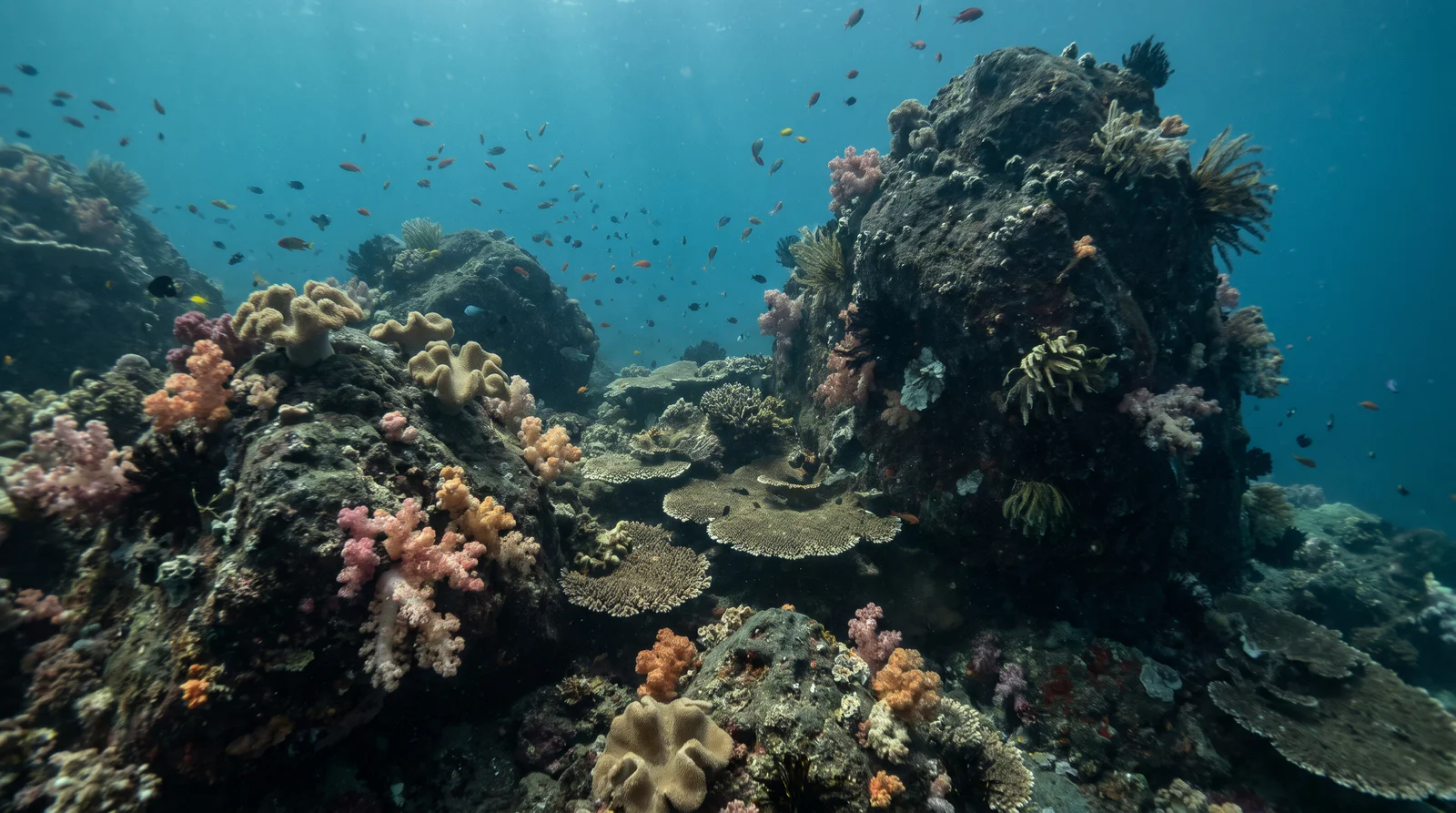
AI-generated illustration of a dark coral-covered wall with a low cave where a whitetip reef shark rests. It is not a photograph of Gili Biaha and is not evidence of any animal or condition at the site.
Crédito de la imagen: AI-generated illustration · Generated for Diveity; no third-party rights · Higgsfield nano_banana_pro image generationDe un vistazo
Dificultad
Avanzado
Profundidad
40 m
Acceso
En barco
Visibilidad
25 mUna fuente
Corriente
Fuerte
Temperatura
26 °C30 °CUna fuente
Aún no documentado:
- Certificación requerida
- Profundidad mínima
- Inicio de la mejor temporada
- Fin de la mejor temporada
- Visibilidad máxima
- Zona
¿Conoces alguno? Selecciona uno para contárnoslo.
Acerca de este sitio de buceo
Overview
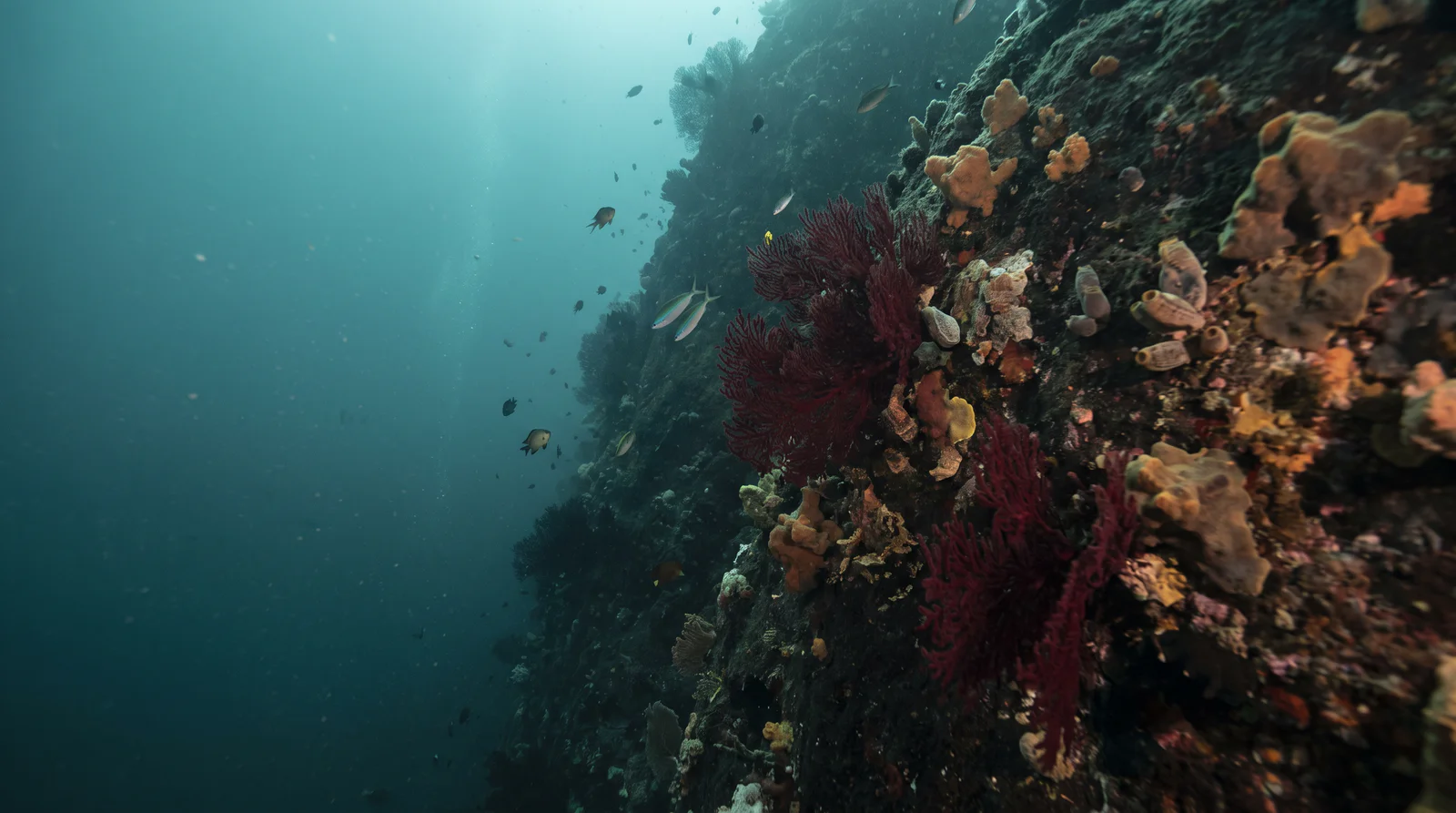
Gili Biaha is a crescent-shaped islet off east Bali with a shark cave at 12 m; advanced divers go by boat to about 40 m, where strong currents are common. The Padang Bai dive centre Waterworx places it at the eastern end of Amuk Bay, 30 minutes away by boat, and describes a U shape with the open side facing the open ocean. On PADI's site, in a description from the dive centre AquaMarine Diving - Bali, it is the crescent-shaped Biaha, and just about the entire island is surrounded by a rich and dense coral reef, part rugged black wall and part slope. Divezone calls the whitetip reef sharks that rest in its cave the site's best-known attraction.
Location
This record's map point, -8.50922, 115.61497, is taken from PADI's page. It lies in the water just outside the OpenStreetMap outline of the island, about 80 metres from the point OpenStreetMap gives for the island. Divezone now shows the same point, taken from PADI's listing, and calls it an approximate reference for the island, not the cave entrance, a boat drop or a surveyed reef boundary. Divezone files the site under Candidasa and describes a guided boat dive from Candidasa or Padang Bai, and the PADI Blog counts a 15-minute boat ride from Candidasa. Blue Season Bali names Gili Mimpang, Gili Tepekong and Gili Biaha as the three small islands of Amuk Bay, near Padang Bai and Candidasa, and says Gili Biaha is about four kilometres from Gili Tepekong.
How the site is dived
Waterworx says the boat drops divers in the centre of the U. On the way down, cliff terraces overgrown with hard and soft corals, fans and sponges level out at around 40 metres into the sea floor. At 12 metres is the entrance to the Shark Cave, a hole of about 5 by 5 metres that reaches back 18 metres into the island and then opens into a domed cavern. AquaMarine, on PADI's site, divides the diving between the slightly more protected south-west end, almost inside the crescent, and the more turbulent conditions on the north side. Divezone says the names Shark Cave and Biaha Slope describe parts of the island rather than two interchangeable entry points, that boat drops change with conditions, and that a wall dive here can be rewarding without entering the cave.
Depth
PADI gives a maximum depth of 40 metres, and Waterworx says the terraces level out at around 40 metres, so this record uses 40 metres as the maximum. Divezone gives the site's depths as about 10 to 40 metres and says they describe terrain, so the agreed limit of a dive may be shallower; the 10 to 25 metres in its rating box is the figure it shows for nearly every site in the area, so it is not read as a statement about Gili Biaha. Waterworx puts the cave entrance at 12 metres, Divezone says local operators place it around 10 to 12 metres, and the PADI Blog describes a shallow cavern 10 metres below the surface. These are the depths of a feature, not a range for the site, so the minimum depth stays unknown.
Conditions
Blue Season Bali says strong currents, both up and down, are common, and that few operators dive the site because its conditions vary. By Waterworx's account the current here ranges from mild to very strong, and is very strong at full and new moon. It says the eastern and western corners of the island are more exposed to currents, and that the site cannot be dived on days with big ocean swell. Divezone's rating box gives a strong current, and its page names current and surge and says that current and swell decide the sector dived, the drop and the pickup. Waterworx states 25 metres and more for visibility, which this record uses as its lower bound on that one source's word; Divezone's rating box reads 30 metres and more. Blue Season Bali's card for the site carries an unlabelled 15 to 30 metres, the same figure as on its cards for Amuk Bay and the other two islands, so it is read neither as a depth nor as a visibility for Gili Biaha. Blue Season Bali's figure for the water is 26 to 30 °C.
Who it suits
Waterworx keeps the site for experienced divers, pointing to the depth and to currents that can turn strong at full and dark moon. AquaMarine, on PADI's site, finds it best suited to advanced divers, and Blue Season Bali's level for it is skilled. Divezone says the combination of current, swell and an exposed pickup makes it a site for experienced divers, and that a certification card alone does not establish suitability. It also calls Gili Biaha a cave diving spot and tells divers to make sure they have all required certifications, without naming one, so no required certification is set here. Entering the cave, in Divezone's words, is a separate decision: its shallow depth does not remove the overhead or surge hazards, and suitability, training, equipment and the day's conditions need their own assessment.
Marine life
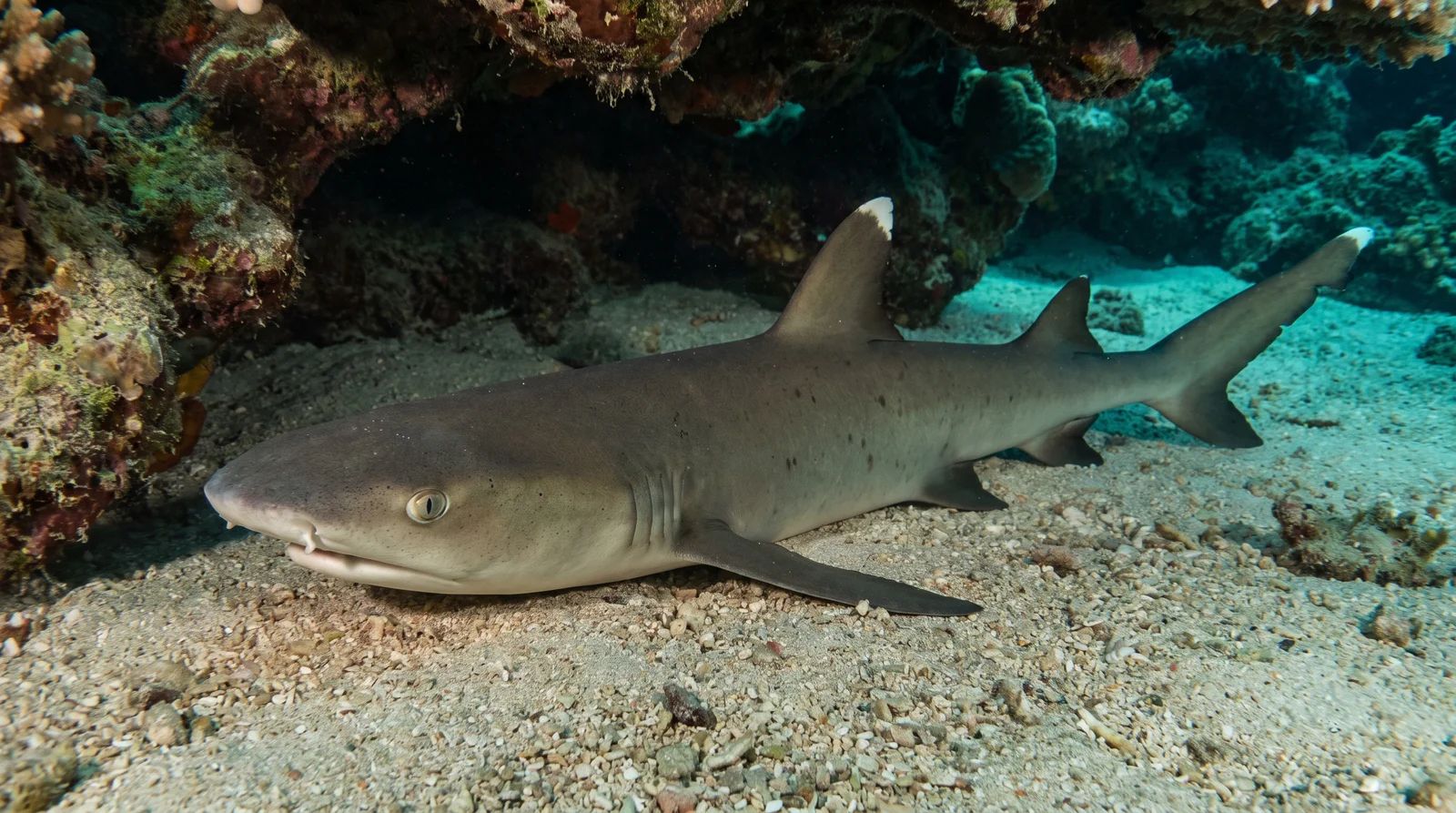
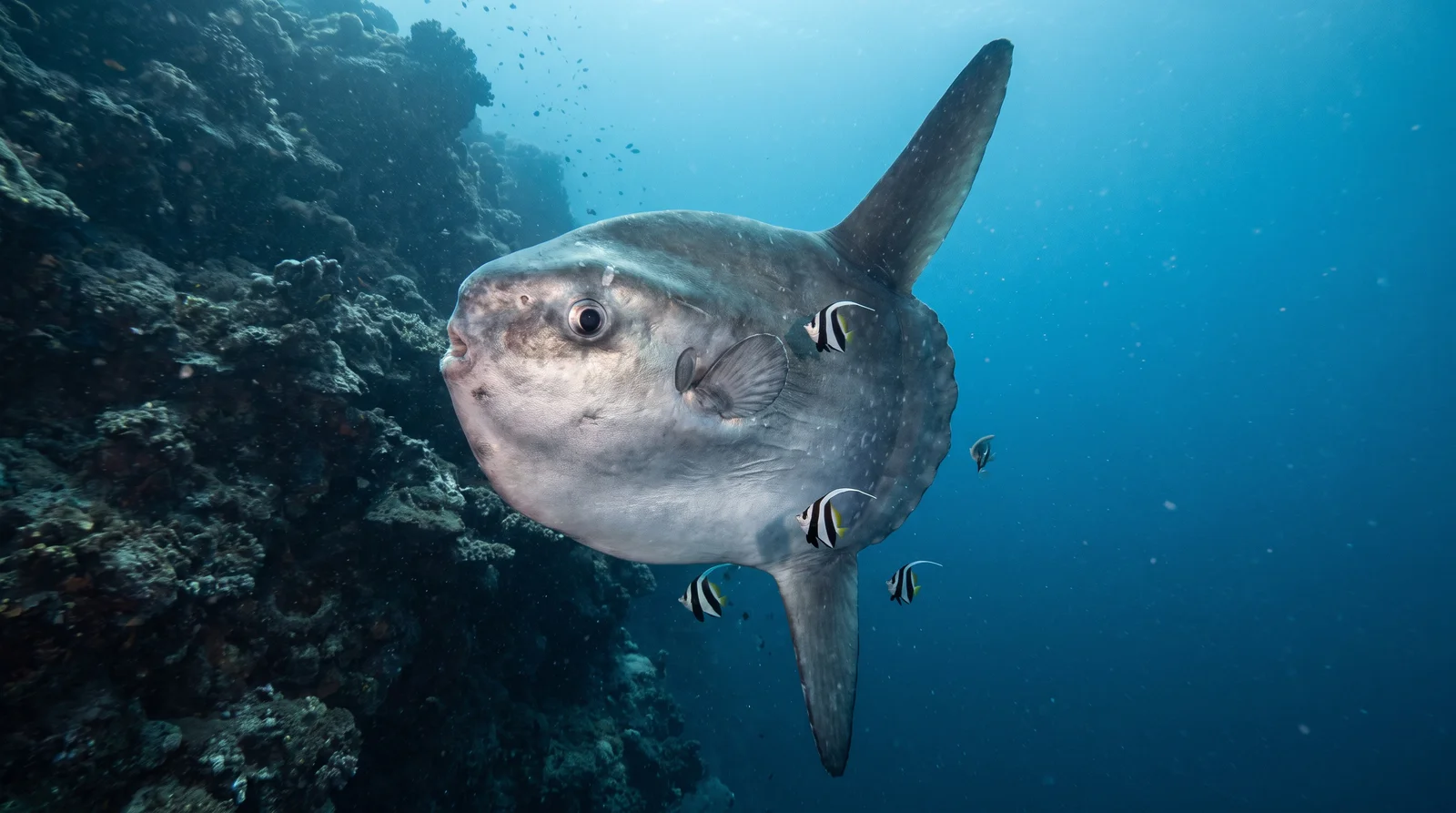
Waterworx says whitetip reef sharks hide out in the cave, resting during the day, that crevices in its walls shelter big rock lobsters, and that the exposed corners give a high chance of pelagic species approaching from the open ocean. It says Mola mola can be seen during the dry season, and its list for the site gives May to November; the PADI Blog says August to November. AquaMarine, on PADI's site, names sleeping whitetip reef sharks in the cave, leaf scorpionfish, cuttlefish, anglerfish and nudibranchs. Divezone credits AquaMarine with resting whitetip reef sharks at the cave and with frogfish, AquaMarine and Nico Dives Cool with leaf scorpionfish, Nico Dives Cool with lionfish, and Bottles Up Diving with moray eels and barracuda. Blue Season Bali names shrimp and crabs outside the cave, and the PADI Blog names patrolling reef sharks and gliding rays. All of this is what dive operators and the PADI Blog report, and none of it says how often any animal is seen.
Name
Waterworx heads its paragraph "Gili Biaha (Shark cave)", but Divezone says Shark Cave and Biaha Slope are names for parts of the island. Because the name may mean the cave dive only, this record carries no alias.
Sources and lineage
Waterworx, AquaMarine Diving - Bali (on PADI) and Blue Season Bali each describe the site in text of their own. Divezone's page, which it says it checked on 17 November 2026, credits AquaMarine, Nico Dives Cool, Bottles Up Diving and Bali Diving Co; those operators' own pages were not consulted for this record, and the material Divezone credits to AquaMarine comes from the same operator as PADI's text. The PADI Blog piece is Brooke McConnell's, dated 10 December 2019, and it names no source for what it says.
Peligros y seguridad
Ten en cuenta estos peligros potenciales en este sitio de buceo
Current
Gravedad: Aún no documentadoBlue Season Bali says strong currents, both up and down, are common. Waterworx says the current is very strong at full and new moon and that the eastern and western corners of the island are more exposed to currents. Divezone's rating box gives a strong current, and its page names current and surge. None of them puts a number on the current's speed.
Overhead environment
Gravedad: Aún no documentadoThe Shark Cave has an entrance at 12 metres and reaches back 18 metres into the island (Waterworx). Divezone calls Gili Biaha a cave diving spot, says the cave's shallow depth does not remove the overhead or surge hazards, and says that entering it needs its own assessment of suitability, training, equipment and the day's conditions.
Swell
Gravedad: Aún no documentadoWaterworx says it is not possible to dive the site on days with big ocean swell. Divezone says swell, with current, decides the sector dived, the drop and the pickup, and that a different site can be the better choice when the swell builds.
Fuentes
- Blue Season Bali
- Divezone
- PADI
- PADI Blog
- Waterworx
Reseñas
Aún no hay reseñas. ¡Sé el primero en compartir tu experiencia!
Vida marina
11 especies registradas en este sitio
Whitetip Reef Shark
Triaenodon obesus
Presencia documentada en el sitio
Fuente revisada el 2026-11-11 · Fuentes: Blue Season Bali, Divezone, PADI, PADI Blog y Waterworx · Fecha de observación no documentada
Ocean Sunfish (Mola mola)
Mola mola
Presencia documentada en el sitio
Fuente revisada el 2026-11-11 · Fuentes: PADI Blog y Waterworx · Fecha de observación no documentada
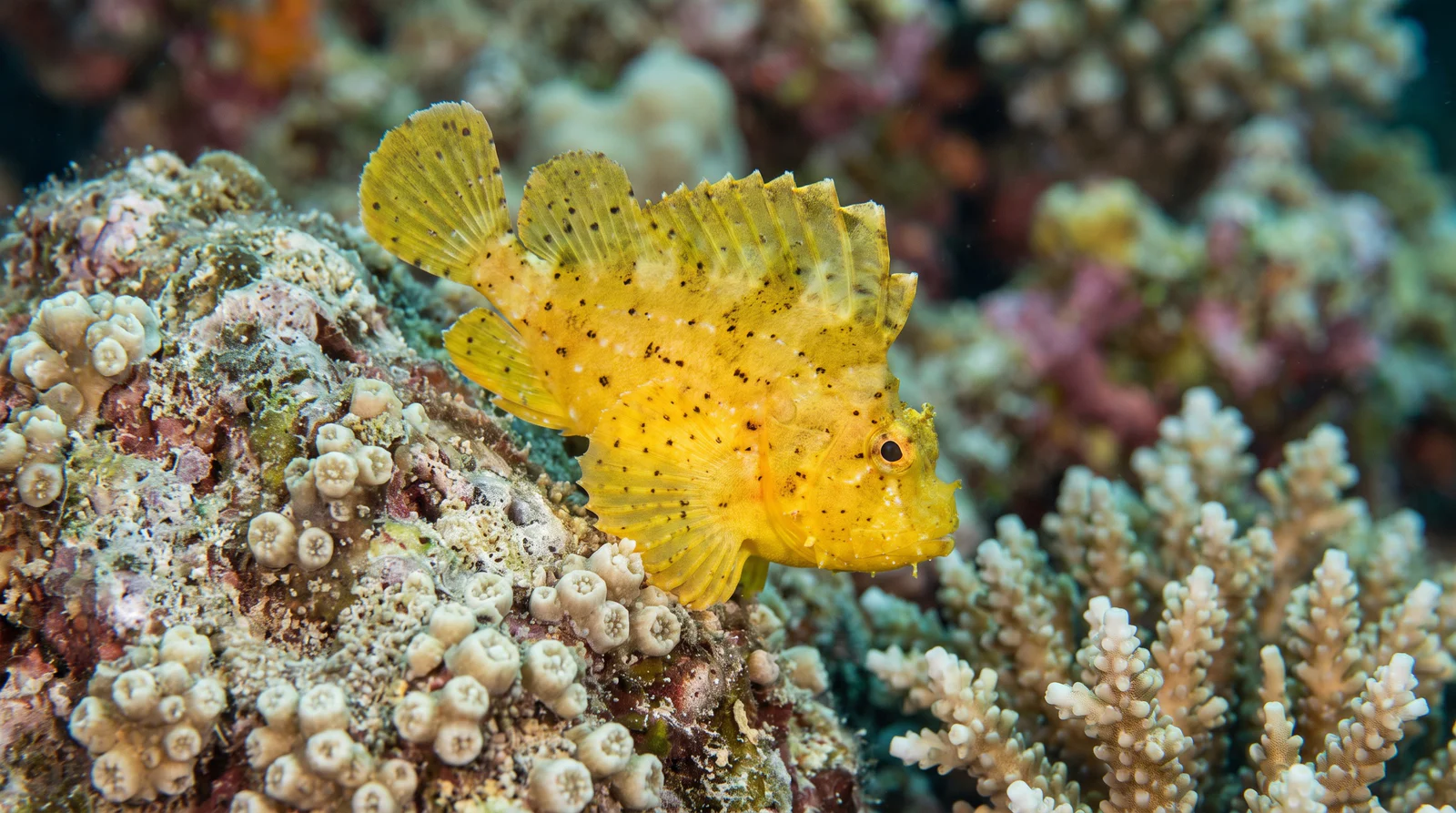
Leaf Scorpionfish
Taenianotus triacanthus
Presencia documentada en el sitio
Fuente revisada el 2026-11-11 · Fuente: PADI · Fecha de observación no documentada
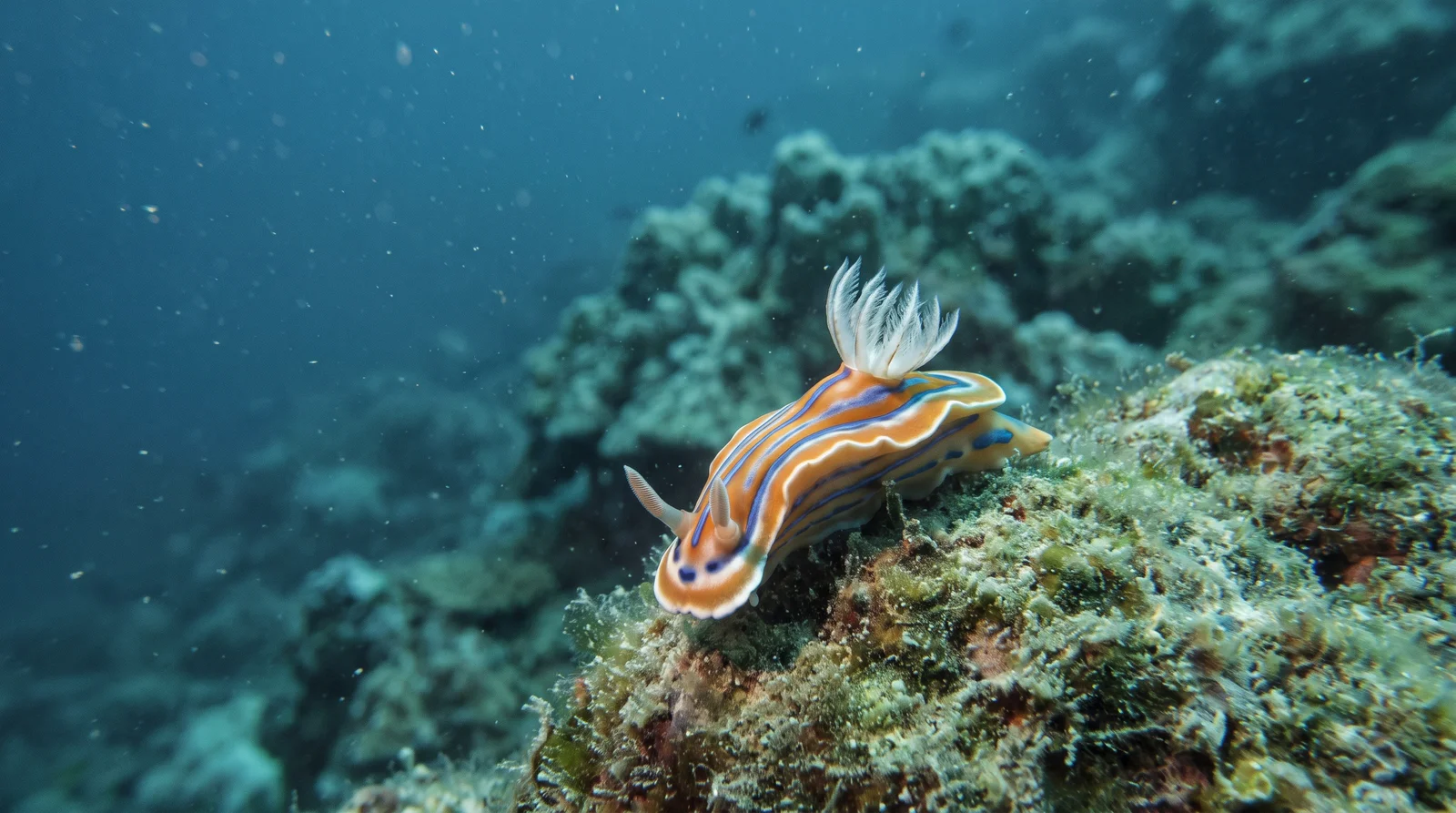
Nudibranch (assorted)
Nudibranchia spp.
Presencia documentada en el sitio
Fuente revisada el 2026-11-11 · Fuente: PADI · Fecha de observación no documentada
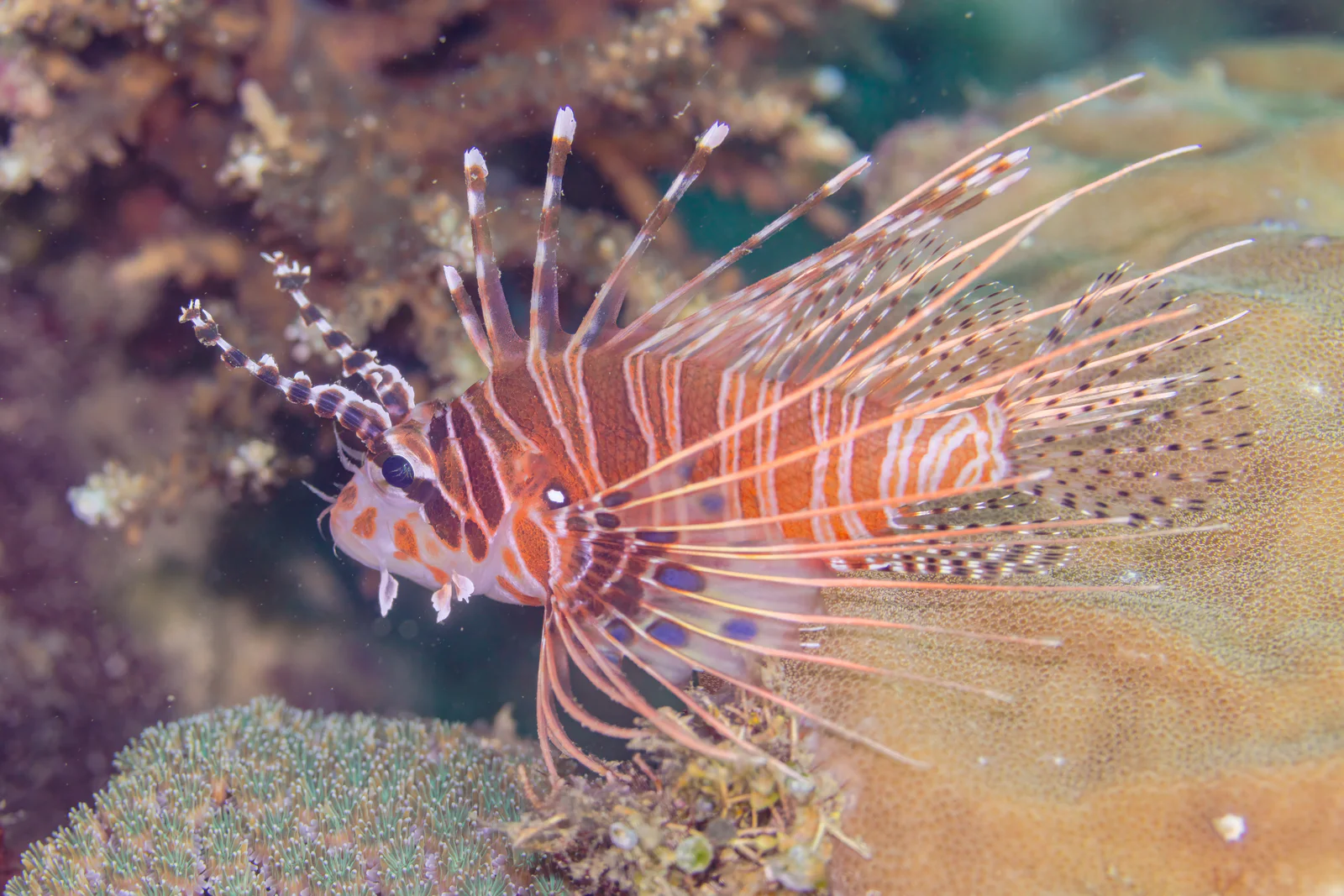
Lionfish (assorted)
Pteroinae spp.
Presencia documentada en el sitio
Fuente revisada el 2026-11-11 · Fuente: Divezone · Fecha de observación no documentada
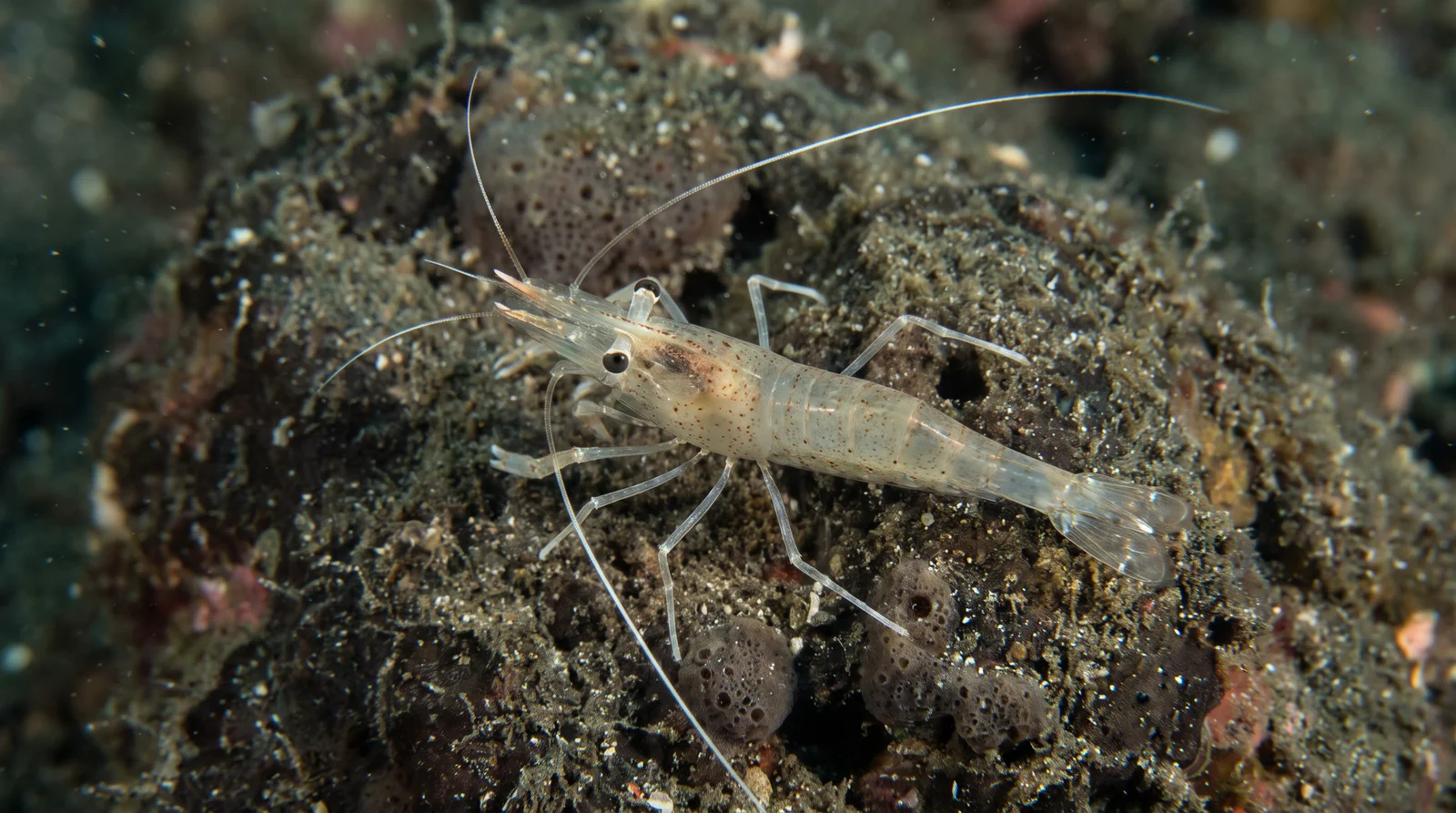
Shrimp (assorted)
Caridea and Dendrobranchiata spp. (shrimps)
Presencia documentada en el sitio
Fuente revisada el 2026-11-11 · Fuente: Blue Season Bali · Fecha de observación no documentada
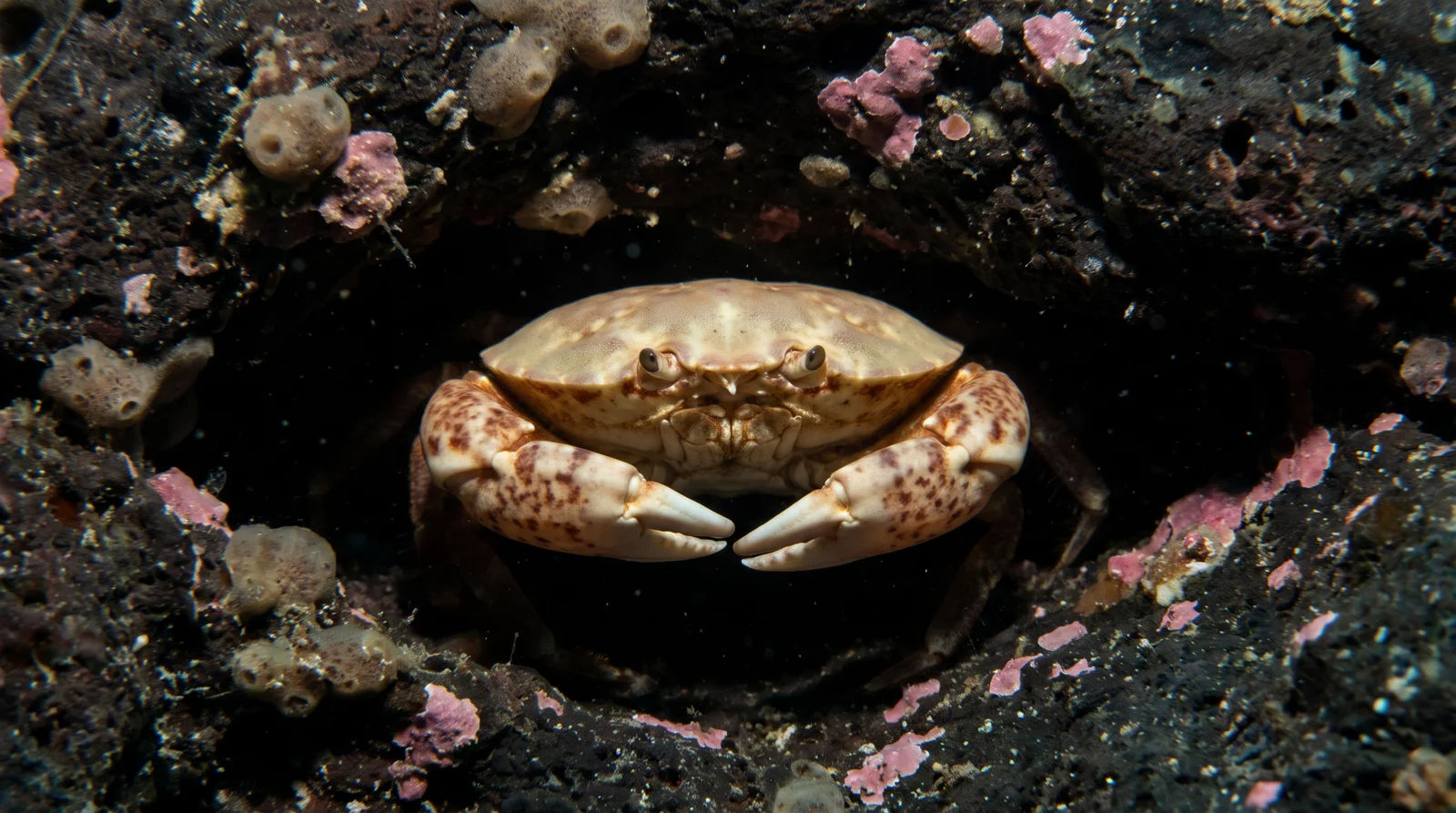
Crab (assorted)
Brachyura and Anomura spp. (crabs)
Presencia documentada en el sitio
Fuente revisada el 2026-11-11 · Fuente: Blue Season Bali · Fecha de observación no documentada
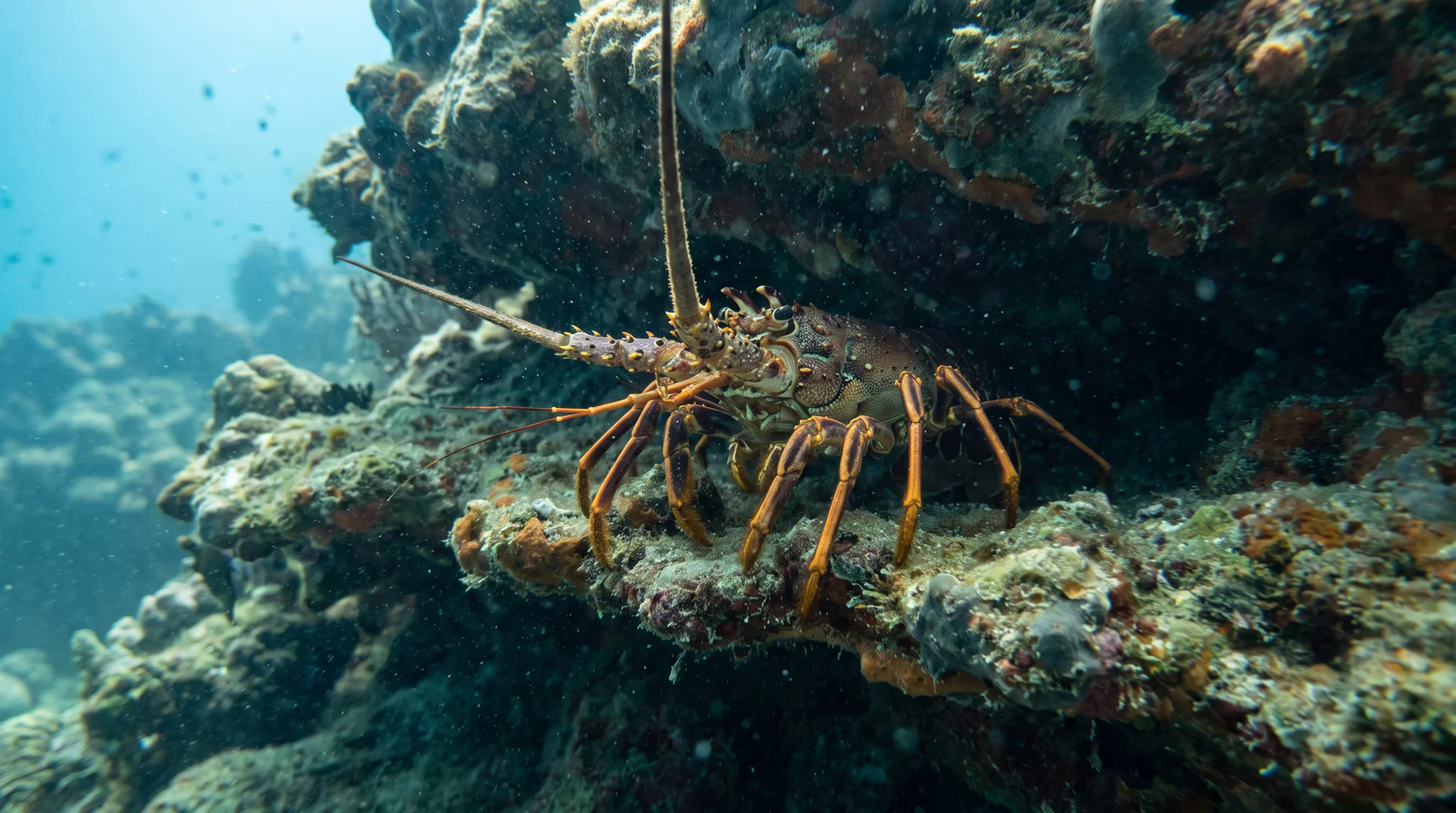
Lobster (assorted)
Palinuridae and Scyllaridae spp.
Presencia documentada en el sitio
Fuente revisada el 2026-11-11 · Fuentes: Divezone y Waterworx · Fecha de observación no documentada
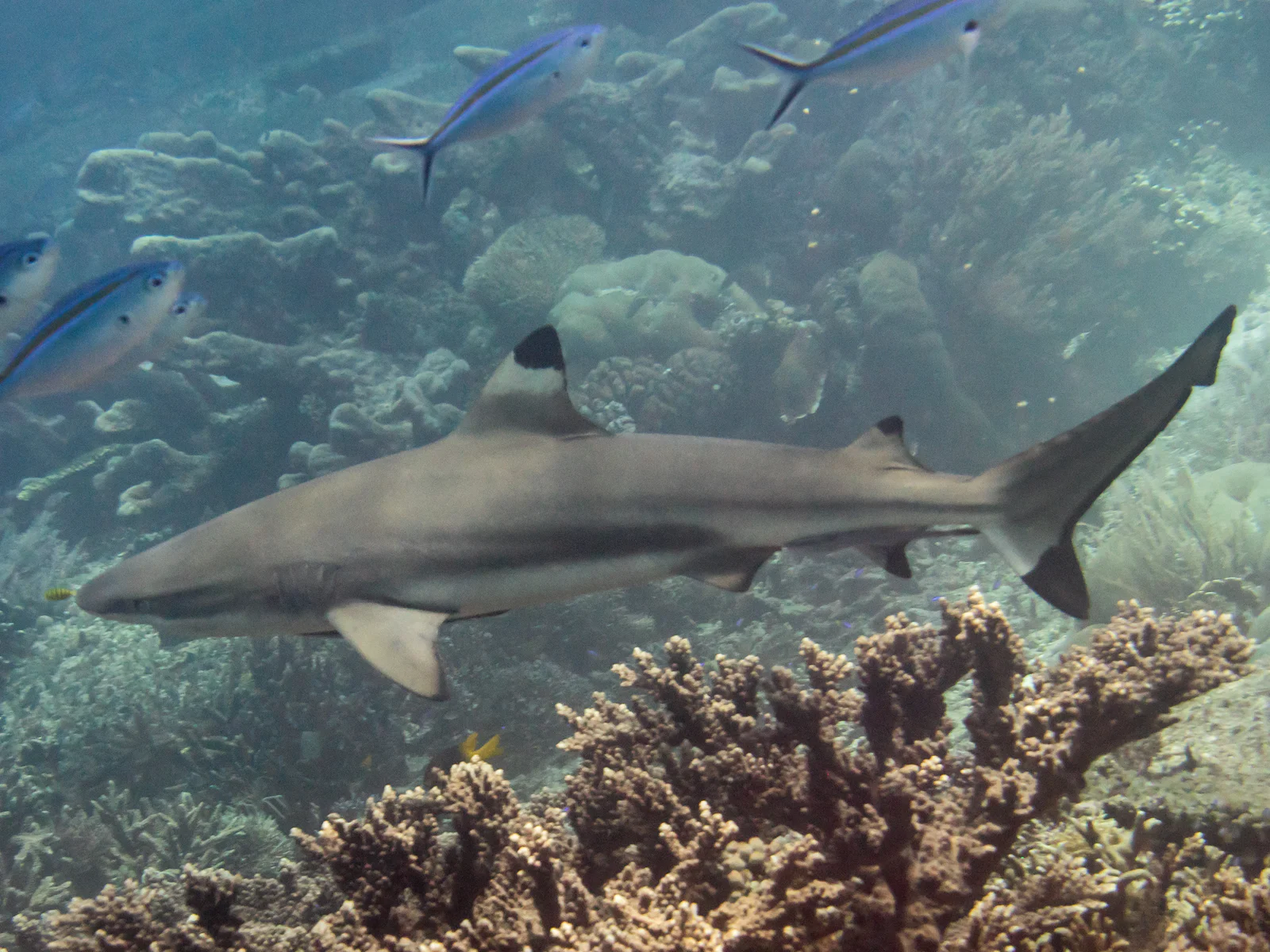
Reef Shark (assorted)
Carcharhinidae spp. (reef sharks)
Presencia documentada en el sitio
Fuente revisada el 2026-11-11 · Fuente: PADI Blog · Fecha de observación no documentada
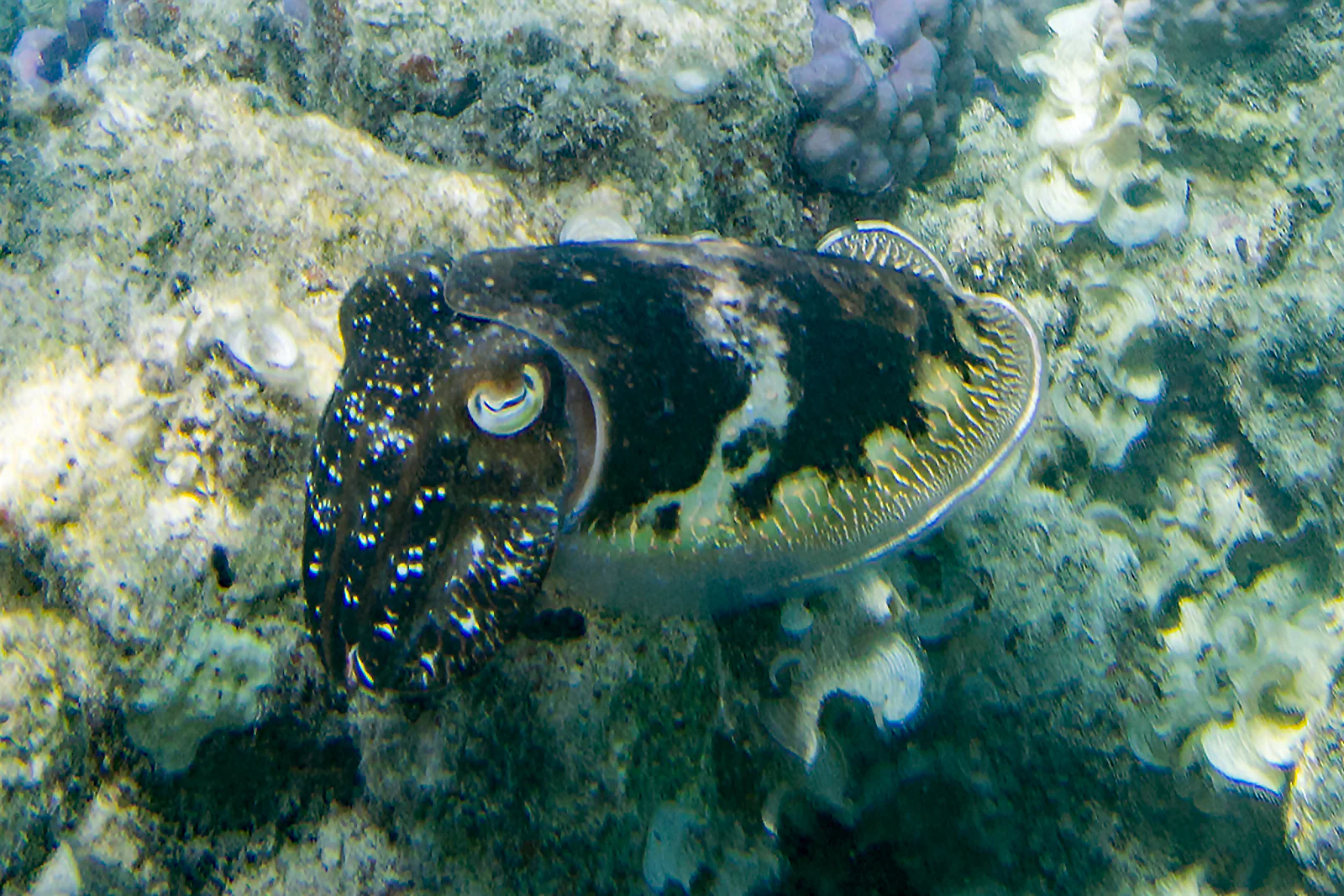
Cuttlefish (assorted)
Sepiidae spp.
Presencia documentada en el sitio
Fuente revisada el 2026-11-11 · Fuente: PADI · Fecha de observación no documentada
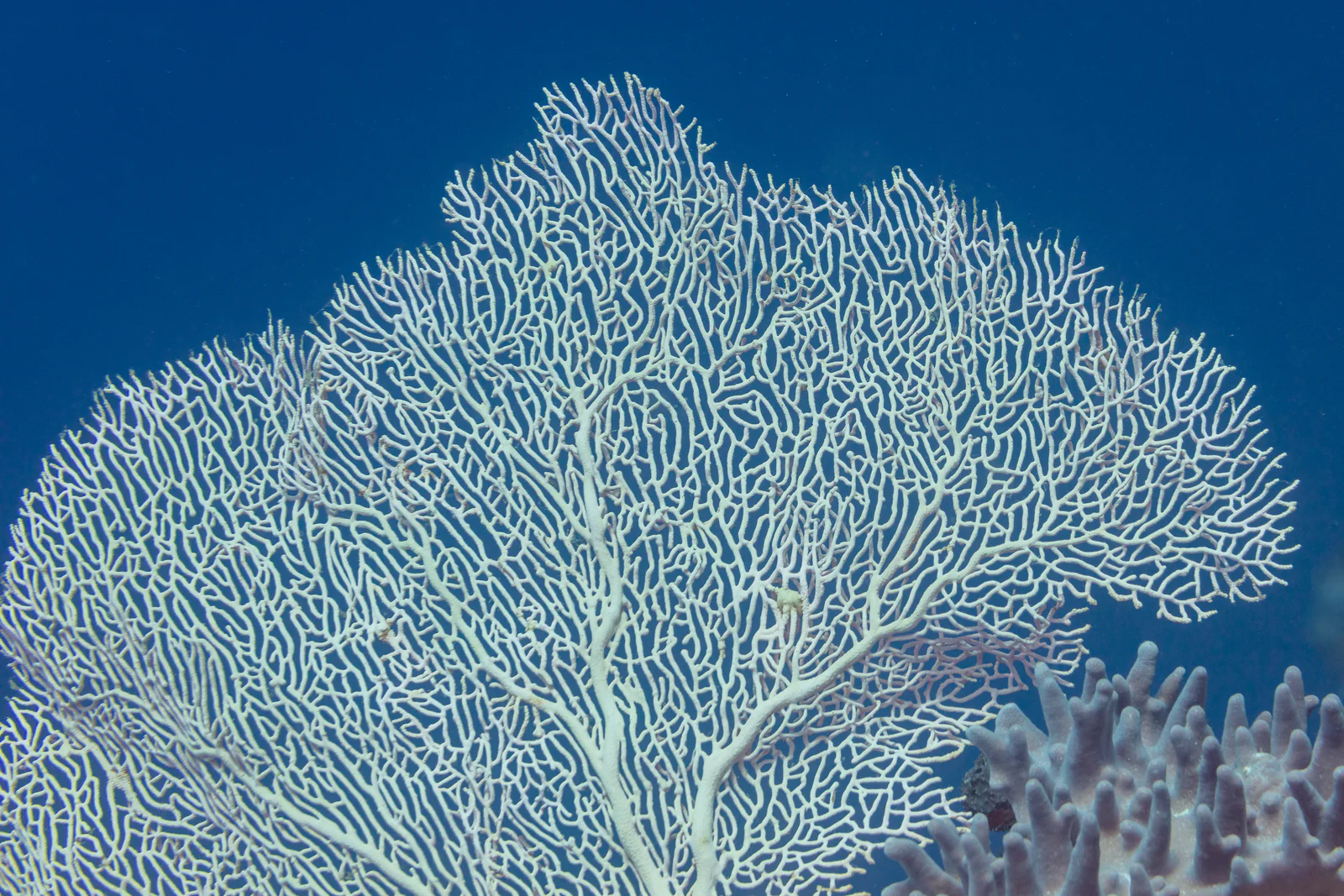
Sea Fan / Gorgonian (assorted)
Octocorallia spp. (gorgonians)
Presencia documentada en el sitio
Fuente revisada el 2026-11-11 · Fuente: Waterworx · Fecha de observación no documentada
Servicios cercanos
Sitios de buceo relacionados
Descubre otros sitios de buceo en la zona
Advanced Advanced
 Beginner
 Advanced
 AdvancedAdvancedAdvancedBeginnerAdvancedAdvanced
¿Has buceado en Gili Biaha?
Regístralo, haz check-in o cuéntales a otros buceadores lo que viste.
Mantente al día
Recibe novedades y consejos sobre lugares de buceo en tu correo.