Garden Eel (assorted)
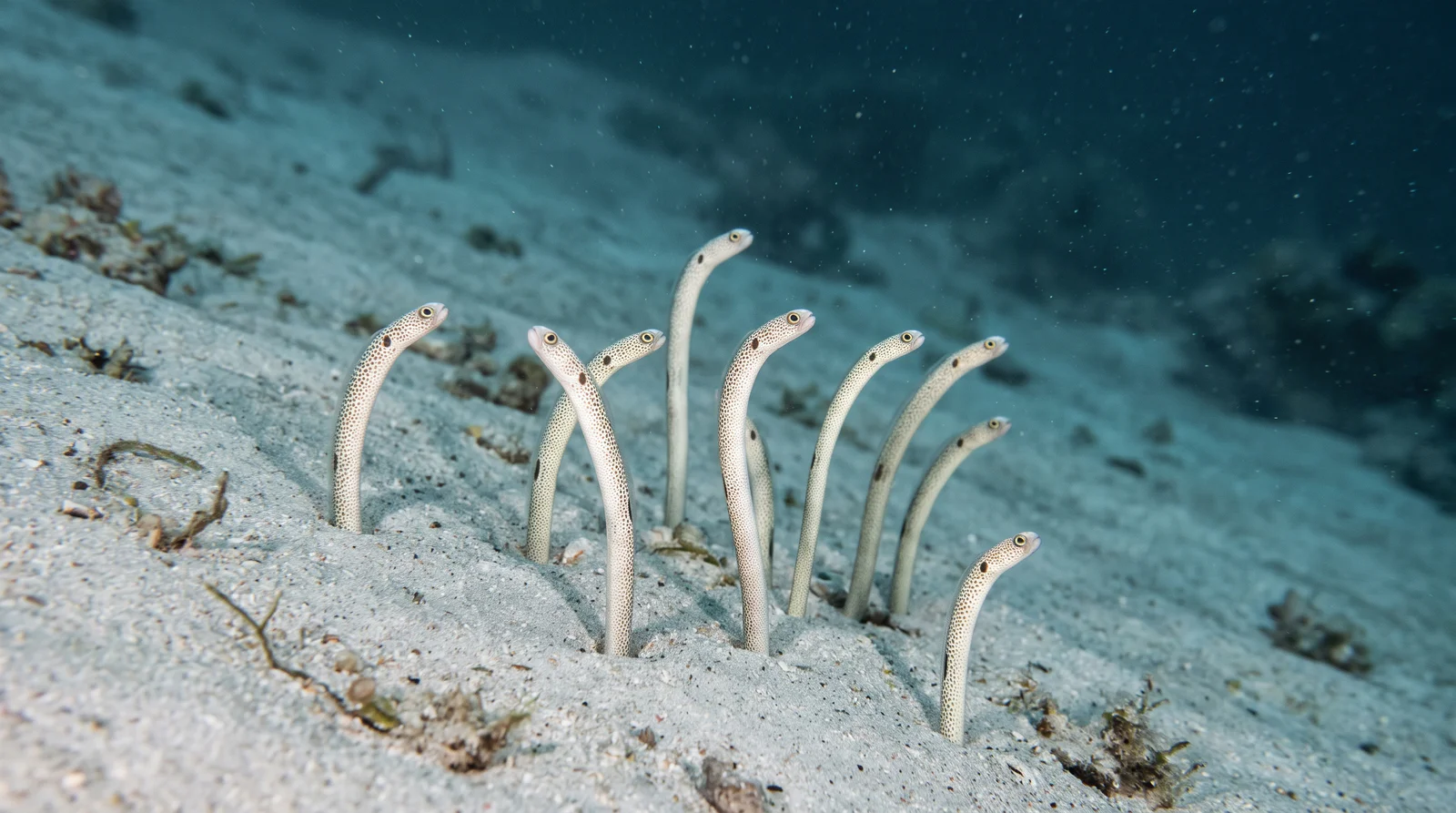 Generado por IA
Crédito de la imagen: AI-generated illustration · Generated for Diveity; no third-party rights · Higgsfield nano_banana_pro image generation
Heterocongrinae spp.
Acerca de Garden Eel (assorted).
Garden eels (subfamily Heterocongrinae, family Congridae) are small eels that live in groups, in burrows in the sea floor. This group entry covers sightings where the species was not recorded. The World Register of Marine Species (WoRMS) lists Heterocongrinae as an accepted subfamily in the order Anguilliformes. Wikipedia names two genera, Gorgasia and Heteroconger, and gives 36 known species, though its own genus counts of 14 and 24 add up to 38.
Wikipedia says the name comes from the eels poking their heads out of their burrows, so that a group looks like shoots of grass in a garden. Colour and size vary by species: the largest reaches about 120 cm, and most do not pass 60 cm.
A conservation status is not given here, because this entry covers a whole subfamily.
Dónde vive.
Wikipedia says most garden eel species live in the Indo-Pacific and that they are found in warm ocean water worldwide. FishBase's note on the family Congridae describes colonies in sand, each animal in its own burrow. Wikipedia says colonies can cover as much as one acre and number several thousand eels.
Where Divers Find Them
Sand is the place these sources point to. In Tulamben, Bali, Neptune Scuba Diving lists garden eels in the sand beyond the bow of the USAT Liberty wreck, and Amed Jepun Divers names them on the sandy slope at Boga Wreck. A Jakarta Post article from 2009 describes them near the shipwreck at Tulamben. None of these sources says which species was seen.
Cómo se comporta.
FishBase's note on the family says they protrude from their burrows to feed on plankton. Wikipedia says most of the body stays hidden in the burrow while the head is out.
Underwater Encounter Behavior
The Jakarta Post's account describes garden eels eating plankton and swaying in a gentle current, with others resting half buried in the seabed. The sources cited here do not describe how garden eels react to divers.
Dónde verlo.
Evidencia para amed · 3 sitios de buceo
La distribución general no demuestra la presencia en un sitio de buceo concreto.
Bunutan
Amed
Presencia documentada en el sitio
Temporada aún no documentada
Fuente revisada el 2026-11-07 · Fuente: Amed Jepun Divers · Fecha de observación no documentada
Jemeluk Bay
Amed
Presencia documentada en el sitio
Temporada aún no documentada
Fuente revisada el 2026-11-07 · Fuente: Amed Jepun Divers · Fecha de observación no documentada
Pyramids
Amed
Presencia documentada en el sitio
Temporada aún no documentada
Fuente revisada el 2026-11-07 · Fuente: Amed Jepun Divers · Fecha de observación no documentada
Galería.
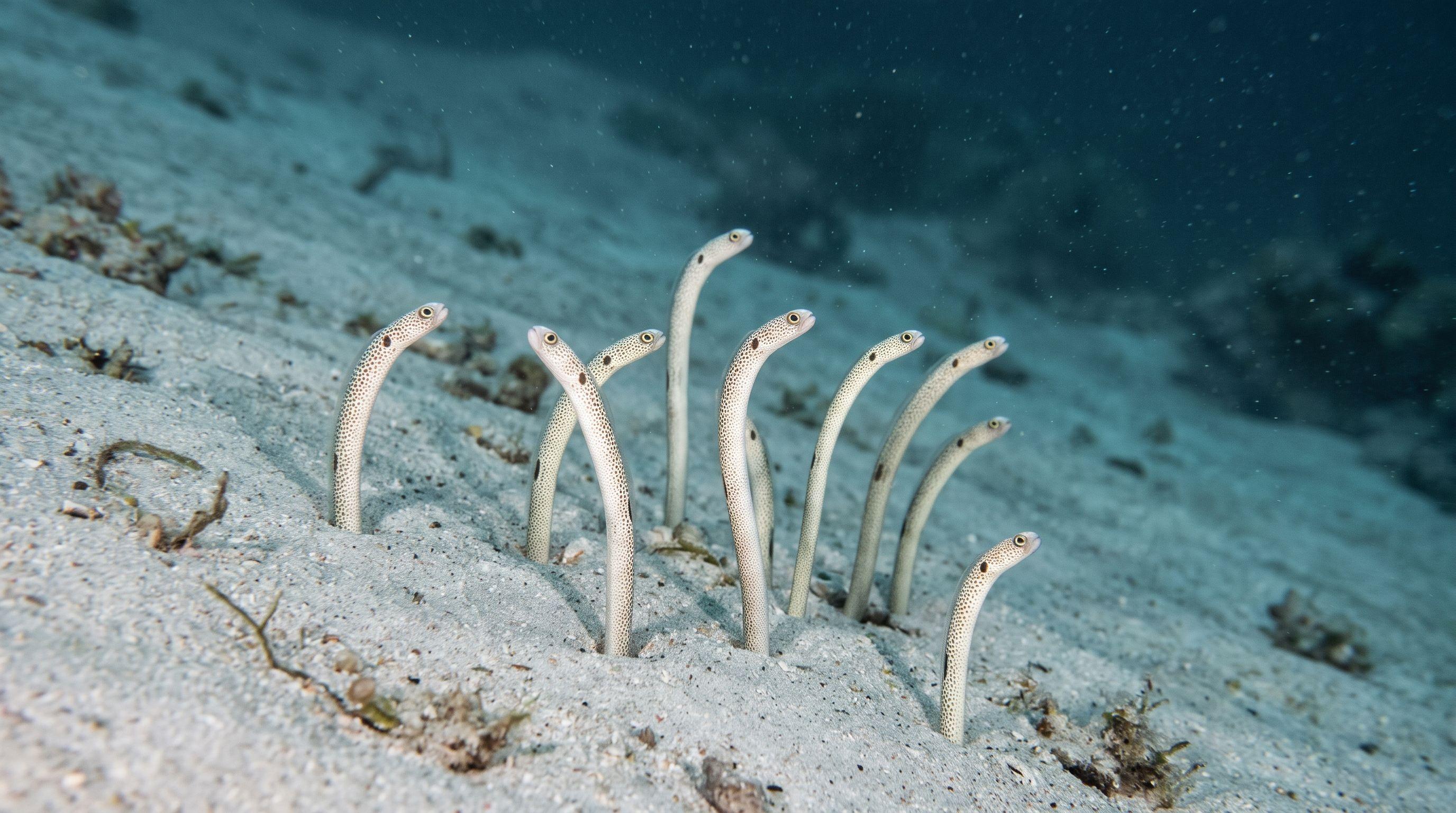 Generado por IA
Crédito de la imagen: AI-generated illustration · Generated for Diveity; no third-party rights · Higgsfield nano_banana_pro image generation