Manta Ray (assorted)
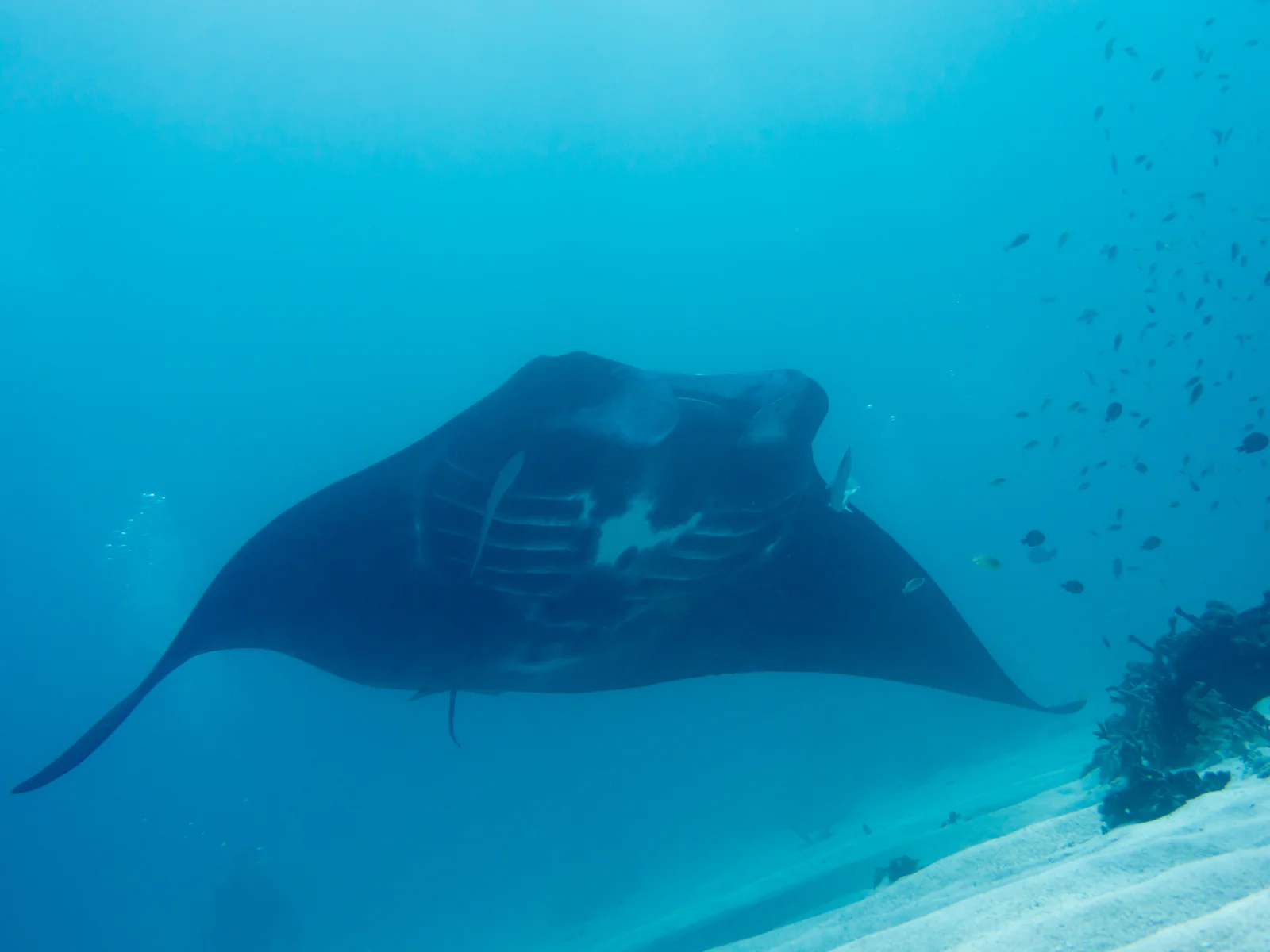
Crédito de la imagen: Rickard Zerpe · CC BY 2.0 · Wikimedia Commons, cropped by this page
Mobula spp. (manta rays)
Acerca de Manta Ray (assorted).
Manta rays are very large filter-feeding rays, and the name does not mean one species. Wikipedia says three are known, all in the genus Mobula: Mobula birostris, Mobula alfredi and the Atlantic manta ray (Mobula yarae), formally described in 2025. This group entry covers sightings where the species was not recorded. The giant oceanic manta (Mobula birostris) and the reef manta (Mobula alfredi) have their own entries. The World Register of Marine Species (WoRMS) lists Manta as an unaccepted genus name in favour of Mobula, in the family Mobulidae; Wikipedia's article on manta rays places them in the eagle ray family Myliobatidae.
Wikipedia says manta rays have broad heads, triangular pectoral fins and horn-shaped cephalic fins on both sides of the mouth, which lies right at the front of the head. It gives a width of at least 7 m for M. birostris, about 5.5 m for M. alfredi and at least 6 m for M. yarae. It says they are typically black or dark on top with pale markings on their shoulders, and usually white or pale underneath with dark markings by which individuals can be recognised.
No conservation status applies to the group as a whole. Wikipedia's species articles give the reef manta as Vulnerable and the giant oceanic manta as Endangered on the IUCN Red List.
Dónde vive.
Wikipedia says mantas are found in tropical and subtropical waters in all the world's major oceans and also venture into temperate seas, and that they prefer water above 20 °C. It says M. alfredi tends to be resident and coastal and is found in the Indo-Pacific and tropical East Atlantic, that M. birostris lives mostly in the open ocean, and that M. yarae inhabits the tropical West Atlantic. The sources cited here do not say which mantas pass Amed.
Where Divers Find Them
Near Gili Selang Island in the Amed area of Bali, bali.live says "you can also spot manta rays, dolphins, turtles, large schools of tuna, and mackerel". It does not name the species or say how often they are seen.
Cómo se comporta.
Wikipedia says manta rays are filter feeders as well as macropredators: at the surface they consume zooplankton such as shrimp, krill and planktonic crabs, and at greater depths small to medium-sized fish. It says they may travel alone or in groups of up to 50, and sometimes breach or leap out of the water, for reasons not known.
Underwater Encounter Behavior
Wikipedia says mantas visit cleaning stations on coral reefs for the removal of external parasites, holding a near-stationary position close to the coral for several minutes while cleaner fish feed. It says that around 1976 divers in the Gulf of California found them placid and safe to interact with. The sources cited here do not describe how mantas react to divers in Bali.
Dónde verlo.
Evidencia de todos los destinos · 14 sitios de buceo
La distribución general no demuestra la presencia en un sitio de buceo concreto.
Batee Meuduro
Pulau Weh
Presencia documentada en el sitio
Temporada aún no documentada
Fuente revisada el 2026-11-18 · Fuente: Sabang Freeport (blog) · Fecha de observación no documentada
Batee Tokong
Pulau Weh
Presencia documentada en el sitio
Temporada aún no documentada
Fuente revisada el 2026-11-18 · Fuente: Underwater Asia · Fecha de observación no documentada
Coral Garden (Belongas Bay)
Lombok
Presencia documentada en el sitio
Temporada aún no documentada
Fuente revisada el 2026-11-19 · Fuente: Wahana Wisata Jatim (blog) · Fecha de observación no documentada
Gili Selang
Amed
Presencia documentada en el sitio
Temporada aún no documentada
Fuente revisada el 2026-11-08 · Fuente: bali.live · Fecha de observación no documentada
Halik
Gili Islands
Presencia documentada en el sitio
Temporada aún no documentada
Fuente revisada el 2026-11-15 · Fuente: Gilibookers · Fecha de observación no documentada
Kaleidoscope
Misool
Presencia documentada en el sitio
Temporada aún no documentada
Fuente revisada el 2026-11-22 · Fuente: Cruising Raja Ampat (Wisesa) · Fecha de observación no documentada
Lekuan III
Bunaken National Park
Presencia documentada en el sitio
Temporada aún no documentada
Fuente revisada el 2026-11-17 · Fuentes: Bihrmann.com y Matuari Sarawet · Fecha de observación no documentada
Manta Point
Gili Islands
Presencia documentada en el sitio
Temporada aún no documentada
Fuente revisada el 2026-11-15 · Fuentes: Manta Dive, PADI, SSI y Terumbu Divers · Fecha de observación no documentada
North Wall (Hoga)
Wakatobi
Presencia documentada en el sitio
Temporada aún no documentada
Fuente revisada el 2026-11-25 · Fuente: Wakatobi Guide Book (FTKP Wakatobi and Swisscontact WISATA) · Fecha de observación no documentada
Pos 2
Menjangan
Presencia documentada en el sitio
Temporada aún no documentada
Fuente revisada el 2026-11-13 · Fuentes: Blue Season Bali, Indo Pacific Images y Nico Dives Cool Bali · Fecha de observación no documentada
Shark Point
Gili Islands
Presencia documentada en el sitio
Temporada aún no documentada
Fuente revisada el 2026-11-15 · Fuente: Gilibookers · Fecha de observación no documentada
Sophie Rickmers
Pulau Weh
Presencia documentada en el sitio
Temporada aún no documentada
Fuente revisada el 2026-11-18 · Fuente: Underwater Asia · Fecha de observación no documentada
Stairs to Medang
Lombok
Presencia documentada en el sitio
Temporada aún no documentada
Fuente revisada el 2026-11-19 · Fuentes: Bottles-Up Diving, Divebooker y Scuba Diver Life · Fecha de observación no documentada
The Canyon
Pulau Weh
Presencia documentada en el sitio
Temporada aún no documentada
Fuente revisada el 2026-11-18 · Fuentes: Sabang Freeport (blog) y Underwater Asia · Fecha de observación no documentada
Galería.
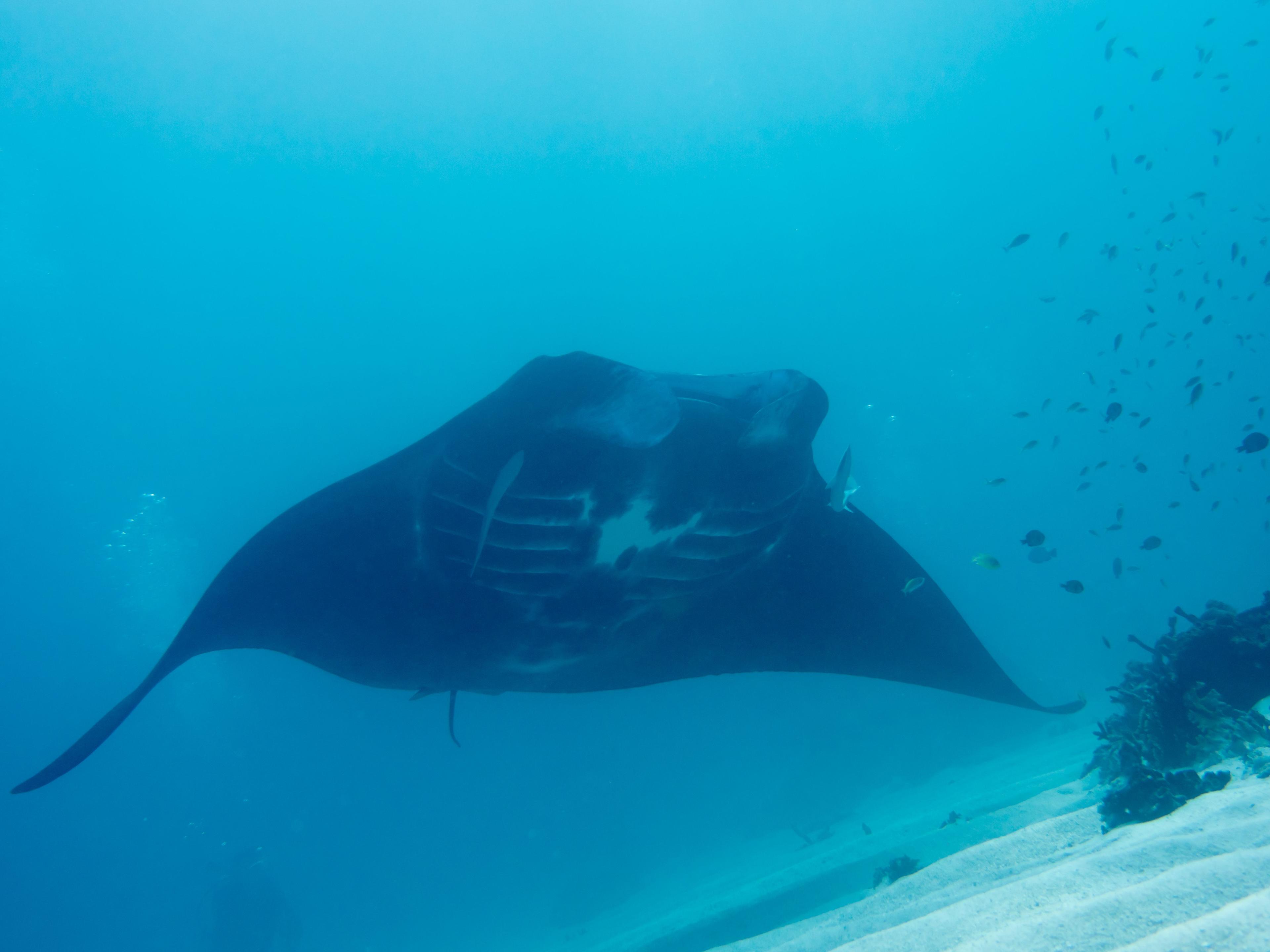
A reef manta ray, Mobula alfredi, one of the manta rays, named by the photographer and photographed in January 2020, seen from below with its wings spread and its cephalic fins raised. The file's map point is in eastern Indonesia, not at Amed, and the source for Amed's sighting names only manta rays, without a species. This page's frame crops the photograph.
Crédito de la imagen: Rickard Zerpe · CC BY 2.0 · Wikimedia Commons, cropped by this page