Nurse Shark (assorted)
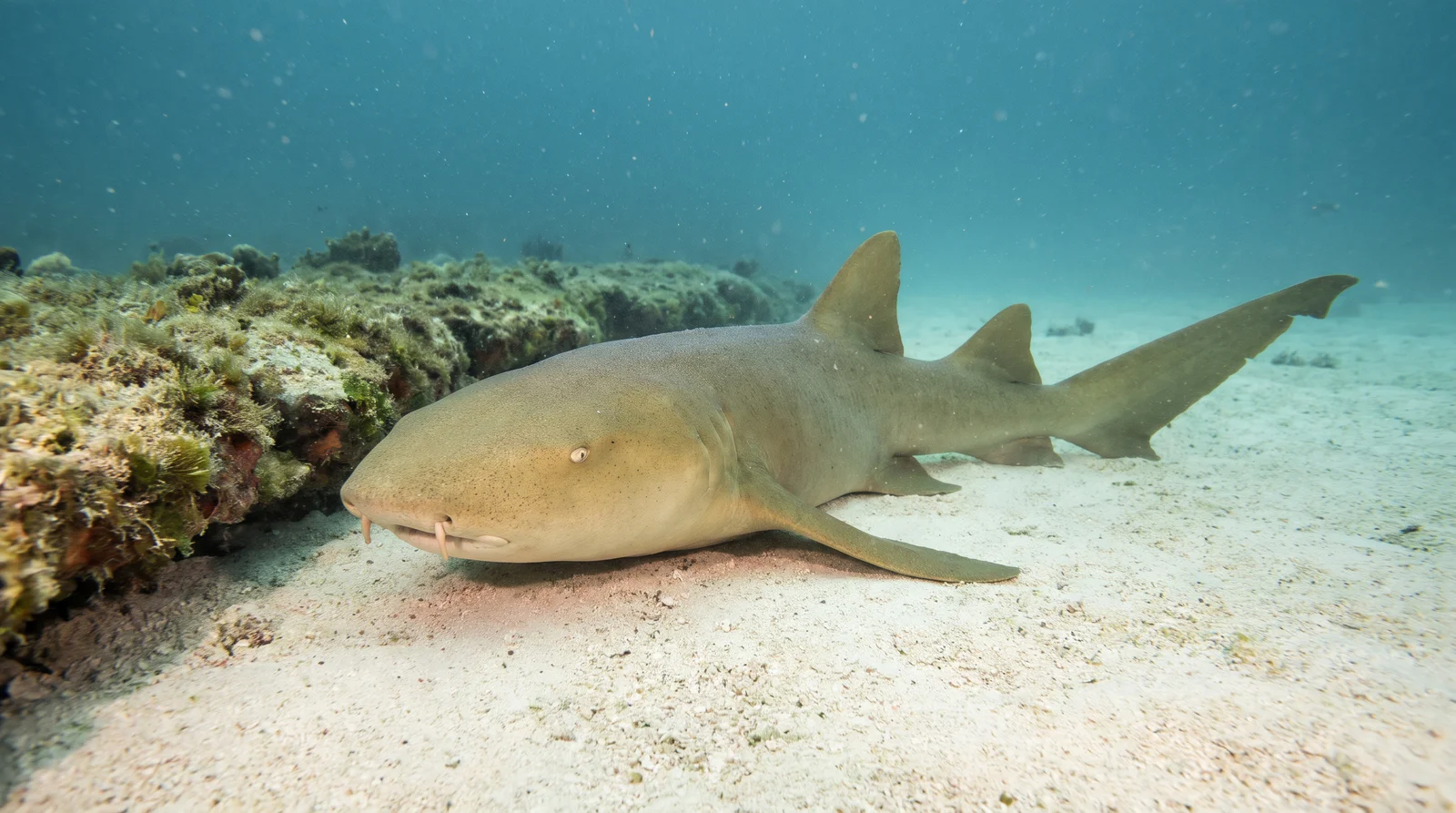 Generado por IA
Crédito de la imagen: AI-generated illustration · Generated for Diveity; no third-party rights · Higgsfield nano_banana_pro image generation
Ginglymostomatidae spp. (nurse sharks)
Acerca de Nurse Shark (assorted).
Nurse shark is the common name of a family as well as of one species. Wikipedia describes the Ginglymostomatidae as a family of carpet sharks known as nurse sharks, with four species in three genera. The World Register of Marine Species (WoRMS) lists Ginglymostomatidae as an accepted family. This group entry covers sightings where the species was not recorded.
Wikipedia gives the largest species, called simply the nurse shark, a length of up to 4.3 m, the tawny nurse shark 3.2 m and the short-tail nurse shark 75 cm. It describes them as yellowish to dark brown, with muscular pectoral fins, two spineless dorsal fins and two fleshy barbels on the lower jaw.
A conservation status is not given here, because this entry covers a whole group.
Dónde vive.
Wikipedia calls this a cosmopolitan family, common in shallow tropical and subtropical waters. It places the nurse shark (Ginglymostoma cirratum) in the Atlantic and East Pacific, and the tawny nurse shark (Nebrius ferrugineus) along coastlines of the Indo-Pacific.
Where Divers Find Them
At Nusa Penida, Bali, Gusti Bali Tours reports frequent sightings at Manta Point, and Bali Fun Diving, Bali Aqua Dive Center and Emperor Divers also name them there. Dive Concepts says they are often encountered at Manta Bay, and Diving Squad reports rare sightings at Mangrove. A Kapal Selam Dive Club trip report of August 2003 records an encounter at Blue Corner. None of these says which species.
Cómo se comporta.
Wikipedia calls these sharks sluggish, docile bottom dwellers. It says they are nocturnal, spending the day in inactive groups of up to 40 under ledges or in crevices and often returning to the same places, and that by night they are largely solitary and search the bottom sediments for food. It names crustaceans, molluscs, tunicates and other fish as their diet.
Underwater Encounter Behavior
Dive Concepts describes them at Manta Bay sleeping under rocks or swimming on the coral floors of the bay. Wikipedia says nurse sharks typically attack humans only if directly threatened.
Dónde verlo.
Evidencia para indonesia · 4 sitios de buceo
La distribución general no demuestra la presencia en un sitio de buceo concreto.
Blue Corner
Nusa Penida
Presencia documentada en el sitio
Temporada aún no documentada
Fuente revisada el 2026-11-07 · Fuente: Kapal Selam Dive Club (trip report, 30 to 31 August 2003) · Fecha de observación no documentada
Mangrove
Nusa Penida
Presencia documentada en el sitio
Temporada aún no documentada
Fuente revisada el 2026-11-07 · Fuente: Diving Squad · Fecha de observación no documentada
Manta Bay
Nusa Penida
Presencia documentada en el sitio
Temporada aún no documentada
Fuente revisada el 2026-11-07 · Fuente: Dive Concepts · Fecha de observación no documentada
Manta Point Nusa Penida
Nusa Penida
Presencia documentada en el sitio
Temporada aún no documentada
Fuente revisada el 2026-11-07 · Fuente: Bali Aqua Dive Center · Fecha de observación no documentada
Galería.
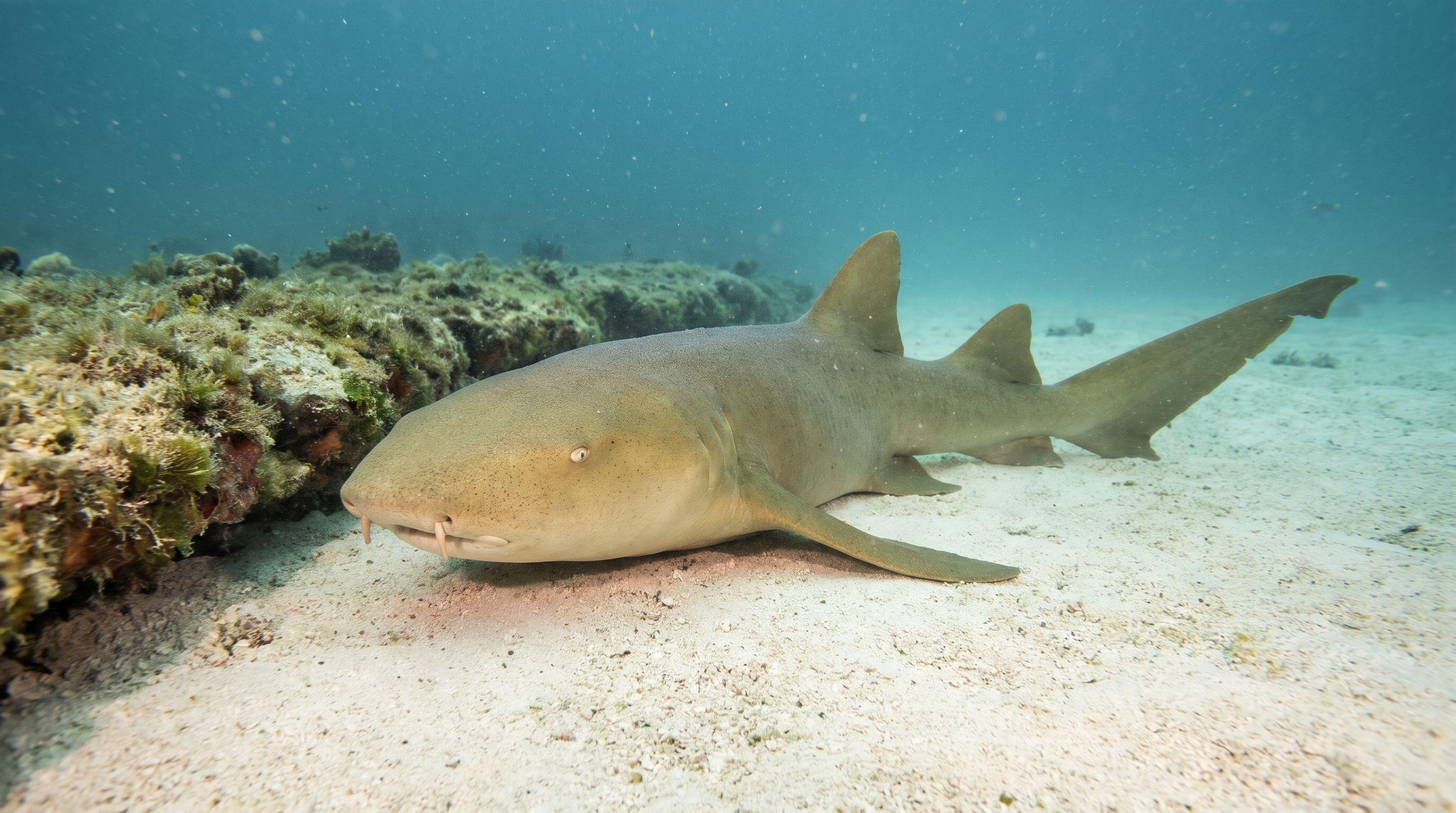 Generado por IA
Crédito de la imagen: AI-generated illustration · Generated for Diveity; no third-party rights · Higgsfield nano_banana_pro image generation