Rhinopias (assorted)
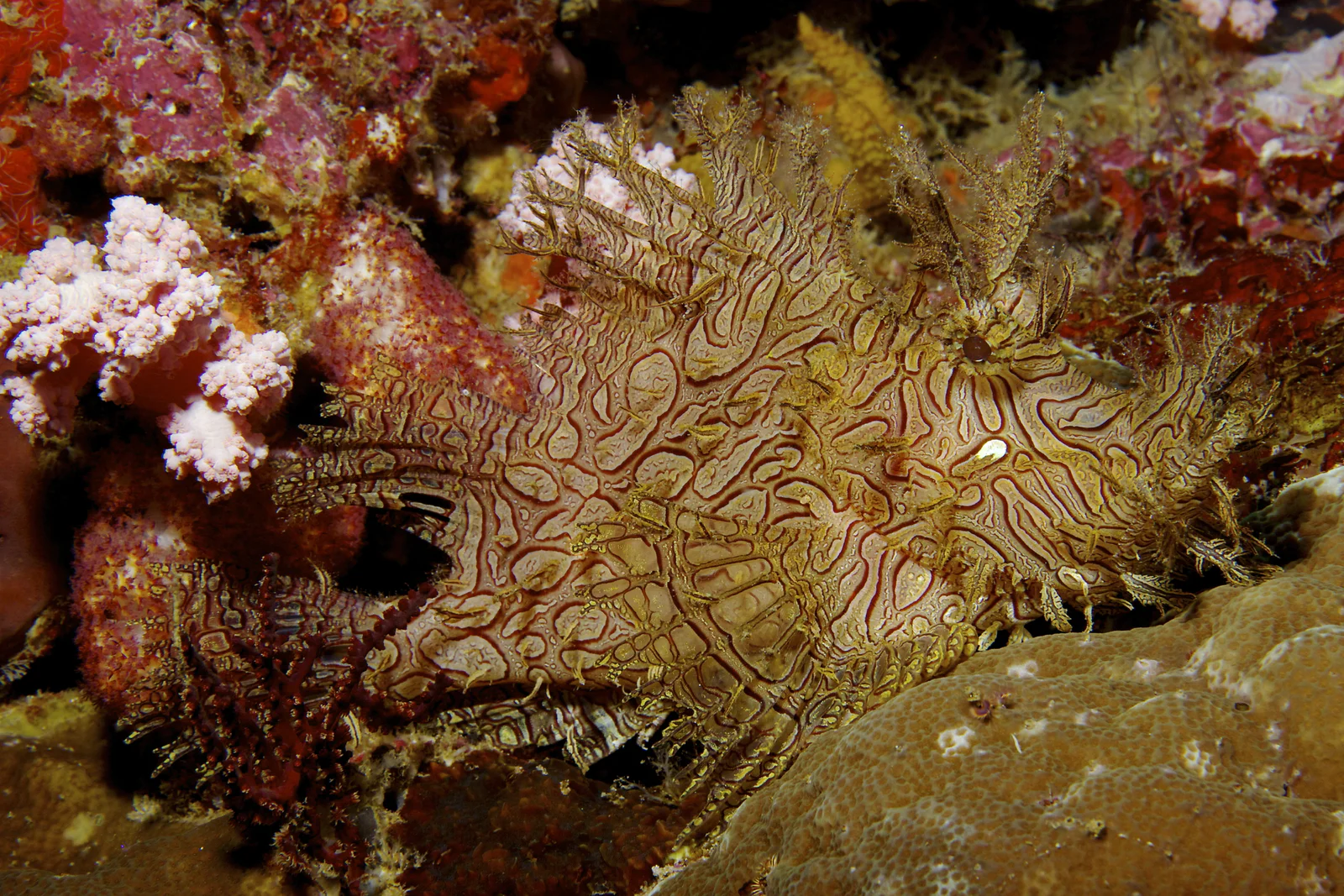
Crédito de la imagen: Nick Hobgood · CC BY-SA 3.0 · Wikimedia Commons, cropped by this page
Rhinopias spp.
Acerca de Rhinopias (assorted).
Rhinopias is a genus of scorpionfishes (family Scorpaenidae), not a single species. The World Register of Marine Species (WoRMS) lists Rhinopias Gill, 1905 as an accepted genus with six accepted species: R. aphanes, R. argoliba, R. cea, R. eschmeyeri, R. frondosa and R. xenops. Wikipedia gives the same six and notes some doubt over whether R. eschmeyeri is a synonym of R. frondosa, the weedy scorpionfish, which has its own entry. This group entry covers sightings where the species was not recorded.
Wikipedia says adults have a highly compressed, very deep head and body covered in small scales, 12 spines in the dorsal fin and 3 in the anal fin, and thickened lower pectoral rays. It gives maximum recorded total lengths from 15.3 cm in R. xenops to 25 cm in R. aphanes.
A conservation status is not given here, because this entry covers a whole genus.
Dónde vive.
Wikipedia says the genus is found in the Indian and Pacific oceans, from the coast of eastern Africa to Hawaii and Easter Island. It describes them as demersal fish of soft substrate and strong currents, from shallow water down to around 300 m.
Where Divers Find Them
At Melasti in the Amed area of Bali, Amed Jepun Divers says "From Rhinopias to frogfish or ghost pipe fish the variety here is astounding." It does not say which species, or how often they are seen.
Cómo se comporta.
Wikipedia describes Rhinopias as ambush predators that rest on the bottom waiting for crustaceans and smaller fishes to come within striking range. It says they frequently shed the outer layer of their skin, because they are so sedentary that parasites and algae quickly gather on it, and that they command a high price in the aquarium trade.
Underwater Encounter Behavior
The sources cited here do not describe how Rhinopias react to divers. Wikipedia says they have venom in their fin spines.
Dónde verlo.
Evidencia de todos los destinos · 7 sitios de buceo
La distribución general no demuestra la presencia en un sitio de buceo concreto.
Aer Perang
Lembeh Strait
Presencia documentada en el sitio
Temporada aún no documentada
Fuente revisada el 2026-11-20 · Fuentes: Dive The World y Matuari Sarawet (blog) · Fecha de observación no documentada
Aw Shucks
Lembeh Strait
Presencia documentada en el sitio
Temporada aún no documentada
Fuente revisada el 2026-11-20 · Fuente: Infinite Blue Dive Travel · Fecha de observación no documentada
Makawide
Lembeh Strait
Presencia documentada en el sitio
Temporada aún no documentada
Fuente revisada el 2026-11-20 · Fuente: Infinite Blue Dive Travel · Fecha de observación no documentada
Melasti
Amed
Presencia documentada en el sitio
Temporada aún no documentada
Fuente revisada el 2026-11-07 · Fuente: Amed Jepun Divers · Fecha de observación no documentada
Meno Slope
Gili Islands
Presencia documentada en el sitio
Temporada aún no documentada
Fuente revisada el 2026-11-15 · Fuente: Terumbu Divers · Fecha de observación no documentada
Nudi Falls
Lembeh Strait
Presencia documentada en el sitio
Temporada aún no documentada
Fuente revisada el 2026-11-20 · Fuentes: Lembeh Resort, Matuari Sarawet (blog) y Starfish · Fecha de observación no documentada
Tanah Ampo Jetty
Padang Bai
Presencia documentada en el sitio
Temporada aún no documentada
Fuente revisada el 2026-11-11 · Fuentes: Abyss Ocean World y Waterworx · Fecha de observación no documentada
Galería.
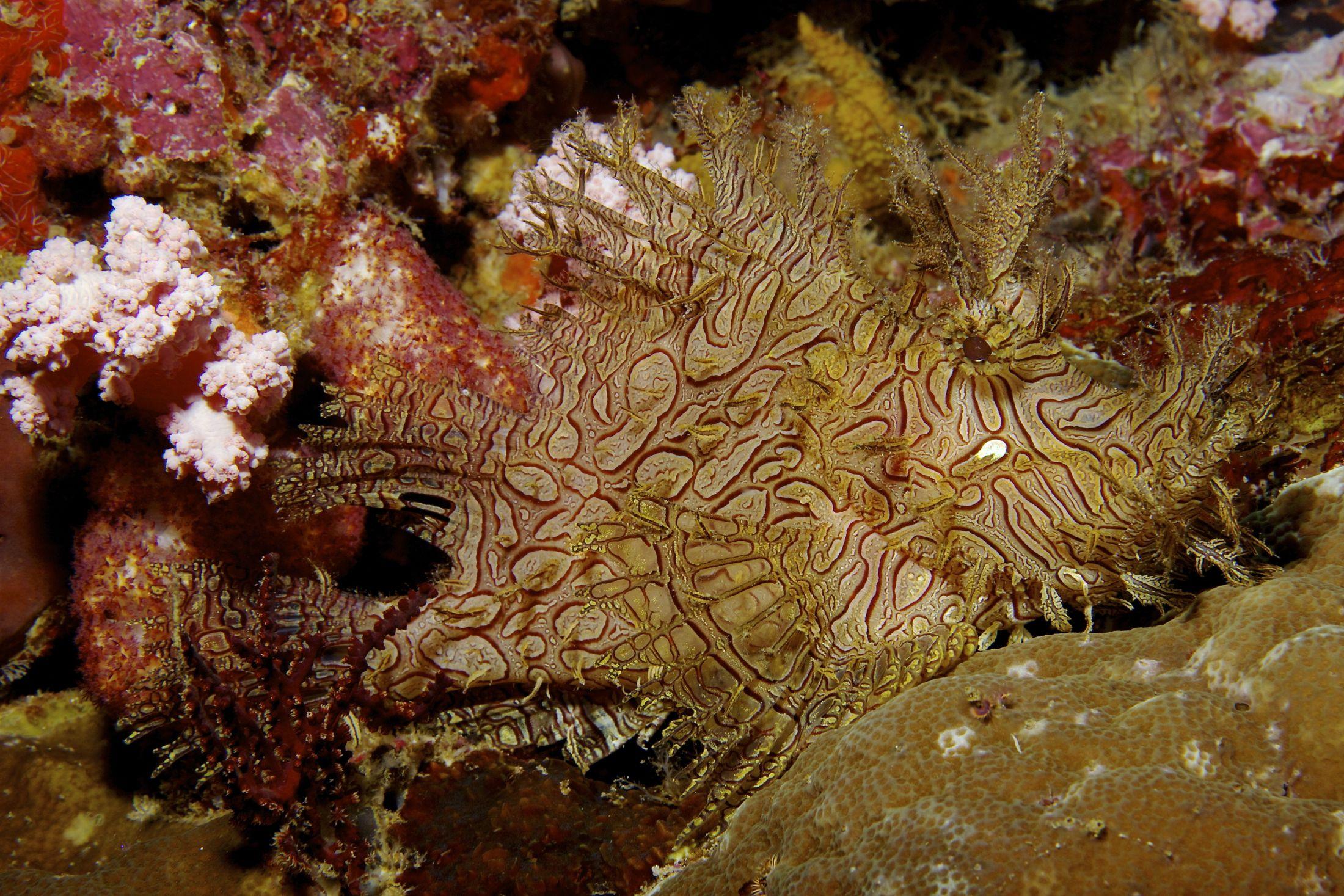
A lacy scorpionfish, Rhinopias aphanes, one of the six accepted species of the genus Rhinopias, resting among corals in Papua New Guinea, photographed in 2013 and identified by the photographer. This photograph is not from Amed, and the source for Amed's sighting names the fish only as Rhinopias, without a species. This page's frame crops the photograph.
Crédito de la imagen: Nick Hobgood · CC BY-SA 3.0 · Wikimedia Commons, cropped by this page