Seamoth (assorted)
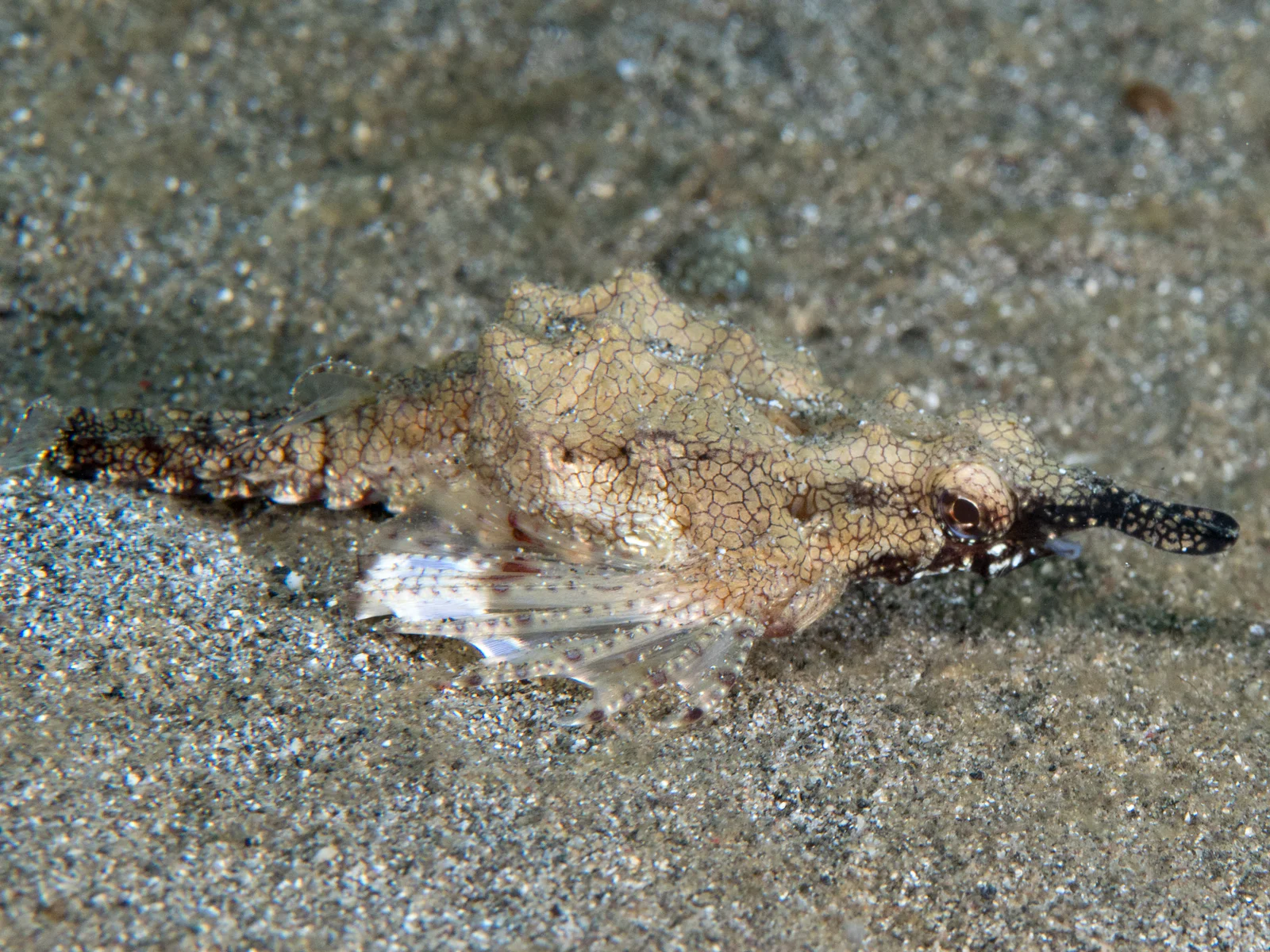
Crédito de la imagen: Rickard Zerpe · CC BY 2.0 · Wikimedia Commons (from Flickr), cropped by this page
Pegasidae spp.
Acerca de Seamoth (assorted).
Seamoth, or sea moth, is a common name for a family, not a single species. Wikipedia describes the Pegasidae as a family of ray-finned fishes in the order Syngnathiformes, with two genera, Eurypegasus and Pegasus. The World Register of Marine Species (WoRMS) lists Pegasidae as an accepted family. This group entry covers sightings where the species was not recorded.
Wikipedia says seamoths have flattened bodies encased in thick bony plates, large wing-like pectoral fins and a long snout. Their toothless jaws sit beneath the snout.
A conservation status is not given here, because this entry covers a whole group. Wikipedia says Pegasus lancifer and the two Eurypegasus species are listed as Least Concern by the IUCN and the other species as Data Deficient.
Dónde vive.
Wikipedia says seamoths are found mainly in coastal tropical waters of the Indo-Pacific and live on the sea bottom.
Where Divers Find Them
At Amed, Bali, Amed Jepun Divers says sea moths lurk in debris at Melasti; Bali Aqua says the sandy slope at the entry of Bunutan is home to Pegasus sea moths; and bali.live says divers can encounter sea moths at Ghost Bay. None says which species, or how often.
Cómo se comporta.
Wikipedia says seamoths have modified pelvic fins that let them walk across the sea bottom, and a mouth that can form a tube to suck worms and other small invertebrates from their burrows. They shed their skin periodically, perhaps as often as every five days. It names bycatch, collection for traditional Chinese medicine and for the aquarium trade, bottom trawling and coastal development as threats.
Underwater Encounter Behavior
The sources cited here do not describe how seamoths react to divers.
Dónde verlo.
Evidencia para amed · 3 sitios de buceo
La distribución general no demuestra la presencia en un sitio de buceo concreto.
Bunutan
Amed
Presencia documentada en el sitio
Temporada aún no documentada
Fuente revisada el 2026-11-07 · Fuente: Bali Aqua · Fecha de observación no documentada
Ghost Bay
Amed
Presencia documentada en el sitio
Temporada aún no documentada
Fuente revisada el 2026-11-07 · Fuente: bali.live · Fecha de observación no documentada
Melasti
Amed
Presencia documentada en el sitio
Temporada aún no documentada
Fuente revisada el 2026-11-07 · Fuente: Amed Jepun Divers · Fecha de observación no documentada
Galería.
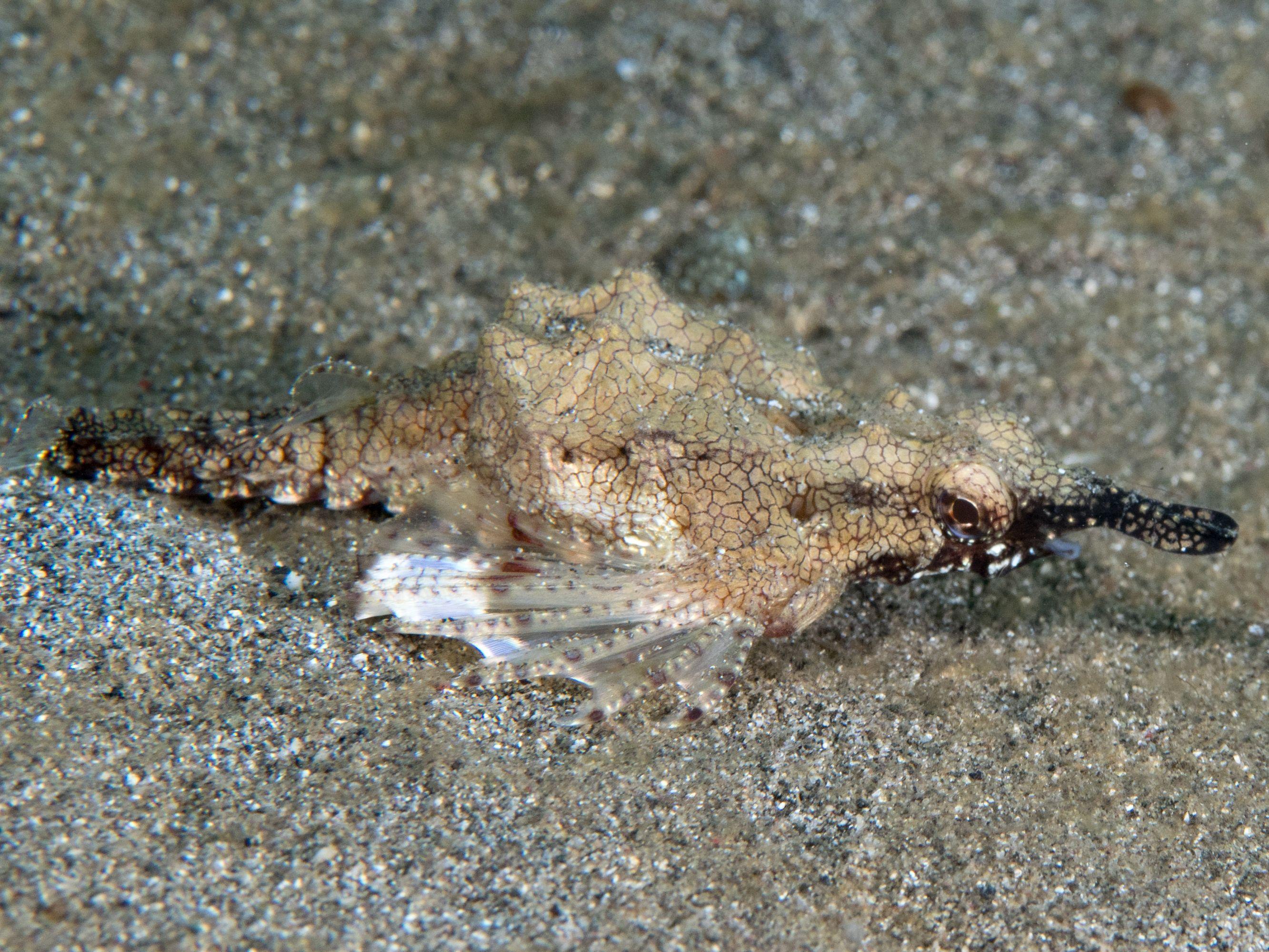
Little dragonfish, also called the dragon seamoth (Eurypegasus draconis), one of the seamoths this group entry covers, on sand at Rao, west of Morotai, Indonesia, photographed on 11 June 2019. This photograph is not from Amed, and the sources for Amed's sightings do not say which seamoth species they saw. This page's frame crops the photograph.
Crédito de la imagen: Rickard Zerpe · CC BY 2.0 · Wikimedia Commons (from Flickr), cropped by this page