Snake Eel (assorted)
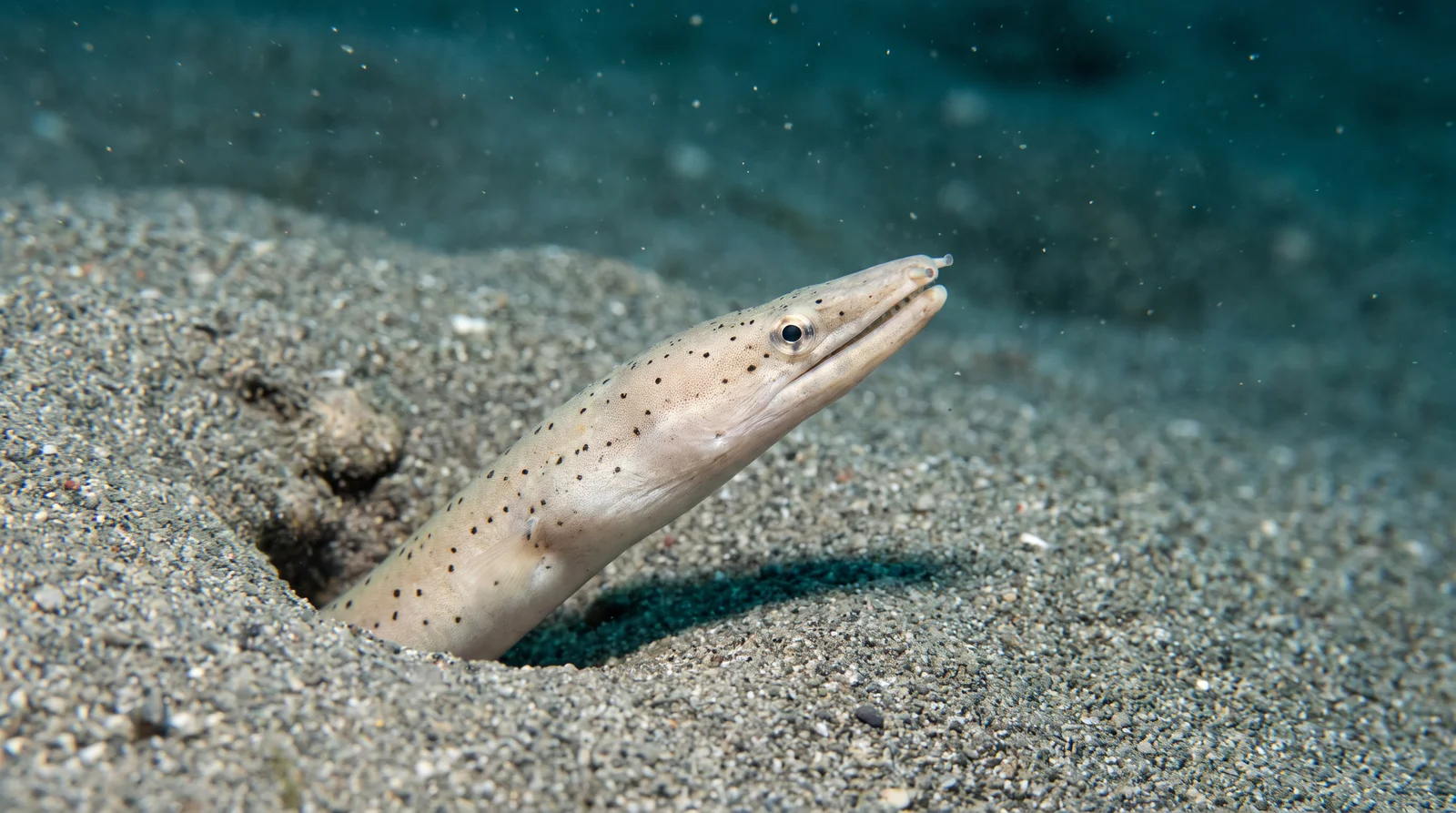 Generado por IA
Crédito de la imagen: AI-generated illustration · Diveity
Ophichthidae spp.
Acerca de Snake Eel (assorted).
Snake eels (family Ophichthidae) are long, cylindrical eels, many of which burrow. This group entry covers sightings where the species was not recorded. Diveity also has an individual page for the Spotted Snake Eel. The World Register of Marine Species (WoRMS) lists Ophichthidae as an accepted family in the eel order Anguilliformes, and FishBase counts 62 genera and 362 species.
Wikipedia gives a total length from 5 cm to 2.3 m or more, depending on the species. It says many species have no fins at all, which helps them burrow, and that they are often spotted or striped, mimicking venomous sea snakes.
A conservation status is not given here, because this entry covers a whole family.
Nobody has verified this record in person; it was researched and written by an automated process from the sources named here.
Dónde vive.
FishBase describes the family as living in tropical to warm temperate waters, from shallow coastal waters to mid waters, on reefs, rubble, sand and muddy bottoms. Some species enter rivers, and FishBase notes that species of Ophichthus have been reported from 1,300 m.
Where Divers Find Them
FishBase says most species spend their time buried in sand, and Wikipedia says most hide in mud or sand, so divers are most likely to notice them on sand and mud bottoms.
Dive operators name snake eels at four Bali sites. In Tulamben, Amed Jepun Divers names them among the animals that emerge from the sand at Seraya Secret at night, and among the regular visitors at Batu Niti, which it calls a haven for macro life. In Amed, the same operator describes the sandy slopes where the Pyramids dive starts as dotted with garden eels, stingrays and snake eels. At Pemuteran Jetty, a shore muck dive, Abyss Ocean World lists snake eels among the animals to see, and Karang Divers lists moray and snake eels hunting after dark. These are operator reports, not survey data, and how often snake eels are seen at any of these sites is unknown.
Cómo se comporta.
FishBase says most species stay buried in sand and hunt small fishes and crustaceans by sense of smell. Wikipedia adds that most are bottom dwellers that hide in mud or sand to capture prey, and that some are pelagic.
Underwater Encounter Behavior
The sources cited here do not describe how snake eels react to divers. The sea-snake pattern noted above can make a snake eel look like a sea snake, so an uncertain identification is best recorded as uncertain.
Dónde verlo.
Evidencia de todos los destinos · 9 sitios de buceo
La distribución general no demuestra la presencia en un sitio de buceo concreto.
Air Bajo
Lembeh Strait
Presencia documentada en el sitio
Temporada aún no documentada
Fuente revisada el 2026-11-20 · Fuente: Infinite Blue Dive Travel · Fecha de observación no documentada
Batu Niti
Tulamben
Presencia documentada en el sitio
Temporada aún no documentada
Fuente revisada el 2026-11-09 · Fuente: Amed Jepun Divers · Fecha de observación no documentada
Gapang House Reef
Pulau Weh
Presencia documentada en el sitio
Temporada aún no documentada
Fuente revisada el 2026-11-18 · Fuentes: Lumba Lumba Diving Centre y Sabang Freeport (blog) · Fecha de observación no documentada
Hairball
Lembeh Strait
Presencia documentada en el sitio
Temporada aún no documentada
Fuente revisada el 2026-11-20 · Fuente: Murex Resorts · Fecha de observación no documentada
Pemuteran Jetty
Pemuteran
Presencia documentada en el sitio
Temporada aún no documentada
Fuente revisada el 2026-11-14 · Fuentes: Abyss Ocean World y Karang Divers · Fecha de observación no documentada
Police Pier
Lembeh Strait
Presencia documentada en el sitio
Temporada aún no documentada
Fuente revisada el 2026-11-20 · Fuente: Dive The World · Fecha de observación no documentada
Pyramids
Amed
Presencia documentada en el sitio
Temporada aún no documentada
Fuente revisada el 2026-11-07 · Fuente: Amed Jepun Divers · Fecha de observación no documentada
Seraya Secret
Tulamben
Presencia documentada en el sitio
Temporada aún no documentada
Fuente revisada el 2026-11-05 · Fuente: Amed Jepun Divers · Fecha de observación no documentada
Teluk Kembahu (TK)
Lembeh Strait
Presencia documentada en el sitio
Temporada aún no documentada
Fuente revisada el 2026-11-20 · Fuente: Infinite Blue Dive Travel · Fecha de observación no documentada
Galería.
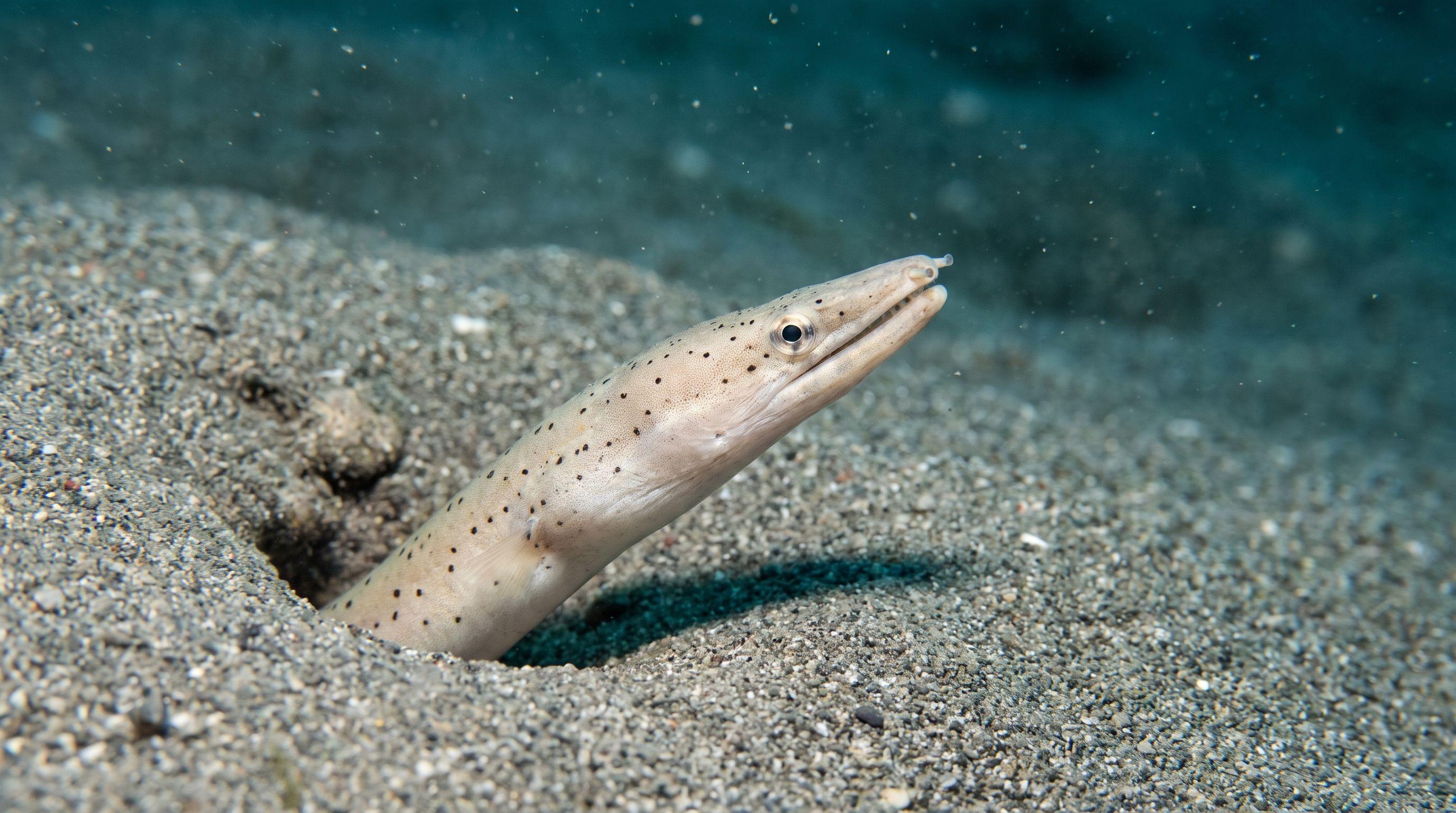 Generado por IA
Crédito de la imagen: AI-generated illustration · Diveity