Starry Night Octopus
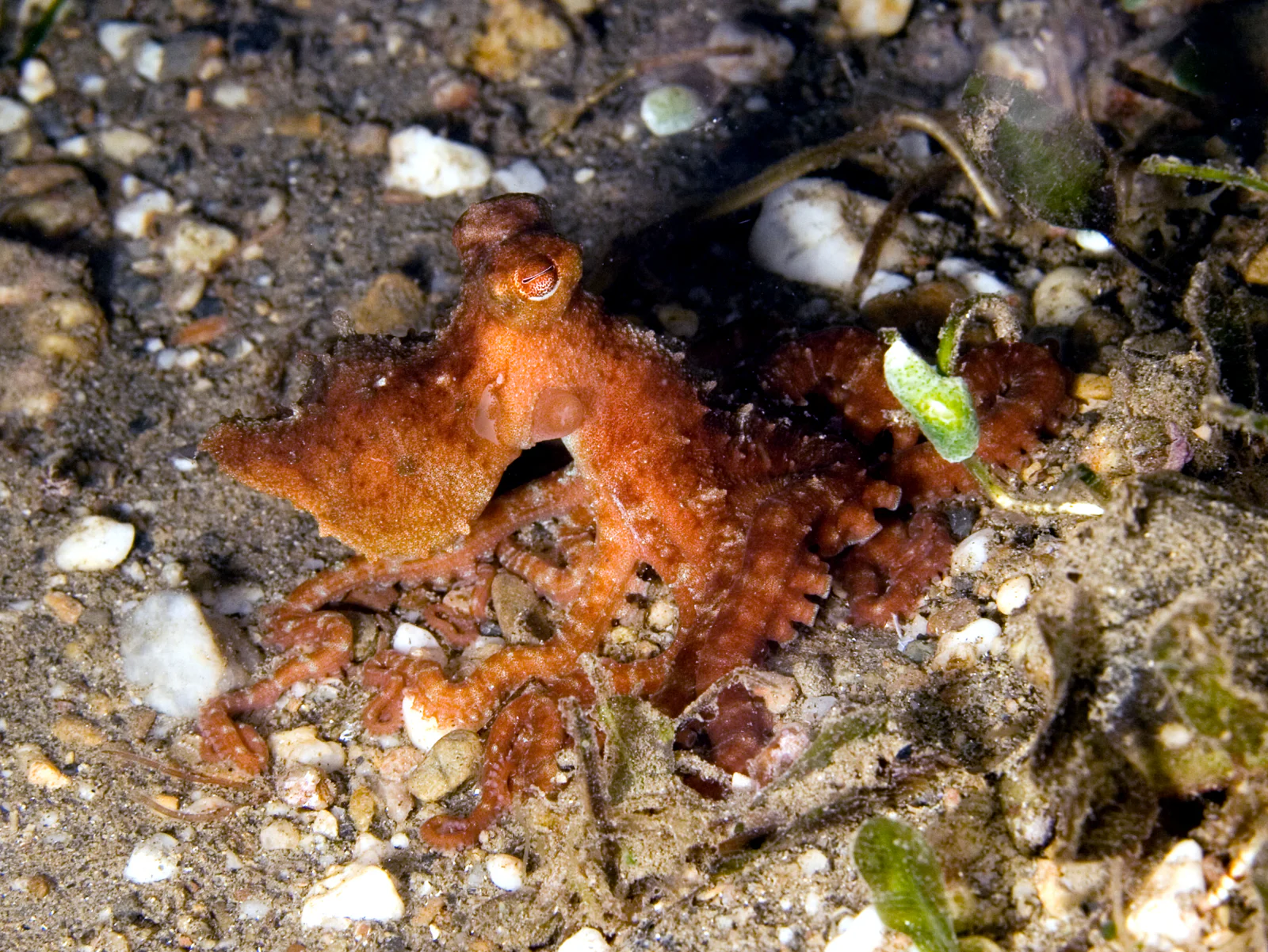
Crédito de la imagen: Nick Hobgood · CC BY-SA 3.0 · Wikimedia Commons, cropped by this page
Pinnoctopus luteus
Acerca de Starry Night Octopus.
The starry night octopus is an octopus of the family Octopodidae. The World Register of Marine Species (WoRMS) lists Pinnoctopus luteus (M. Sasaki, 1929) as the accepted name and Callistoctopus luteus as a superseded combination; Wikipedia follows WoRMS. SeaLifeBase still uses Callistoctopus luteus, with the English name small-spot octopus. Wikipedia gives starry night octopus as its common name.
Wikipedia describes it as reddish brown with several white spots. SeaLifeBase describes a large, elongate octopus whose skin has small fixed papillae and scattered larger light spots, and gives a maximum length of 70 cm and a mantle length of 12.5 cm.
SeaLifeBase lists the species as Least Concern on the IUCN Red List (version 2025-2, global; assessed 22 July 2014).
Dónde vive.
SeaLifeBase gives its range as the Western Pacific and a depth range of 0 to 82 m. Wikipedia lists records from the Gulf of Thailand, Taiwan, Vietnam, the Philippines, Indonesia, Japan, Timor and Hawaii, and names sandy seafloors, seaweed and rubble as the areas where it forages.
Where Divers Find Them
At Amed, Bali, Amed Jepun Divers names the starry night octopus among the rare macro species to spot at Ghost Bay. It does not say how often, and gives no scientific name.
Cómo se comporta.
Wikipedia says it forages for prey on sandy seafloors, seaweed and rubble. The sources cited here say nothing else about its behaviour. Wikipedia says it is targeted by fisheries, such as those in the Philippines, and caught as bycatch throughout its range.
Underwater Encounter Behavior
The sources cited here do not describe how the starry night octopus reacts to divers.
Dónde verlo.
Evidencia para amed · 1 sitio de buceo
La distribución general no demuestra la presencia en un sitio de buceo concreto.
Galería.
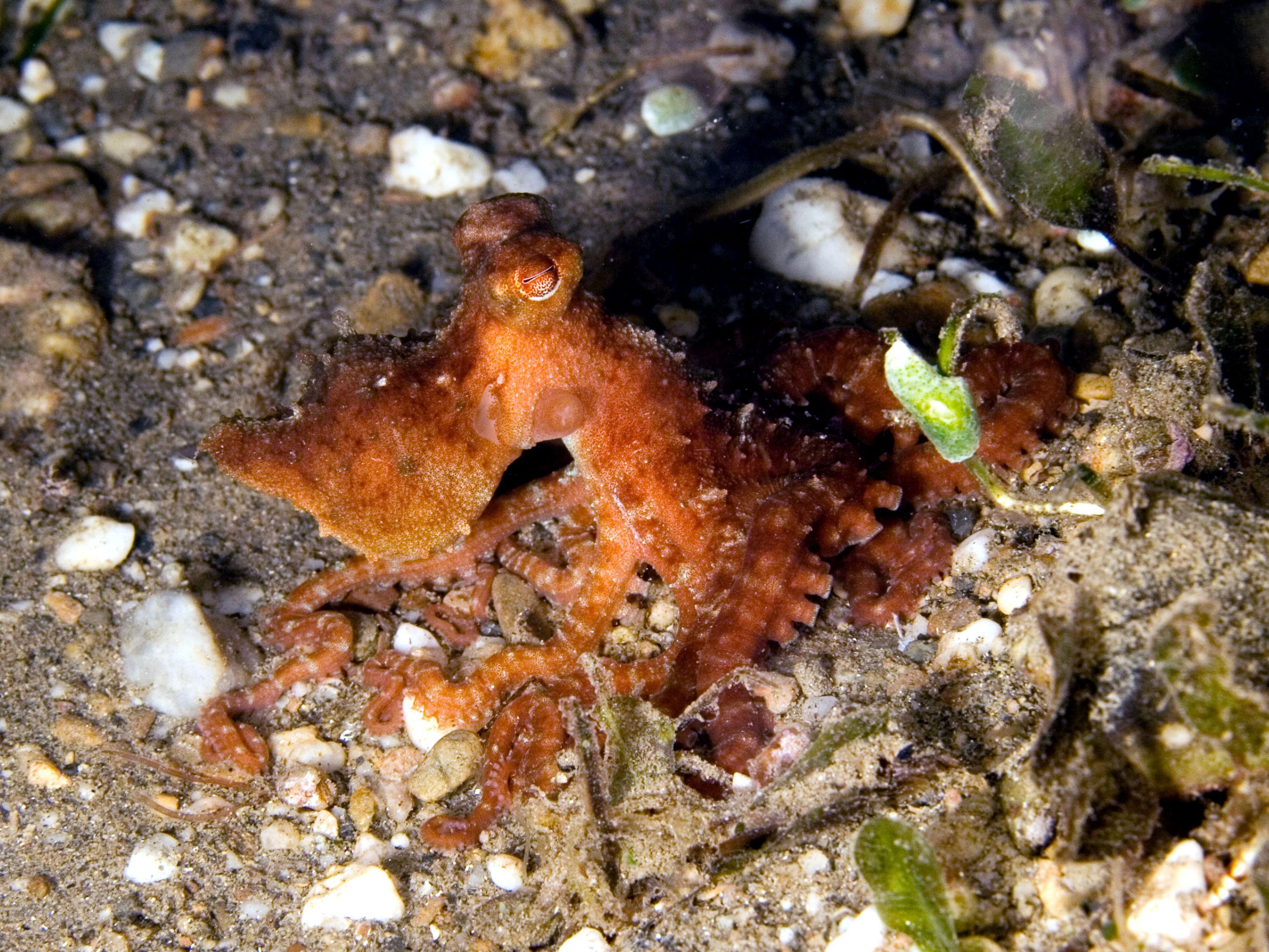
A starry night octopus hunting on sand at night at Tasitolu, Timor-Leste, photographed in 2006 and identified by the photographer as Octopus luteus, an older name of Pinnoctopus luteus. This photograph is not from Amed, and the source for Amed's sighting names the octopus only by its common name. This page's frame crops the photograph.
Crédito de la imagen: Nick Hobgood · CC BY-SA 3.0 · Wikimedia Commons, cropped by this page