Yellow-edged Moray
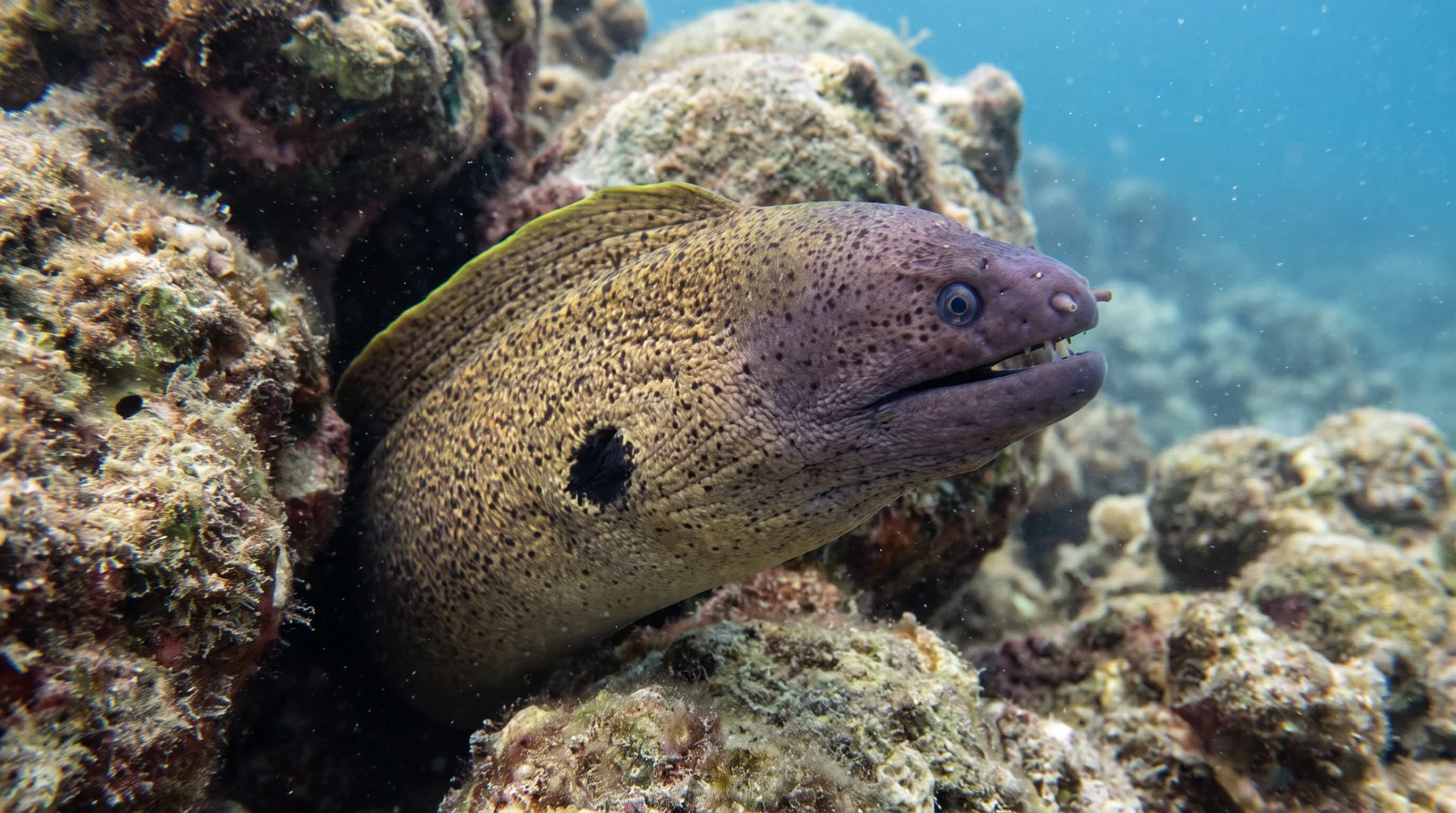 Generado por IA
Crédito de la imagen: AI-generated illustration · Generated for Diveity; no third-party rights · Higgsfield nano_banana_pro image generation
Gymnothorax flavimarginatus
Acerca de Yellow-edged Moray.
The yellow-edged moray (Gymnothorax flavimarginatus), also called the yellow-margin moray, leopard moray and speckled moray, is a moray eel of the family Muraenidae. The World Register of Marine Species (WoRMS) lists Gymnothorax flavimarginatus (Rüppell, 1830) as the accepted name.
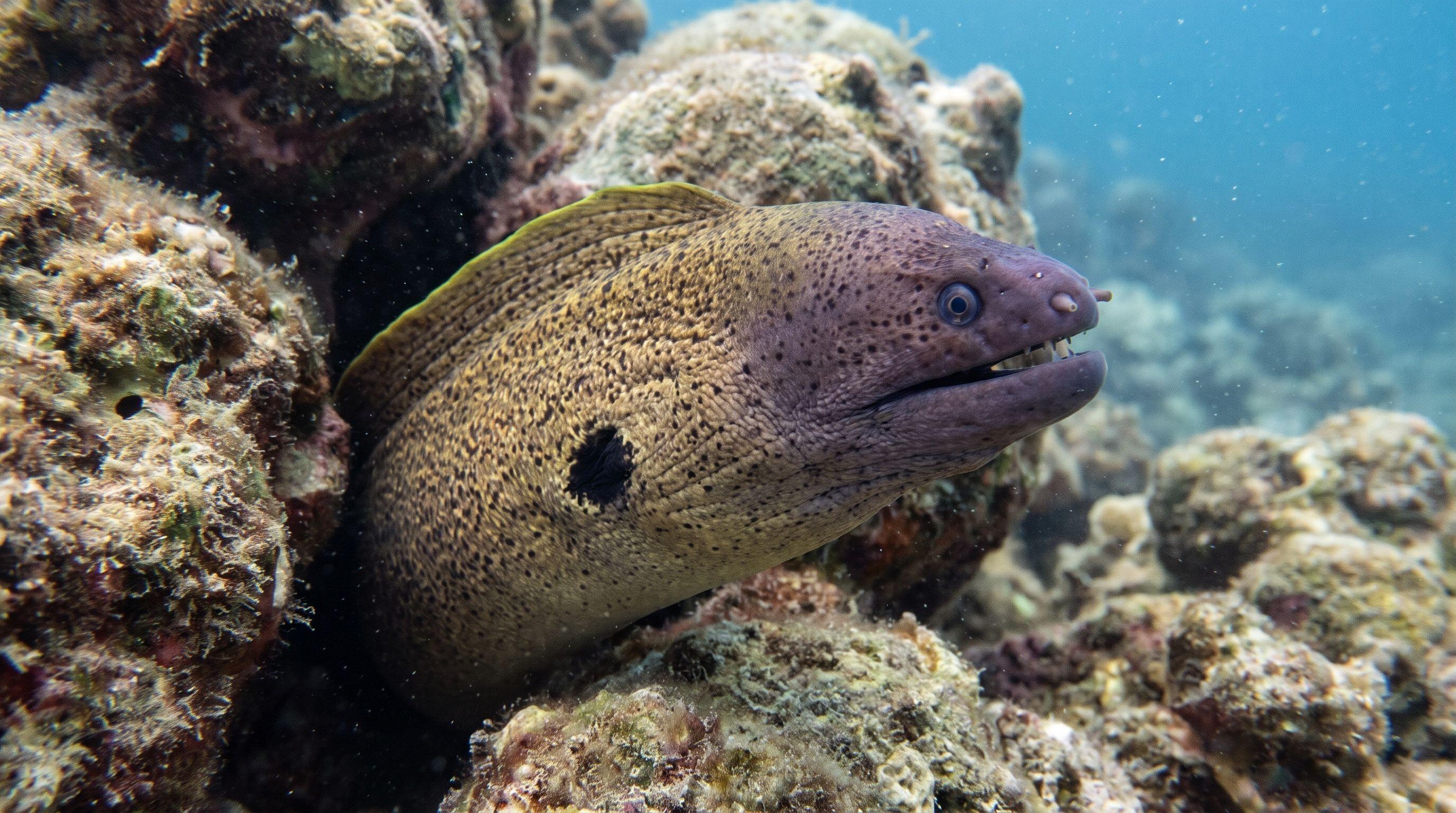
Wikipedia describes a dull yellow eel with a mottled pattern of dark brown or black over most of the body, a purplish-grey head and a large black blotch on the gill cover. The margins of the fins on the rear part of the body are yellowish or greenish. Young fish may have a brighter yellow background with brown blotches. FishBase gives a maximum length of 240 cm; Wikipedia says a more typical length is about 80 cm.
FishBase lists the species as Least Concern on the IUCN Red List (version 2025-2, global), which matches the assessment Wikipedia cites.
Dónde vive.
FishBase calls it a marine, reef-associated fish found from the surface to 150 m. Wikipedia says its range extends from East Africa and the Red Sea to Japan, Indonesia and Australia, on to the Ryukyu and Hawaiian islands and New Caledonia, and to Costa Rica, Panama and the Galápagos Islands. Its typical habitat is coral or rocky areas of reef flats and the protected sides of seaward reefs; FishBase also notes it along drop-offs.
Where Divers Find Them
At Amed, Bali, PADI's page for Gili Selang names yellow margin morays on its reef, with no frequency or season.
Cómo se comporta.
Wikipedia says the yellow-edged moray is usually solitary, hiding in a crevice or buried in the sediment with only its head showing, and sometimes shares its shelter with others of its kind or with other morays. It is mainly nocturnal but also swims freely in the morning and evening, and it eats fish, cephalopods and crustaceans. It is quick to appear when a fish is speared on the reef. FishBase records reports of ciguatera poisoning from eating it.
Underwater Encounter Behavior
The sources cited here do not describe how the yellow-edged moray reacts to divers.
Dónde verlo.
Evidencia para amed · 1 sitio de buceo
La distribución general no demuestra la presencia en un sitio de buceo concreto.
Galería.
 Generado por IA
Crédito de la imagen: AI-generated illustration · Generated for Diveity; no third-party rights · Higgsfield nano_banana_pro image generation