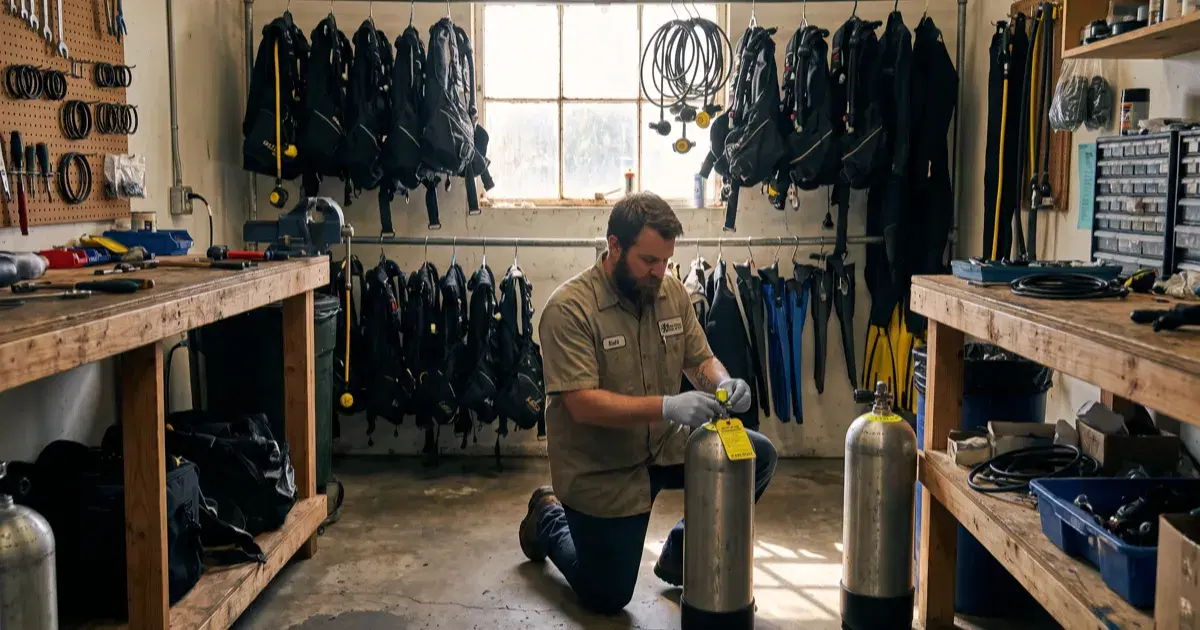
A dive shop's safety record shows up in three checkable places before you hand over a deposit: verified diver reviews, the certifications the staff actually hold, and the condition of the gear on the wall. Checking all three takes less time than filling out the booking form.
Where can you find verified reviews of a dive shop's safety?
Look for reviews tied to a confirmed booking, not a bare star rating on a generic listings site. Diveity's shop reviews come only from verified users and carry a dedicated safety sub-rating alongside overall, visibility, marine life, and value, so you can filter on safety specifically instead of guessing from an average.
Unverified platforms are easier to game. A shop can seed five-star reviews from friends or paid campaigns with no proof anyone dove with them. A safety sub-score tied to an actual account is harder to fake at scale.
What certifications should a safe dive shop hold?
Three things, minimum: agency affiliation (PADI, SSI, or an equivalent training body), current instructor and divemaster certification for staff leading dives, and liability insurance. Ask directly if a shop doesn't post this information, a shop with nothing to hide answers in one sentence.
First-aid and emergency oxygen provider training for staff matters just as much as the diving credentials themselves. A shop can be technically certified to lead dives and still have no one on hand who knows how to run oxygen on a boat.
How do you spot red flags in a dive shop's equipment?
Check for visible hydro-test stickers on tanks, cracked or brittle hoses, and BCDs with worn buckles before you get in the water. A shop that hesitates to let you inspect gear before booking, rather than after, is the clearest red flag on this list.
Regulator service intervals are harder to verify on sight, so ask when the rental fleet was last serviced. A vague answer isn't automatically disqualifying, but a shop that can't answer at all is worth a second look.
What should you ask before booking a dive?
What's the dive-master-to-diver ratio on this trip?
Is emergency oxygen carried on the boat?
How far is the nearest recompression chamber, and has anyone here used the referral process?
What's the cancellation policy if conditions turn rough?
FAQ
Is a cheaper shop automatically less safe? No. Price reflects overhead, location, and boat size as much as safety practice. A budget shop with current certifications and well-maintained gear can be just as safe as a premium one.
Do all dive shops carry the same insurance? No, coverage varies by country and operator. Ask what's covered, and whether it extends to divers, not just staff.
What should you do if a shop refuses to answer safety questions? Book somewhere else. A shop with nothing to hide answers directly; deflection is itself the signal.
How can you tell an outdated certification card from a current one? Ask for the renewal date and cross-check it against the agency's public verification tool if one exists, most major agencies offer one.
Check reviews before you book, on Diveity
Diveity's dive shop profiles surface verified safety sub-ratings alongside overall reviews, so you can compare before you book. Keep your own dive log once you're diving. Diver accounts are free.