Emperor Shrimp
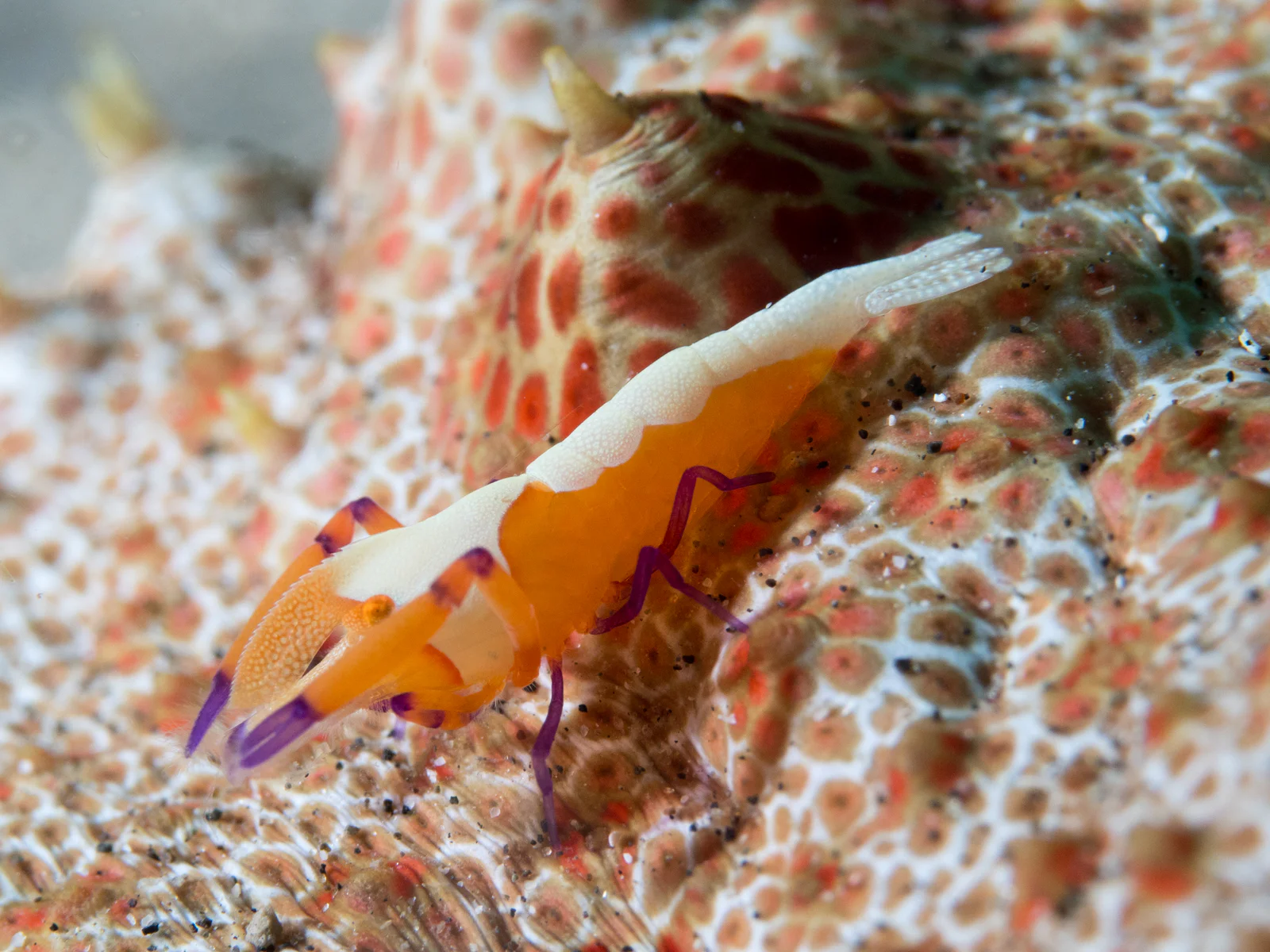
画像提供: Rickard Zerpe · CC BY 2.0 · Wikimedia Commons (from Flickr)
Zenopontonia rex
Emperor Shrimpについて。
The emperor shrimp or imperial shrimp (Zenopontonia rex) is a small shrimp of the family Palaemonidae that lives on sea cucumbers, nudibranchs and other large molluscs. The World Register of Marine Species (WoRMS) lists Zenopontonia rex (Kemp, 1922) as the accepted name and treats Periclimenes imperator Bruce, 1967 as a junior subjective synonym.
Wikipedia describes a robust shrimp, orange-yellow to orange-red with purple antennal plates, claws and walking legs. During the day white areas may cover much of its back and tail fan, and its colouring varies with the host, sometimes matching it. Females are rather larger and slightly less colourful. The same article gives two lengths, about 3 cm in one section and 1.9 cm in another, so the maximum size is not settled here.
SeaLifeBase lists the species as Not Evaluated on the IUCN Red List (version 2025-2), so no conservation status is given here.
生息地。
Wikipedia says it is native to the tropical Indo-Pacific, from the Red Sea, Réunion and Mayotte to Hawaii and French Polynesia, and from southern Japan to New Caledonia and northern Australia. SeaLifeBase calls it reef-associated, and its distribution entry is much narrower, naming only Mozambique. Wikipedia gives depths down to about 40 m in one section and 45 m in another.
Where Divers Find Them
Wikipedia says it always lives on a host. It lists sea cucumbers such as Bohadschia, Stichopus, Synapta maculata and Thelenota, nudibranchs and other large molluscs such as Chromodoris and Hexabranchus, and occasionally starfish. In Tulamben, Bali, bali.com lists emperor shrimps at Batu Kelebit, with no frequency or season.
行動について。
Wikipedia describes it as a commensal, often in a pair or a group of three on one host, usually with identical colouring. The shrimps keep to the host's back or flanks and move to the far side if danger threatens. They feed on detritus on the seabed, clean the surface of the host and feed on its mucus and faeces.
Underwater Encounter Behavior
Wikipedia reports two observations of predation in Tulamben, Bali: a single shrimp living on the nudibranch Ceratosoma tenue attacked a small palaemonid shrimp, and two shrimps on a sea star attacked a small post-larval fish. The sources cited here do not describe how the emperor shrimp reacts to divers.
見られる場所。
すべての目的地の記録 · ダイブサイト1件
一般的な分布域は、特定のダイブサイトでの出現を示す証拠ではありません。
ギャラリー。
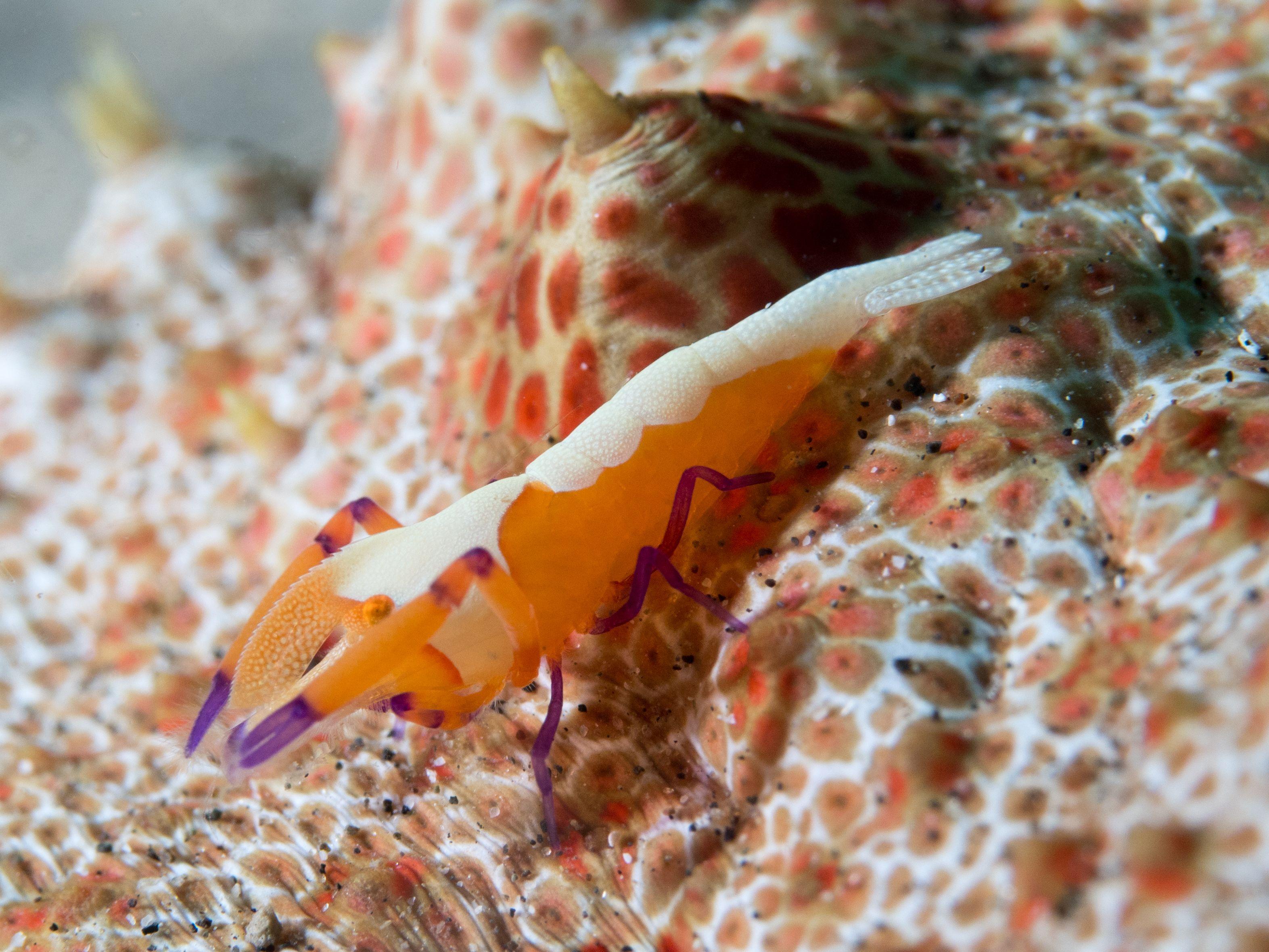
Emperor shrimp (Zenopontonia rex), described by its photographer under the synonym Periclimenes imperator, photographed at Lembeh, Indonesia. This photograph is not from Tulamben.
画像提供: Rickard Zerpe · CC BY 2.0 · Wikimedia Commons (from Flickr)