Stonefish (assorted)
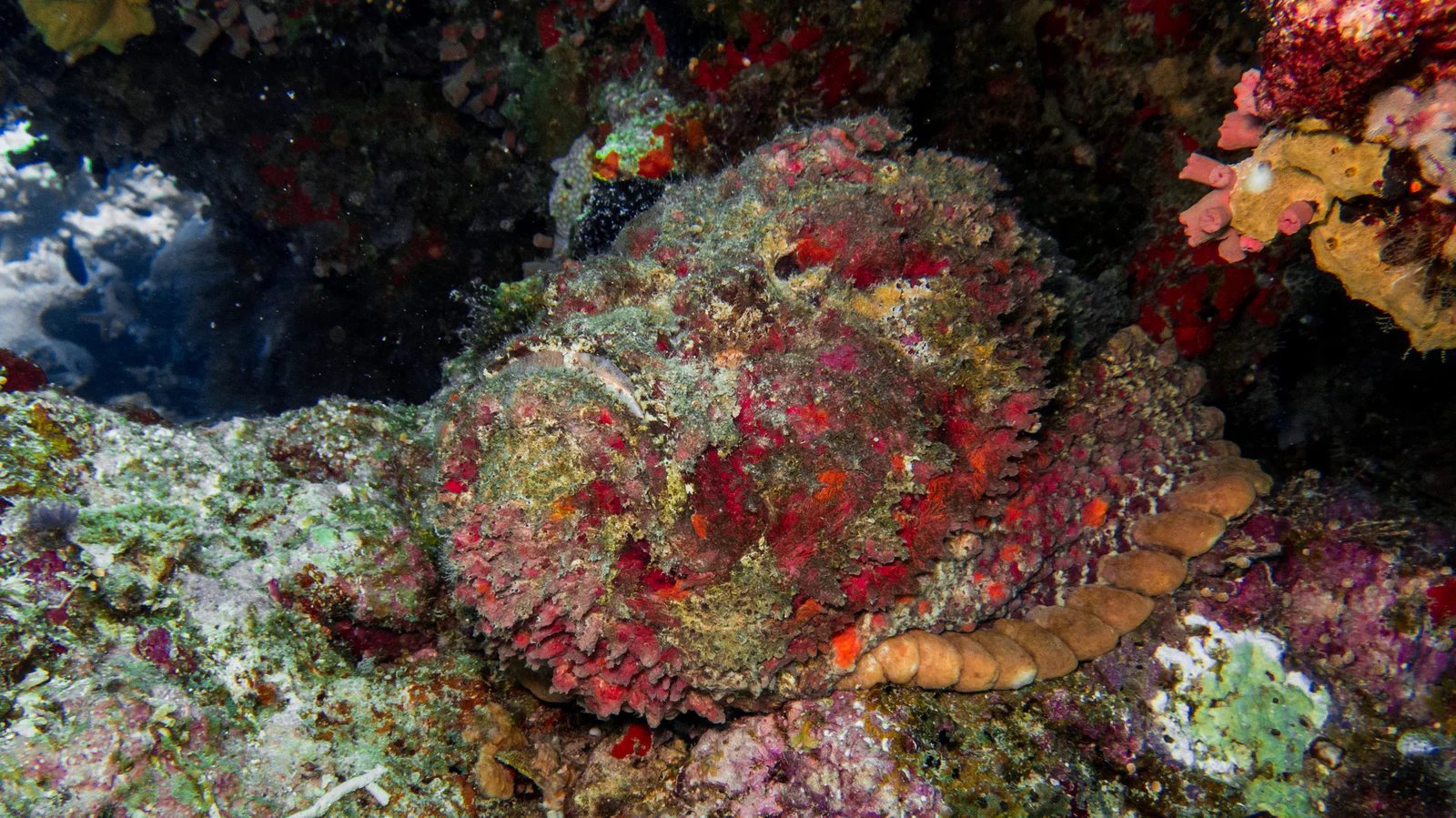
画像提供: João D'Andretta · CC BY 4.0 · Wikimedia Commons (from iNaturalist), cropped by this page
Synanceia spp.
Stonefish (assorted)について。
Stonefish is a common name for the genus Synanceia, not a single species. The World Register of Marine Species (WoRMS) lists Synanceia Bloch & Schneider, 1801 as an accepted genus in the family Synanceiidae. Wikipedia and FishBase each list six species, among them the reef stonefish (Synanceia verrucosa) and the estuarine stonefish (Synanceia horrida). This group entry covers sightings where the species was not recorded; the reef stonefish has its own entry.
Wikipedia says the name comes from their grey, mottled camouflage, similar to the colour of a stone. It notes that some authorities place the stonefishes in the scorpionfish family Scorpaenidae rather than in a family of their own; this entry follows WoRMS.
A conservation status is not given here, because this entry covers a whole genus.
生息地。
Wikipedia says stonefishes are found in the coastal regions of the Indo-Pacific; they are primarily marine and most live on coral reefs of the tropical Pacific and Indian oceans, though some species are known to live in rivers.
Where Divers Find Them
At Amed, Bali, Amed Jepun Divers lists stonefish at Ghost Bay and at the Japanese Shipwreck, where it says they linger on the sandy bottom with trumpetfish and crocodile flatheads. Amed Dive Center mentions huge stonefishes at Ghost Bay, and Blue Season Bali says the artificial reef there is home to large stonefish. None of them says which species, or how often.
行動について。
Wikipedia calls stonefishes the most venomous fish known. Potent neurotoxins are secreted from glands at the base of their needle-like dorsal fin spines, which stick up when the fish is disturbed or threatened. Wikipedia says stings can cause intense pain, respiratory weakness, damage to the cardiovascular system, convulsions and paralysis, and can be fatal to humans.
Underwater Encounter Behavior
Wikipedia says stonefishes are not easily seen, because they look like rocks or coral, and that most stings happen when someone steps on one; stings are less common when the fish is picked up. The sources cited here do not describe how stonefishes react to divers.
見られる場所。
すべての目的地の記録 · ダイブサイト2件
一般的な分布域は、特定のダイブサイトでの出現を示す証拠ではありません。
ギャラリー。
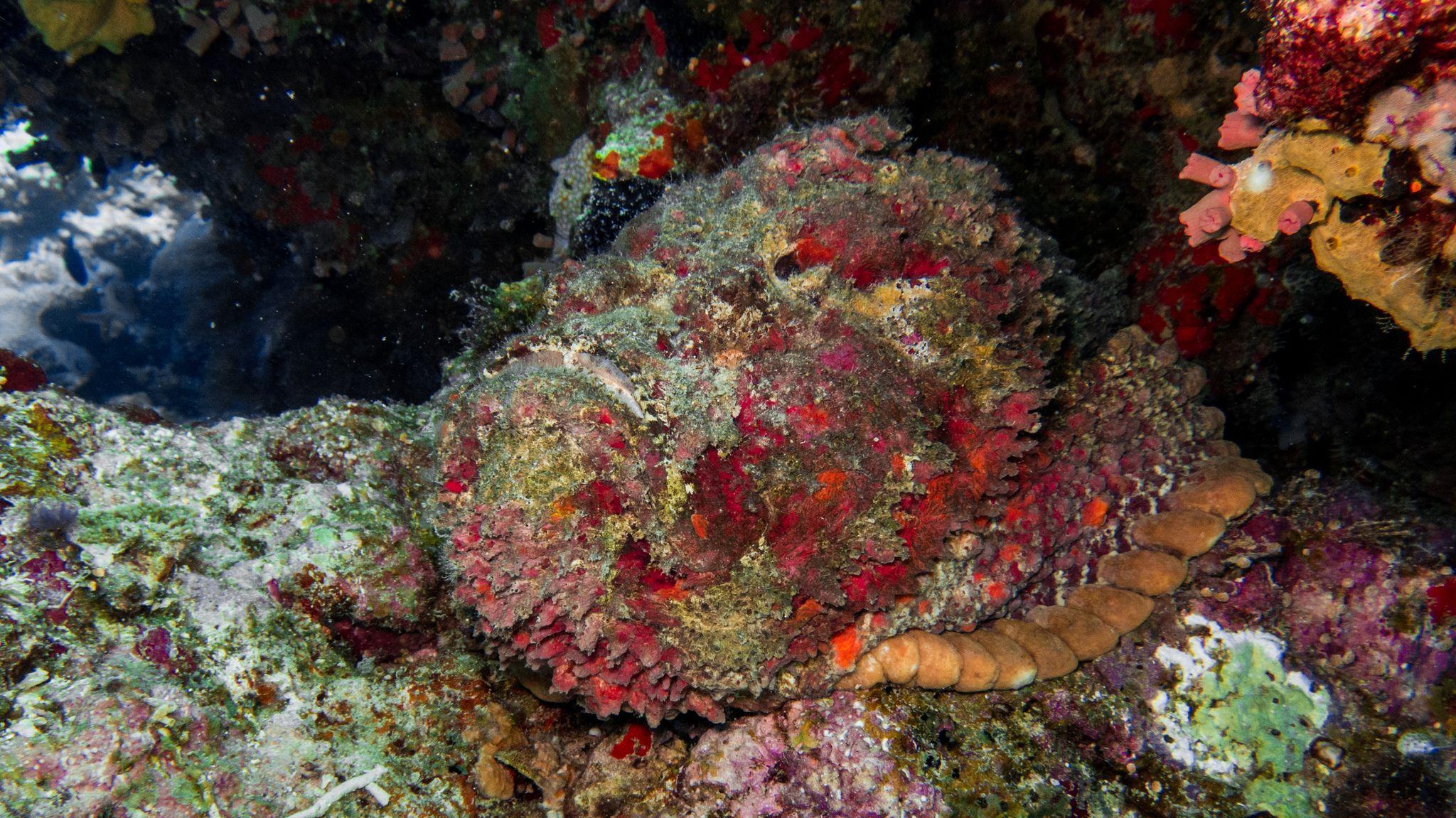
A reef stonefish (Synanceia verrucosa), one species of the stonefish genus, resting on a reef off north-east Australia, photographed on 23 December 2017. This photograph is not from Amed, and the sources for Amed's sightings do not say which species of stonefish was seen. This page's frame crops the photograph.
画像提供: João D'Andretta · CC BY 4.0 · Wikimedia Commons (from iNaturalist), cropped by this page