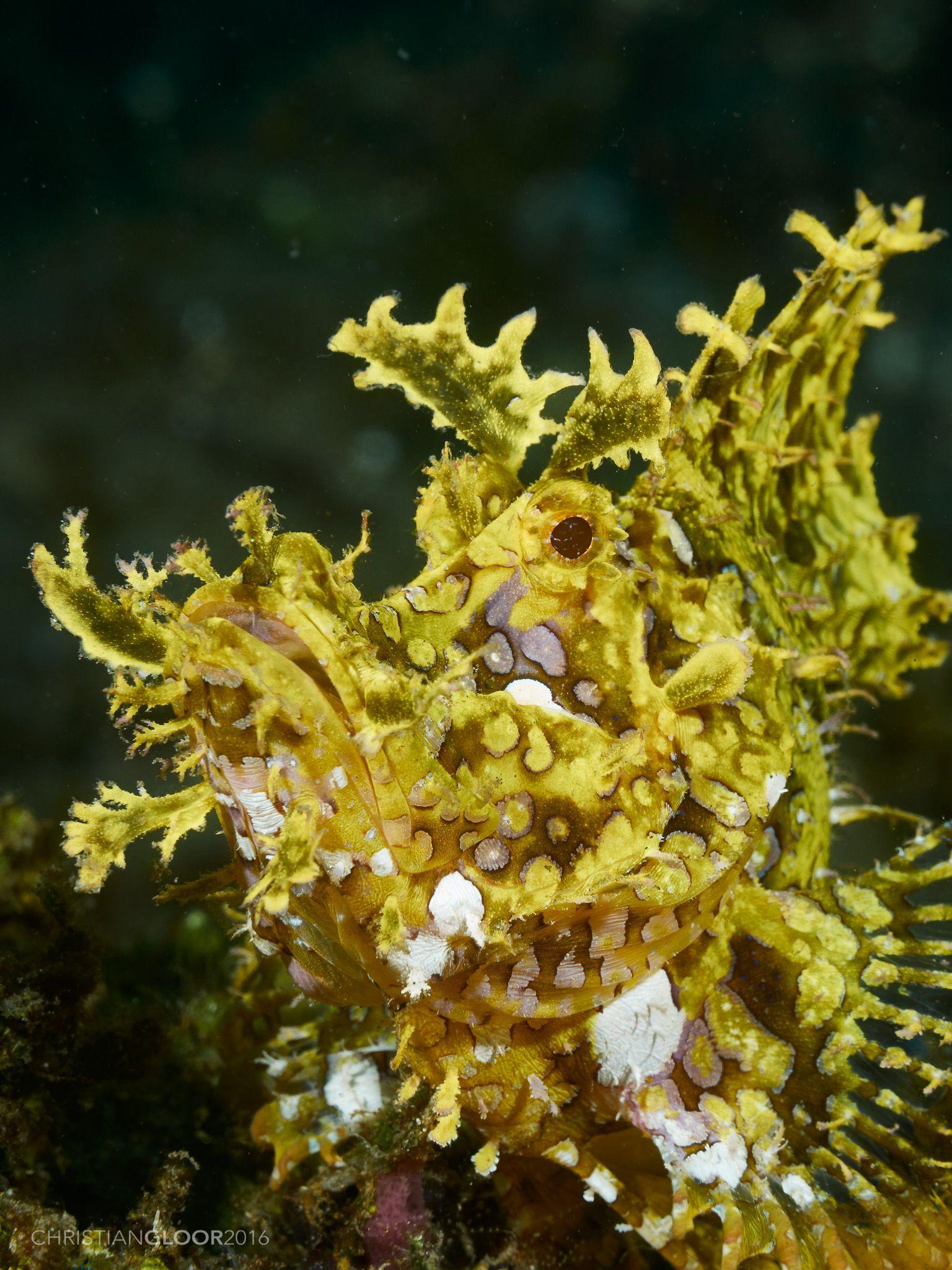
Ambon Scorpionfish
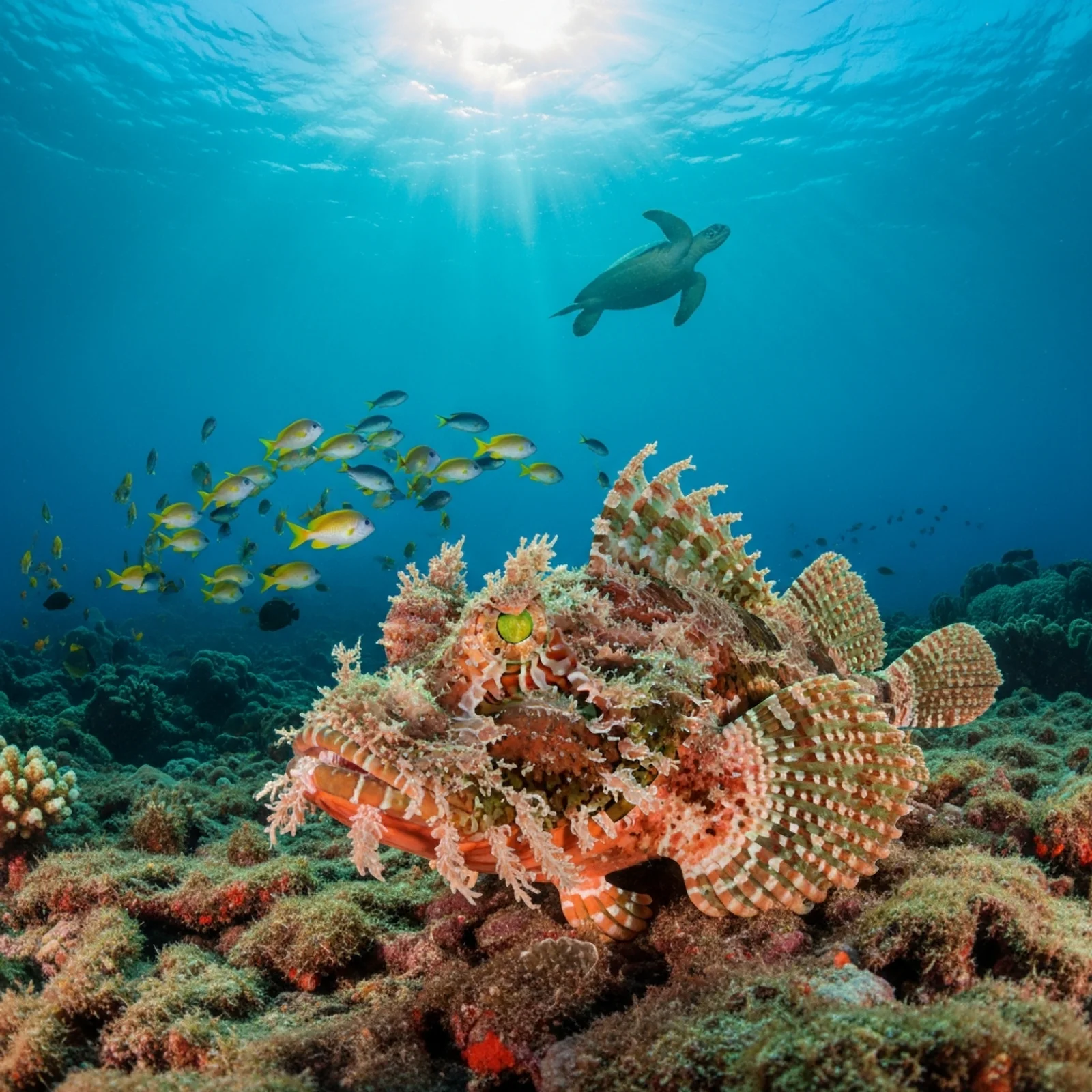
Pteroidichthys amboinensis
About Ambon Scorpionfish.
The Ambon Scorpionfish, scientifically known as Pteroidichthys amboinensis, is a master of disguise within the family Scorpaenidae, commonly referred to as scorpionfishes or rockfishes. This captivating species is a highly sought-after subject for macro photographers and divers due to its extraordinary camouflage abilities. Its scientific name honors Ambon Island in Indonesia, where it was first described.
Found across the Indo-West Pacific, its range extends from the Red Sea to Fiji, encompassing diverse locations such as China, Micronesia, Indonesia, Papua New Guinea, Japan, Vietnam, Australia, Taiwan, and India. In the Philippines, it has been observed at dive sites like Secret Bay and Talisay Pier, and is a particular highlight in muck diving locations such as Anilao and Lembeh. The Ambon Scorpionfish is a demersal species, typically found at depths of 3–43 m, inhabiting soft substrates like sand and mud, often blending seamlessly with filamentous algae growths on coastal reefs. It is a solitary ambush predator, remaining motionless for extended periods, patiently waiting for unsuspecting prey. Despite its formidable appearance and venomous spines, its conservation status is currently listed as Least Concern by the IUCN Red List.
Identification
- Size: The Ambon Scorpionfish is a relatively small species, reaching a maximum size of approximately 13 cm (5 inches) in total length.
- Camouflage and Body Shape: This species is renowned for its exceptional camouflage, which allows it to blend almost perfectly with its surroundings, mimicking detritus, algae, or plant debris. Its body is covered in numerous skin filaments and dermal appendages, giving it a "hirsute" or rugged appearance, with these flaps often more prominent in males.
- Coloration: Its coloration is highly variable, ranging from mottled blackish and reddish to shades of yellow, brown, red, and pink, allowing it to radically change its hue to match the substrate.
- Distinctive Facial Features: Key identification features include two prominent, horn-like growths (supraocular tentacles) located above each eye, and a wide, mustache-like growth of dermal projections on both sides of its mouth. These tentacles are well-developed, often longer than the diameter of its orbit.
- Fins: The Ambon Scorpionfish possesses dramatically enlarged pectoral fins that can create a wing-like appearance. It has 12 flexible dorsal spines and 9 dorsal soft rays, along with 2 anal spines and 6 anal soft rays. Notably, there is no distinct black blotch on the soft-rayed portion of its dorsal fin.
- Spines: While it has venomous spines, the lateral lacrimal and suborbital spines are poorly developed and often appear as tiny spines or bony protuberances without pointed tips.
Where it lives.
The Ambon Scorpionfish (Pteroidichthys amboinensis) is a master of camouflage, perfectly adapted to blend into its preferred habitats across the vast Indo-West Pacific region. This includes the Red Sea, India, Vietnam, Indonesia (including Ambon, Sulawesi, Bali, and Komodo), Papua New Guinea, southern Japan (excluding the Ryukyu Islands), Australia (northwestern Western Australia and the Great Barrier Reef), Taiwan, and Fiji.
Divers can typically encounter the Ambon Scorpionfish at depths ranging from 3–43 m, though some observations extend to 40 m. It thrives in environments characterized by soft substrates, making its home on:
- Sandy and Muck Bottoms: These are its primary habitats, where its elaborate skin flaps and variable coloration allow it to mimic detritus and blend seamlessly with the substrate.
- Silty Areas: Often found in silty environments, particularly those with filamentous algae growths or other forms of marine vegetation.
- Coastal Reefs and Slopes: While primarily a bottom dweller, it is also associated with the sandy and rubble areas adjacent to coral reef slopes, utilizing mixed substrates for optimal camouflage and ambush hunting.
The Ambon Scorpionfish is a solitary ambush predator, remaining motionless for extended periods as it waits for unsuspecting prey. Its presence is often indicative of healthy marine ecosystems with diverse prey communities. Dive sites known for excellent muck diving, such as Secret Bay in Bali, Indonesia, are prime locations to spot this species. Secret Bay, a shallow muck dive site with fine black and gray volcanic sand and rubble, typically ranges from 3–10 m in depth, with water temperatures around 23–25°C. Similarly, locations like Talisay, Philippines, which offer a mix of sandy slopes and coral reef environments, provide suitable habitats for the Ambon Scorpionfish.
How it behaves.
The Ambon Scorpionfish (Pteroidichthys amboinensis) is a master of disguise, making it a prized and often challenging find for divers exploring the Indo-Pacific's diverse underwater landscapes. This small, fascinating fish, reaching up to 13 cm (5 in) in length, is renowned for its exceptional camouflage and sedentary lifestyle.
- Underwater Encounter Behavior
Divers encountering an Ambon Scorpionfish will typically find it motionless, perfectly blended into its surroundings. This species is a highly sedentary ambush predator, relying on its remarkable camouflage to avoid detection by both prey and potential threats. Its body is adorned with numerous skin flaps, tentacles, and cirri (hair-like appendages above the eyes), which, combined with its ability to change coloration (ranging from browns, yellows, reds, to pinks), allow it to mimic algae, detritus, or other bottom debris. It inhabits soft substrates such as sandy and muddy bottoms, often among filamentous algae growths or rubble, typically encountered at depths between 7 and 43 m (23 and 141 ft). When approached, the Ambon Scorpionfish usually remains still, demonstrating extraordinary patience. However, divers should maintain a respectful distance as this fish possesses venomous spines on its dorsal fin, which are used purely for defense when threatened or cornered. These spines deliver potent neurotoxins, and envenomation can be highly toxic to humans. Interestingly, the Ambon Scorpionfish is also capable of producing audible clicking or drumming sounds through specialized muscle contractions against its swim bladder, a form of acoustic communication used during territorial disputes or mating displays. Its elusive nature makes it a rewarding subject for macro photography, requiring patience and a keen eye to spot. - Feeding Habits
As a solitary ambush predator, the Ambon Scorpionfish employs a sit-and-wait strategy. It patiently lies in wait, perfectly camouflaged, until unsuspecting prey comes within striking distance. Its feeding mechanism is a rapid suction strike: it quickly opens its wide mouth, creating a strong vacuum that sucks in the prey whole. Its diet primarily consists of crustaceans and small fish. While often observed during day dives, it is known to hunt actively at night. - Social Structure
The Ambon Scorpionfish is generally considered a solitary species. However, observations suggest they can sometimes be found in pairs, particularly during mating periods. The acoustic communication mentioned earlier, involving clicking or drumming sounds, plays a role in both territorial displays and mating interactions. - Notable Seasonal Patterns
Information regarding specific seasonal patterns for the Ambon Scorpionfish's reproduction is limited. It is an oviparous species, meaning females lay eggs, and fertilization occurs in open water. The eggs are then dispersed by currents. While a distinct breeding season is not widely documented, some dive sites report sightings of this species "all year," suggesting it may not have a highly restricted seasonal presence in certain areas.
Where to see it.
Evidence for philippines · 2 dive sites
General range is not evidence of occurrence at a specific dive site.
Secret Bay
Anilao
Site occurrence not yet documented
Season not yet documented
No dated observations available.
Talisay Pier
Cabilao Island
Site occurrence not yet documented
Documented site seasonality: Jan, Feb, Mar, Apr, May, Jun, Jul, Aug, Sep, Oct, Nov, Dec
No dated observations available.
Gallery.