Anemonefish / Clownfish (assorted)
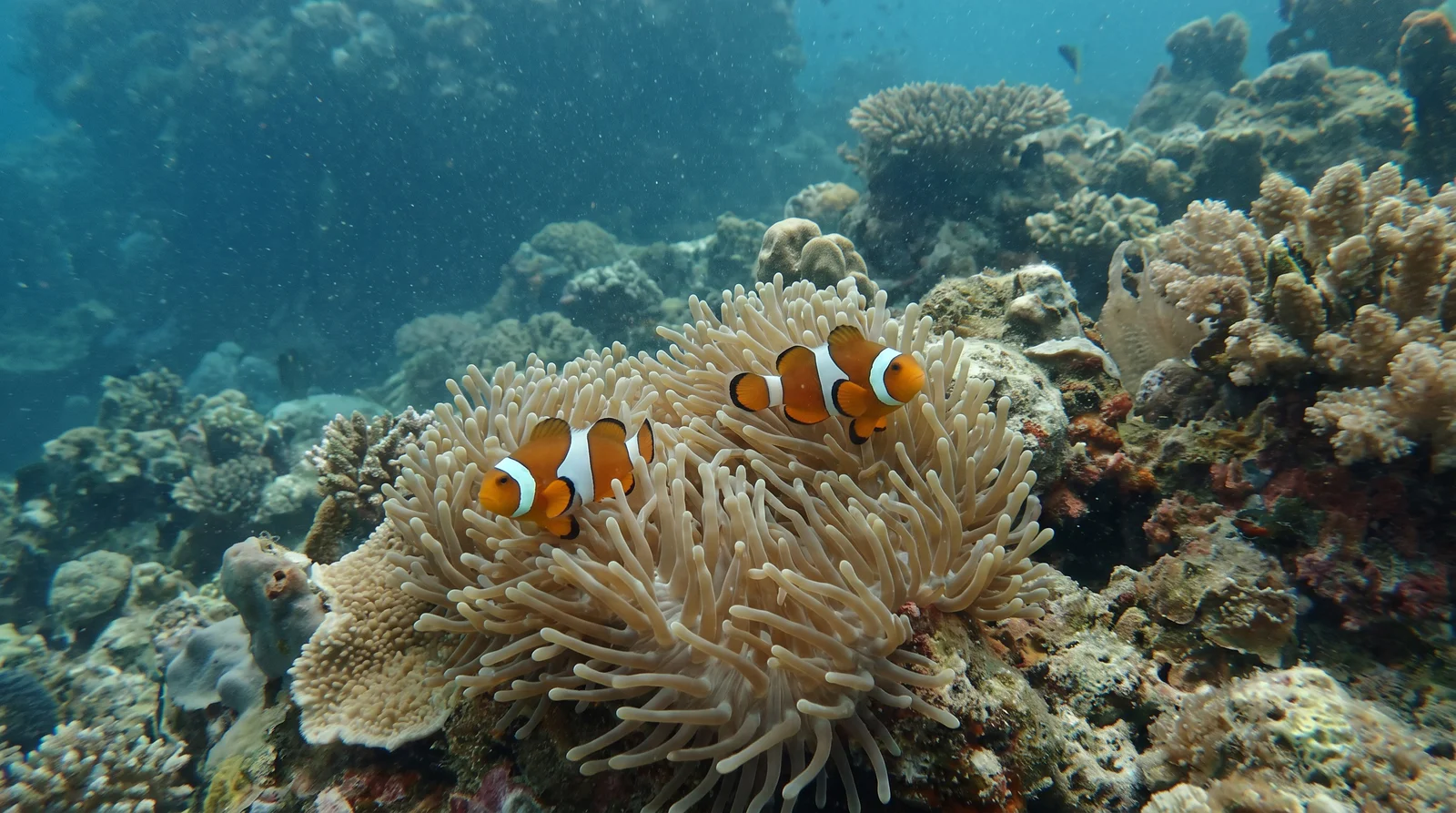 AI-generated
Image credit: AI-generated illustration · License unspecified · Source unspecified
Amphiprion spp.
About Anemonefish / Clownfish (assorted).
Anemonefish, widely called clownfish, are small damselfishes (family Pomacentridae) of the genus Amphiprion that live in close partnership with large sea anemones on warm Indo-Pacific reefs. This group entry covers sightings where the exact species was not recorded. Diveity also has individual species pages for the Ocellaris Clownfish, Clark's Anemonefish, the Barrier Reef Anemonefish, the Red Sea Clownfish and the Maroon Anemonefish. The species share one body plan and lifestyle, but differ in colour, in the number and shape of their white bars, and in which anemones they use as hosts. FishBase lists A. ocellaris as harmless to humans and of no interest to fisheries.
A taxonomic note: the Maroon (Spinecheek) Anemonefish was long placed in its own genus as Premnas biaculeatus. The World Register of Marine Species (WoRMS) now treats that name as unaccepted and lists the fish as Amphiprion biaculeatus, and FishBase uses the same name, so it falls within this group. Older field guides may still use Premnas.
Identification
- Size: Small fish. FishBase gives a maximum length of 11 cm for the Ocellaris Clownfish (A. ocellaris) and 17 cm for the Spinecheek Anemonefish (A. biaculeatus).
- Colour: Usually orange, red, brown or near-black, and many species carry one or more white bars; the colour and bar pattern are the main clues to species.
- Setting: Almost always seen within a short distance of a host anemone, moving in and out of its tentacles.
- Group structure: Often a larger fish and one or more smaller fish share an anemone. FishBase notes that in A. biaculeatus the males are much smaller than the females.
Conservation status varies by species. FishBase reports IUCN Red List assessments of Least Concern for both A. ocellaris and A. biaculeatus (both assessed in 2021). FishBase also notes that A. ocellaris is traded for aquariums and has been reared in captivity.
Where it lives.
Anemonefish are reef fish of the Indo-Pacific. Because adults live among the tentacles of large sea anemones, they are found where suitable host anemones grow, mostly on shallow, sunlit reef flats, lagoons and reef slopes. FishBase gives the range of the Ocellaris Clownfish as the eastern Indian Ocean across Southeast Asia, north to Taiwan and the Ryukyu Islands, and that of the Spinecheek Anemonefish as India and Southeast Asia east to New Guinea, the Solomon Islands, Vanuatu and northern Queensland. Other species, such as the Red Sea Clownfish, occupy other parts of the region. FishBase lists these fish as tropical and reef-associated.
Where Divers Find Them
- Depth: Mostly shallow. FishBase gives 1–15 m for A. ocellaris and 1–16 m for A. biaculeatus; other species may differ.
- Reef zones: FishBase describes A. ocellaris on coral reefs in shallow, calm lagoons, and A. biaculeatus on lagoon and seaward reefs, mainly in protected coastal waters.
- Host anemones: Hosts listed by FishBase include Heteractis magnifica, Stichodactyla gigantea and Stichodactyla mertensii for A. ocellaris, and Entacmaea quadricolor for A. biaculeatus.
- Site fidelity: FishBase lists both species as non-migratory, and adults stay closely tied to their host anemone.
Because anemonefish seldom leave their hosts, the most productive way to find them is to look for large anemones on reef tops and upper slopes, then check among the tentacles and around the base of the anemone. FishBase describes adults of both species as living among the tentacles of their hosts, so searching reef areas without anemones is rarely productive.
How it behaves.
Anemonefish are among the easiest reef fish to watch, because they stay with one anemone rather than roaming the reef. The tentacles sting most other fish, but the anemonefish shelter among them unharmed, and the fish are generally described as defending their anemone against intruders.
Underwater Encounter Behavior
Resident fish often swim out a short distance toward an approaching diver and then retreat into the tentacles. FishBase describes breeding pairs of A. ocellaris as monogamous and notes that A. biaculeatus is usually found in pairs. FishBase also records A. ocellaris as a protandrous hermaphrodite: individuals mature first as males and can later change sex to female. The eggs are demersal and stick to the substrate, and the males guard and aerate them, so a male tending a clutch of eggs on rock beside the anemone may be seen. FishBase notes that A. biaculeatus is active by day and feeds mainly on zooplankton and bottom-growing algae. In that species the larger fish of a pair is the female. FishBase also records an A. ocellaris that lived to 12 years of age in captivity.
Diver Tips
- Do not touch: Keep hands, fins and cameras off the anemone. The tentacles sting, and contact can damage the anemone.
- Approach slowly: Hover at a distance with good buoyancy and let the fish settle; a fish darting at you is defending its home, so back off a little.
- Look for eggs: Check bare rock near the base of the anemone for egg clutches guarded by the male, and avoid stirring up sand over them.
- Photography: The fish move constantly within the tentacles; patience works better than chasing, and limiting repeated close strobe use reduces disturbance.
- Record the details: Note the colour, the bar pattern and the host anemone so the sighting can be matched to a species page.
Where to see it.
Evidence for davao gulf · 4 dive sites
General range is not evidence of occurrence at a specific dive site.
Dapia
Davao Gulf
Documented site occurrence
Season not yet documented
Source reviewed on 2026-10-14 · Source: PADI dive-site page (contributor: South Shore Divers) · Observation date not documented
Isla Reta
Davao Gulf
Documented site occurrence
Season not yet documented
Source reviewed on 2026-10-14 · Source: PADI dive-site page (contributor: South Shore Divers) · Observation date not documented
Mansud Wall
Davao Gulf
Documented site occurrence
Season not yet documented
Source reviewed on 2026-10-14 · Source: Dive Happy (Chris Mitchell; Scuba Diver AustralAsia 2008 article) · Observation date not documented
San Jose
Davao Gulf
Documented site occurrence
Season not yet documented
Source reviewed on 2026-10-14 · Source: PADI dive-site page (contributor: South Shore Divers) · Observation date not documented
Gallery.
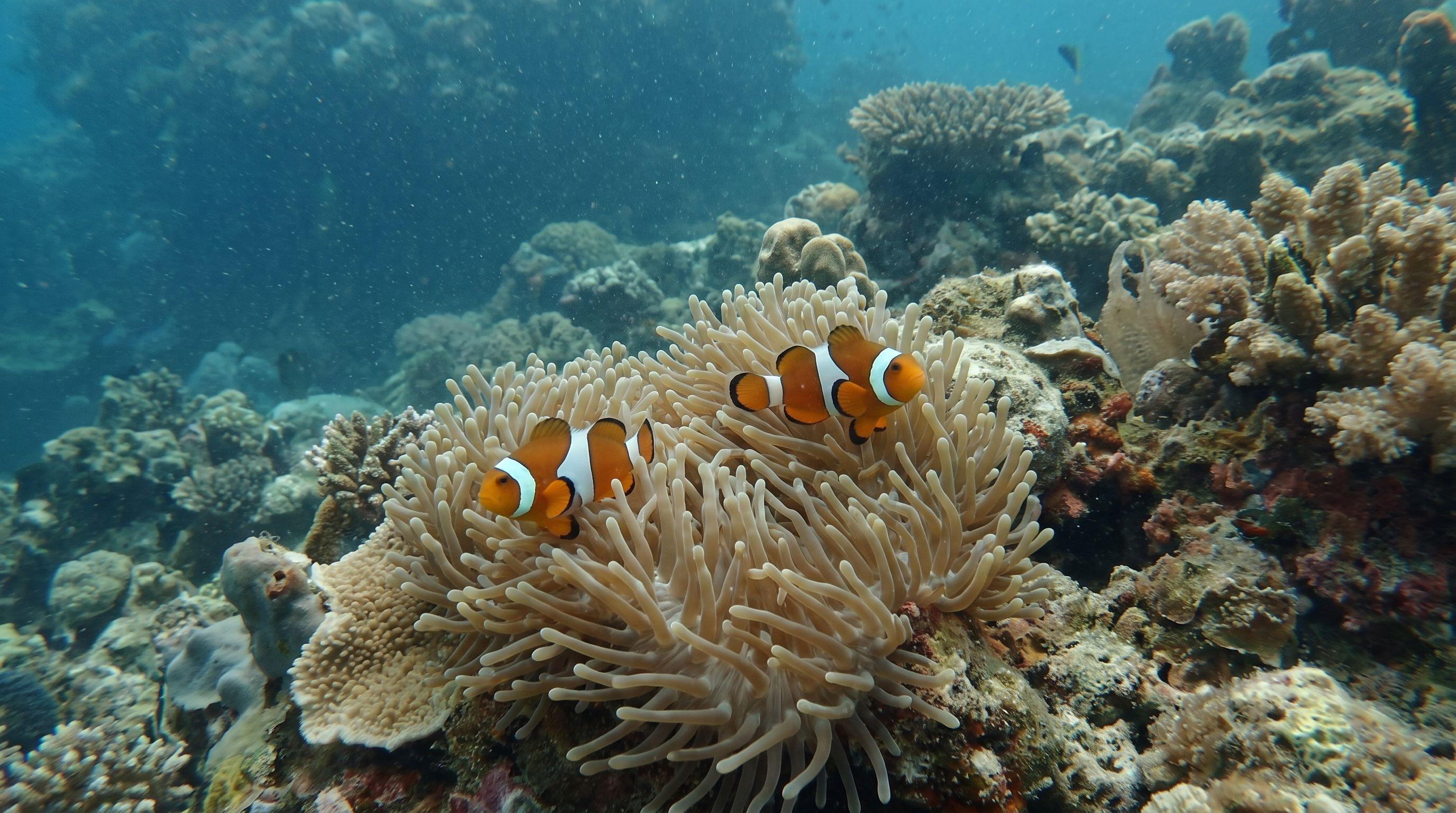 AI-generated
AI-generated illustration
Image credit: AI-generated illustration · License unspecified · Source unspecified