Angelfish (assorted)
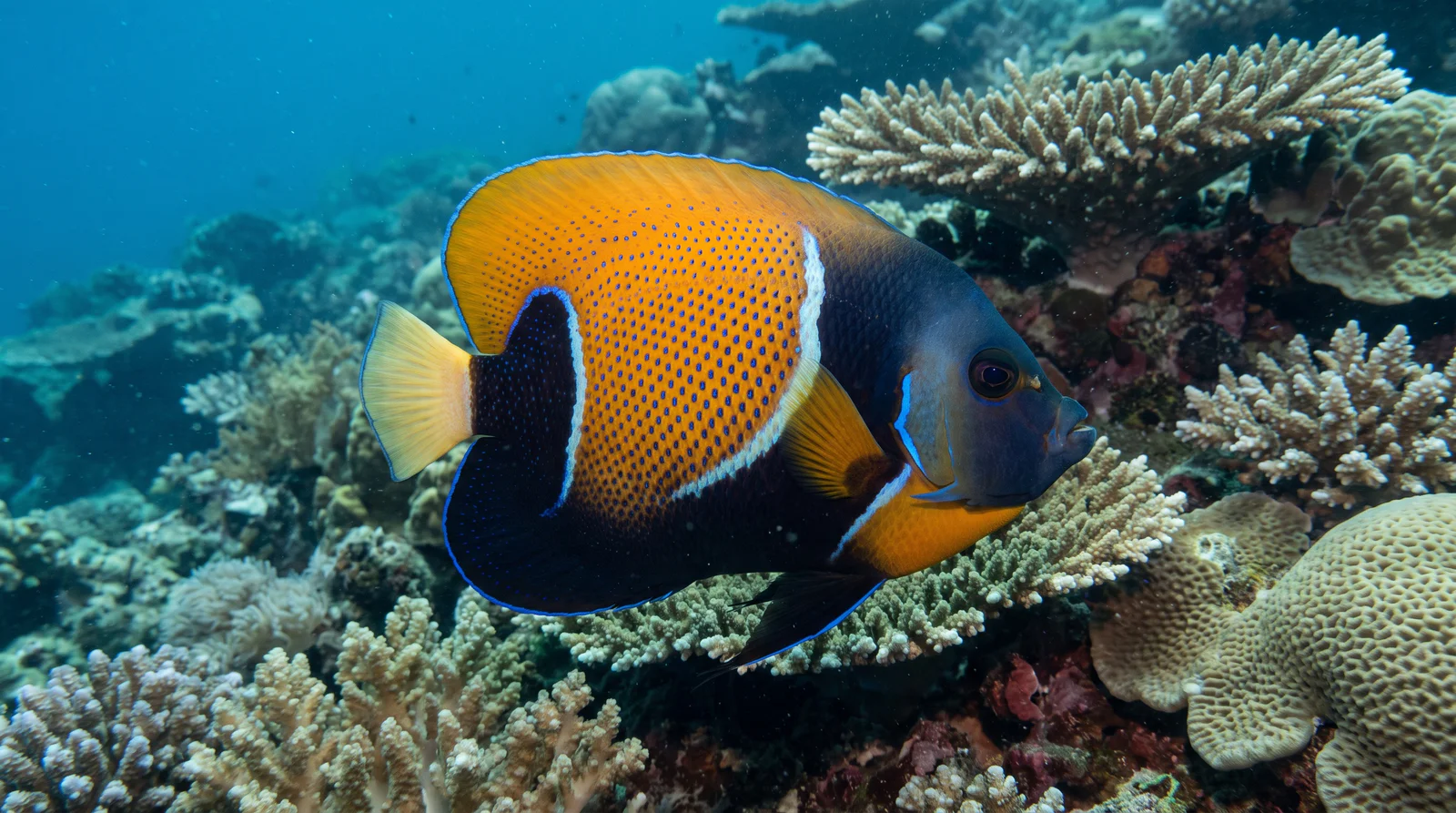 AI-generated
Image credit: AI-generated illustration · Generated for Diveity; no third-party rights · Higgsfield nano_banana_pro image generation
Pomacanthidae spp.
About Angelfish (assorted).
Marine angelfishes are deep-bodied, strongly compressed reef fishes of the family Pomacanthidae. This group entry covers angelfish sightings where the species was not recorded. Diveity also has individual pages for the Blue-face Angelfish (Pomacanthus xanthometopon), the Emperor Angelfish (Pomacanthus imperator), the Regal Angelfish (Pygoplites diacanthus) and the Six-banded Angelfish (Pomacanthus sexstriatus), and, in the western Atlantic, for the French Angelfish (Pomacanthus paru), the Queen Angelfish (Holacanthus ciliaris) and the Rock Beauty (Holacanthus tricolor). The World Register of Marine Species (WoRMS) lists Pomacanthidae as an accepted family in the order Acanthuriformes with eight accepted genera: Apolemichthys, Centropyge, Chaetodontoplus, Genicanthus, Holacanthus, Paracentropyge, Pomacanthus and Pygoplites. The FishBase family page counts seven genera and 91 species, so the two databases divide the family slightly differently.
The name "angelfish" is also used for the freshwater aquarium fishes of the genus Pterophyllum, which are cichlids and are not related to this family; they are not covered here. Because many angelfishes look very different as juveniles and as adults, the young and old of one species can easily be taken for different fish.
Identification
- Family features: FishBase describes a strongly compressed body, a strong spine at the angle of the preopercle (the gill-cover bone) and three spines in the anal fin; many species have an elongate extension on the hind margin of the soft dorsal and anal fins.
- Angelfish or butterflyfish: The Australian Museum notes that angelfishes are related to the butterflyfishes (family Chaetodontidae) and that the two families can be told apart by a large spine on the lower, rear margin of the preoperculum, which is present in angelfishes and absent in butterflyfishes.
- Size: FishBase gives maximum lengths of 15 cm TL for Centropyge bicolor and C. loricula, 25 cm SL for Pygoplites diacanthus, 38 cm TL for P. xanthometopon, 40 cm SL for P. imperator and 46 cm TL for P. sexstriatus. The Australian Museum gives 38 cm for P. imperator, so sources differ by a few centimetres. In the western Atlantic, FishBase gives 41.1 cm TL for P. paru, 45 cm TL for H. ciliaris and 35 cm TL for H. tricolor.
- Juveniles: FishBase says the colours of many species are markedly different between juveniles and adults. The Australian Museum describes the juvenile P. imperator as dark blue-black with a white ring on the rear of the body, while the adult has diagonal yellow and purplish-blue stripes and a curved black bar over the eye. FishBase adds that juveniles of this species have a white dorsal-fin margin.
- Atlantic field marks: FishBase describes H. ciliaris with entirely yellow tail and pectoral fins and a black forehead spot ringed in electric blue, H. tricolor with a yellow front body and tail and black elsewhere, and P. paru as black with golden-yellow scale edges.
Conservation status varies by species. FishBase reports IUCN Red List assessments of Least Concern, all dated 2009, for the species named above. FishBase lists P. xanthometopon, P. sexstriatus, P. diacanthus, H. tricolor, C. bicolor and C. loricula as harmless to humans. It also notes that several species, including P. imperator and P. diacanthus, are exported for the aquarium trade, and that P. diacanthus rarely survives in an aquarium.
Where it lives.
Angelfishes are reef fishes of the tropical Atlantic, Indian and mainly western Pacific oceans, according to the FishBase family page. FishBase also states that they occur in shallow water of less than 20 m, very seldom below 50 m, and generally near coral reefs; its individual species pages give wider depth ranges in some cases, which is why the figures below are attributed species by species.
Where Divers Find Them
- Indo-Pacific ranges: FishBase gives the range of P. imperator as the Red Sea and East Africa to the Line and Tuamotu islands, north to southern Japan and south to the Great Barrier Reef. It gives P. xanthometopon as Maldives to Vanuatu, P. sexstriatus as Ryukyu Islands to Malaysia, Indonesia and the Solomon Islands, south to Australia, and P. diacanthus as Red Sea and East Africa to the Tuamotu Islands.
- Atlantic ranges: FishBase gives P. paru as a western Atlantic species from Florida and the Bahamas to Brazil, including the Gulf of Mexico and the Caribbean, H. ciliaris from Florida and the Gulf of Mexico to Brazil, and H. tricolor from Georgia, Bermuda and the northern Gulf of Mexico to Brazil.
- Depth: FishBase gives 1–100 m for P. imperator, 5–30 m for P. xanthometopon, 0–110 m for P. diacanthus, 3–60 m for P. sexstriatus, 1–25 m for C. bicolor and 0–60 m for C. loricula. For the Atlantic species it gives 3–100 m for P. paru, 1–70 m for H. ciliaris and 3–92 m (usually 3–35 m) for H. tricolor.
- Caves and ledges: FishBase notes that P. xanthometopon and P. diacanthus are often found near caves, and that large adult P. imperator inhabit ledges and caves in areas of rich coral growth on clear lagoon, channel or seaward reefs.
- Young fish: FishBase says juvenile P. imperator are found under ledges or in holes of outer lagoon patch reefs, juvenile P. xanthometopon settle in very shallow inshore caves with algae growth, and juvenile P. sexstriatus prefer sheltered inner reefs. Juvenile H. tricolor are often associated with fire corals.
- Other settings: FishBase describes C. bicolor in lagoons, channels and protected seaward slopes, drop-offs, coral and rubble areas, and C. loricula in clear lagoon and seaward reefs from the lower surge zone to 57 m. It notes H. tricolor on rock jetties, rocky reefs and rich coral areas.
For divers, reef walls with caves and overhangs, lagoon and channel edges and the shelter of ledges are the usual places to look, and small species or young fish are easy to miss because they stay close to cover.
How it behaves.
Social organisation in angelfishes varies. The FishBase family page lists monogamy, harems, promiscuity and lekking, and says that several species are protogynous hermaphrodites with a harem system and that angelfishes are pelagic spawners. At species level, FishBase describes P. sexstriatus as solitary or mostly in pairs, P. imperator as forming pairs, P. diacanthus as solitary, in pairs or in groups, C. bicolor as usually in pairs or small groups, and C. loricula as forming harems of 3–7 individuals. Encounters therefore range from a single fish to a pair or a small cluster.
Underwater Encounter Behavior
FishBase describes P. sexstriatus as very elusive and notes that it emits loud grunting sounds when harassed. It says C. bicolor darts from one hiding place to the next and that C. loricula is secretive and stays near shelter. On diet, FishBase says Centropyge species feed primarily on filamentous algae and Genicanthus species primarily on zooplankton, while most others feed on sponges, invertebrates, algae and fish eggs. For named species it lists sponges and tunicates for P. imperator and P. diacanthus, and sponges almost exclusively for H. ciliaris, based on the stomach contents of 26 specimens. Some young angelfishes act as cleaners: FishBase says juvenile P. paru tend cleaning stations serving clients such as jacks, snappers, morays and wrasses, and that young H. ciliaris pick ectoparasites from other fishes. For P. paru it also describes monogamous, strongly territorial spawning pairs. Sex change is reported for C. bicolor, where FishBase says sex reversal is completed in 18–20 days, while for H. tricolor it says protogyny has been proposed and awaits confirmation.
Diver Tips
- Look for the spine: A deep-bodied, flat reef fish with a strong spine at the lower rear edge of the gill cover is an angelfish rather than a butterflyfish.
- Photograph the whole fish: Juveniles and adults of the same species can look very different, so clear photographs of the full body, both sides if possible, help later identification.
- Check caves and ledges: Many species stay near shelter, so look into caves and under overhangs without entering confined spaces beyond your training.
- Keep your distance: Do not chase or corner shy fish, and do not touch the reef while looking for them.
- Do not feed: Avoid feeding angelfishes or any other reef fish, as it changes natural behaviour.
- Record what you can: If you cannot tell which species it was, note the size, colour pattern and whether the fish was alone or paired, and log it as an angelfish.
Where to see it.
Evidence for philippines · 11 dive sites
General range is not evidence of occurrence at a specific dive site.
Agus Bay
Mactan
Documented site occurrence
Season not yet documented
Source reviewed on 2026-10-15 · Source: Scotty's Dive Center (Wayback snapshot 2024-02-29) · Observation date not documented
Balinghai Wall
Boracay
Documented site occurrence
Season not yet documented
Source reviewed on 2026-10-15 · Source: New Wave Divers Boracay (dive-site page) · Observation date not documented
Crocodile Island
Boracay
Documented site occurrence
Season not yet documented
Source reviewed on 2026-10-15 · Source: DiveGurus Boracay · Observation date not documented
Dapia
Davao Gulf
Documented site occurrence
Season not yet documented
Source reviewed on 2026-10-15 · Source: PADI dive-site page (contributor: South Shore Divers) · Observation date not documented
Diniwid
Boracay
Documented site occurrence
Season not yet documented
Source reviewed on 2026-10-15 · Source: New Wave Divers Boracay (article "Diniwid") · Observation date not documented
Disneyland
Sipalay
Documented site occurrence
Season not yet documented
Source reviewed on 2026-10-15 · Source: Sea Explorers Sipalay, "Sipalay Dive Sites" page · Observation date not documented
Friday's Rock
Boracay
Documented site occurrence
Season not yet documented
Source reviewed on 2026-10-15 · Source: Wicked Squid Divers Boracay (Wayback snapshot 2026-03-12 of /boracay-dive-sites/) · Observation date not documented
Nalusuan Island Sanctuary
Mactan
Documented site occurrence
Season not yet documented
Source reviewed on 2026-10-15 · Source: Scotty's Dive Center (live page retrieved 2026-10-07) · Observation date not documented
Punta Bunga
Boracay
Documented site occurrence
Season not yet documented
Source reviewed on 2026-10-15 · Source: Alta Vista de Boracay blog (Wayback snapshot 2026-05-15) · Observation date not documented
Talima Marine Sanctuary
Mactan
Documented site occurrence
Season not yet documented
Source reviewed on 2026-10-15 · Source: Scotty's Dive Center (Wayback snapshot 2024-02-29) · Observation date not documented
Toscana Reef
Sipalay
Documented site occurrence
Season not yet documented
Source reviewed on 2026-10-15 · Source: Manami Resort, "Dive Sites" page · Observation date not documented
Gallery.
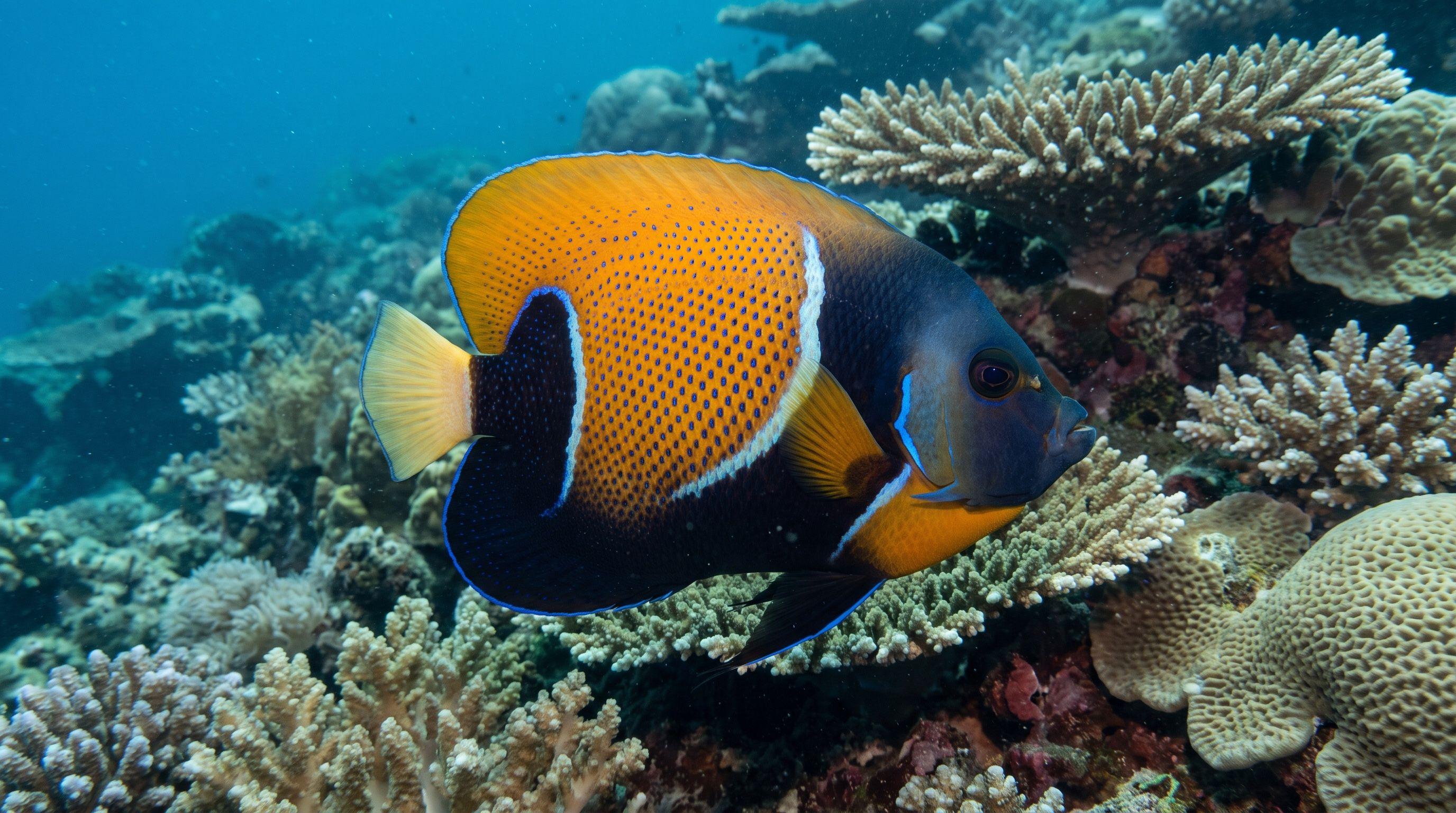 AI-generated
AI-generated illustration
Image credit: AI-generated illustration · Generated for Diveity; no third-party rights · Higgsfield nano_banana_pro image generation