Bar Jack
 AI-generated
Image credit: AI-generated illustration · License unspecified · Source unspecified
Caranx ruber
About Bar Jack.
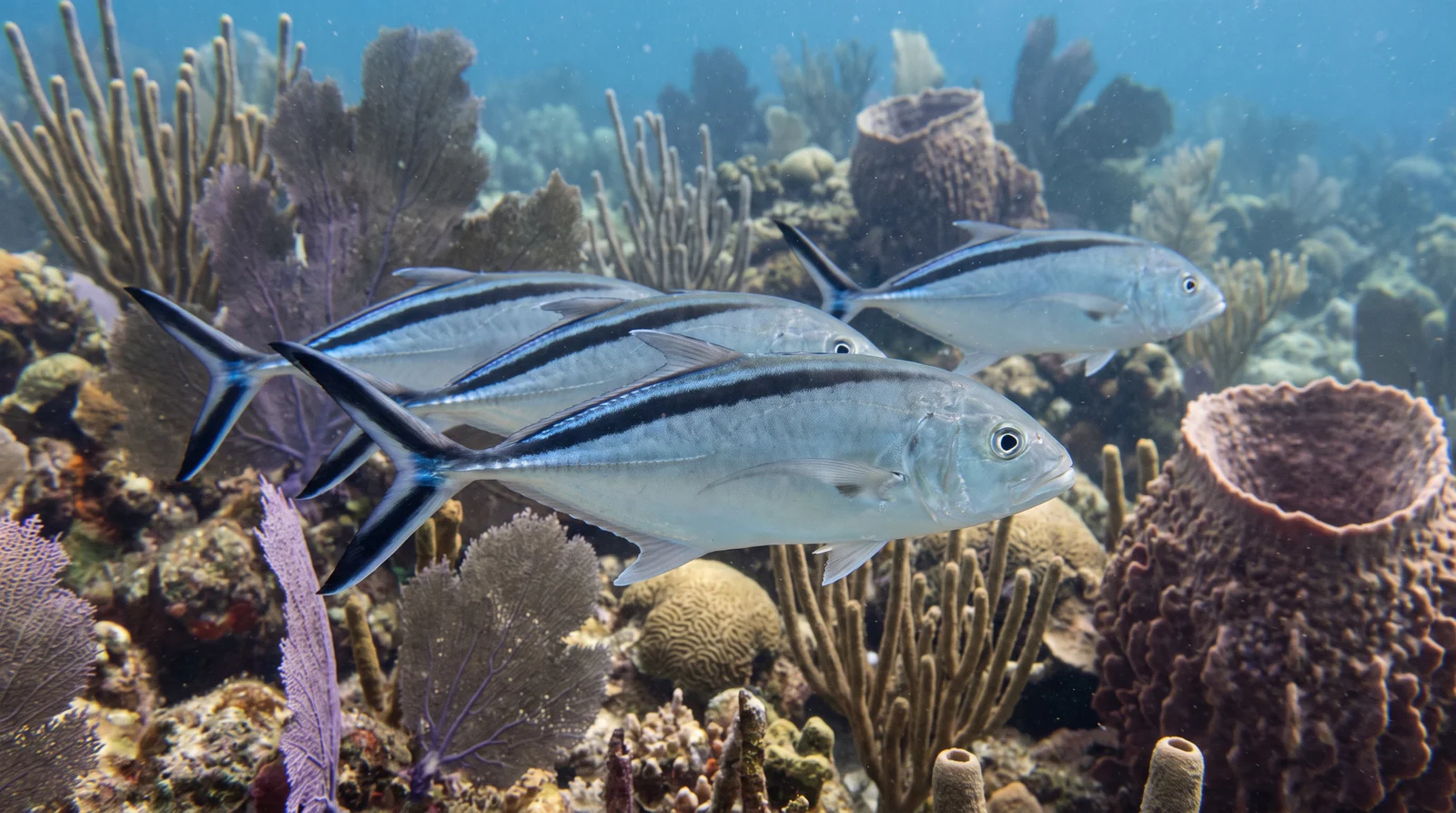
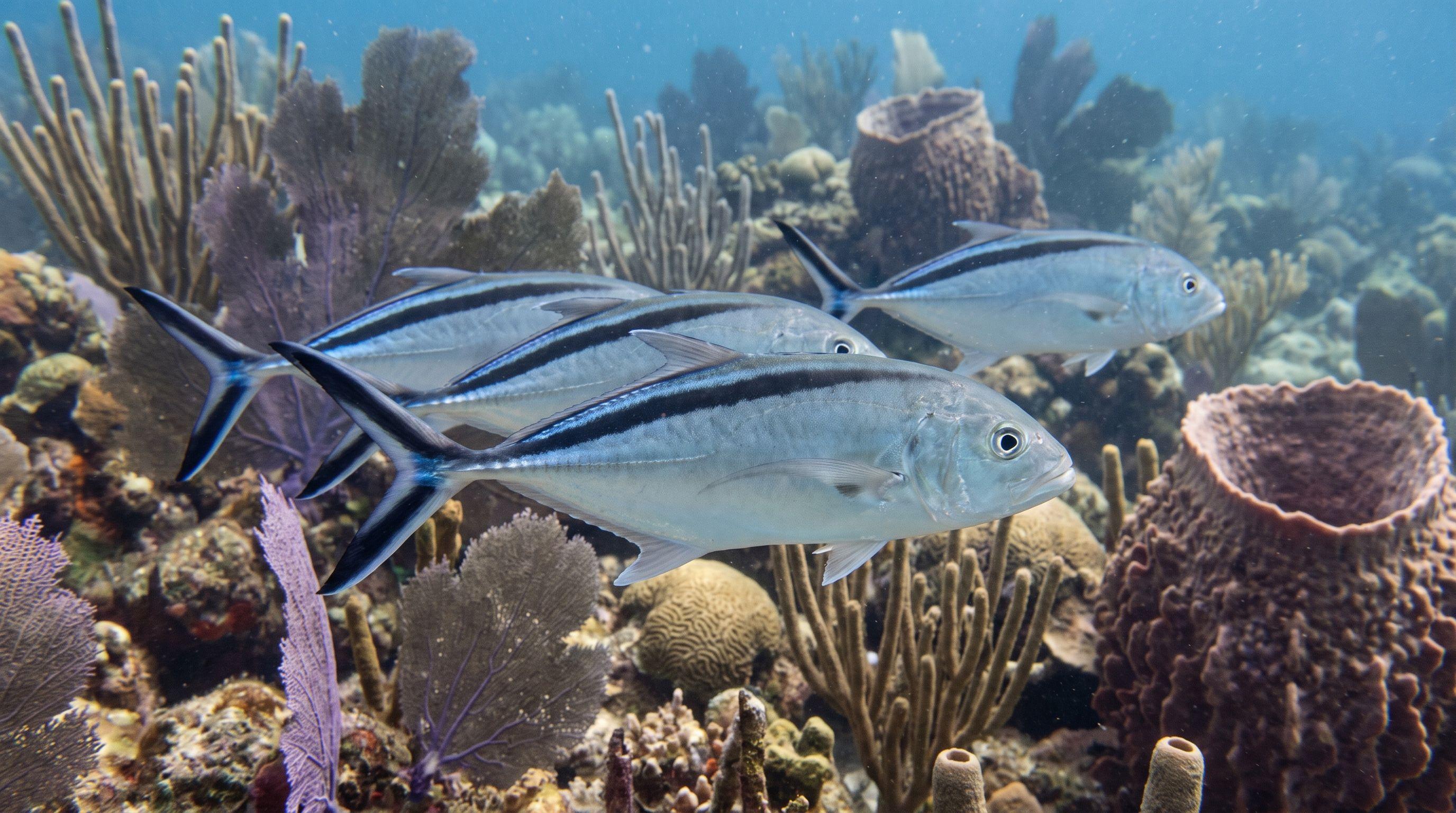
The Bar Jack, scientifically known as Caranx ruber, is an elegantly streamlined fish boasting a classically almond-shaped, moderately compressed body that is perfectly adapted for swift movement through its marine environment. Its striking appearance is characterized by a predominantly silvery body with subtle grayish-blue tints, which can sometimes take on a bronze or even near-black hue, particularly when the fish is excited, hunting, or feeding along the seafloor. A defining feature, from which it derives its common name, is a prominent dark, often golden-brownish to blackish bar that runs horizontally along its back, extending through the lower lobe of its caudal (tail) fin. This distinctive stripe is frequently accompanied by a vibrant, iridescent electric blue line running parallel and immediately beneath it, creating a visually arresting contrast.
Distinguishing it from similar species, such as the crevalle jack, the Bar Jack possesses a fully scaled chest and a bicolored tail fin with a black upper lobe edge and a white or pale lower lobe edge, making it one of the more easily identifiable jacks for divers. Juveniles exhibit a series of up to six dark vertical bars on their bodies, which gradually converge into the single, prominent horizontal bar as they mature. Their pectoral fins are noticeably longer than their head, contributing to their agile swimming capabilities. The Bar Jack is a moderately large species, typically encountered at lengths of 40-50 cm (15.7-20 inches), though larger individuals can reach impressive sizes. Despite its appeal as a sport fish and food source, it's important to note that Bar Jacks are known to carry the ciguatera toxin, posing a moderate risk for human consumption.
Where it lives.
The Bar Jack (Caranx ruber) is widely distributed throughout the tropical and subtropical waters of the western Atlantic Ocean. Its range extends from New Jersey and Bermuda in the north, along the continental coasts, through the Gulf of Mexico and the West Indies, and south to Venezuela, with some reports suggesting its presence as far as Brazil and even offshore at Saint Helena. This species is most abundant in the clear, shallow water environments of the Gulf of Mexico, the West Indies, and the Caribbean.
Bar Jacks predominantly inhabit coral reefs, but are also commonly found over sand flats, in seagrass beds, and within lagoons. They typically occur in shallow to moderately deep waters, usually within a depth range of 0 to 22 meters (0 to 72 feet), though they have been recorded at depths up to 35 meters (115 feet) and, in some instances, even deeper than 100 meters around seamounts, indicating a broader habitat flexibility. While strongly associated with reef ecosystems, these highly mobile fish are known to traverse large expanses of sandy substrate between reef patches. Juveniles often seek protection amongst floating mats of Sargassum algae in pelagic waters before moving to more coastal areas.
How it behaves.
Bar Jacks are active, often social fish, displaying a dynamic array of behaviors within their diverse habitats. They are frequently observed swimming solitarily or, more commonly, in small to large schools along reef edges, over sandy patches adjacent to coral structures, and in open water. Renowned for their speed and opportunistic predatory nature, adult Bar Jacks primarily feed on a diet of small fish, shrimp, crustaceans, cephalopods, and other invertebrates. Their feeding strategy often involves associating with larger bottom-foraging animals like stingrays, eagle rays, barracudas, and even sharks, shadowing them to snatch prey disturbed from the sand or reef substrate. This cooperative hunting can also extend to forming unique foraging partnerships with puddingwife wrasses, benefiting both species in detecting and capturing food.
As sight hunters, Bar Jacks are diurnal, actively foraging during daylight hours and becoming inactive at night. Juveniles, in contrast to adults, primarily consume zooplankton near the surface. During intense feeding or cleaning sessions, these fish have the remarkable ability to darken their silvery bodies to an almost black coloration, sometimes making their signature blue stripe temporarily invisible. Bar Jacks are generally curious and approachable by divers, often swimming close or even forming shoals around them during safety stops, showcasing a remarkable degree of comfort around humans. Spawning typically occurs offshore during the warmer months, between February and August, with eggs and larvae drifting as plankton before juveniles settle in shallower nursery habitats.
Where to see it.
Evidence for philippines · No dive sites
General range is not evidence of occurrence at a specific dive site.
No documented dive-site associations in this destination yet.
Gallery.
 AI-generated
AI-generated illustration
Image credit: AI-generated illustration · License unspecified · Source unspecified