Bigeye Barracuda
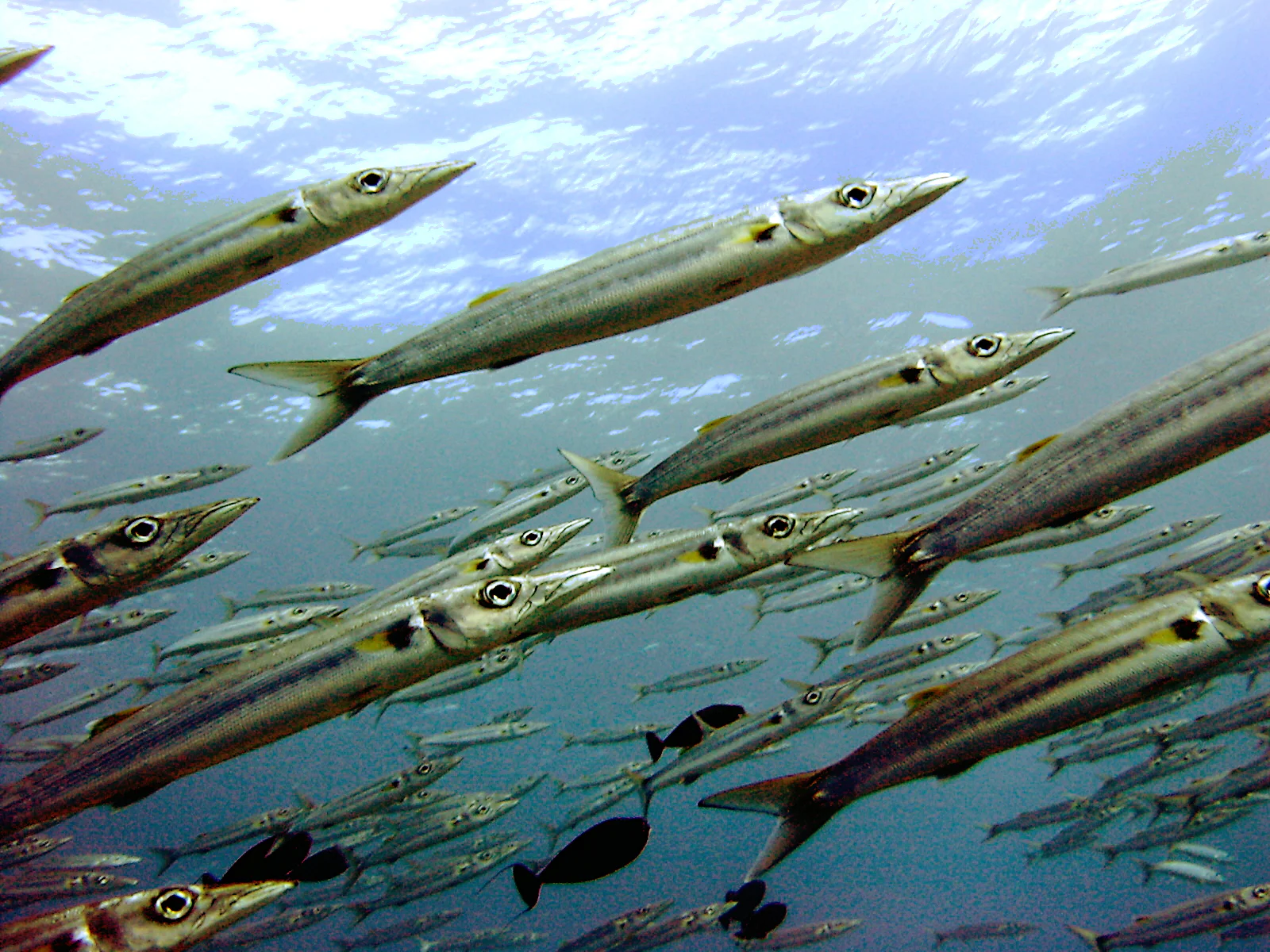
Image credit: Source unspecified · License unspecified
Sphyraena forsteri
About Bigeye Barracuda.
The Bigeye Barracuda (Sphyraena forsteri) is a captivating species frequently encountered by divers across the tropical Indo-West Pacific. Belonging to the family Sphyraenidae, these sleek predators are renowned for their impressive schooling formations, often forming dense, slow-rotating "walls" of fish that can be a breathtaking sight. Its conservation status is currently listed as Least Concern, indicating a stable global population.
This species is a reef-associated marine fish, thriving in coastal tropical waters. Divers commonly observe them over lagoon patch reefs, outer reef slopes, and within coral reef environments. Their extensive distribution spans from the Red Sea and East African coast eastward across the Indian Ocean to Southeast Asia, the Marquesas and Society Islands, northward to southern Japan, and southward to New Caledonia, including iconic dive sites like the Great Barrier Reef. While they can be found at depths ranging from 6 to 300 m, they are most frequently encountered by recreational divers in shallower waters between 10 and 50 m over reefs. They prefer warm waters, typically found in temperatures of 19.4–28.2°C.
During the day, Bigeye Barracudas form large schools, often seen in the spectacular "barracuda tornadoes" that give famous locations like Sipadan's Barracuda Point its name. At night, they disperse to become more active, preying primarily on small schooling fishes, as well as cephalopods like squids and cuttlefish, and crustaceans such as shrimps.
Identification
- Size: The Bigeye Barracuda can reach a maximum length of up to 92.3 cm, though individuals commonly observed are around 50 cm.
- Body: They possess an elongate, subcylindrical to oval body shape, which is slightly compressed and covered in small, smooth cycloid scales.
- Head: Distinctively long and pointed, featuring a large, horizontal mouth where the lower jaw protrudes slightly beyond the upper.
- Eyes: As their name suggests, they have notably large eyes, an adaptation for their nocturnal hunting habits.
- Coloration: Generally bluish-grey to greenish-grey on the dorsal side, transitioning to silvery on the flanks and underside. They typically lack obvious bars or stripes along their sides.
- Distinctive Markings: A key identification feature is a dark or black blotch located on the lower gill cover or in the axil (base) of the pectoral fin. They also often display white tips on their second dorsal and anal fins.
- Fins: The first dorsal fin has six spines, while the second dorsal fin has nine soft rays. The anal fin has two spines and nine soft rays. The first dorsal fin's origin is typically positioned slightly behind or opposite the insertion point of the pelvic fins. Their caudal fin is forked, with a small inner lobe on each major lobe.
- Lateral Line: A straight and well-developed lateral line runs along their body, containing approximately 101-120 scales.
Where it lives.
The Bigeye Barracuda (Sphyraena forsteri) is a widely distributed and captivating species for divers across the tropical Indo-West Pacific Ocean. Its extensive range stretches from the Red Sea and East African coast, encompassing areas around Madagascar and the Seychelles, eastward across the Indian Ocean to Southeast Asia and the western Pacific. This includes significant regions such as the Great Barrier Reef, French Polynesia, the Marquesas and Society Islands, extending north to southern Japan, and south to New Caledonia, though it is notably absent from Hawaii.
This reef-associated marine species primarily inhabits coastal tropical waters, making it a common sight on many dive sites. Divers can typically encounter Bigeye Barracudas around:
- Lagoon patch reefs
- Outer reef slopes
- Coral reef environments
- Walls (as noted in the existing habitat description)
While predominantly found in marine settings, these adaptable fish also venture into brackishwater habitats, including estuaries, lagoons, mangroves, and marshy areas near shorelines, favoring protected inshore and neritic zones.
Bigeye Barracudas are found at depths ranging from 6 to 300 meters. However, recreational divers are most likely to observe them in shallower waters, typically between 10 and 50 meters over reefs. They thrive in warm tropical conditions, preferring water temperatures between 19.4 and 28.2°C, with an average of 26.2°C. Juveniles and smaller individuals often prefer schooling over shallow sandy or weedy bottoms, while adults are more commonly associated with reef structures.
During the day, Bigeye Barracudas are known to form large, impressive schools above lagoon patch reefs and along outer reef slopes, providing spectacular viewing opportunities for divers. At night, these schools typically disperse as individuals or small groups become more active, venturing out to feed.
How it behaves.
The Bigeye Barracuda (Sphyraena forsteri) is a captivating species frequently encountered by divers across its Indo-Pacific range. Known for its striking appearance and schooling behavior, it offers a memorable underwater experience.
Underwater Encounter Behavior
Divers are most likely to encounter Bigeye Barracudas in impressive, dense schools during daylight hours. These schools typically hover over lagoon patch reefs, along outer reef slopes, and above reef networks, often in depths ranging from 5 to 70 meters, though they can inhabit waters as deep as 300 meters. While their elongated bodies and sharp teeth might appear intimidating, Bigeye Barracudas are generally calm and curious around divers, rarely exhibiting aggression unless provoked. They are known for their fast swimming capabilities and agility, moving with streamlined precision within their schooling formations. Divers should maintain a respectful distance and avoid sudden movements or wearing shiny objects, which can sometimes attract the attention of barracudas due to their reflective properties.
Feeding Habits
The Bigeye Barracuda is a carnivorous piscivore, primarily preying on small schooling fishes within tropical reef ecosystems. Their diet predominantly consists of teleosts (bony fish), but they also consume cephalopods such as squids and cuttlefish, as well as penaeid shrimps. While observed in large schools during the day, these barracudas are largely nocturnal hunters. At night, the schools disperse, and individuals or smaller groups become more active, venturing out to forage for prey. Their large eyes are particularly adapted for low-light conditions, aiding their predatory success after dusk.
Social Structure
A defining characteristic of the Bigeye Barracuda is its strong schooling behavior. During the day, they form large, cohesive schools, sometimes comprising thousands of individuals, which can be a spectacular sight for divers. Juveniles and smaller individuals often congregate in shallower sandy or weedy areas, while adults are commonly found in schools over reefs and along outer reef slopes. This schooling behavior is believed to offer protection from larger predators. However, as night falls, their social structure shifts; the large schools typically break apart, and individuals or small groups disperse to hunt independently.
Notable Seasonal Patterns
Bigeye Barracudas thrive in warm tropical waters, preferring temperatures between 19.4°C and 28.2°C, with an average of 26.2°C. While they are present year-round in their extensive Indo-Pacific distribution, no specific seasonal patterns directly influencing their schooling behavior or encounters with divers have been widely documented. Their presence at popular dive sites like Richelieu Rock, SS Thistlegorm, and Barracuda Point is generally consistent throughout the year, making them a reliable highlight for divers seeking impressive schooling fish formations.
Where to see it.
Evidence for philippines · 5 dive sites
General range is not evidence of occurrence at a specific dive site.
Cabilao Shark Point (Lighthouse)
Cabilao Island
Site occurrence not yet documented
Season not yet documented
No dated observations available.
Kilima Steps
Puerto Galera
Site occurrence not yet documented
Season not yet documented
No dated observations available.
Shark Ridge (Apo Reef)
Apo Reef Natural Park
Site occurrence not yet documented
Season not yet documented
No dated observations available.
The Canyons
Puerto Galera
Site occurrence not yet documented
Season not yet documented
No dated observations available.
Verde Island Wall
Verde Island
Site occurrence not yet documented
Season not yet documented
No dated observations available.
Gallery.
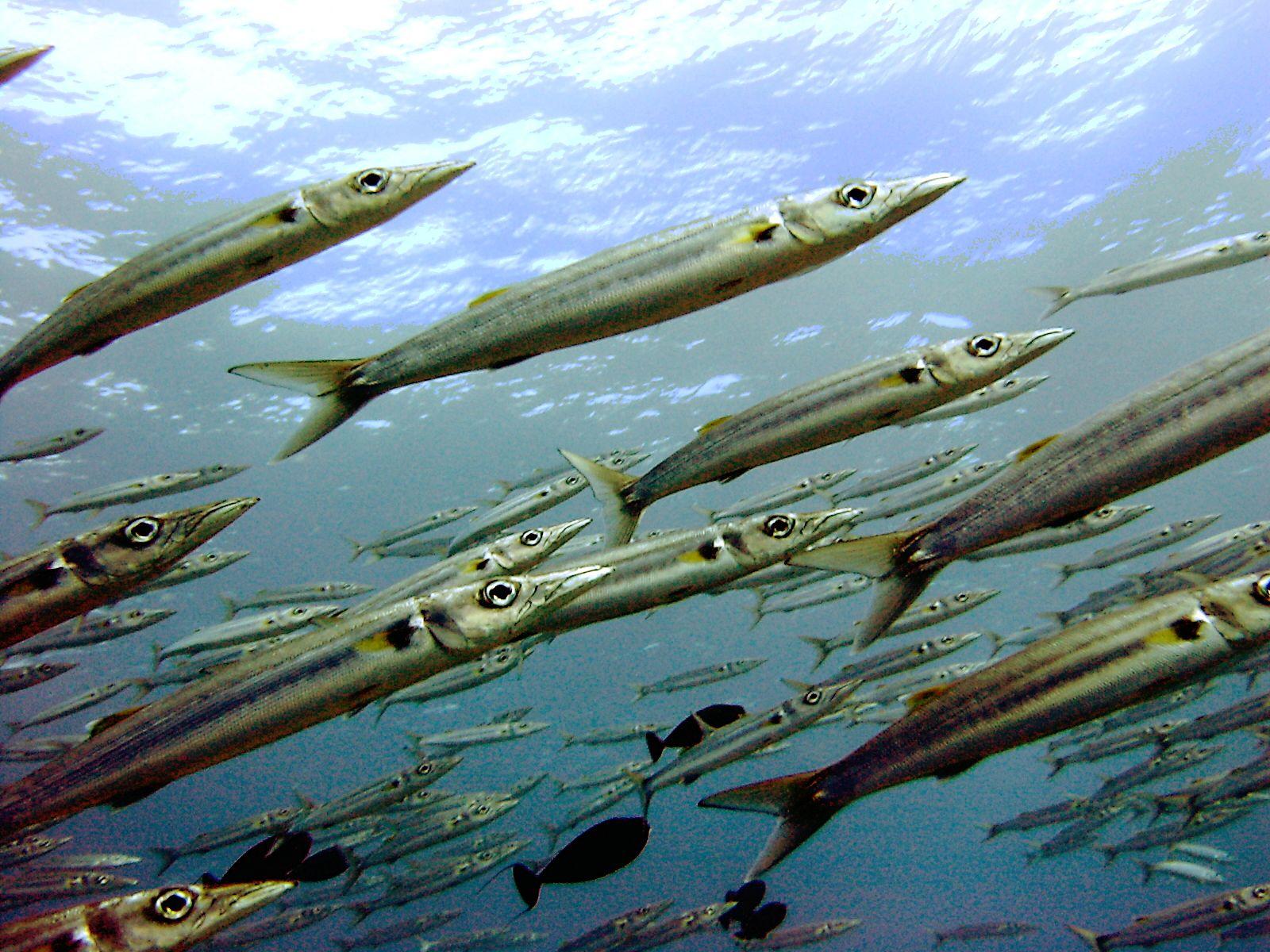
Photo: Shinji / CC BY-SA 2.0 via Wikimedia Commons
Image credit: Source unspecified · License unspecified