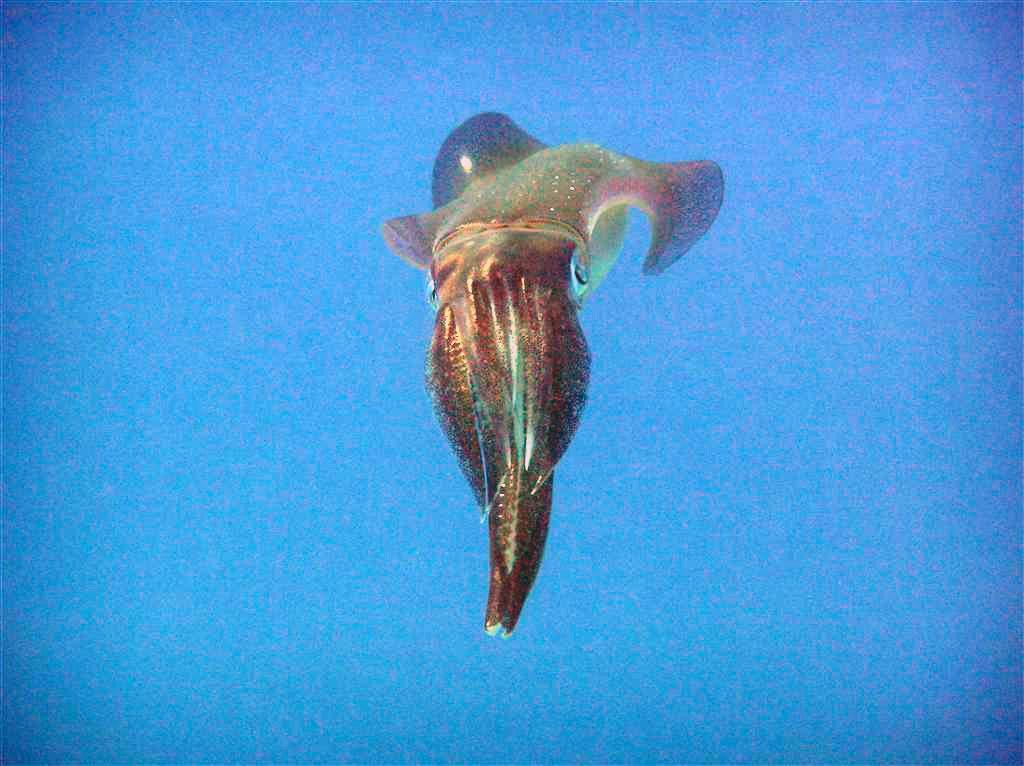
Bigfin Reef Squid
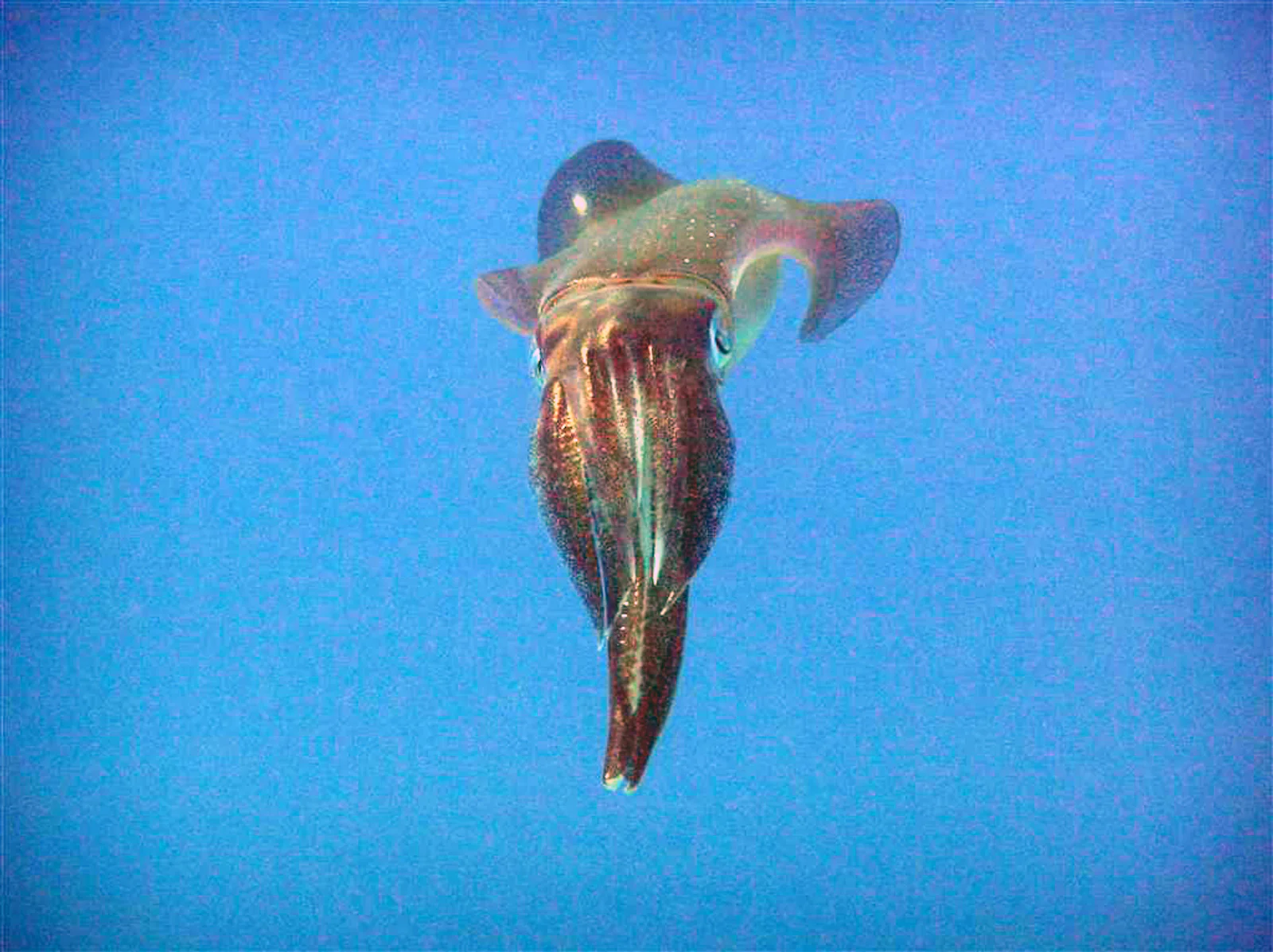
Sepioteuthis lessoniana
Acerca de Bigfin Reef Squid.
El calamar de arrecife de aleta grande (Sepioteuthis lessoniana) es un cautivador cefalópodo que los buceadores encuentran con frecuencia en todo el Indo-Pacífico. Conocida por su llamativa apariencia y comportamientos dinámicos, esta especie es un punto culminante de muchos ecosistemas de arrecife. Pertenece a la familia Loliginidae, comúnmente conocida como calamares lápiz o calamares costeros. Si bien la ficha técnica enumera su estado de conservación como Preocupación Menor, cabe señalar que algunas fuentes lo clasifican como Datos Insuficientes o Casi Amenazado, lo que refleja la complejidad de gestionar una especie que puede comprender varios linajes crípticos.
Estos calamares habitan en aguas costeras cálidas, típicamente encontrados a profundidades de 0 a 100 m en temperaturas que oscilan entre 16 y 34 °C. Prefieren hábitats diversos, incluyendo arrecifes de coral, lechos de pastos marinos y costas arenosas o rocosas. Aunque a menudo se les observa flotando en grupos sobre corales y crinoideos, particularmente al final de la tarde, generalmente son más activos y se encuentran en áreas menos profundas por la noche, retirándose a aguas más profundas o buscando refugio durante el día. El calamar de arrecife de aleta grande tiene una amplia distribución geográfica, abarcando el Indo-Pacífico occidental desde el Mar Rojo y el Océano Índico hasta el norte de Australia, Nueva Zelanda, Asia y las Islas Hawaianas. Notablemente, también ha establecido poblaciones en el Mar Mediterráneo como migrante lessepsiano. Los buceadores pueden encontrar esta especie en sitios de buceo como Bethlehem, Ligpo Island, Snappers y Pianemo (Piaynemo Jetty).
Identificación
El calamar de arrecife de aleta grande recibe su nombre por su característica física más distintiva: aletas grandes, musculosas y ovaladas que se extienden a lo largo de casi toda la longitud de su manto, típicamente 83-97%. Esto le da una apariencia algo similar a la de una sepia, lo que lleva a una identificación errónea ocasional.
- Tamaño: Este es uno de los calamares de arrecife más grandes, con una longitud máxima registrada del manto de 33 cm, aunque los machos pueden alcanzar hasta 42 cm y las hembras hasta 38 cm. Pueden pesar hasta 1,8 kg.
- Forma del cuerpo: El manto es cilíndrico, estrechándose hasta un cono romo en el extremo posterior.
- Aletas: Las aletas prominentes son gruesas y musculosas, y recorren casi toda la longitud del manto. A menudo es visible una línea azul o blanca estrecha donde las aletas se unen al manto.
- Brazos y tentáculos: Como otros calamares, posee ocho brazos de longitud desigual, cada uno revestido con dos filas de ventosas, y dos tentáculos más largos utilizados para capturar presas. En los machos, el brazo izquierdo del cuarto par está modificado en un hectocotilo, un órgano especializado para la reproducción.
- Ojos: Tienen ojos grandes y bien desarrollados, lo que contribuye a su excelente visión nocturna, que les ayuda en su caza nocturna.
- Coloración y patrones: El calamar de arrecife de aleta grande es un maestro del camuflaje y la comunicación, capaz de cambios rápidos y dramáticos de color y patrón (metacrosis) mediante el control voluntario de cromatóforos, iridóforos y leucóforos. Su piel puede mostrar patrones que van desde intrincadas bandas negras hasta casi transparentes, y los iridóforos en la cabeza pueden producir verdes y rojos metálicos iridiscentes cuando se iluminan.
- Exhibiciones masculinas: Durante el cortejo, los machos realizan elaboradas exhibiciones, mostrando complejos patrones corporales y gestos rítmicos del manto para atraer a las hembras. Estos pueden incluir un patrón de "gónadas acentuadas", donde reducen la coloración general del cuerpo para resaltar sus órganos reproductores como blanco brillante, y una postura de "brazos extendidos" donde inclinan su cuerpo hacia adelante con los brazos ampliamente extendidos. Los buceadores también pueden observar a los machos mostrando un distintivo patrón mitad blanco, mitad marrón durante los rituales de apareamiento.
Dónde vive.
- Arrecifes de coral: Se asocian comúnmente con los arrecifes de coral, utilizando estas complejas estructuras para refugio, caza y desove, especialmente por la noche.
- Lechos de pastos marinos: Los prados de pastos marinos sirven como hábitats cruciales, particularmente para juveniles y adultos jóvenes, ofreciendo tanto protección como abundante presa pequeña.
- Fondos arenosos y rocosos: Los calamares de arrecife de aleta grande también se encuentran sobre fondos arenosos y a lo largo de costas rocosas, donde pueden camuflarse eficazmente y emboscar a sus presas.
- Campos de crinoideos: Como se observa en las observaciones, ocasionalmente se encuentran en campos de crinoideos, lo que sugiere una asociación con estas áreas ricas en invertebrados.
- Escombros flotantes: Los juveniles a menudo se observan escondiéndose debajo de madera flotante u otras obstrucciones, usándolas como cubierta temporal de los depredadores.
Cómo se comporta.
Comportamiento en encuentros submarinos
Los calamares de arrecife de aleta grande se observan a menudo en aguas costeras, típicamente encontrados a profundidades de 0 a 100 m, prefiriendo áreas alrededor de arrecifes, lechos de pastos marinos y fondos arenosos o rocosos. Generalmente son más activos por la noche, moviéndose a áreas menos profundas, mientras que durante el día pueden retirarse a aguas más profundas o buscar refugio. Cuando los buceadores se acercan, estos calamares son curiosos pero cautelosos. A menudo mantienen su posición si un buceador se mueve lenta y tranquilamente, lo que permite una observación cercana de sus rápidos e intrincados cambios de color. Estos patrones dinámicos de la piel, controlados por cromatóforos, se utilizan para el camuflaje, la comunicación y la caza. Si se asustan o se sienten amenazados, pueden liberar una nube de tinta y propulsarse hacia atrás con un chorro de agua para escapar. Los buceadores deben mantener una distancia respetuosa para evitar causar estrés, ya que estas criaturas inteligentes son conscientes de su presencia.Hábitos alimenticios
Como depredadores carnívoros, los calamares de arrecife de aleta grande son voraces, consumiendo principalmente peces pequeños, crustáceos (como camarones, estomatópodos y cangrejos) y otros moluscos. Son impresionantes cazadores nocturnos, utilizando su excelente visión nocturna para localizar presas. El calamar captura presas vivas usando sus dos tentáculos especializados, que luego se utilizan para guiar la comida a su pico afilado y musculoso para desgarrar y triturar. Su abertura de pico es relativamente pequeña, lo que les obliga a tomar pequeños bocados, y poseen siete filas de dientes para descomponer aún más la comida. Los juveniles y adultos jóvenes a menudo se alimentan en lechos de pastos marinos, mientras que los adultos prefieren los entornos de arrecifes de coral.Estructura social
La estructura social de los calamares de arrecife de aleta grande varía con la edad. Los calamares jóvenes vulnerables tienden a agregarse en cardúmenes cerca del fondo marino, participando en comunicación visual para mejorar la supervivencia al advertirse mutuamente de los depredadores y ayudar en la localización de alimentos. A medida que maduran, pueden exhibir comportamientos tanto solitarios como de cardumen. El comportamiento de cardumen, donde los individuos nadan en formaciones sincronizadas, se observa principalmente durante las etapas juveniles, con grupos que van de 8 a más de 100 individuos. A diferencia de otras especies de calamares, los calamares de arrecife de aleta grande adultos rara vez se canibalizan entre sí, lo que permite que diferentes tamaños coexistan sin amenaza. Durante el apareamiento, son evidentes interacciones sociales complejas, que involucran elaboradas exhibiciones de cortejo y competencia entre machos. Los machos pueden proteger a una hembra, mostrando comportamientos agonísticos como extender sus brazos para parecer más grandes y destellar colores de advertencia para disuadir a los rivales. Algunos machos más pequeños pueden incluso imitar las exhibiciones de color de las hembras para engañar a los machos más grandes durante el apareamiento.Patrones estacionales notables relevantes para los buceadores
Los calamares de arrecife de aleta grande pueden poner huevos durante todo el año, pero el inicio de las principales temporadas de desove puede variar significativamente según la ubicación y la temperatura del agua. En aguas ecuatoriales más cálidas, el desove puede ocurrir antes en el año, mientras que en regiones subtropicales más frías, podría comenzar más tarde. Por ejemplo, los eventos de desove se observan en Japón desde la primavera hasta el verano, típicamente cuando las temperaturas del agua alcanzan alrededor de 19 °C, a menudo entre finales de mayo y principios de junio, y extendiéndose hasta agosto o incluso octubre en algunas áreas. Durante estos períodos, se forman grandes agregaciones para el cortejo, el apareamiento y la puesta de huevos. Las hembras depositan grupos de cápsulas de huevos gelatinosas, cada una conteniendo varios huevos, sobre sustratos duros como escombros de coral, rocas, raíces de manglar o incluso ramas de árboles sumergidas colocadas por operadores de buceo para crear viveros. Los buceadores que visitan los sitios de buceo durante estas temporadas pico de desove pueden presenciar espectaculares danzas de apareamiento que involucran rápidos cambios de color y movimientos sincronizados, así como observar grupos de huevos adheridos al arrecife. Estos períodos ofrecen oportunidades excepcionales para observar toda su gama de comportamientos complejos.Dónde verlo.
Evidencia para philippines · 3 sitios de buceo
La distribución general no demuestra la presencia en un sitio de buceo concreto.
Bethlehem
Anilao
Presencia en el sitio aún no documentada
Temporada aún no documentada
No hay observaciones con fecha disponibles.
Ligpo Island
Anilao
Presencia en el sitio aún no documentada
Temporada aún no documentada
No hay observaciones con fecha disponibles.
Snappers
Anda
Presencia en el sitio aún no documentada
Estacionalidad documentada en el sitio: Jan, Feb, Mar, Apr, May, Jun, Jul, Aug, Sep, Oct, Nov, Dec
No hay observaciones con fecha disponibles.
Galería.