Blue-ribbon Eel
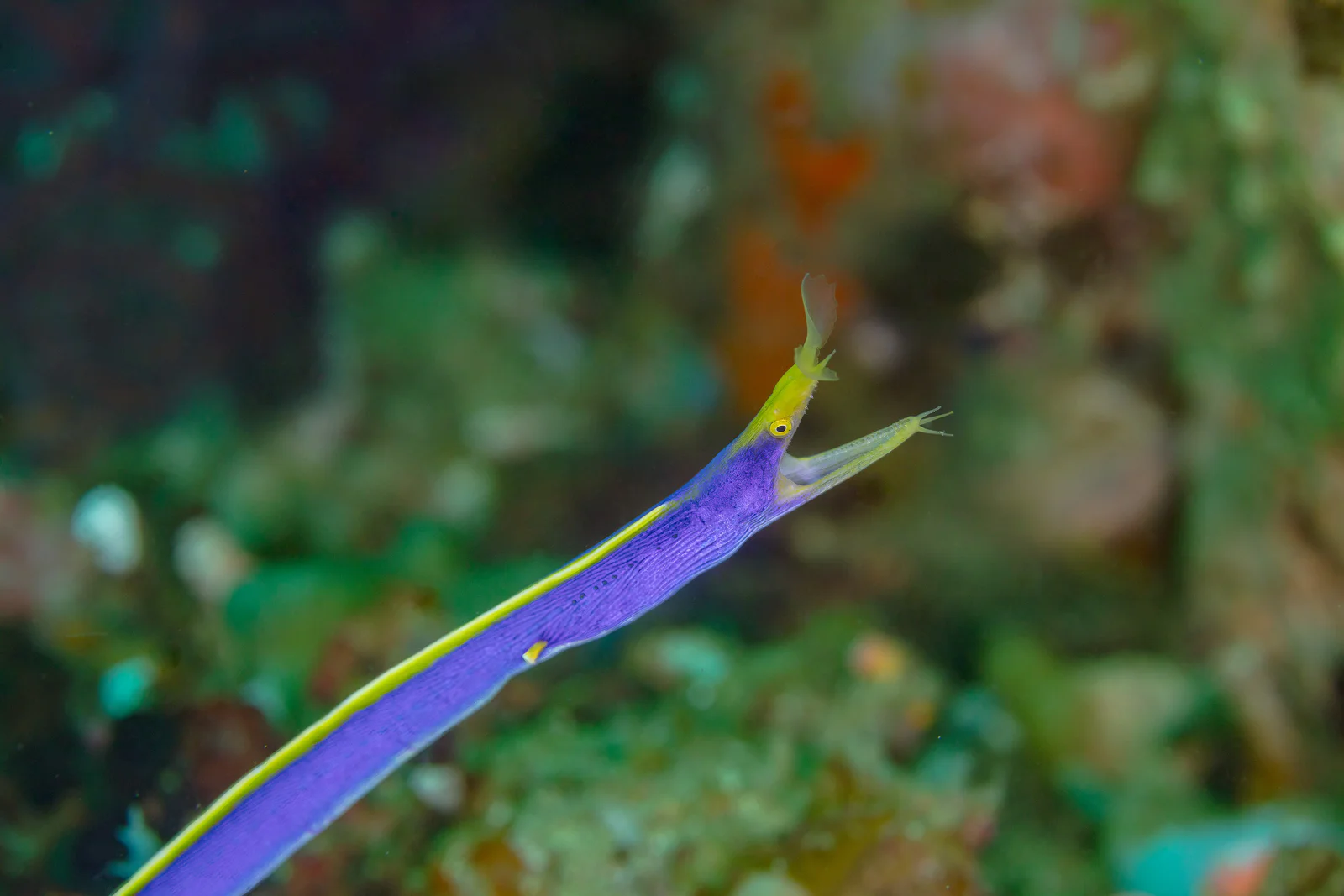
Image credit: Source unspecified · License unspecified
Rhinomuraena quaesita
About Blue-ribbon Eel.
The Blue-ribbon Eel (Rhinomuraena quaesita) is a captivating and easily recognizable member of the Muraenidae family, commonly known as moray eels. This species is renowned for its striking coloration and unique life cycle, making it a favorite sighting among divers across the Indo-Pacific. Despite its exotic appearance, the Blue-ribbon Eel is currently listed as "Least Concern" by the IUCN Red List, indicating a stable population in the wild.
Typically found in tropical waters ranging from East Africa to French Polynesia, and north to southern Japan, the Blue-ribbon Eel inhabits lagoons and seaward reefs. It prefers sandy or rubbly areas adjacent to coral reefs, where it constructs elaborate burrows lined with mucus to protect its scaleless skin. Divers often observe these eels with only their head and forebody protruding from their sandy retreats, patiently waiting to ambush small fish and crustaceans that pass by. They are generally solitary creatures and are rarely seen free-swimming. The Blue-ribbon Eel can be found at depths of 1–67 m, thriving in waters of 22–28°C. In the wild, these eels can live for up to 20 years.
Identification
The Blue-ribbon Eel is instantly identifiable by its extremely slender, ribbon-like body and distinctive facial features, which include greatly expanded anterior nostrils that resemble fan-shaped appendages or "horns". Its continuous dorsal fin runs almost the entire length of its body, contributing to its elegant, undulating movement when it does swim.
One of the most remarkable characteristics of Rhinomuraena quaesita is its dramatic color transformation throughout its life, which is linked to its protandrous hermaphroditism (changing sex from male to female):
- Juveniles: Young eels are typically jet black with a bright yellow dorsal fin.
- Adult Males: As they mature, males transition to a vibrant electric blue body with a yellow dorsal fin, and often a yellow snout and lower jaw. Adult males typically range from 65 to 94 cm in length.
- Adult Females: Larger individuals, which are believed to be post-male (sex-changed) females, become predominantly yellow, sometimes retaining some blue coloration towards the posterior. Females are generally the largest individuals, reaching a maximum size of up to 1.2 m (4 ft).
These distinct color phases make the Blue-ribbon Eel a truly unique and sought-after sighting on any dive site, offering a visual spectacle of nature's artistry.
Where it lives.
The striking Blue-ribbon Eel (Rhinomuraena quaesita) is a captivating inhabitant of the Indo-Pacific's tropical waters, renowned for its vibrant colors and distinctive appearance. This species is widely distributed, found from East Africa across to southern Japan, Australia, and French Polynesia, including the Marianas and Marshall Islands.
Divers commonly encounter the Blue-ribbon Eel in:
- Ecosystems: Warm, shallow lagoons and seaward coral reefs. They are an integral part of these vibrant reef ecosystems, where they help regulate populations of small fish and crustaceans.
- Depth Range: Typically observed in relatively shallow waters, from depths of 1 to 67 m. While they can be found deeper, a common range for divers is often between 12 and 30 m. These eels thrive in waters with temperatures generally ranging from 24–28°C.
- Substrate Preference: Blue-ribbon Eels prefer sandy or rubble areas, particularly those adjacent to coral reefs. They are masters of concealment, constructing burrows within these soft substrates where they spend much of their time. Divers will often spot their heads and anterior bodies protruding from crevices or burrows, patiently waiting to ambush unsuspecting prey.
Popular dive sites like Coral Cove and Batangas Channel are known for common sightings of this species, while others such as Pink Beach, Three Sisters, Arthur's Rock, and Arco Point offer occasional encounters, highlighting their preference for specific microhabitats within the broader reef environment.
How it behaves.
The Blue-ribbon Eel (Rhinomuraena quaesita) is a captivating and distinctive member of the moray eel family, highly sought after by divers for its vibrant coloration and elegant, ribbon-like form. Reaching a maximum size of 1.2 meters, this species is typically encountered in the Indo-Pacific, inhabiting sandy or rubble areas adjacent to coral reefs at depths ranging from 1 to 67 meters, though most commonly observed shallower than 50 meters. They thrive in waters of 24–28°C.
Underwater Encounter Behavior
Blue-ribbon Eels are predominantly burrow-bound, with divers usually observing only their head and the anterior portion of their body emerging from a crevice or burrow in the substrate. Their distinctive appearance includes greatly enlarged, fan-shaped anterior nostrils that resemble "horns" and three barbels on the lower jaw. While they may appear to be posturing aggressively with their mouths often agape, this is merely a mechanism for breathing and not a sign of threat. These eels are generally shy; a slow and calm approach is recommended to avoid startling them back into their hiding spots. Observing a Blue-ribbon Eel free-swimming is a relatively rare and mesmerizing sight, as their slender bodies undulate gracefully through the water.
Feeding Habits
As carnivores, Blue-ribbon Eels are opportunistic ambush predators. They primarily feed on small fish and crustaceans, such as shrimp, striking forward from the safety of their burrow when unsuspecting prey passes by. Their hunting strategy relies heavily on their highly developed sense of smell, as their eyesight is poor. Some sources suggest they are nocturnal hunters, emerging from their hiding spots under the cover of darkness.
Social Structure
The Blue-ribbon Eel exhibits a fascinating social and reproductive characteristic: it is a protandrous sequential hermaphrodite. This means individuals begin life as males and can later transition to females. This sex change is accompanied by dramatic shifts in coloration: juveniles are typically black with a yellow dorsal fin, adult males display a vibrant blue body with a yellow dorsal fin and sometimes yellow highlights around the mouth, and mature females become predominantly yellow, often with some blue posteriorly. While generally solitary, males may occasionally share burrows for extended periods. Reproduction involves adults forming brief spawning aggregations, releasing eggs and sperm into the open water, with no lasting pair bond.
Notable Seasonal Patterns
Blue-ribbon Eels do not appear to exhibit distinct seasonal patterns relevant to divers; they can be observed year-round at appropriate dive sites. However, a notable aspect of their life cycle is the relatively short lifespan of females after they transition sex and lay eggs, often only about a month. This makes sightings of the all-yellow female phase considerably rarer compared to the blue male or black juvenile phases.
Where to see it.
Evidence for boracay · 4 dive sites
General range is not evidence of occurrence at a specific dive site.
Angol Point
Boracay
Documented site occurrence
Season not yet documented
Source reviewed on 2026-10-14 · Source: DiveGurus Boracay · Observation date not documented
Balinghai Wall
Boracay
Documented site occurrence
Season not yet documented
Source reviewed on 2026-10-14 · Source: Wicked Squid Divers Boracay (Wayback snapshot 2026-03-12 of /boracay-dive-sites/) · Observation date not documented
Camia II Wreck
Boracay
Documented site occurrence
Season not yet documented
Source reviewed on 2026-10-14 · Source: Wicked Squid Divers Boracay (Wayback snapshot 2026-03-12 of /boracay-dive-sites/) · Observation date not documented
Coral Garden
Boracay
Documented site occurrence
Season not yet documented
Source reviewed on 2026-10-14 · Source: Wicked Squid Divers Boracay (Wayback snapshot 2026-03-12 of /boracay-dive-sites/) · Observation date not documented
Gallery.
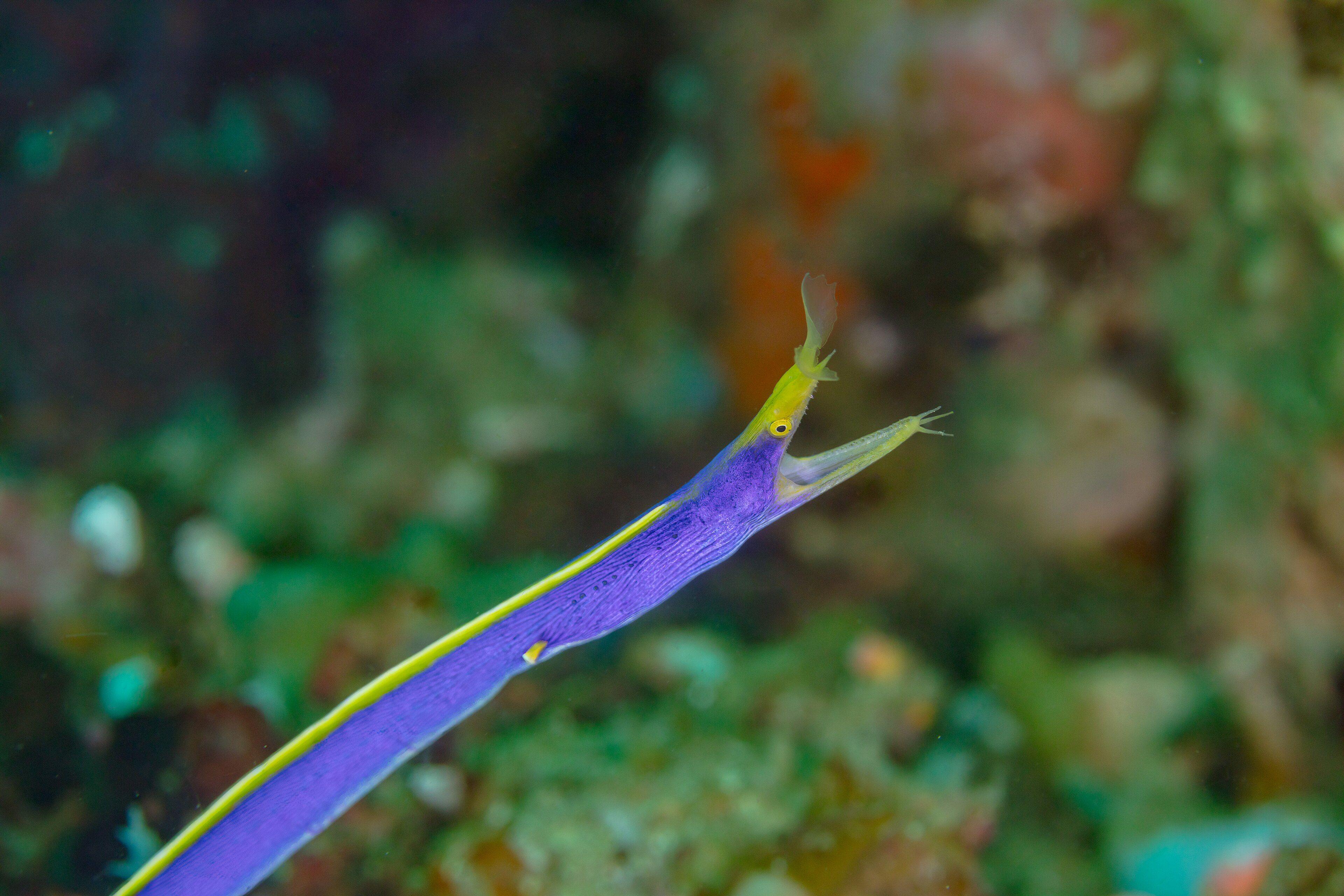
Photo: Diego Delso / CC BY-SA 4.0 via Wikimedia Commons
Image credit: Source unspecified · License unspecified