Blue Tang
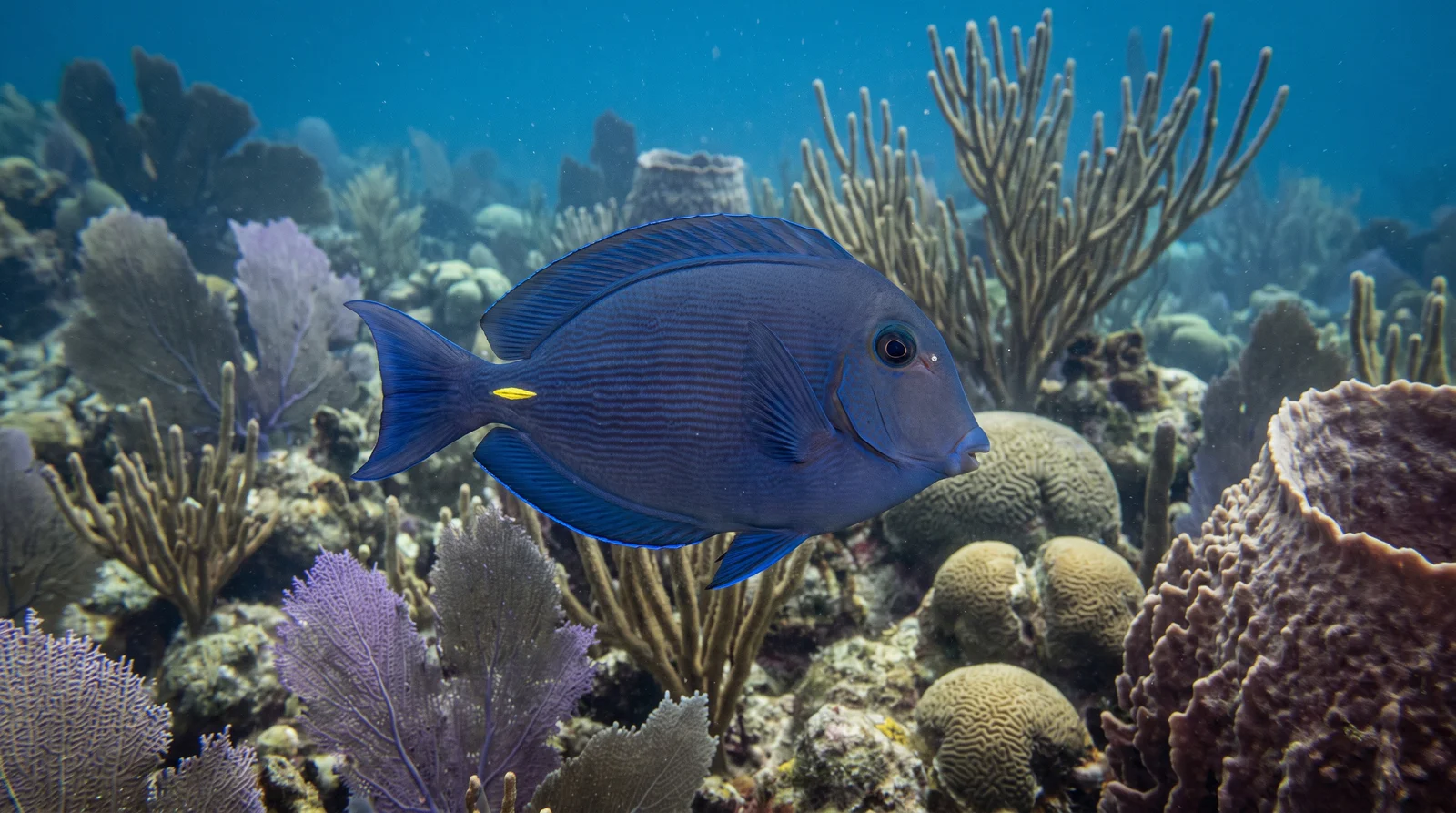 AI-generated
Image credit: AI-generated illustration · License unspecified · Source unspecified
Acanthurus coeruleus
About Blue Tang.
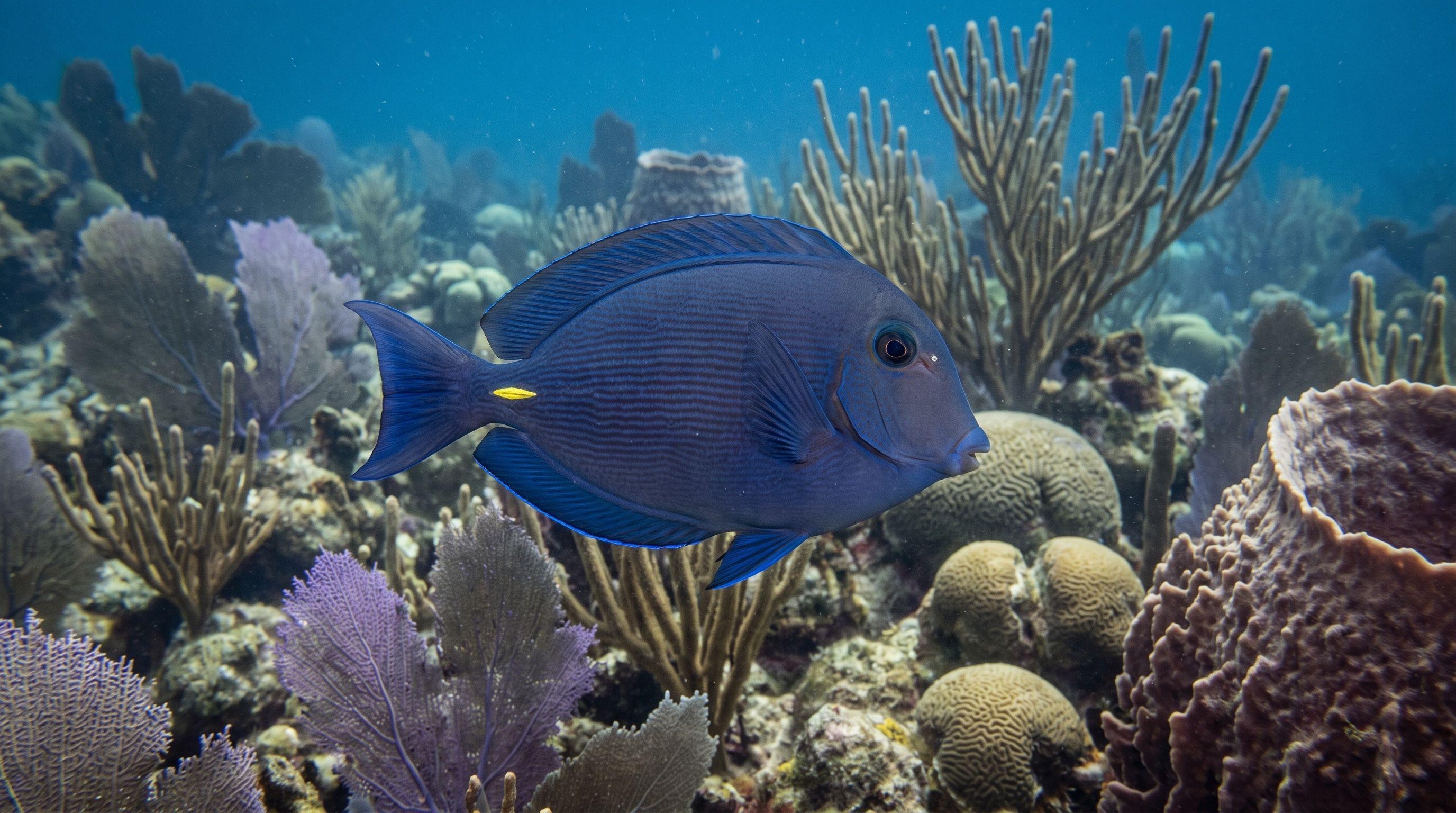
The Blue Tang, Acanthurus coeruleus, is a striking surgeonfish renowned for its vibrant coloration and distinctive body shape. As juveniles, these fish are typically a brilliant yellow, sometimes with blue margins on their dorsal and anal fins and blue-green rings around their eyes. As they mature, their coloration undergoes a fascinating transformation. Subadults may display a blue or orange-brown body with grey stripes and a yellow caudal fin, while adults become a deep, electric blue to purplish-blue. Adult blue tangs possess the remarkable ability to temporarily alter their body color, shifting between near-black and pale white, with these changes potentially varying between sexes.
This species is characterized by a deep, highly laterally compressed, or "pancake-shaped," oval body, with a pointed snout and eyes set high on the head. A key identifying feature, shared with other surgeonfishes, is the sharp, scalpel-like spine located on each side of the caudal peduncle (the narrow area before the tail). This spine, which is yellow and housed in a horizontal groove, can be extended during aggressive interactions or for defense, posing a risk of painful wounds to those who handle them carelessly. Their small, protrusible mouth is equipped with specialized close-set, spatulate teeth, numbering around 14 on the upper jaw and 16 on the lower, perfectly adapted for grazing on algae. The dorsal fin is continuous, featuring 9 spines and 26-28 soft rays, while the anal fin has 3 spines and 24-26 soft rays. Blue tangs can reach a maximum size of approximately 39 cm (15 inches) in length, with a lifespan that can extend up to 12-15 years in the wild, and reportedly up to 22 years.
Where it lives.
The Blue Tang, Acanthurus coeruleus, is widely distributed throughout the tropical and subtropical waters of the Western Atlantic Ocean. Its extensive geographic range stretches from New York and Bermuda in the north, southward through the Gulf of Mexico and the Caribbean Sea, all the way to the Amazon delta in Brazil. They are particularly abundant in coastal Florida, the Bahamas, and across the Caribbean. In the Eastern Atlantic, isolated populations can be found near Ascension Island, and there have even been sightings in the Mediterranean Sea since 2011.
This species primarily inhabits shallow marine environments, favoring hard-coral reefs where algae are abundant. They can also be found in adjacent habitats such as soft coral areas, rubble zones, inshore grassy patches, rocky areas, and algal beds. Younger juveniles exhibit a strong preference for areas offering ample cover, often seeking shelter within coral holes and crevices to evade predators. Adults, too, utilize these reef structures for nocturnal refuge. Blue tangs typically occupy depths ranging from 2 to 40 meters (6-131 feet), though some reports indicate their presence down to 60 meters (200 feet). They play a vital ecological role within these reef ecosystems by consuming algae that could otherwise overgrow and smother corals.
How it behaves.
Blue Tangs are diurnal fish, actively foraging during the day and seeking shelter within reef crevices and holes at night to avoid predators. Their diet is strictly herbivorous as adults, consisting predominantly of filamentous algae, detritus, and plankton. Unlike some other surgeonfishes, they possess thin-walled stomachs and actively avoid ingesting calcareous material, preferring to graze algae directly from reef surfaces and even from the bodies of other fish, acting as cleaners for them. Juveniles also engage in cleaning behaviors, picking molted skin and parasites from green sea turtles alongside other surgeonfish and sergeant majors.
The social behavior of Blue Tangs varies significantly with age. Juveniles are typically solitary and territorial, fiercely defending their home ranges from conspecifics and other species. As they mature, adults can exhibit three distinct social modes: territorial, wandering, and schooling. Territorial adults aggressively chase intruding blue tangs. Wandering individuals move across the reef, often visiting cleaning stations. The most notable social behavior is their schooling, where large aggregations, sometimes exceeding 100 individuals, form with other blue tangs and occasionally with other surgeonfish species like doctorfish. These massive feeding schools are a strategic adaptation, enabling them to overwhelm the territorial defenses of damselfish, which typically "farm" their own algal patches, thus granting the tangs access to otherwise protected food resources. Schooling fish are less aggressive and feed at intermediate rates. Reproduction involves resident spawning aggregations, with courting females and a small number of males engaging in "spawning rushes" to release gametes at the water's surface, typically occurring year-round.
Where to see it.
Evidence for bonaire · No dive sites
General range is not evidence of occurrence at a specific dive site.
No documented dive-site associations in this destination yet.
Gallery.
 AI-generated
 illustration
Image credit: AI-generated illustration · License unspecified · Source unspecified