Bottlenose Dolphin
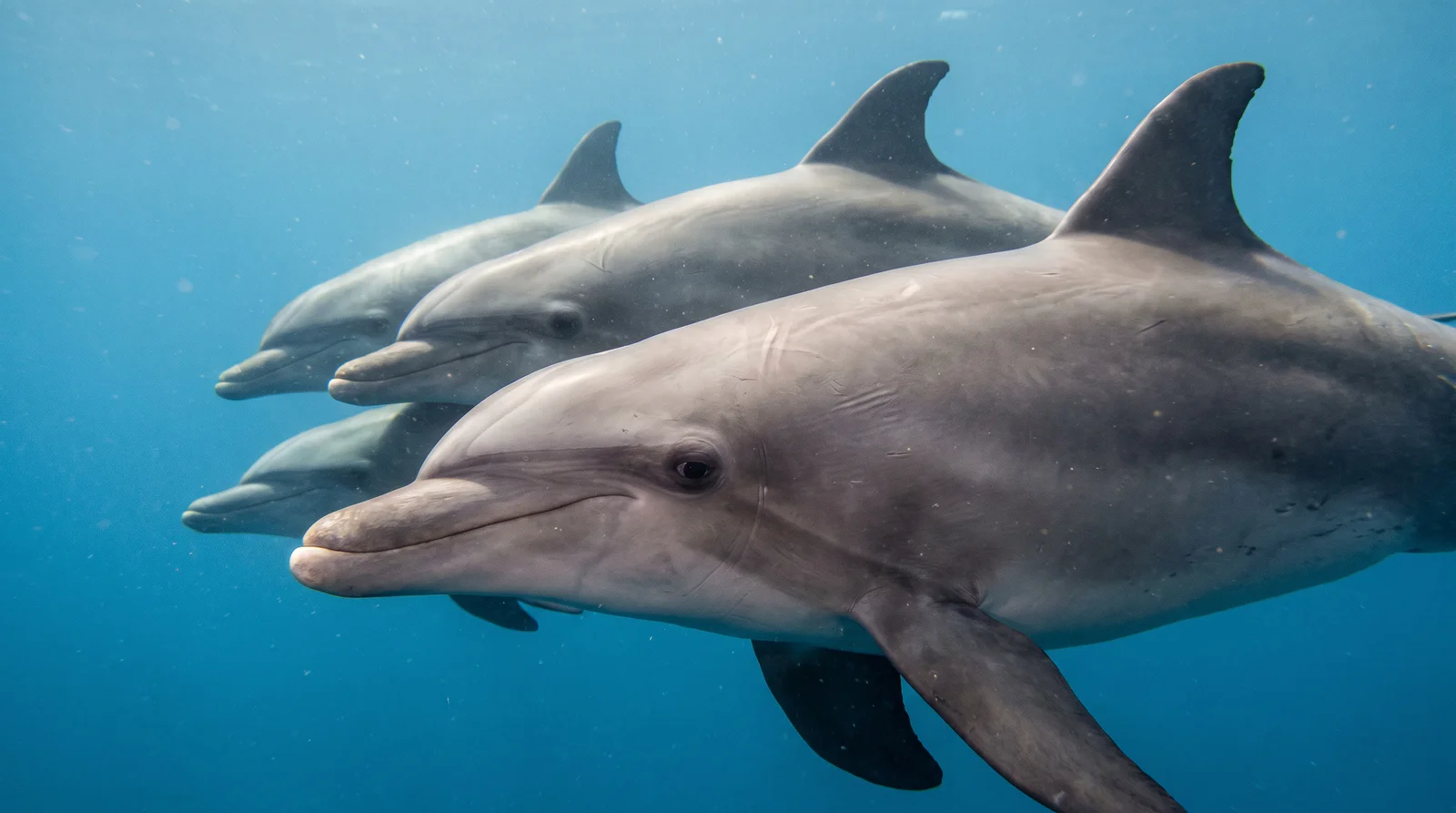 AI-generated
Image credit: AI-generated illustration · License unspecified · Source unspecified
Tursiops truncatus
About Bottlenose Dolphin.
The Bottlenose Dolphin (Tursiops truncatus) is arguably one of the most recognizable and charismatic marine mammals encountered by divers worldwide. Belonging to the family Delphinidae, these highly intelligent and social creatures are a highlight at many dive sites, occasionally displaying their inquisitive nature by approaching divers.
Found in temperate and tropical waters across the globe, from shallow coastal bays and estuaries to deeper offshore environments, the Bottlenose Dolphin is a truly cosmopolitan species. They are known for their complex social structures, living in dynamic groups called pods, and communicating through an intricate system of whistles, clicks, and body language. Their advanced cognitive abilities include problem-solving, social learning, and even self-awareness, making them a fascinating subject for marine enthusiasts. While generally listed as "Least Concern" in terms of conservation status, local populations can face threats from human activities.
Identification
- Size: Adult Bottlenose Dolphins typically measure between 2.5 and 3.7 meters in length, with a maximum recorded size of 3.8 meters. Their weight can vary significantly, with offshore ecotypes generally being larger.
- Body Shape: They possess a robust, streamlined, and fusiform body, perfectly adapted for efficient movement through water.
- Coloration: Generally gray, their coloration exhibits countershading; they are typically dark gray to almost black on their dorsal (back) surface, fading to a lighter gray, white, or cream on their ventral (belly) side. Some individuals may have light brush markings on their sides. Offshore populations tend to be larger and darker than their coastal counterparts.
- Rostrum (Snout): The species is named for its distinctive short, thick, and well-defined "bottlenose" or beak.
- Dorsal Fin: A prominent feature is their large, falcate (sickle-shaped) dorsal fin, which is set midway along the back. This fin often bears unique nicks and scratches, allowing researchers and divers to identify individual dolphins.
- Flippers and Flukes: They have pointed pectoral flippers and deeply notched tail flukes, which are used for propulsion.
- Teeth: Bottlenose Dolphins have 72 to 104 conical teeth, which they use to grip prey before swallowing it whole, rather than chewing.
- Blowhole: A single blowhole is located on the top of their head for breathing.
These adaptable mammals inhabit waters with surface temperatures generally ranging from 10–32°C. While coastal populations often frequent shallow areas, sometimes less than 3 meters deep, Bottlenose Dolphins regularly dive to depths of 3–46 meters for foraging. However, they are capable of much deeper dives, with trained individuals reaching 390 meters and tagged offshore dolphins recorded at 492 meters, and some records even exceeding 1,000 meters. Their diet primarily consists of various fish species, squid, and crustaceans, which they often hunt cooperatively.
Divers have the rare opportunity to observe Bottlenose Dolphins at dive sites such as Castle Rock (rare sightings) and Elphinstone Reef (occasional sightings).
Where it lives.
The bottlenose dolphin (Tursiops truncatus) is a highly adaptable marine mammal found in a vast array of environments across the globe, inhabiting temperate and tropical marine waters worldwide. Their distribution is generally limited to surface water temperatures ranging from 10–32°C, though they are often observed in waters between 22–29°C. This species demonstrates remarkable ecological plasticity, thriving in both coastal and offshore habitats, from shallow estuaries to the deeper continental shelf edge.
Divers may encounter bottlenose dolphins in a variety of ecosystems:
- Coastal Waters: These dolphins are frequently observed in sheltered areas such as bays, tidal creeks, inlets, marshes, lagoons, and along open ocean beaches. They occasionally venture into rivers and estuaries, demonstrating a tolerance for brackish waters. Coastal populations, such as those found at dive sites like Elphinstone Reef, often prefer shallower depths, typically 3 m or less.
- Offshore Environments: Beyond the immediate coastline, bottlenose dolphins inhabit deeper waters over the continental shelf and far offshore in the open ocean. Offshore populations are known to associate with the continental shelf edge.
- Depth Range: While coastal dolphins often remain in shallow areas, most bottlenose dolphins regularly dive to depths of 3–46 m. However, they are capable of much deeper excursions; a trained dolphin has been recorded diving to 547 m, and a tagged offshore individual reached 492 m. Indo-Pacific bottlenose dolphins (Tursiops aduncus), a closely related species, are typically found near continental shelves at depths less than 300 m.
- Ecosystem Associations: Their habitat use is influenced by factors like resources, depth, water temperature, and the type of sea-bed gradient and sediment. They are known to frequent areas with strong tidal currents and steep bottom relief. While some studies suggest a preference for bare sand habitats for foraging over seagrass beds in certain estuarine environments, others note their presence in seagrass meadows. Complex bottom substrates, including mixtures of rock, sand, and seaweed, are often favored for behaviors such as bottom rubbing and feeding. In tropical regions, they can be found near coral reefs and mangrove shorelines. Offshore populations may also associate with other cetaceans, such as long-finned pilot whales.
The global distribution of bottlenose dolphins spans the Pacific, Atlantic, and Indian Oceans, as well as the Mediterranean and Black Seas, making them one of the most widespread marine mammal species.
How it behaves.
Underwater Encounter Behavior:
Bottlenose dolphins are known for their curiosity and can sometimes approach divers, particularly in certain dive sites like Socorro, where they are famous for their playful nature and interactions, occasionally even guiding their calves toward human observers. However, it's important to remember that wild dolphin encounters are not guaranteed and are initiated by the dolphins themselves. Divers should maintain calm, deliberate movements, avoid aggressive swimming or chasing, and never attempt to feed or touch the dolphins, as this can disrupt their natural behaviors and potentially transmit diseases. Observing from a respectful distance is key, especially if dolphins are engaged in feeding or resting. While some populations may be less curious, others might engage in playful interactions like "keep-away" with seaweed. Occasionally, dolphins have even been reported to rescue injured divers by raising them to the surface.
Feeding Habits:
As active and opportunistic predators, Bottlenose Dolphins have a diverse diet consisting primarily of fish, squid, and crustaceans such as shrimp and crabs. Their feeding strategies are flexible and adapted to their habitat and available prey. They hunt both individually and cooperatively. Cooperative hunting techniques include herding schools of fish into dense masses, taking turns to charge through them, or trapping fish against sandbars and seawalls. Individual hunting methods can involve using their tail flukes to stun fish out of the water or diving snout-first into sandy bottoms in a technique known as "crater feeding." Some coastal dolphins have even been observed using sponges as tools to protect their rostrums while foraging on the seabed. Dolphins grip prey with their cone-shaped teeth and swallow it whole, headfirst, rather than chewing. An adult dolphin consumes approximately 4% to 6% of its body weight in food per day.
Social Structure:
Bottlenose dolphins live in complex "fission-fusion" societies, meaning that individuals frequently merge or split within groups throughout the day. Group size can vary, typically ranging from 2 to 15 individuals, though larger aggregations (superpods) of over 1,000 members can form in areas with abundant food. Social bonds are fluid but can be strong, particularly between mothers and their calves, with calves staying with their mothers for 3 to 6 years. Females often form alliances for food resources, while males may form stable alliances of two to three individuals to gain access to females, sometimes even forming "second-order" or "superalliances" to defend against other groups. Dolphins engage in various social bonding behaviors, including synchronized swimming, vocalizations, and playful interactions.
Notable Seasonal Patterns:
Bottlenose dolphins exhibit seasonal migration patterns, particularly in colder regions, moving to warmer waters for breeding and calving, and following prey availability. While some populations are resident year-round, others undertake long-distance migrations. Births can occur in all seasons, but peaks are typically observed during spring, early summer, and fall, influenced by local environmental conditions. For instance, on the US East Coast, dolphins migrate north in spring, mate, and calve during March and April, with mothers and calves frequently observed in coastal waters during the summer months in areas like Cape May, New Jersey, where water temperatures average around 20-23°C. Relative abundance of dolphins in some areas is lowest when sea surface temperatures drop below 13°C and increases with warmer temperatures from March through November.
Where to see it.
Evidence for red sea · No dive sites
General range is not evidence of occurrence at a specific dive site.
No documented dive-site associations in this destination yet.
Gallery.
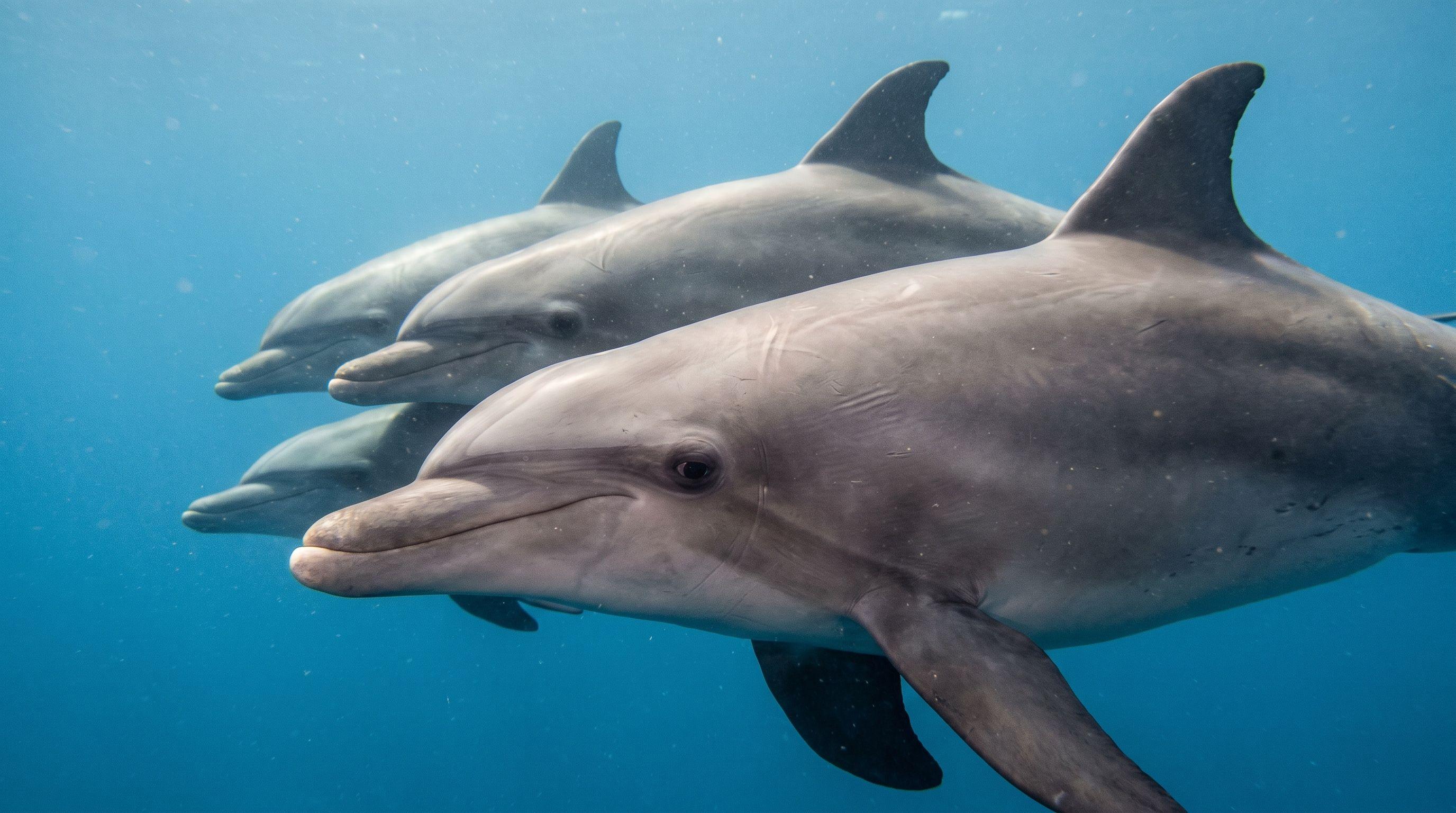 AI-generated
 illustration
Image credit: AI-generated illustration · License unspecified · Source unspecified