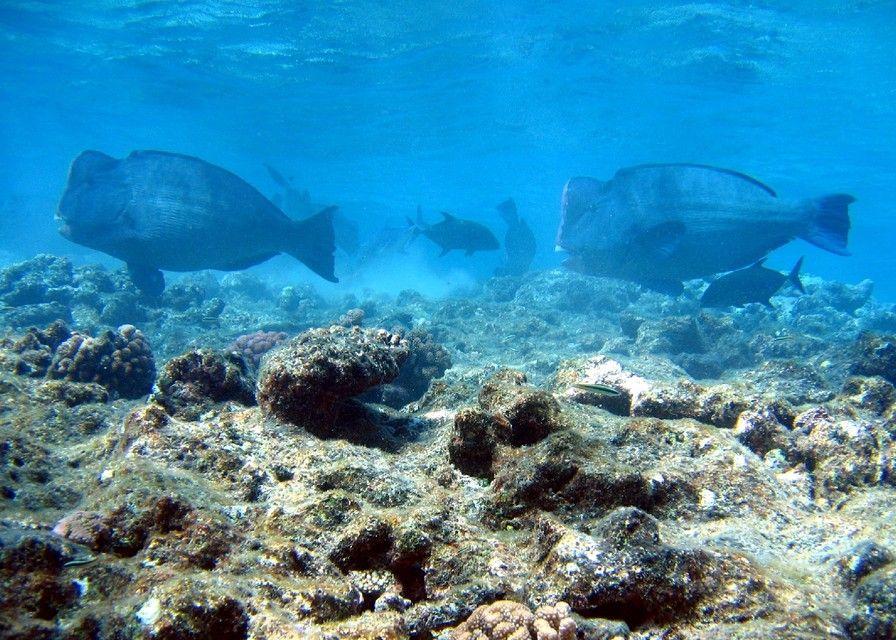
Bumphead Parrotfish
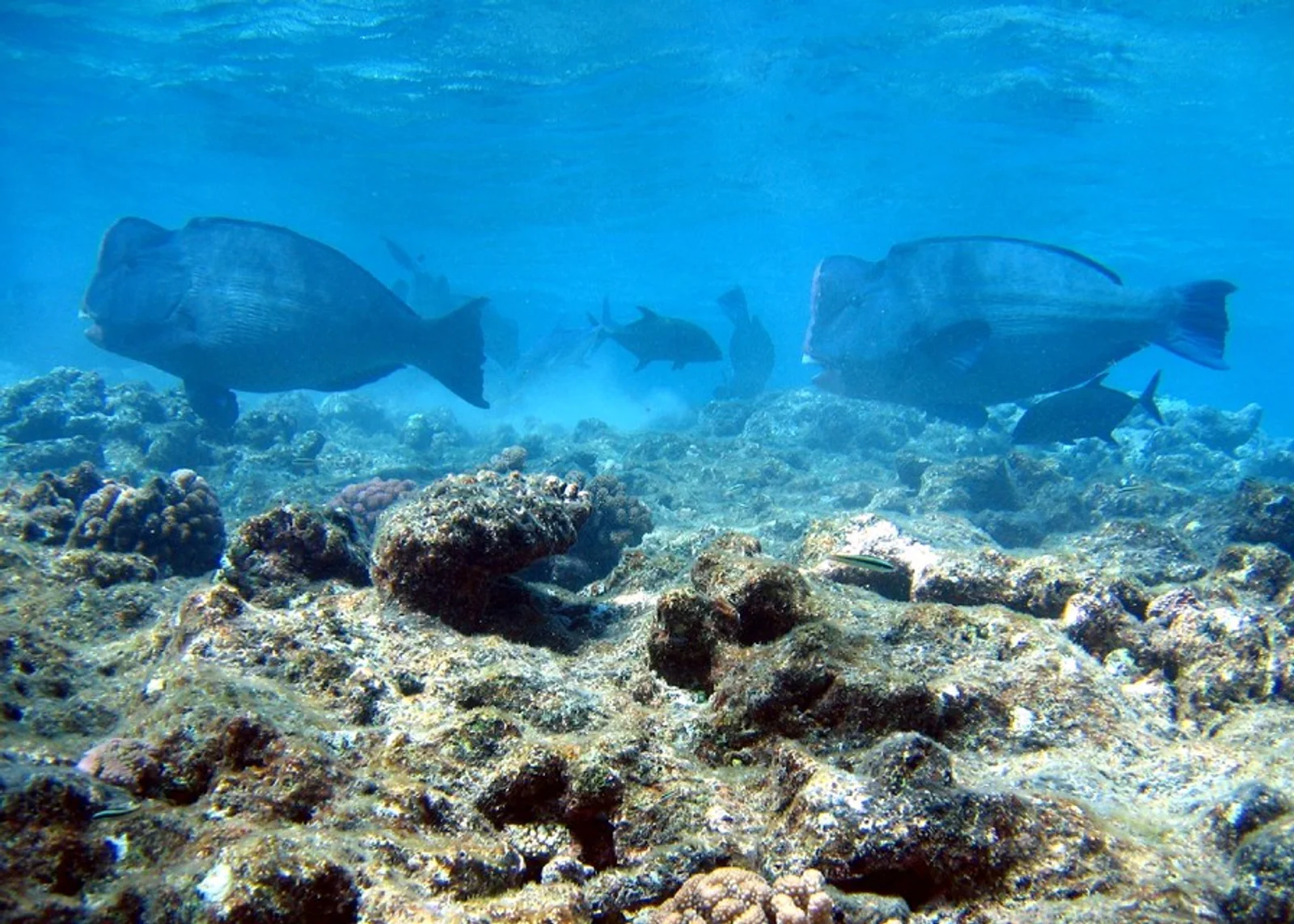
Bolbometopon muricatum
Über Bumphead Parrotfish.
Der Buckel-Papageifisch (Bolbometopon muricatum) ist ein wahrhaft ikonischer und beeindruckender Bewohner der Korallenriffe des Indopazifiks, sofort erkennbar an seiner kolossalen Größe und seiner markanten Stirn. Als größte Art innerhalb der Papageifischfamilie (Scaridae) und einziges Mitglied seiner Gattung, Bolbometopon, spielt er eine einzigartige ökologische Rolle bei der Erhaltung der Gesundheit von Riffökosystemen.
Diese Art ist in einem riesigen Verbreitungsgebiet vom Roten Meer und Ostafrika bis Samoa und den Line Islands sowie von den Yaeyama-Inseln im Norden bis zum Great Barrier Reef in Australien zu finden und gedeiht in klaren äußeren Lagunen und seewärtigen Riffen. Erwachsene Tiere werden typischerweise in Tiefen bis zu 30 m beobachtet, obwohl sie gelegentlich auch in Tiefen von bis zu 40 m gefunden werden können. Jungtiere bevorzugen geschütztere Umgebungen, wie verzweigte Korallenhabitate (hauptsächlich Acropora) in Lagunen und Seegraswiesen.
Diese sehr geselligen Fische werden oft in Schwärmen gesehen, die von kleinen Gruppen bis zu Ansammlungen von über 75 Individuen reichen können, wobei historische Aufzeichnungen Schwärme von bis zu 250 Tieren vermuten lassen. Sie sind tagaktiv, fressen tagsüber aktiv und sind bekannt für ihre einzigartige Fressstrategie: Sie rammen ihre prominente Stirn in Korallen, um Stücke abzubrechen, die sie dann mit ihren kräftigen, verschmolzenen Zähnen zermahlen. Dieses Fressverhalten macht sie zu entscheidenden Bioerodierern, wobei ein einzelnes erwachsenes Tier jährlich über fünf Tonnen struktureller Riffkarbonate aufnimmt, was erheblich zur Sandproduktion und Rifferhaltung beiträgt. Nachts suchen sie in großen Gruppen in Höhlen, Spalten oder sogar Schiffswracks Schutz und schlafen, was sie zu einem faszinierenden Anblick für Nachttaucher macht.
Der Buckel-Papageifisch ist eine langsam wachsende und langlebige Art, die bis zu 40 Jahre alt werden kann, aber eine verzögerte Fortpflanzung und niedrige Nachwuchsraten aufweist. Dies, kombiniert mit ihrer großen Größe und ihrem Schwarmverhalten, macht sie besonders anfällig für Überfischung, was zu ihrem aktuellen Schutzstatus als gefährdet führt.
Tauchplätze, an denen diese prächtige Art beobachtet wurde, sind:
- USAT Liberty Wreck (häufig)
- Cape Kri (gelegentlich)
- Kyokuzan Maru (häufig)
- Karang Makassar (Manta Point) (gelegentlich)
- Barracuda Point (häufig)
- Hastings Reef (häufig)
- Tatawa Kecil (gelegentlich)
- Arborek Jetty (gelegentlich)
- Manta Alley (gelegentlich)
- Castle Rock (gelegentlich)
Identifikation
Der Buckel-Papageifisch ist aufgrund mehrerer wichtiger physischer Merkmale unverkennbar:
- Größe: Er ist der größte Papageifisch und kann eine Länge von bis zu 1,5 m (5 ft) und ein Gewicht von bis zu 75 kg (165 lb) erreichen.
- Körperform: Sie besitzen einen tiefen, robusten Körper mit einem markanten vertikalen Kopfprofil.
- Färbung: Erwachsene Tiere zeigen typischerweise eine einheitliche dunkelgrüne bis mattgrüne Färbung, oft mit einem blassgelben bis rosa vorderen Rand am Kopf. Jungtiere sind bräunlich bis grün mit fünf vertikalen Reihen weißlicher Flecken. Im Gegensatz zu vielen anderen Papageifischarten zeigt der Buckel-Papageifisch keine geschlechtsbedingten Farbveränderungen.
- Stirnbuckel: Das auffälligste Merkmal ist der prominente, knollige Buckel auf der Stirn der Erwachsenen, von dem er seinen gebräuchlichen Namen ableitet. Dieser Buckel ist bei Männchen stärker ausgeprägt und erscheint fast parallel zum Schnabel, während er bei Weibchen tendenziell vom Schnabel nach hinten abfällt. Dieser knöcherne Vorsprung wird zum Brechen von Korallen während der Nahrungsaufnahme und bei ritualisierten Kopfstoß-Wettkämpfen zwischen Männchen während der Laichzeit verwendet.
- Maul und Zähne: Sie haben kräftige, verschmolzene Zähne, die einen papageienartigen Schnabel bilden, der größtenteils freiliegt und nur teilweise von fleischigen Lippen bedeckt ist. Diese unglaublich starken Zähne, härter als viele Metalle, werden zum Abkratzen und Zermahlen von Korallen und benthischen Algen verwendet.
Lebensraum.
Der Buckel-Papageifisch (Bolbometopon muricatum) ist ein majestätischer Bewohner tropischer Korallenriff-Ökosysteme im gesamten Indo-Westpazifik. Sein ausgedehntes Verbreitungsgebiet erstreckt sich vom Roten Meer und Ostafrika ostwärts bis Samoa und den Line Islands, nordwärts bis Taiwan, Südjapan und Wake Island und südwärts bis zum Great Barrier Reef und Neukaledonien.
Diese Art zeigt während ihrer verschiedenen Lebensstadien unterschiedliche Habitatpräferenzen:
- Jungtiere: Neu angesiedelte Buckel-Papageifische findet man typischerweise in geschützten Lagunen, oft in Verbindung mit verzweigten Korallenhabitaten, hauptsächlich Acropora-Arten. Kleinere Jungtiere (weniger als 50 mm) werden häufig zusammen mit Riffbarschen beobachtet, während größere Jungtiere oft in Lagunen, einschließlich Seegraswiesen, leben.
- Erwachsene: Ausgewachsene Buckel-Papageifische frequentieren hauptsächlich klare äußere Lagunen und seewärtige Riffe sowie Barriere- und Saumriffe. Sie sind auch auf Riffkämmen und in energiereichen Vorriffbereichen zu finden, oft in kleinen bis großen Ansammlungen.
Taucher können diese beeindruckenden Fische in Tiefen von 1 bis 40 m antreffen, obwohl Erwachsene am häufigsten in flacheren Gewässern, typischerweise zwischen 0 und 30 m, beobachtet werden. Tagsüber suchen sie aktiv Nahrung am Riff, aber nachts suchen sie Schutz und schlafen oft in Gruppen in Höhlen, flachen sandigen Lagunenhabitaten oder sogar in Schiffswracks, was diese Tauchplätze zu vorhersehbaren Beobachtungsorten macht.
Als entscheidender Bestandteil der Korallenriffgesundheit spielt der Buckel-Papageifisch eine wichtige ökologische Rolle. Er ist ein fakultativer Korallenfresser, der sich überwiegend von lebenden Korallen ernährt, aber auch benthische Algen konsumiert. Mit kräftigen Kiefern und einem markanten Kopf beißen sie große Korallenstücke ab oder rammen ihren Kopf gegen das Riff, um Stücke abzubrechen, was erheblich zur Bioerosion und Sandproduktion beiträgt. Dies macht sie zu einem wichtigen „Ökosystem-Ingenieur“ und „Schlüsselarten“, die dazu beitragen, die physikalische Struktur zu formen und die Vielfalt der Korallenriffumgebungen zu erhalten. Ihr Lebensraum erfordert komplexe Riffstrukturen, einschließlich Sporn-und-Rillen-Formationen und Kanälen, zusammen mit ausreichenden Unterschlüpfen für ihre nächtliche Ruhe.
Verhalten.
Verhalten bei Unterwasserbegegnungen
Taucher begegnen Buckel-Papageifischen oft tagsüber, wenn sie aktiv am Riff nach Nahrung suchen. Obwohl sie im Allgemeinen als vorsichtig gelten, insbesondere in Gebieten mit Fischereidruck, können sie in großen Schwärmen beobachtet werden, manchmal Dutzende oder sogar Hunderte von Individuen umfassend. Bei ruhiger Annäherung können Taucher ihr einzigartiges Fressverhalten beobachten. Nachts suchen diese großen Fische Schutz in Höhlen, unter Überhängen oder in Schiffswracks, wie dem USAT Liberty Wreck, wo sie in Gruppen schlafen. Bei Nachttauchgängen ist es entscheidend, einen respektvollen Abstand zu halten und direktes Scheinwerferlicht auf sie zu vermeiden, um Störungen zu verhindern, da sie während des Ruhens besonders fügsam und anfällig sind.
Fressgewohnheiten
Der Buckel-Papageifisch spielt eine entscheidende Rolle für die Gesundheit der Korallenriff-Ökosysteme. Ausgestattet mit verschmolzenen Zähnen, die einen kräftigen, papageienartigen Schnabel bilden, ernähren sie sich hauptsächlich von benthischen Algen und lebenden Korallen. Ein bemerkenswerter Aspekt ihrer Nahrungsaufnahme ist ihre Fähigkeit, ihre knöcherne Stirn gegen Korallen zu rammen, um Stücke abzubrechen, die dann von Schlundzähnen zermahlen werden. Dieser Prozess des Verzehrs von hartem Korallenmaterial und dessen Ausscheidung als feiner Sand macht sie zu bedeutenden Bioerodierern und Sandproduzenten an Riffen. Ein erwachsener Buckel-Papageifisch kann jährlich über fünf Tonnen struktureller Riffkarbonate aufnehmen. Taucher können ihre charakteristischen „Beißgeräusche“ hören und „Meißelspuren“ an Korallen beobachten, die auf ihre jüngste Fressaktivität hinweisen. Sie fressen typischerweise auf Riff-Oberflächen und lebenden Korallen, oft zwischen 5–15 m, obwohl Fressschwärme mit steigender Flut in flachere Gewässer von 1–2 m vordringen können.
Sozialstruktur
Buckel-Papageifische sind sehr gesellig und bilden Schwärme sowohl zur Nahrungsaufnahme als auch zur Fortpflanzung. Obwohl sie typischerweise in kleinen Gruppen gesehen werden, können diese Schwärme erheblich anwachsen, insbesondere an seewärtigen und klaren äußeren Lagunenriffen. Historische Aufzeichnungen deuten auf Schwärme von bis zu 250 Individuen hin, obwohl heute häufiger Gruppen von 20 bis 75 beobachtet werden. Sie zeigen vorhersehbare Bewegungsmuster, indem sie von den Tagesfutterplätzen zu bestimmten Nachtschlafplätzen wechseln. Während der Laichereignisse wird ihre Sozialstruktur noch komplexer und umfasst große Ansammlungen.
Bemerkenswerte saisonale Muster, die für Taucher relevant sind
Eines der spektakulärsten und für Taucher relevantesten saisonalen Muster des Buckel-Papageifisches sind ihre Laichansammlungen. Diese Ereignisse treten typischerweise um bestimmte Mondphasen herum auf, oft kurz vor und nach Voll- und letztem Viertelmond, wobei einige Aktivitäten bis zum Neumond reichen. Das Laichen findet normalerweise morgens statt, oft zusammenfallend mit ablaufenden Gezeiten, um die Eier ins offene Wasser, weg von Raubtieren, zu verteilen. Taucher an Orten wie Palau haben die einzigartige Gelegenheit, diese Massenlaichereignisse zu beobachten, bei denen Tausende von Individuen zusammenkommen und Männchen territoriale Verteidigung, einschließlich Kopfstößen, betreiben, um Weibchen anzulocken. Während des Laichens kann sich ihre Gesichtsfarbe weiß verfärben, was die Paarungsbereitschaft signalisiert. Diese Ansammlungen sind ein wahrhaft beeindruckender Anblick, mit vertikalen Fischsäulen, die Wolken von Sperma und Eiern freisetzen. Aufgrund ihrer Anfälligkeit und der Bedeutung dieser Ansammlungen werden die genauen Standorte der Laichplätze oft vertraulich behandelt, um die Schutzbemühungen zu unterstützen.
Wo man es sehen kann.
Nachweise für philippines · 2 Tauchplätze
Das allgemeine Verbreitungsgebiet ist kein Nachweis für das Vorkommen an einem bestimmten Tauchplatz.
Galerie.