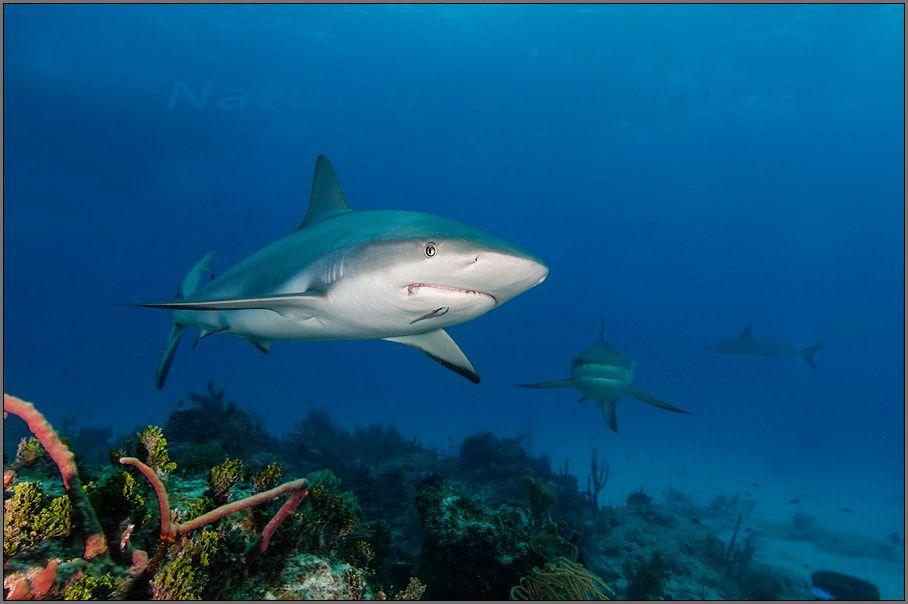
Caribbean Reef Shark
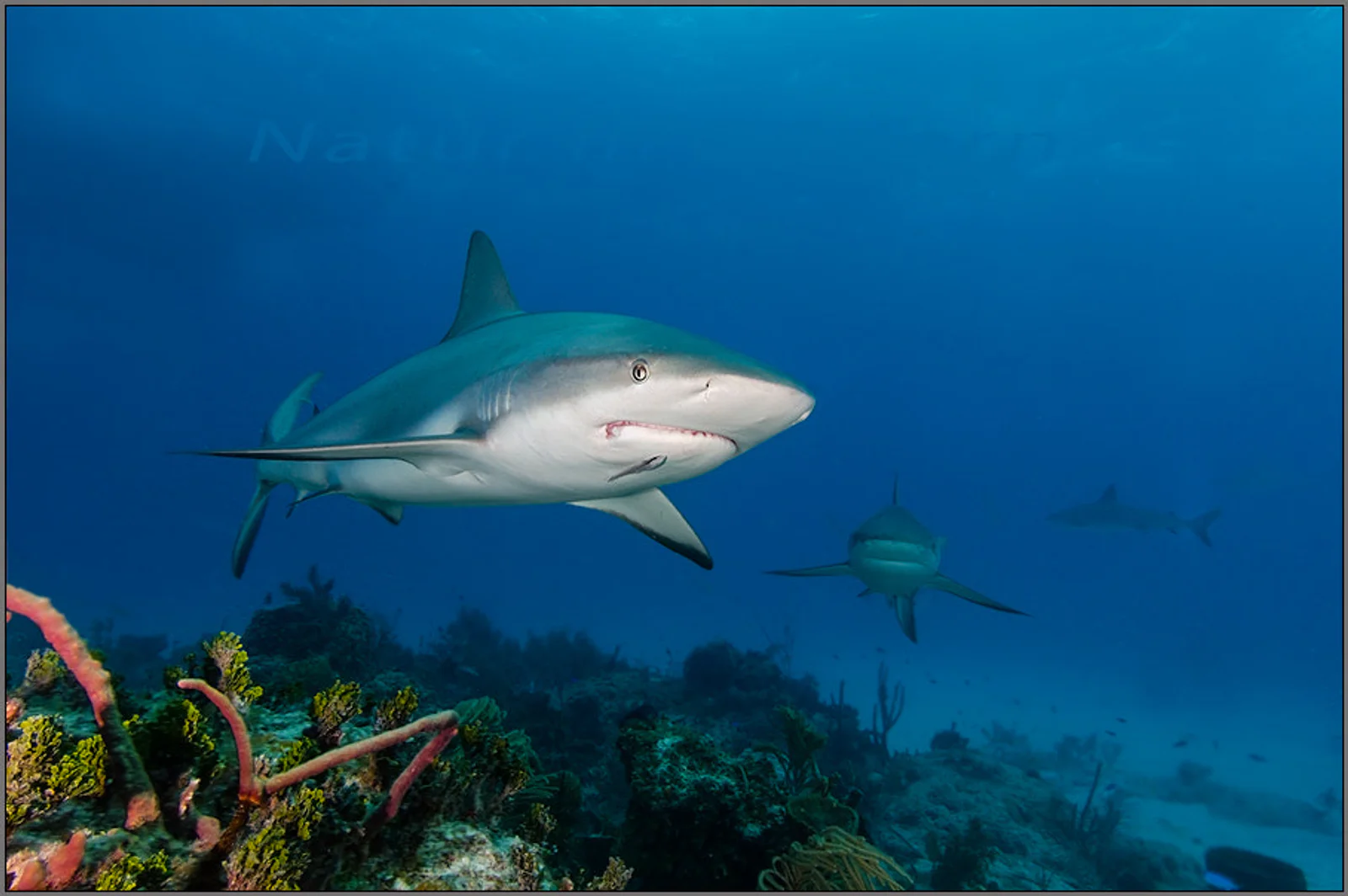
Carcharhinus perezi
About Caribbean Reef Shark.
The Caribbean Reef Shark (Carcharhinus perezi) is a prominent and robust species belonging to the family Carcharhinidae, making it a familiar sight for divers across the Western Atlantic. As the most commonly encountered reef shark in the Caribbean Sea, its range extends from Florida down to Brazil, encompassing the Gulf of Mexico and the wider Caribbean region. This apex predator plays a crucial role in maintaining the ecological balance of coral reef ecosystems. Unfortunately, the Caribbean Reef Shark is currently listed as Endangered, facing threats primarily from overexploitation in fisheries, habitat degradation, and rising water temperatures.
These sharks are typically found in tropical inshore waters, closely associated with coral reef ecosystems, coastal areas, and atoll lagoons. They prefer shallow waters, commonly observed at depths of 10–30 m, but have been recorded to dive significantly deeper, reaching up to 378 m or even 400 m. They thrive in warm, clear waters, generally ranging from 24–28°C. Caribbean Reef Sharks are often seen cruising along reef walls and drop-offs, exhibiting a generally territorial nature with predictable patterns. While usually solitary, they can sometimes be found in small aggregations. A unique behavior for an active-swimming shark, they have been documented resting motionless on the ocean floor or inside caves. When threatened, they may perform a distinctive threat display, involving jerky swimming and dipping their pectoral fins.
Identification Features:
- Size: Individuals typically measure 2–2.5 m (6.5–8.2 ft) in length, with a maximum recorded size of 3 m (9.8 ft).
- Body Shape: They possess a robust, streamlined, and heavy-bodied form, characteristic of requiem sharks.
- Coloration: The dorsal (upper) side is typically dark gray or gray-brown, contrasting with a white or whitish-yellow ventral (underside). An inconspicuous white band may be visible along their flanks.
- Fins:
- All fins, particularly the undersides of the paired fins (pectoral and pelvic), the anal fin, and the lower lobe of the caudal fin, are dusky-colored without prominent markings.
- A low interdorsal ridge is present between the first and second dorsal fins.
- The first dorsal fin is high and falcate (sickle-shaped), with its origin located over or slightly forward of the free rear tips of the pectoral fins.
- The second dorsal fin is relatively large and features a very short free rear tip, a key distinguishing characteristic.
- Pectoral fins are notably large and narrow, tapering to a point.
- Head:
- The snout is moderately short and broadly or bluntly rounded.
- They have relatively large, circular eyes equipped with nictitating membranes.
- Moderately long gill slits are present, with the third gill slit positioned above the origin of the pectoral fin.
This species is a highlight at many dive sites across its range, including the Great Blue Hole (common), Devil's Throat (Punta Sur) (occasional), Mary's Place (rare), Columbia Reef (occasional), Palancar Reef (occasional), and Maracaibo Deep (common).
Where it lives.
The Caribbean Reef Shark (Carcharhinus perezi) is a prominent and ecologically vital species primarily inhabiting the warm, clear waters of the tropical western Atlantic Ocean. Its extensive range stretches from North Carolina in the north, encompassing Bermuda, the Gulf of Mexico, and the entire Caribbean Sea, extending southwards to Brazil. This shark is particularly abundant throughout the Caribbean region, including around the Bahamas and the Antilles, which is reflected in its common name.
These sharks are strongly associated with diverse coral reef ecosystems, where they function as a crucial meso- and apex predator, helping to maintain the health and balance of these vibrant marine environments. Divers frequently encounter them in a variety of reef-associated habitats:
- Outer Reef Walls and Drop-offs: Caribbean Reef Sharks are commonly found patrolling the edges of coral reefs, particularly near steep drop-offs and along outer reef walls. These areas, such as the famous Great Blue Hole and Maracaibo Deep, offer access to both shallow foraging grounds and deeper waters.
- Channels and Atoll Lagoons: They also frequent channels, atoll lagoons, and areas near insular and continental shelves, where they can find abundant food resources and shelter. Dive sites like Devil's Throat (Punta Sur) and Columbia Reef exemplify these preferred environments.
- Shallow Bays and Reef Caves: While primarily reef-dwellers, they may also venture into shallow bays and have a unique habit of resting motionless on the ocean floor or within reef caves, a behavior unusual for an active-swimming shark. Mary's Place is one such location where this behavior has been observed.
- Substrate Diversity: Their habitat preferences extend to areas with sandy substrates, seagrass beds, and macroalgae in shallow lagoons. Juveniles typically remain in shallower, more protected waters within the reef system until they are large enough to venture further.
Caribbean Reef Sharks generally prefer shallow waters, typically found at depths of 10–30 m. However, they exhibit significant depth adaptability and have been observed making extended vertical excursions into much deeper waters, with recorded dives reaching up to 378 m or even 400 m. They thrive in warm, clear waters with temperatures generally ranging from 24–28°C.
How it behaves.
Underwater Encounter Behavior
Caribbean Reef Sharks are generally curious and often approach divers, making them a favorite subject for underwater photographers. They are typically observed cruising along coral reef edges, reef slopes, and drop-offs, often in depths ranging from 10 to 30 meters, though they can dive much deeper, up to 378 meters. While usually considered resident species with strong site-attached tendencies, they exhibit predictable patrolling patterns within their territories. These sharks are not considered inherently aggressive towards humans and unprovoked attacks are rare. However, they may display a "threat dance" if they feel cornered or threatened, which involves stiffly lowering their pectoral fins and making frequent, sharp changes in direction. Divers should maintain a respectful distance and avoid sudden movements. In areas where shark feeding dives are conducted, Caribbean Reef Sharks may associate divers with food, leading to closer approaches. They are also known to visit cleaning stations, where smaller cleaner fish remove parasites from their bodies.Feeding Habits
As carnivorous predators, Caribbean Reef Sharks primarily feed on a variety of bony fishes, including groupers, snappers, and parrotfish. Their diet also includes cephalopods like squid and octopus, and occasionally crustaceans. They are fierce hunters, utilizing their streamlined bodies and acute senses—including smell, sight, touch (water vibration sensitivity), hearing, and electric reception—to locate prey. They often patrol reef edges, using stealth and speed to ambush their prey. While typically solitary hunters, they may form small groups or aggregations in areas with abundant food sources and have been observed cooperatively hunting, sometimes driving prey into shallower waters.Social Structure
Caribbean Reef Sharks are generally considered solitary hunters. However, they can be found in small groups or aggregations, particularly when food is plentiful. Some sources suggest they may form loose social bonds and occasionally exhibit cooperative behaviors, such as group hunting. Females may live in larger schools, with males appearing occasionally. They are territorial animals, often staying near the same reefs.Notable Seasonal Patterns
Reproduction in Caribbean Reef Sharks is viviparous, meaning females give birth to live young after a gestation period of approximately one year. Litters typically consist of 4-6 pups, which are born in shallow, protected nursery areas of coral reefs or nearshore environments. Births most commonly occur between February and April or November and December. During mating season, females often bear deep bite marks on their sides from males, indicating aggressive mating behavior. While generally resident, some Caribbean Reef Sharks may undertake seasonal movements linked to changes in water temperature, prey availability, and breeding cycles, migrating to different areas to find optimal conditions for feeding and reproduction. They thrive in warm, clear waters with temperatures generally ranging from 24 to 28°C. Divers frequently encounter Caribbean Reef Sharks at dive sites such as the Great Blue Hole and Maracaibo Deep, where they are commonly observed, as well as Devil's Throat (Punta Sur) and Columbia Reef, where sightings are occasional. Encounters at Mary's Place are rare. Observing these magnificent creatures in their natural habitat offers a unique and memorable diving experience.Where to see it.
Evidence for philippines · No dive sites
General range is not evidence of occurrence at a specific dive site.
No documented dive-site associations in this destination yet.
Gallery.