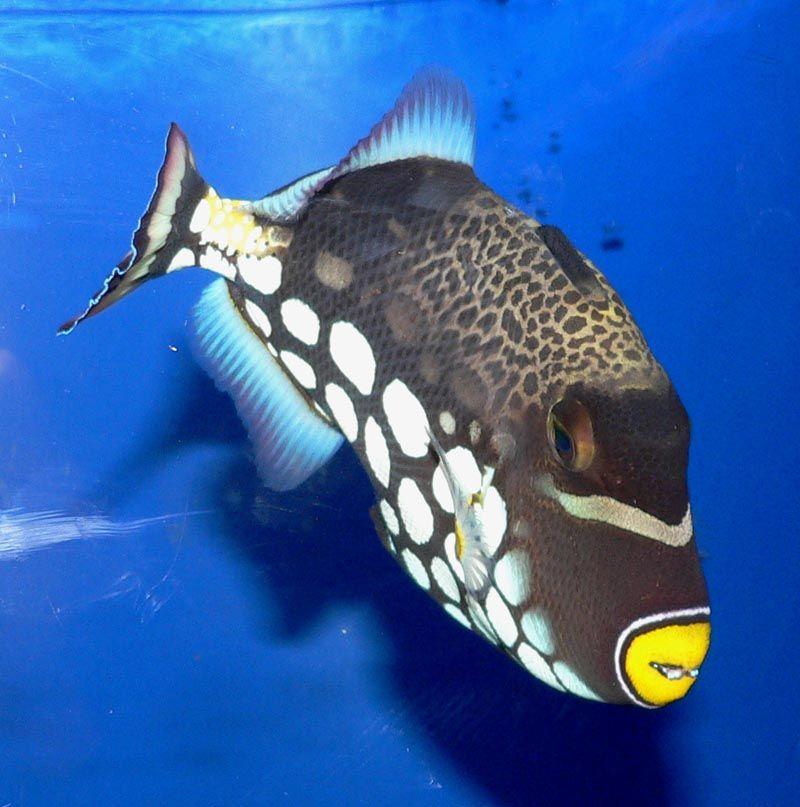
Clown Triggerfish
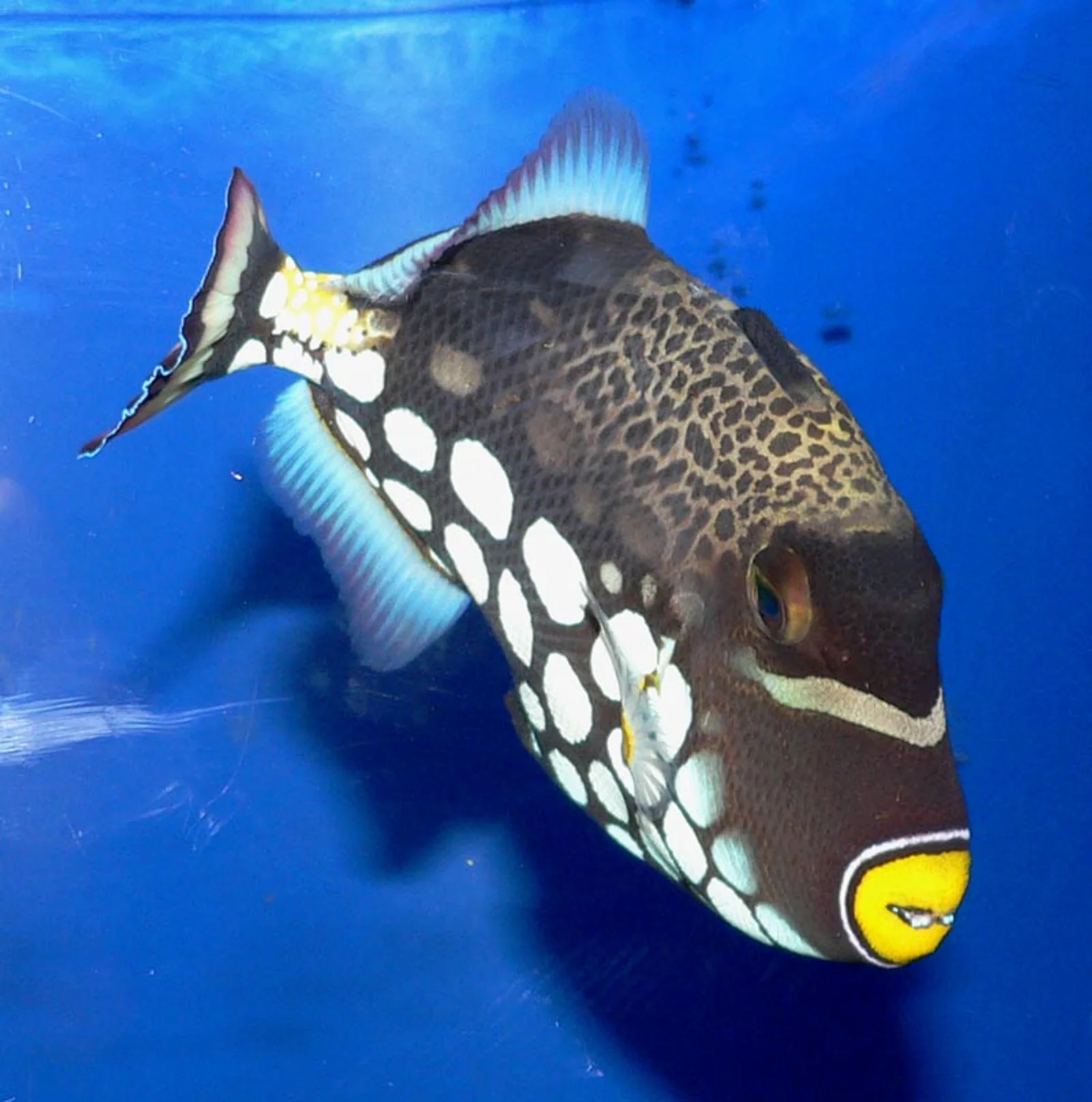
Balistoides conspicillum
About Clown Triggerfish.
The Clown Triggerfish (Balistoides conspicillum) is a truly iconic and unmistakable inhabitant of Indo-Pacific coral reefs, belonging to the family Balistidae. Renowned for its striking coloration and bold patterns, this species is a favorite among divers and underwater photographers alike. It is classified as "Least Concern" by the IUCN, indicating a stable global population.
These fascinating fish can reach a maximum size of 50 cm (20 in). They are typically found in clear coastal to outer reef habitats, including seaward reefs adjacent to steep drop-offs, among rocks, and in caves. While adults often patrol deep drop-offs, juveniles are more secretive, preferring to hide in shallow cavities. Their distribution spans the tropical and subtropical waters of the Indian and Western Pacific Oceans, from East Africa to Samoa, extending north to southern Japan and south to New Caledonia and the Great Barrier Reef. Divers can typically encounter them at depths ranging from 1 to 50 m, though they have been observed as deep as 75 m.
Clown Triggerfish are diurnal and primarily solitary, known for their territorial nature. They are carnivores, using their powerful jaws and strong teeth to feed on a varied diet of benthic organisms, including sea urchins, crabs, other crustaceans, mollusks, and tunicates. When threatened, they exhibit a unique defense mechanism: they can wedge themselves into crevices by locking their prominent first dorsal spine upright, making it incredibly difficult for predators to dislodge them – a characteristic that gives the triggerfish family its name. While generally curious, they can display aggressive behavior, particularly when guarding their nests during breeding season.
This species has been observed at various dive sites, including:
- Yellow Wall of Texas (occasional)
- Cod Hole (common)
- Challenger Bay (common)
Identification
The Clown Triggerfish is instantly recognizable due to its extraordinary and complex pattern:
- Body Shape: It possesses a stocky, oval, and laterally compressed body, with a large head that accounts for approximately one-third of its total length.
- Coloration: The base color of the body is a deep black.
- Spotting: The lower half of its body is adorned with large, distinct, roundish white spots, resembling polka dots.
- Dorsal Pattern: The upper half of the body, particularly around the dorsal fin, features a striking network of yellowish sinuosities or a yellow area with small black freckles, sometimes described as a light-colored saddle.
- Facial Features: Its small, terminal mouth is encircled by bright yellow or orange lips, often with a fine white ring just behind them. A prominent white or yellow stripe runs across the snout, often masking the eyes.
- Fins: The second dorsal fin and the anal fin are typically white, frequently highlighted with a yellow line at their base. The caudal peduncle (the narrow part connecting the body to the tail) may have a yellowish blotch and distinctive spiny scales. The caudal fin itself can be yellowish in the center with black margins, or feature a vertical white stripe.
- Trigger Mechanism: A defining characteristic is the first dorsal fin, composed of three spines. The largest of these can be locked upright by the second spine, forming a "trigger" system that allows the fish to secure itself within reef crevices.
- Juveniles: Younger Clown Triggerfish display a black background with smaller, more numerous white spots, and a yellowish snout and base of the first dorsal fin. As they mature, these spots enlarge and spread out, and the distinctive yellow lips develop. Juveniles are also more cryptic, often remaining hidden in reef cavities.
Where it lives.
The striking Clown Triggerfish (Balistoides conspicillum) is a captivating inhabitant of tropical and subtropical marine environments across the vast Indo-Pacific region. Divers can encounter this species from the warm waters of East Africa, eastward through Indonesia, to the western Pacific Ocean, encompassing areas like the Great Barrier Reef, parts of Japan, and New Caledonia.
This demersal fish primarily favors clear outer reef slopes and dramatic drop-offs, often found in coral-rich areas. While adults are typically observed swimming openly along deeper sections of these reefs, juveniles are more secretive, often sheltering in small caves or beneath overhangs. Their preferred habitat includes areas with abundant invertebrate growth, which forms a significant part of their diet.
Clown Triggerfish are typically found at depths ranging from 1 to 75 m. Juveniles tend to remain in shallower waters, generally below 20 m, seeking refuge in crevices and cavities within the reef structure. Adults, however, are more commonly sighted along the deeper sections of reef walls and drop-offs.
Regarding substrate, these triggerfish are strongly associated with coral and rocky reefs. They utilize rocky crevices for hiding and resting, employing their unique dorsal spine to wedge themselves securely into shelters. When it comes to reproduction, they are known to spawn on patches of sand and coral rubble, where the female lays her eggs for the male to fertilize and guard. As benthic feeders, they actively explore the substrate, often digging and flipping rocks in search of crustaceans, molluscs, and sea urchins.
The Clown Triggerfish plays an integral role within its coral reef ecosystem, contributing to the balance of these vibrant underwater communities through its feeding habits and territorial behavior.
How it behaves.
Underwater Encounter Behavior
Clown Triggerfish are generally diurnal and can be observed actively swimming along reef slopes and in shallow lagoons, typically at depths of 1–75 m, though juveniles often stay below 20 m in sheltered caves or overhangs. While not typically shy of divers, they will retreat if approached too closely. However, their territorial nature becomes pronounced, especially during breeding season. During this time, they can exhibit aggressive behavior, defending their nests vigorously against perceived threats, including divers. If a Clown Triggerfish feels threatened, it may erect its prominent dorsal spine, which locks into place, serving as a deterrent to predators and allowing it to wedge itself securely into crevices. Divers should maintain a respectful distance, particularly if the fish appears agitated or is guarding a nest, and swim horizontally away from the area if necessary.Feeding Habits
As active carnivores, Clown Triggerfish possess powerful jaws and strong, continually growing teeth, which they use to crush the hard shells of their prey. Their diet is varied, consisting primarily of benthic invertebrates such as crustaceans (e.g., crabs, shrimp), mollusks (e.g., clams, pearl oysters), echinoderms (e.g., sea urchins, starfish), and tunicates. They are voracious eaters and have been observed moving coral rubble to access hidden morsels. Clown Triggerfish often blow jets of water onto sandy areas to uncover buried prey before attacking.Social Structure
Clown Triggerfish are predominantly solitary creatures, spending most of their lives alone. However, they gather in groups for reproduction. During the breeding season, males establish and defend small territories at spawning grounds. They form harems, typically consisting of one male and two to five females.Notable Seasonal Patterns
Reproduction is a significant seasonal event for Clown Triggerfish, influencing their behavior. Males arrive first at spawning areas, often sandy patches or areas with coral rubble, where they dig shallow nests. Females then lay their eggs in these nests, which the male fertilizes. Both parents, particularly the male, aggressively guard the nest for approximately eight days until the eggs hatch. Spawning often occurs in sync with lunar and tidal cycles, typically a few days before a full or new moon, often around sunset, to minimize strong currents on the developing eggs. During this nesting period, divers are more likely to encounter their aggressive territorial displays. Juveniles remain in deeper waters until they reach about 15–20 cm in size. Clown Triggerfish are commonly observed at dive sites such as Cod Hole and Challenger Bay, with occasional sightings at the Yellow Wall of Texas.Where to see it.
Evidence for philippines · 1 dive site
General range is not evidence of occurrence at a specific dive site.
Gallery.