Costasiella Sea Slugs (assorted)
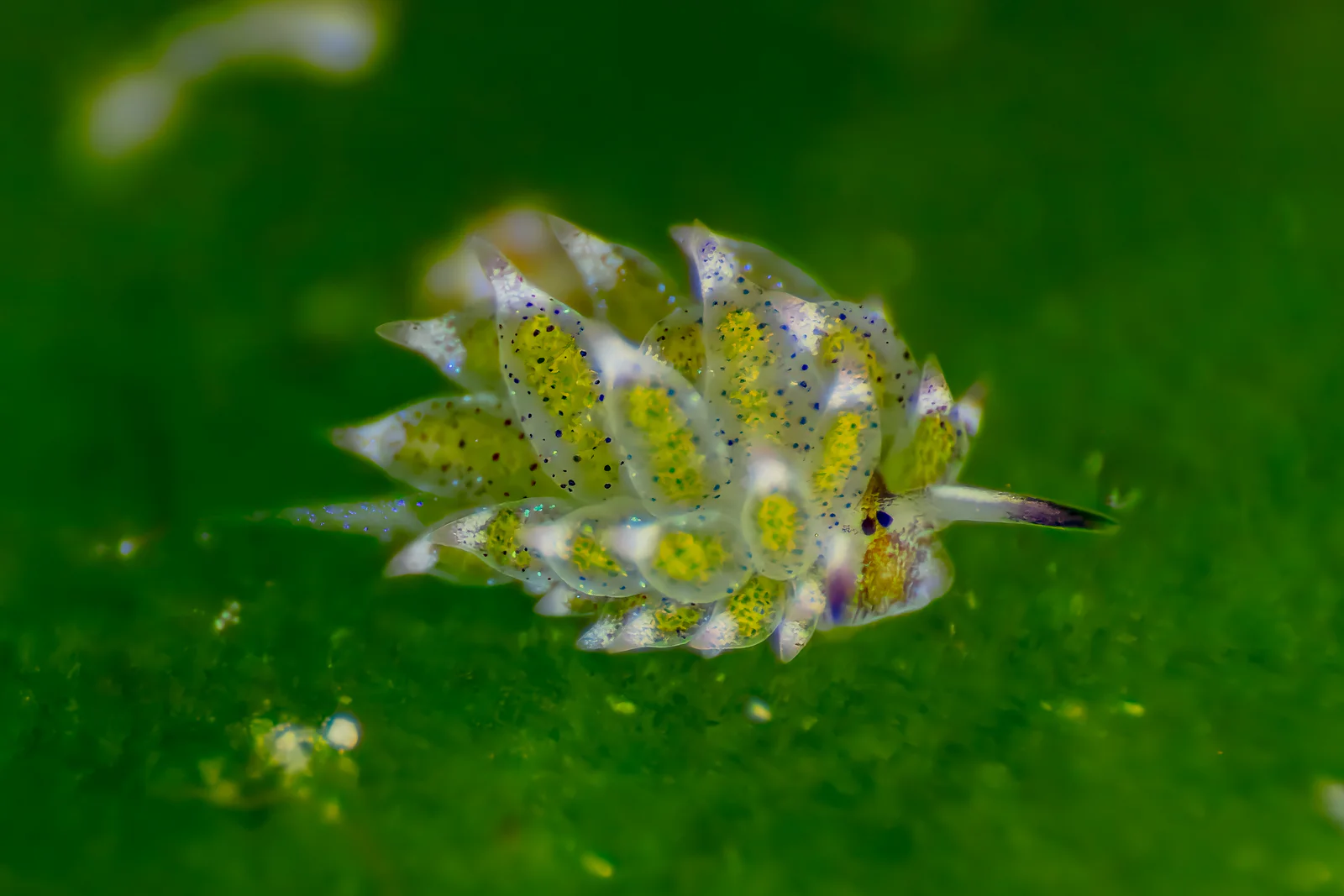
Crédito de la imagen: Diego Delso, delso.photo · CC BY-SA 4.0 · Wikimedia Commons, cropped by this page
Costasiella spp.
Acerca de Costasiella Sea Slugs (assorted).
Costasiella is a genus of sacoglossan sea slugs in the family Costasiellidae, not a single species. The World Register of Marine Species (WoRMS) lists Costasiella Pruvot-Fol, 1951 as an accepted genus with 17 accepted species, and Wikipedia gives the same 17. This group entry covers sightings where the species was not recorded.
The Amed dive operators cited here call them nudibranchs, but Wikipedia classifies them as sacoglossan sea slugs (superorder Sacoglossa), not as nudibranchs. It describes the genus as shell-less, with smooth, usually simple rhinophores, rounded tentacle-like corners to the front of the foot and blade-shaped radular teeth.
The best known species is Costasiella kuroshimae, which Wikipedia says is also called the leaf slug, sea sheep or leaf sheep. It describes two dark eyes, two rhinophores that look like a sheep's ears, rows of leaf-like cerata along the body, and a length of 5 to 10 mm. The sources cited here do not give sizes for the other species.
A conservation status is not given here, because this entry covers a whole genus.
Dónde vive.
Wikipedia says most of the genus lives in the tropical and subtropical western Pacific, and that the preferred habitat is soft, muddy sediment around the intertidal zone. It says C. kuroshimae has been found in the waters near Japan, the Philippines and Indonesia; its type locality is Kuroshima in the Ryukyu Islands.
Where Divers Find Them
At Melasti in the Amed area of Bali, Amed Jepun Divers says: "With a trained eyes can even spot costasiella nudibranch, also called 'The shaun the sheep nudibranch'." At Bunutan, Bali Aqua says the sandy slope at the entry "is also home to Pegasus sea moths, shaun the sheep nudies and grazing green turtles." Neither names the species or says how often they are seen.
Cómo se comporta.
Wikipedia says the diet varies between species, but that members of the genus generally eat green algae, most often Vaucheria and Avrainvillea. It says C. kuroshimae feeds selectively on Avrainvillea and keeps the chloroplasts of the algae in its own cells, a process called kleptoplasty, which lets it photosynthesise for a short time and survive longer without food. It also says that species is a simultaneous hermaphrodite that lays its eggs in tiny spiral ribbons on algae. These statements are about that one species unless the genus is named.
Underwater Encounter Behavior
The sources cited here do not describe how Costasiella react to divers. Amed Jepun Divers says it takes a trained eye to spot them.
Dónde verlo.
Evidencia de todos los destinos · 2 sitios de buceo
La distribución general no demuestra la presencia en un sitio de buceo concreto.
Bunutan
Amed
Presencia documentada en el sitio
Temporada aún no documentada
Fuente revisada el 2026-11-08 · Fuente: Bali Aqua · Fecha de observación no documentada
Melasti
Amed
Presencia documentada en el sitio
Temporada aún no documentada
Fuente revisada el 2026-11-08 · Fuente: Amed Jepun Divers · Fecha de observación no documentada
Galería.
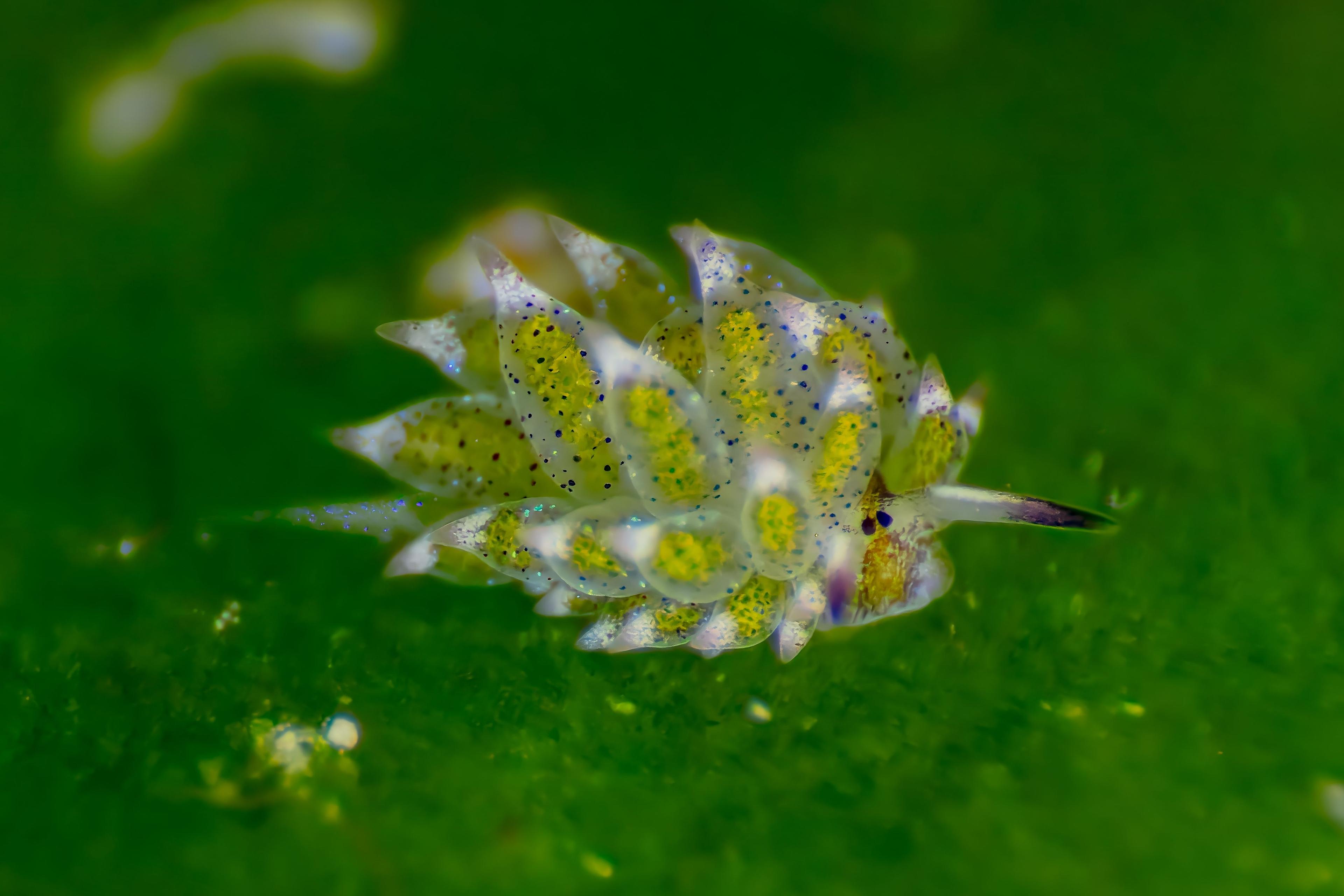
A leaf sheep, Costasiella kuroshimae, one of the 17 accepted species of the sea slug genus Costasiella, photographed at Anilao, Philippines, in 2023 and identified by the photographer, seen from above with its leaf-like cerata spread and two dark eyes near the head. This photograph is not from Amed, and the sources for Amed's sightings name the slug only as costasiella or "shaun the sheep", without a species. This page's frame crops the photograph.
Crédito de la imagen: Diego Delso, delso.photo · CC BY-SA 4.0 · Wikimedia Commons, cropped by this page