Doctorfish
 AI-generated
Image credit: AI-generated illustration · License unspecified · Source unspecified
Acanthurus chirurgus
About Doctorfish.
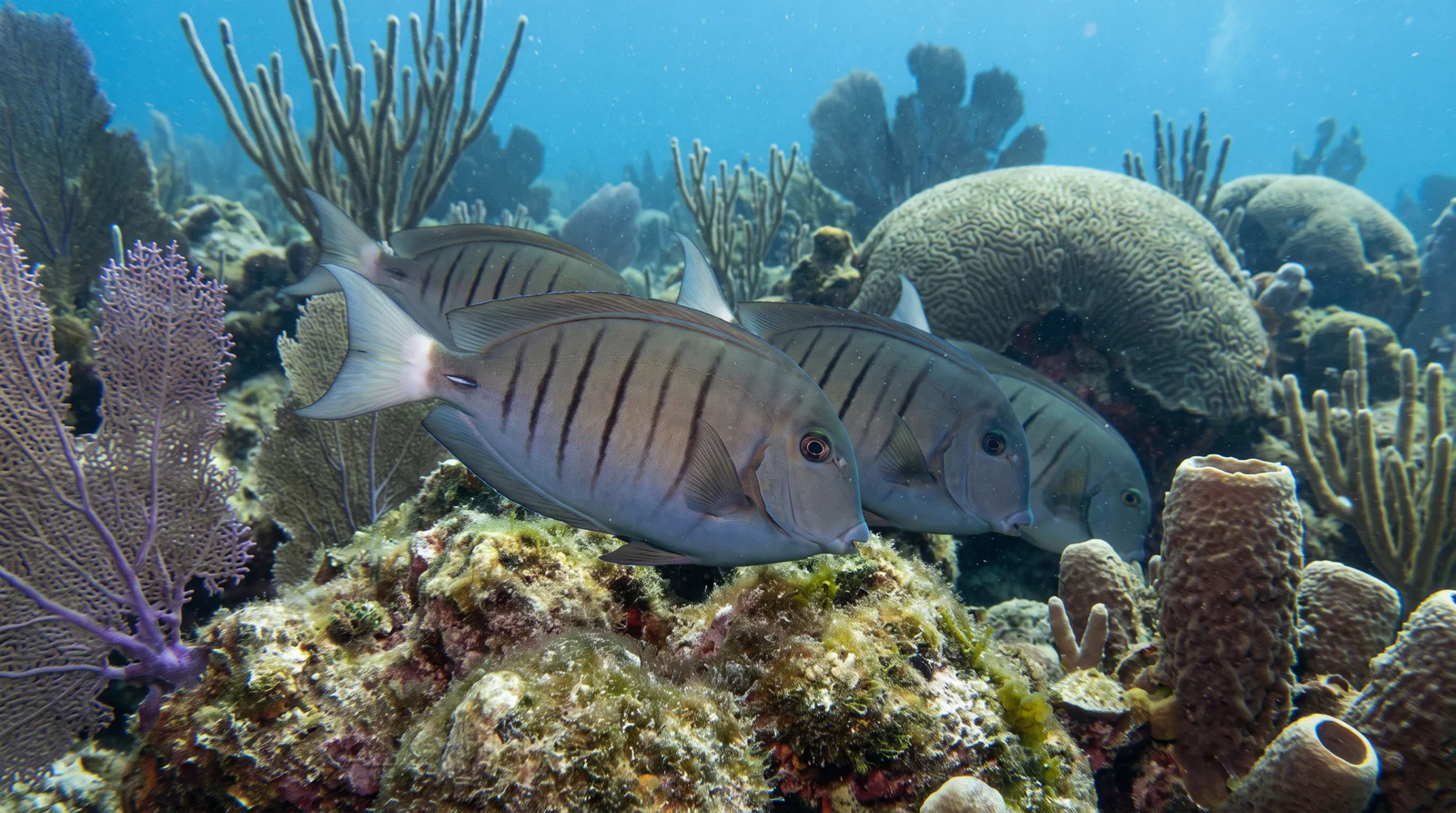
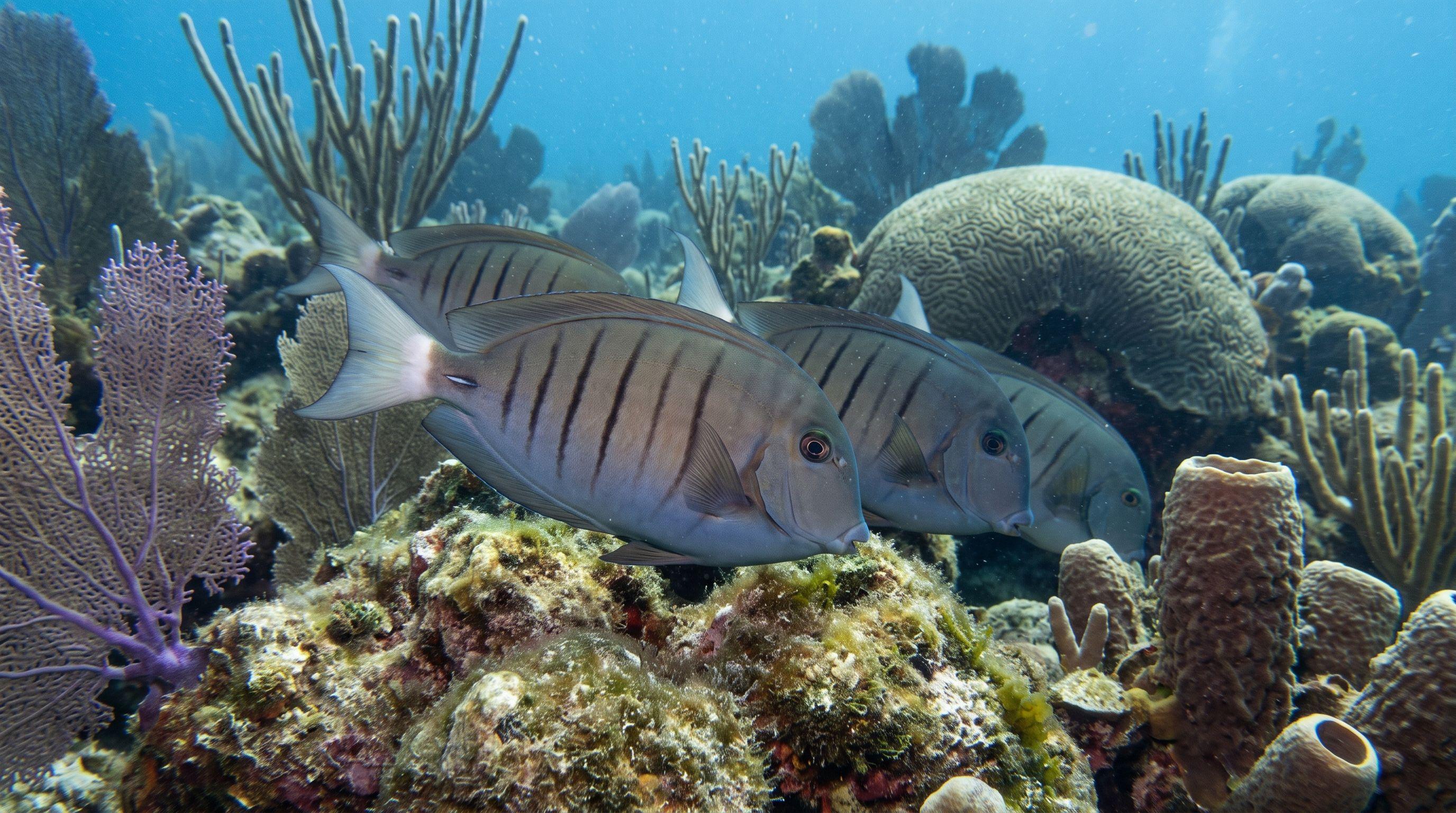
The Doctorfish, Acanthurus chirurgus, is a fascinating marine species belonging to the surgeonfish family, renowned for its distinctive appearance and specialized features. These fish typically display a coloration ranging from blue-gray to dark brown, though they possess a remarkable ability to rapidly change their hue to blend seamlessly with their surrounding environment. This chameleon-like trait aids them in various aspects of their daily life, from camouflage to communication. A key identifying characteristic is the presence of 10 to 12 thin, often faint, dark vertical bars running down their compressed, high-bodied, and somewhat pancake-shaped sides.
Their fins, including the caudal, dorsal, and anal fins, are typically edged in a vibrant blue. A subtle, yet notable, blue ring often encircles the prominent "scalpel" located on each side of the caudal peduncle—the narrow area just before the tail fin. This "scalpel" is a sharp, blade-like spine, which gives the entire family its common name of surgeonfish and serves as a crucial defense mechanism against predators and a tool in intraspecific conflicts.
Doctorfish have relatively small mouths equipped with specialized incisor-like, lobate teeth, perfectly adapted for scraping algae and other plant matter from hard surfaces. They also possess small scales covering their body. While they can reach a maximum size of 39 centimeters (15 inches) in length and weigh up to 5.1 kilograms (11 pounds), they are more commonly observed at lengths between 25 to 30 centimeters (10 to 12 inches). Their larval stage is particularly unique, characterized by a translucent, diamond-shaped, and laterally compressed form with large eyes and prominent pectoral fins, undergoing a significant metamorphosis as they mature into juveniles.
Where it lives.
The Doctorfish (Acanthurus chirurgus) is primarily found in the tropical and subtropical regions of the Western Atlantic Ocean, with a broad distribution extending from Massachusetts in the United States southward to Brazil, encompassing the northern Gulf of Mexico and the entire Caribbean Sea. They are also known to inhabit the tropical west coast of Africa, although some records from this area might be misidentifications. Intriguingly, there have been recent sightings of the species in the central Mediterranean Sea.
This species is highly adaptable and occupies a variety of shallow marine environments. They are commonly associated with coral reefs, particularly in rocky outcrops and reef flats, where they can forage among the substrate. Doctorfish also thrive over sandy bottoms and are frequently observed in inshore seagrass beds and around mangroves, especially as juveniles. Their depth range is quite extensive for a shallow-water species, typically found between 2 to 65 meters (6 to 213 feet), though they predominantly inhabit the shallower parts of these habitats.
How it behaves.
Doctorfish are diurnal herbivores, meaning they are active during daylight hours, primarily grazing on benthic (bottom-dwelling) algae, organic detritus, and the associated microinvertebrates found on rocks, coral, and compacted sand bottoms. A unique adaptation for their diet involves swallowing food whole; they possess a gizzard-like organ in their intestine, partially filled with sand particles, which aids in grinding their food before digestion.
These surgeonfish exhibit social behavior, often forming small groups and loose feeding schools. They are frequently observed schooling with other surgeonfish species, such as ocean surgeonfish and blue tangs, cooperatively grazing and overwhelming territorial damselfish. Juveniles of the Doctorfish species are known to establish cleaning stations, where they perform an important ecological role by removing parasites and algae from the shells and bodies of green turtles. As they mature into adults, their role reverses, and they visit cleaning stations to be cleaned themselves by other small fish or cleaner wrasses.
Doctorfish utilize their ability to rapidly change color for communication within their schools and to highlight problem areas on their bodies for cleaner fish. While generally not aggressive towards divers, the sharp, scalpel-like spines located on either side of their caudal peduncle can inflict painful wounds if the fish is handled carelessly or feels threatened. These spines are primarily used for defense and in territorial disputes with other doctorfish.
Where to see it.
Evidence for philippines · No dive sites
General range is not evidence of occurrence at a specific dive site.
No documented dive-site associations in this destination yet.
Gallery.
 AI-generated
AI-generated illustration
Image credit: AI-generated illustration · License unspecified · Source unspecified