Elkhorn Coral
 AI-generated
Image credit: AI-generated illustration · License unspecified · Source unspecified
Acropora palmata
About Elkhorn Coral.
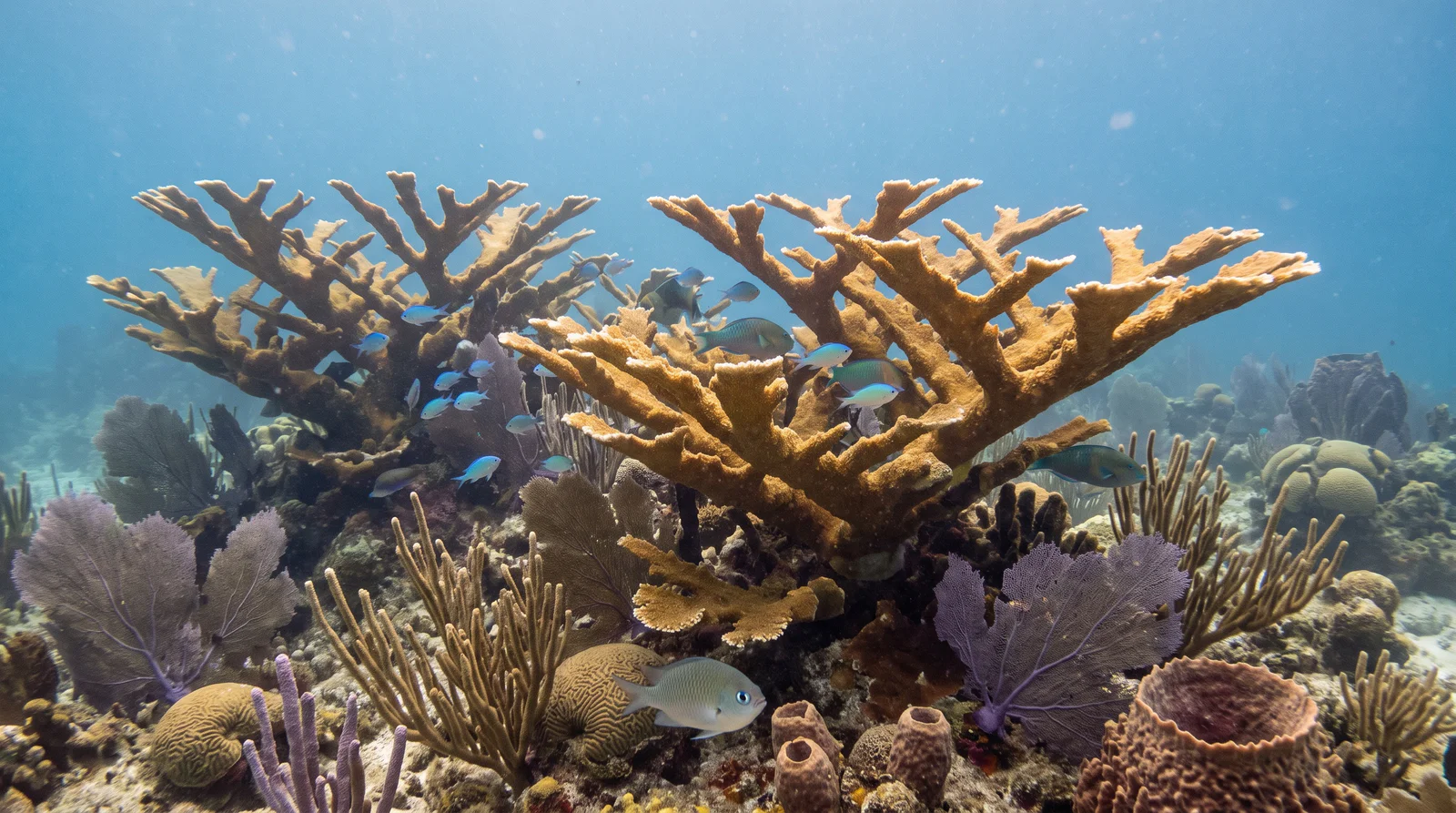
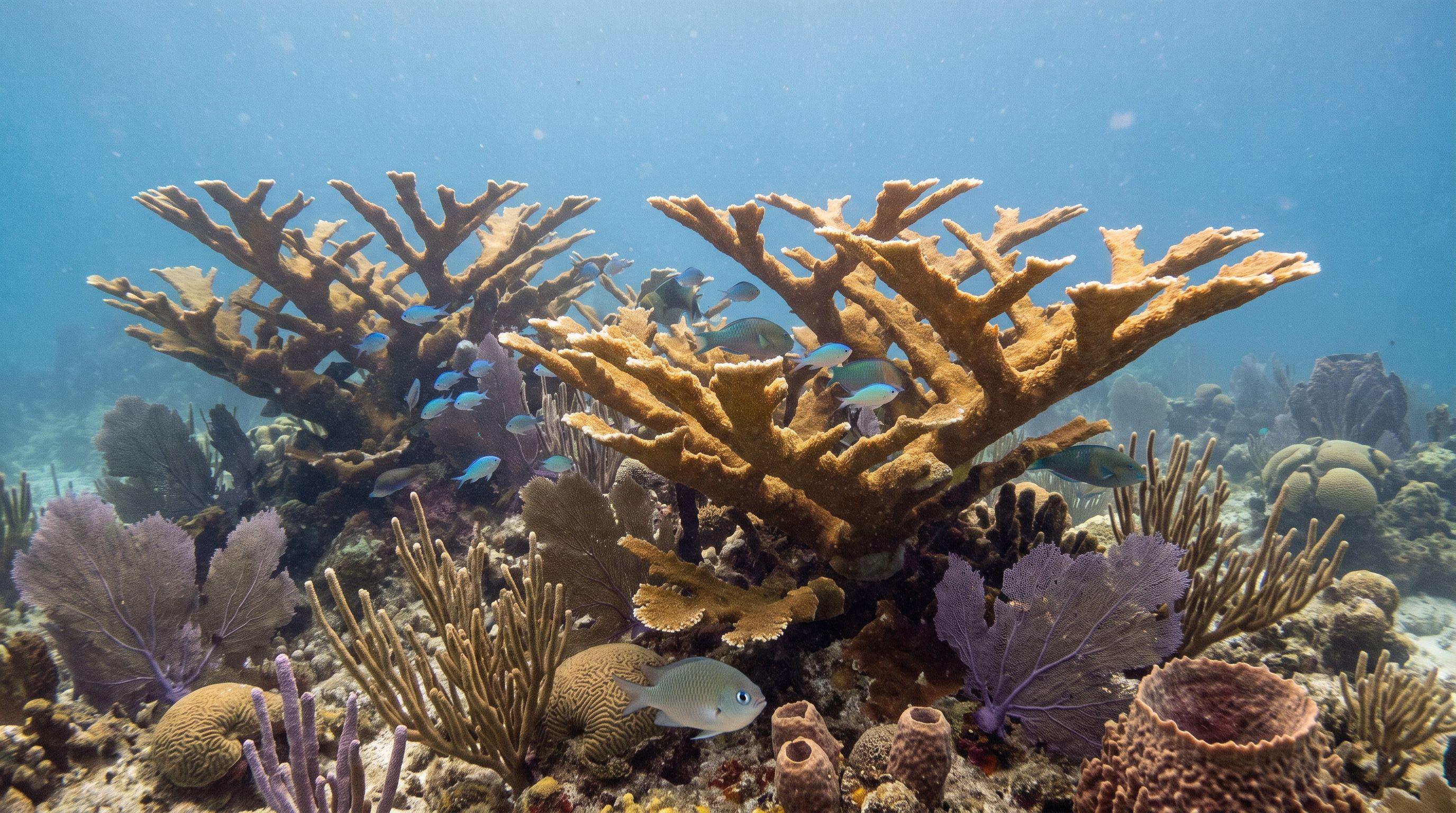
The Elkhorn Coral (Acropora palmata) is a prominent species of hard coral, instantly recognizable by its large, branching colonies that strikingly resemble the antlers of an elk or moose. This distinctive morphology gives the coral its common name and makes it a critical structural component of shallow Caribbean reef ecosystems. Healthy colonies form thick, robust branches that can spread outward and upward, creating a complex three-dimensional habitat. These branches, often flattened to a near-round shape, can extend impressively, with individual colonies recorded up to 6 meters (20 feet) in diameter and reaching heights of 2 meters (6.5 feet). The coloration of Elkhorn Coral typically ranges from a golden brown to a yellowish-brown hue, a vibrant palette attributed to the symbiotic zooxanthellae, photosynthetic algae, living within its tissues. Occasionally, the tips of its branches, where active growth is occurring, may appear paler or white. Acropora palmata is renowned for its relatively fast growth rate among corals; its branches can increase in length by approximately 5 to 10 centimeters (2 to 4 inches) annually. Under optimal conditions, a colony can achieve its maximum size within 10 to 12 years. Historically, Elkhorn Coral was one of the most ecologically significant reef-building corals in the Caribbean, forming vast, dense thickets that provided the foundational structure for extensive shallow reef zones and served as crucial shelter for myriad marine organisms. However, populations have suffered a catastrophic decline, with estimates indicating an 80-97% reduction since the 1970s and 1980s. This severe collapse is primarily attributed to widespread disease outbreaks, particularly white-band disease, exacerbated by the compounding threats of climate change, including ocean warming and acidification, and physical damage from hurricanes and other extreme weather events.
Where it lives.
The Elkhorn Coral (Acropora palmata) thrives in the warm, clear, shallow tropical waters of the Caribbean Sea and the adjacent Western Atlantic Ocean. Its geographical distribution extends from the southern coast of Florida, specifically north to Broward County, southwards along the Greater and Lesser Antilles, the Central American coast, and to the northern shores of Venezuela. This species is typically found in high-energy marine environments, favoring exposed reef crests and fore-reef zones where there is significant wave action and strong currents. These dynamic conditions are crucial for maintaining the clear water quality and light penetration necessary for its survival. Elkhorn Coral generally inhabits depths ranging from 1 to 5 meters (3 to 16 feet), but it can be observed from the surface down to about 17 meters (56 feet), and occasionally as deep as 20 meters (65 feet). The coral’s preference for shallow depths is directly linked to its reliance on symbiotic zooxanthellae; these photosynthetic algae require abundant sunlight to produce energy. Elkhorn Coral thrives in tropical waters with temperatures typically between 19°C to 30°C (66°F to 86°F) and tolerates normal oceanic salinities ranging from 33 to 37 parts per thousand.
How it behaves.
Elkhorn Coral (Acropora palmata) is a sessile, colonial organism whose survival is intricately linked to both autotrophic and heterotrophic feeding strategies. Its primary source of sustenance derives from a mutualistic relationship with zooxanthellae, photosynthetic algae residing within its tissues. These algae harness sunlight to produce oxygen and various carbon compounds, such as amino acids and glucose, which are then utilized by the coral polyps for energy and growth. This symbiotic relationship underscores the coral's critical need for clear, shallow, sunlit waters. In addition to this internal food source, Elkhorn Coral polyps are also active filter feeders. At night, they extend their tiny tentacles to capture microscopic plankton, including phytoplankton, zooplankton, and other small organisms, as well as detritus from the water column. This nocturnal feeding behavior supplements the energy provided by the zooxanthellae, especially during periods when photosynthetic output may be reduced, such as during bleaching events or increased water turbidity. The reproduction of Elkhorn Coral occurs through both sexual and asexual methods. Asexual reproduction, primarily via fragmentation, is particularly significant; broken branches, often detached during storms or by other disturbances, can reattach to suitable hard substrates and grow into new, genetically identical colonies. Sexual reproduction involves broadcast spawning, a synchronized event where entire colonies, which are simultaneously hermaphroditic (producing both eggs and sperm), release their gametes into the water column. This mass spawning typically occurs once a year, usually in late summer during August or September, often coinciding with a full moon. The architectural complexity of Elkhorn Coral thickets provides vital ecological functions, serving as essential habitat, shelter, and nursery grounds for a diverse array of reef fish, invertebrates, and other marine life. Furthermore, large, healthy stands of Elkhorn Coral play a crucial role in coastal protection, acting as natural breakwaters that buffer shorelines from the erosive forces of waves and storms.
Where to see it.
Evidence for bonaire · No dive sites
General range is not evidence of occurrence at a specific dive site.
No documented dive-site associations in this destination yet.
Gallery.
 AI-generated
 illustration
Image credit: AI-generated illustration · License unspecified · Source unspecified