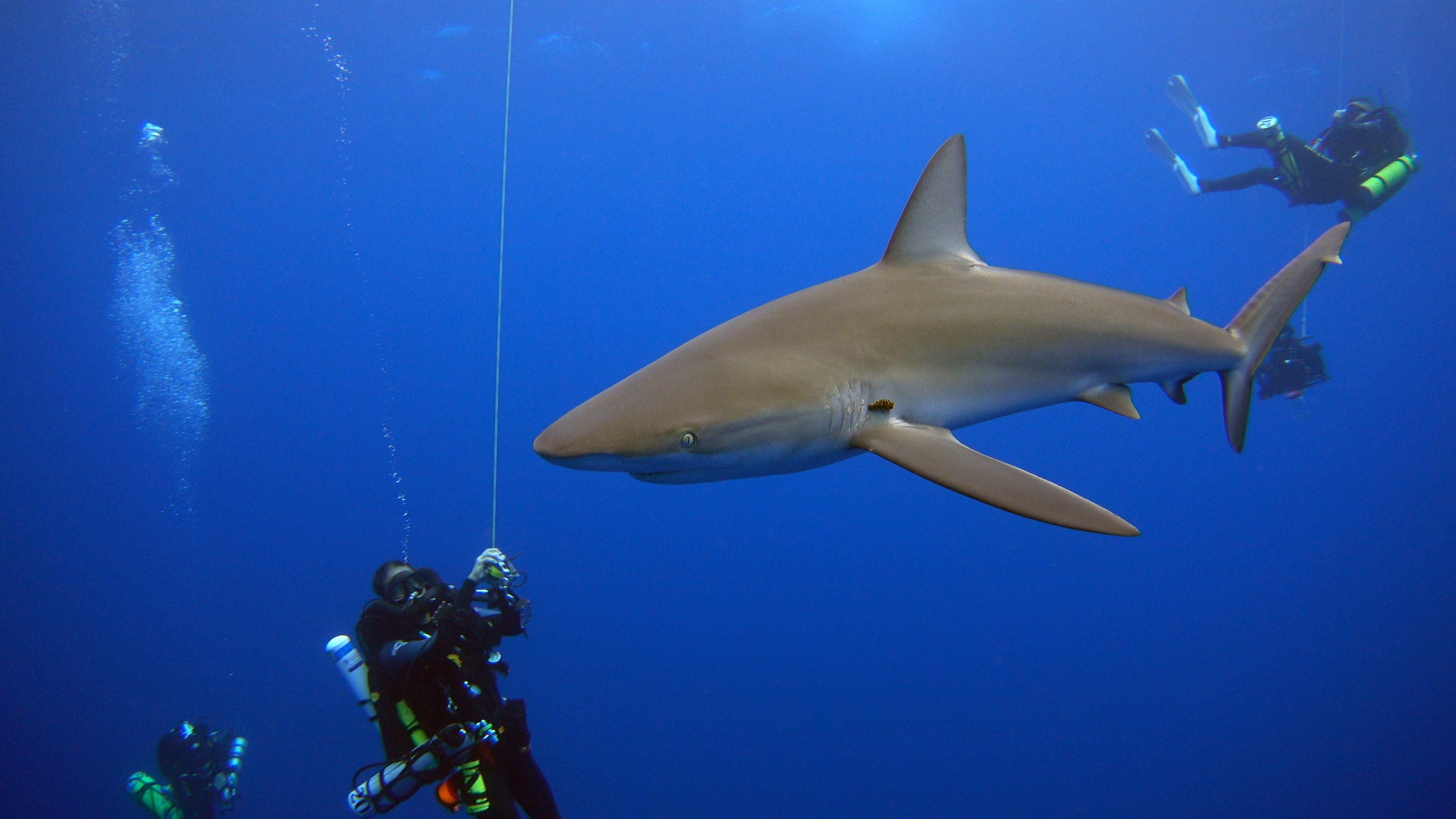
Galápagos Shark
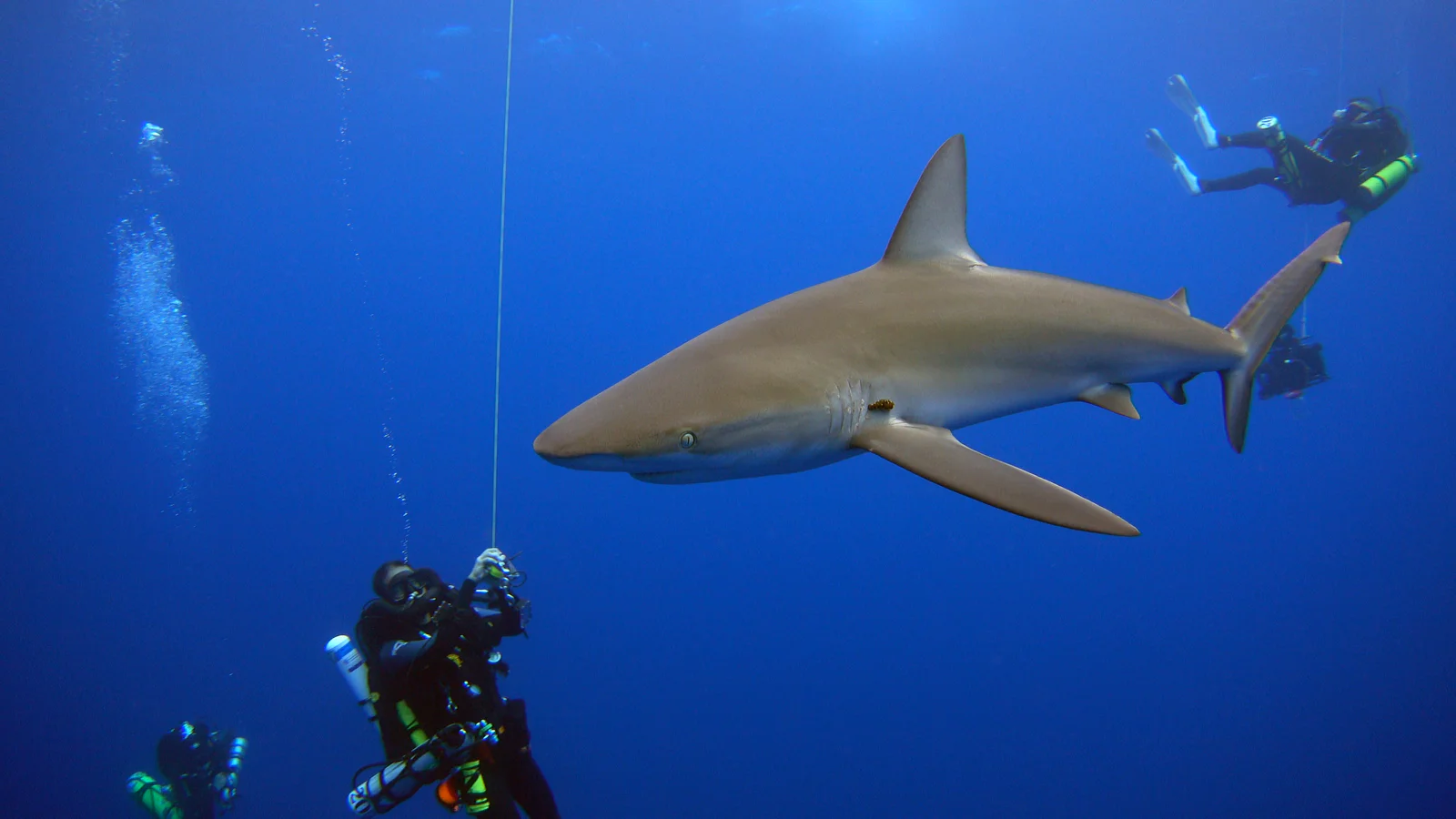
Carcharhinus galapagensis
About Galápagos Shark.
The Galápagos Shark (Carcharhinus galapagensis) is a prominent member of the requiem shark family (Carcharhinidae), frequently encountered by divers in tropical and warm-temperate oceanic island environments. Despite its name, this species is found worldwide, though it was first identified near the Galápagos Islands, where it remains a common sighting. Known for its inquisitive nature, the Galápagos Shark is an active predator that often forms loose groups around seamounts and clear reef systems with strong currents.
With a maximum recorded size of 3.7 meters (12 feet) and a weight of up to 195 kg (430 lbs), it is one of the larger species in its genus. Its diet primarily consists of bottom-dwelling bony fishes and cephalopods, but larger individuals have a more varied diet, including other sharks, marine iguanas, and sea lions. The International Union for Conservation of Nature (IUCN) currently lists the Galápagos Shark as "Least Concern," though its slow reproductive rate and localized fishing pressures are noted concerns.
Divers frequently observe Galápagos Sharks at dive sites such as Cousin's Rock (occasional) and Bajo Alcyone (common), particularly in the Eastern Pacific. They typically inhabit depths from the surface down to 286 meters, with juveniles often found in shallower waters less than 25 meters to avoid predation by adults.
Identification
Identifying the Galápagos Shark can be challenging due to its strong resemblance to other large requiem sharks, particularly the Dusky Shark (C. obscurus) and the Grey Reef Shark (C. amblyrhynchos).
- Body Shape and Coloration: This shark possesses a slender, streamlined, fusiform body, characteristic of reef sharks. Its dorsal (upper) surface is typically brownish-grey to dark grey, transitioning to a white ventral (underside) surface. A faint white stripe may sometimes be visible along its flanks.
- Dorsal Fins: A key identifying feature is its tall, often described as nearly straight or slightly falcate, first dorsal fin with a slightly rounded tip. This fin originates over the rear tips of the pectoral fins. A low inter-dorsal ridge is present between the first and second dorsal fins. The second dorsal fin originates roughly above the anal fin.
- Pectoral Fins: The pectoral fins are large with pointed tips. The edges of the fins are often darker, or have slightly dusky tips, which are more pronounced in younger individuals.
- Head and Snout: The snout is moderately long and broadly rounded, with large, circular eyes.
- Teeth: The upper jaw contains 14 rows of broad, triangular, and serrated teeth on each side, while the lower jaw has narrower, serrated teeth.
- Distinguishing from Similar Species:
- From the Dusky Shark: The Galápagos Shark generally has taller first and second dorsal fins and larger teeth.
- From the Grey Reef Shark: It has a more slender body and a slightly rounded tip on its first dorsal fin, compared to the Grey Reef Shark's more robust body and pointed first dorsal fin tip.
Where it lives.
- Habitat and Distribution: Despite its name, the Galápagos Shark has a circumtropical distribution, found globally in warm waters, particularly favoring isolated oceanic islands and their surrounding shelves. Its range includes locations in the Atlantic (e.g., Bermuda, Ascension Island), the western Indian Ocean (e.g., Walter's Shoal), and numerous sites across the Pacific (e.g., Hawaiian Islands, Cocos Island, Tuamotu Archipelago). These sharks are often encountered in areas with strong currents and are known to form loose aggregations, especially around rocky islets and seamounts. While considered a coastal species, they are capable of traversing significant stretches of open ocean between islands, with sightings reported at least 50 km from land.
- Depth Range: Galápagos Sharks are typically found from surface waters down to considerable depths. Adults have been reported at depths of up to 180 m, and some sources indicate occurrences as deep as 680 m. Juveniles, however, tend to remain in shallower waters, generally restricted to depths of 25 m or less. These shallow areas serve as crucial nursery grounds, offering protection from larger predators, including adult Galápagos Sharks.
- Ecosystem and Substrate: This species shows a strong preference for rugged reef habitats, including coral and rocky bottoms. They are often observed swimming just above the bottom substrate. As active predators, Galápagos Sharks play a vital role in their ecosystems, feeding primarily on bottom-dwelling bony fishes and cephalopods. Larger individuals exhibit a more varied diet, preying on other sharks, marine iguanas, and sea lions, particularly in areas like the Galápagos Islands. Dive sites such as Cousin's Rock and Bajo Alcyone are known locations where divers may encounter these impressive sharks.
How it behaves.
Underwater Encounter Behavior
Galápagos Sharks are often described as bold and highly inquisitive, frequently approaching divers. While generally not aggressive towards humans, they have been known to investigate divers closely, sometimes showing interest in fins or hands. It is recommended that divers maintain a respectful distance and avoid provoking the shark. If a Galápagos Shark feels threatened or agitated, it may perform a "hunch" display, characterized by an arched back, raised head, and lowered pectoral and caudal fins. This is a warning sign that can precede more aggressive behaviors. Despite their bold demeanor, serious incidents with divers are rare, with only a few non-fatal incidents reported and one recorded fatality.
These sharks are typically found in clear waters over coral reefs or rocky bottoms, often in areas with strong currents. They can be encountered from the surface down to depths of 180 m, though they are capable of deeper dives to 680 m. Juveniles tend to remain in shallower waters, usually less than 25 m, to avoid predation by larger adults.
Feeding Habits
The Galápagos Shark is an active and opportunistic predator. Its diet primarily consists of bottom-dwelling bony fishes and cephalopods such as squid and octopus. As they grow larger, their diet diversifies significantly, including other sharks, marine iguanas, and even sea lions, particularly around the Galápagos Islands. They have also been observed consuming crustaceans and mollusks. While they typically feed near the bottom, they are known to take bait from the surface. They can be encountered in feeding frenzies.
Social Structure
Galápagos Sharks are often encountered in groups or aggregations, particularly around offshore islands and seamounts. These aggregations are not considered coordinated schools like those of scalloped hammerheads. Within these groups, a size-structured dominance hierarchy is often observed, where larger individuals typically occupy more central positions near food sources, and smaller sharks maintain a wider distance to avoid potential cannibalism by adults.
Seasonal Patterns Relevant to Divers
Galápagos Sharks can be encountered year-round at dive sites such as Cousin's Rock and Bajo Alcyone. In the Galápagos Islands, they are frequently seen during both the cool season (June to November) and the warm season (December to May). The cool season, characterized by cooler water temperatures (as low as 16°C) and stronger currents, brings nutrient-rich upwellings that attract large pelagic species, including Galápagos Sharks, to dive sites like Darwin and Wolf Islands. While conditions can be more demanding during this period, it offers unparalleled opportunities for encounters with a high biomass of sharks. During the warm season, water temperatures are higher (up to 28°C) and seas are generally calmer, offering comfortable diving conditions with continued shark activity.
Where to see it.
Evidence for philippines · No dive sites
General range is not evidence of occurrence at a specific dive site.
No documented dive-site associations in this destination yet.
Gallery.