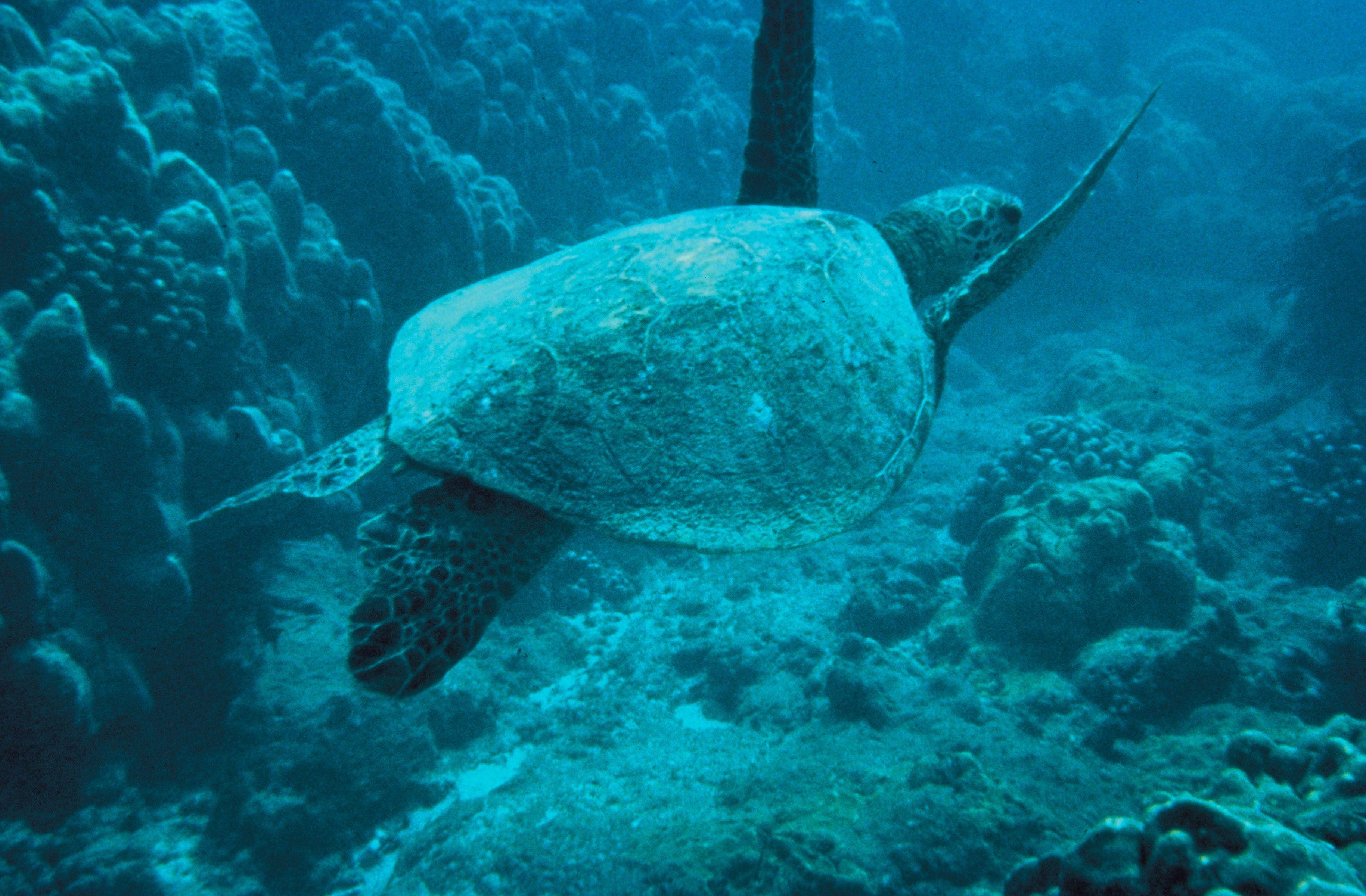
Green Sea Turtle
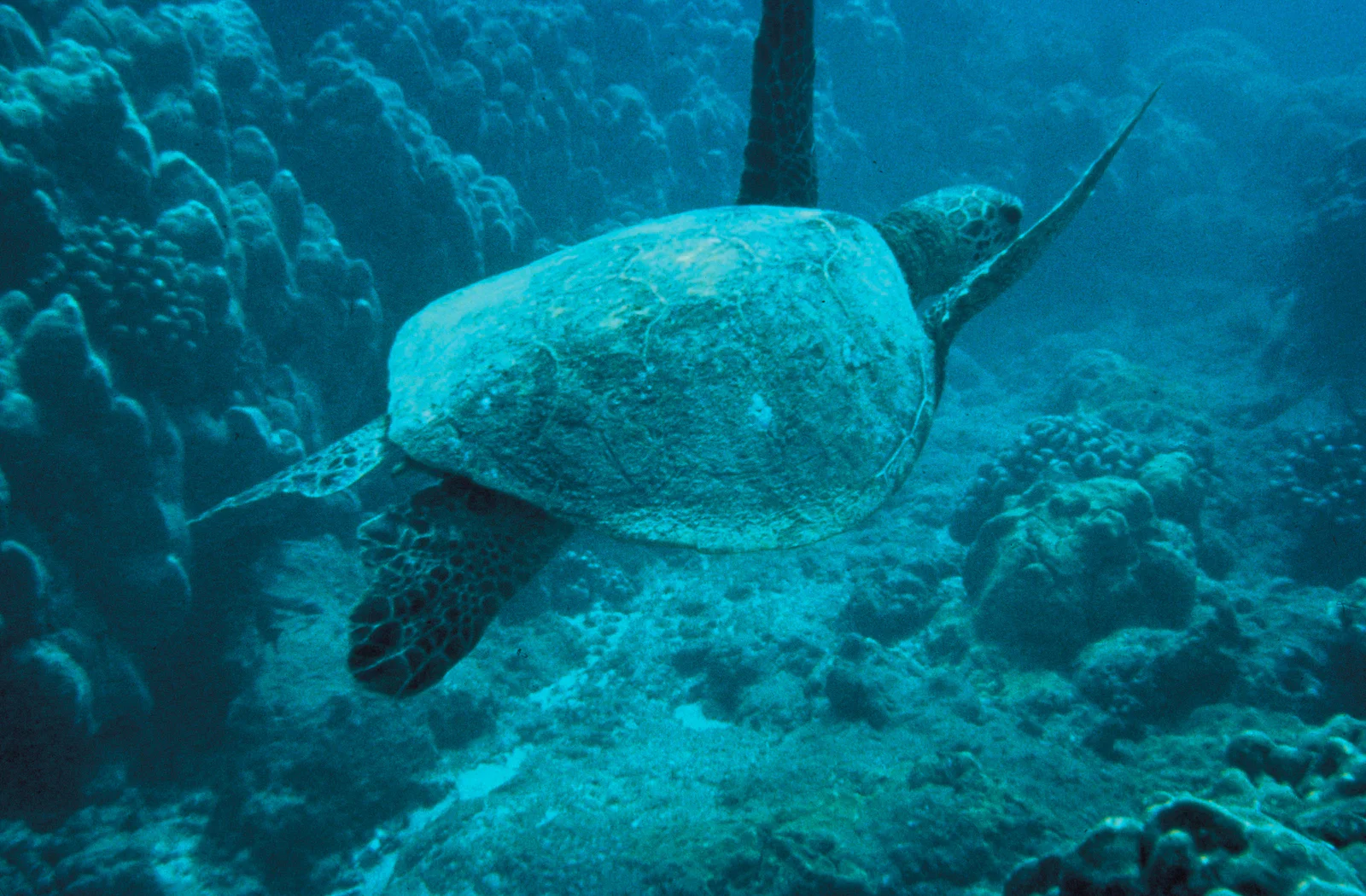
Chelonia mydas
Über Green Sea Turtle.
Die Grüne Meeresschildkröte (Chelonia mydas) ist ein prächtiges Meerestier, das weithin für seinen glatten, herzförmigen Panzer und sein sanftes Wesen bekannt ist. Trotz ihres Namens ist der Panzer typischerweise oliv bis braun, wobei sich das Grün auf die Farbe ihres Körperfetts bezieht, ein Ergebnis ihrer pflanzlichen Ernährung. Diese Schildkröten können eine Länge von bis zu 1,5 Metern erreichen und sind ein geschätzter Anblick an vielen Tauchplätzen weltweit, darunter Norman Reef, Manta Point Nusa Penida, Karang Makassar (Manta Point), Shotgun (The Cauldron), Golden Passage, Tatawa Besar, Siaba Besar, Cannibal Rock und Yellow Wall of Texas, wo sie häufig beobachtet werden.
Verhalten bei Unterwasserbegegnungen
Grüne Meeresschildkröten werden von Tauchern oft in flachen Küstenhabitaten wie Seegraswiesen und Korallenriffen angetroffen, wo sie Nahrung suchen oder ruhen. Sie sind im Allgemeinen ruhig und scheinen an Tauchern desinteressiert zu sein, wobei sie ihre natürlichen Aktivitäten fortsetzen, während sie aus respektvoller Entfernung beobachtet werden. Taucher sollten sich langsam und vorsichtig nähern und plötzliche Bewegungen vermeiden, die sie erschrecken könnten. Es ist entscheidend, einen respektvollen Abstand zu halten, da das Belästigen, Jagen, Stören, Füttern oder Berühren dieser gefährdeten Tiere illegal und schädlich ist. Wenn eine Schildkröte ihren Panzer einem Taucher zuwendet, kann dies ein Zeichen von Angst sein, das auf die Notwendigkeit von mehr Raum hinweist. Grüne Schildkröten ruhen bekanntermaßen über längere Zeiträume auf dem Meeresboden, oft in Tiefen von 7–26,5 m. Kürzere Tauchgänge sind typischerweise mit aktiven Verhaltensweisen wie Schwimmen oder Fressen verbunden. Sie müssen zum Atmen an die Oberfläche kommen, da sie Reptilien mit Lungen sind.
Fressgewohnheiten
Adulte Grüne Meeresschildkröten sind unter den Meeresschildkröten einzigartig, da sie hauptsächlich Pflanzenfresser sind und sich fast ausschließlich von Seegräsern und Algen ernähren. Ihre fein gezackten Kiefer sind gut angepasst, um Algen von Felsen zu schaben und Seegräser und Meeresalgen zu zerreißen. Taucher können sie beim Grasen in ausgedehnten Seegraswiesen oder auf algenbedeckten Riffen beobachten. Während Adulte Pflanzenfresser sind, haben juvenile Grüne Schildkröten eine omnivore Ernährung und konsumieren Wirbellose wie Quallen, Schwämme, kleine Fische, Krebstiere und Würmer, wobei sie mit zunehmender Reife allmählich zu einer pflanzlichen Ernährung übergehen. Diese Ernährung ist für die grünliche Farbe ihres Fettes und Knorpels verantwortlich.
Soziale Struktur
Grüne Meeresschildkröten gelten im Allgemeinen als Einzelgänger, obwohl sie sich gelegentlich in Gebieten mit reichlich Nahrungsquellen wie Seegraswiesen versammeln können. Während der Brutzeit versammeln sich Männchen und Weibchen in der Nähe von Niststränden zur Paarung. Während die meisten Begegnungen in unstrukturierten Gebieten mit Einzelgängern stattfinden, wurden interaktivere Begegnungen, einschließlich Inspektionsverhalten und manchmal Körperkontakt, in tieferen, strukturierten Habitaten wie Riffen oder Felsvorsprüngen beobachtet, die als wichtige Rückzugs- und Ruhegebiete dienen. Diese tieferen Habitate erleichtern auch die Selbst- und symbiotische Reinigung, um Epibionten von ihren Panzern zu entfernen.
Bemerkenswerte saisonale Muster
Grüne Meeresschildkröten unternehmen ausgedehnte Wanderungen, oft Hunderte bis Tausende von Kilometern zwischen ihren küstennahen Nahrungsgründen und Niststränden. Weibchen zeigen eine starke Geburtsorttreue und kehren zum Nisten an Strände in der allgemeinen Gegend zurück, in der sie Jahrzehnte zuvor geschlüpft sind. Die Paarung findet während der Fortpflanzungszeit vor der Küste, in der Nähe der Niststrände, statt.
- Nistsaison: Weibliche Grüne Schildkröten kommen an Land, um Eier an Sandstränden zu legen, typischerweise nachts. In vielen Regionen, wie dem Südosten der Vereinigten Staaten, findet das Nisten im Sommer statt, im Allgemeinen zwischen Juni und September, mit Spitzenaktivität im Juni und Juli. Weibchen legen mehrere Gelege, durchschnittlich etwa 110–115 Eier pro Nest, in Abständen von etwa zwei Wochen über mehrere Monate, bevor sie zu ihren Nahrungsgründen zurückkehren. Ein Weibchen nistet typischerweise alle 2 bis 5 Jahre.
- Schlüpfen: Die Eier inkubieren etwa zwei Monate (45-75 Tage), bevor die Jungtiere schlüpfen, normalerweise nachts, und ihre gefährliche Reise zum Meer antreten.
- Migration: Nach dem Nisten wandern die Weibchen zu ihren Nahrungsgründen zurück, die über tausend Kilometer entfernt sein können. Jungtiere verbringen mehrere Jahre in pelagischen (offenen Ozean) Habitaten, bevor sie in küstennahe Nahrungsgründe ziehen.
Taucher, die Tauchplätze besuchen, die für Grüne Meeresschildkröten bekannt sind, insbesondere solche, die als häufig oder reichlich vorkommend aufgeführt sind (z.B. Siaba Besar, Norman Reef, Manta Point Nusa Penida), haben eine hohe Chance, diesen majestätischen Kreaturen zu begegnen, insbesondere in Gebieten, die reich an Seegras oder Algen sind.
Lebensraum.
Grüne Meeresschildkröten sind weltweit verbreitet und bewohnen tropische und subtropische Gewässer des Atlantiks, Pazifiks und Indischen Ozeans sowie des Mittelmeeres. Ihre Habitatnutzung variiert erheblich während ihrer Lebensstadien. Nach dem Schlüpfen aus den Nestern begeben sich die Jungtiere auf eine Reise in pelagische oder offene Ozeanumgebungen vor der Küste, wo sie mehrere Jahre verweilen, oft in Verbindung mit Konvergenzzonen. Wenn sie zu Jungtieren heranwachsen, wechseln sie vom offenen Ozean zu geschützteren, flachen Küsten-Nahrungsgründen.
Adulte Grüne Meeresschildkröten frequentieren hauptsächlich flache Küstengewässer, einschließlich ausgedehnter Lagunen, Buchten und Flussmündungen, insbesondere Gebiete, die reich an Seegraswiesen sind. Diese üppigen Unterwasserwiesen dienen als entscheidende Nahrungsgründe. Obwohl sie größtenteils in diesen flacheren Gebieten bleiben, können Grüne Meeresschildkröten bis in Tiefen von über 50 Metern tauchen. Neben den Nahrungsgebieten nutzen sie auch tiefere, strukturell komplexe Habitate wie Korallenriffe und Felsvorsprünge, die wichtige Ruheplätze bieten. Weibchen unternehmen ausgedehnte Wanderungen zu spezifischen ozeanischen Stränden, bekannt als Geburtsstrände, zum Nisten.
Verhalten.
Adulte Grüne Meeresschildkröten sind fast ausschließlich Pflanzenfresser, was sie als einzige Meeresschildkrötenart auszeichnet, die nach Erreichen der Reife eine rein pflanzliche Ernährung beibehält. Ihre primäre Nahrung stammt vom Grasen von Seegräsern und Algen, ein Fressverhalten, das durch ihre fein gezackten Kiefer erleichtert wird. Diese Grastätigkeit ist entscheidend für die Erhaltung der Gesundheit und des Wachstums von Seegras-Ökosystemen. Im Gegensatz dazu zeigen juvenile Grüne Schildkröten eine omnivore Ernährung, die eine größere Vielfalt an Beute wie Würmer, junge Krebstiere, Wasserinsekten, Quallen und Fischeier neben Pflanzenmaterial konsumiert, bevor sie zu ihrem adulten herbivoren Lebensstil übergehen.
Diese Schildkröten sind bekannt für ihre stark wandernde Natur, die anstrengende Reisen, manchmal Tausende von Kilometern über Ozeane, zwischen ihren Nahrungsgründen und verschiedenen Niststränden unternimmt. Weibchen kehren typischerweise alle zwei bis fünf Jahre zu den Stränden zurück, an denen sie geboren wurden, um ihre Gelege abzulegen. Ihre Navigationsfähigkeiten sind bemerkenswert und werden vermutlich durch ihre Empfindlichkeit gegenüber den Magnetfeldern der Erde und der Wellenausbreitungsrichtung unterstützt.
Historisch als Einzelgänger betrachtet, deutet neuere Forschung darauf hin, dass Grüne Meeresschildkröten eine größere Fähigkeit zu sozialen Interaktionen besitzen, als bisher angenommen. Sie wurden dabei beobachtet, wie sie sich an konsistenten, passiven Interaktionen beteiligen und Toleranz gegenüber anderen Schildkröten zeigen, insbesondere während der Nahrungssuche. In einigen Fällen wurden Gruppenruhe- und Reinigungsverhalten in strukturierten Habitaten dokumentiert. Wenn jedoch Ressourcen wie Nahrung, Raum oder Partner begrenzt sind, können agonistische Verhaltensweisen wie Jagen, Kieferknacken, Beißen und Harken mit dem Schnabel auftreten, insbesondere bei adulten Männchen während der Paarungs- und Nistsaison. Trotzdem zeigen Interaktionen mit Tauchern oft ein ruhiges und sanftes Wesen, was sie zu einem beliebten Anblick für Unterwasserenthusiasten macht. Grüne Meeresschildkröten haben eine lange Lebensspanne und leben in freier Wildbahn oft 80 Jahre oder länger.
Wo man es sehen kann.
Nachweise für philippines · 42 Tauchplätze
Das allgemeine Verbreitungsgebiet ist kein Nachweis für das Vorkommen an einem bestimmten Tauchplatz.
Apo Island Marine Sanctuary
Apo Island
Vorkommen am Tauchplatz noch nicht dokumentiert
Saison noch nicht dokumentiert
Keine datierten Beobachtungen verfügbar.
Arco Point
Panglao
Vorkommen am Tauchplatz noch nicht dokumentiert
Saison noch nicht dokumentiert
Keine datierten Beobachtungen verfügbar.
Arthur's Rock
Anilao
Vorkommen am Tauchplatz noch nicht dokumentiert
Saison noch nicht dokumentiert
Keine datierten Beobachtungen verfügbar.
Bahura
Anilao
Vorkommen am Tauchplatz noch nicht dokumentiert
Saison noch nicht dokumentiert
Keine datierten Beobachtungen verfügbar.
Balicasag Sanctuary (Rico's Wall)
Panglao
Vorkommen am Tauchplatz noch nicht dokumentiert
Dokumentierte Saisonalität am Tauchplatz: Nov, Dec, Jan, Feb, Mar, Apr, May
Keine datierten Beobachtungen verfügbar.
Beatrice Rock
Anilao
Vorkommen am Tauchplatz noch nicht dokumentiert
Saison noch nicht dokumentiert
Keine datierten Beobachtungen verfügbar.
Bethlehem
Anilao
Vorkommen am Tauchplatz noch nicht dokumentiert
Saison noch nicht dokumentiert
Keine datierten Beobachtungen verfügbar.
Black Forest (Balicasag Island)
Panglao
Vorkommen am Tauchplatz noch nicht dokumentiert
Saison noch nicht dokumentiert
Keine datierten Beobachtungen verfügbar.
Cathedral
Anilao
Vorkommen am Tauchplatz noch nicht dokumentiert
Saison noch nicht dokumentiert
Keine datierten Beobachtungen verfügbar.
Cathedral
Panglao
Vorkommen am Tauchplatz noch nicht dokumentiert
Dokumentierte Saisonalität am Tauchplatz: Nov, Dec, Jan, Feb, Mar, Apr, May
Keine datierten Beobachtungen verfügbar.
Coral Garden
Coron
Vorkommen am Tauchplatz noch nicht dokumentiert
Saison noch nicht dokumentiert
Keine datierten Beobachtungen verfügbar.
Coral Garden
Puerto Galera
Vorkommen am Tauchplatz noch nicht dokumentiert
Saison noch nicht dokumentiert
Keine datierten Beobachtungen verfügbar.
Dilumacad Island (Helicopter Island)
El Nido
Vorkommen am Tauchplatz noch nicht dokumentiert
Saison noch nicht dokumentiert
Keine datierten Beobachtungen verfügbar.
Diver's Heaven
Panglao
Vorkommen am Tauchplatz noch nicht dokumentiert
Dokumentierte Saisonalität am Tauchplatz: Nov, Dec, Jan, Feb, Mar, Apr, May
Keine datierten Beobachtungen verfügbar.
Dry Dock
Puerto Galera
Vorkommen am Tauchplatz noch nicht dokumentiert
Saison noch nicht dokumentiert
Keine datierten Beobachtungen verfügbar.
Dungon Wall
Puerto Galera
Vorkommen am Tauchplatz noch nicht dokumentiert
Saison noch nicht dokumentiert
Keine datierten Beobachtungen verfügbar.
Gorgonian Wall
Cabilao Island
Vorkommen am Tauchplatz noch nicht dokumentiert
Dokumentierte Saisonalität am Tauchplatz: Jan, Feb, Mar, Apr, May, Jun, Jul, Aug, Sep, Oct, Nov, Dec
Keine datierten Beobachtungen verfügbar.
IJN Irako
Coron
Vorkommen am Tauchplatz noch nicht dokumentiert
Saison noch nicht dokumentiert
Keine datierten Beobachtungen verfügbar.
Ligpo Island
Anilao
Vorkommen am Tauchplatz noch nicht dokumentiert
Saison noch nicht dokumentiert
Keine datierten Beobachtungen verfügbar.
Luca Marine Sanctuary
Dauin
Vorkommen am Tauchplatz noch nicht dokumentiert
Saison noch nicht dokumentiert
Keine datierten Beobachtungen verfügbar.
Galerie.