Grey Snapper
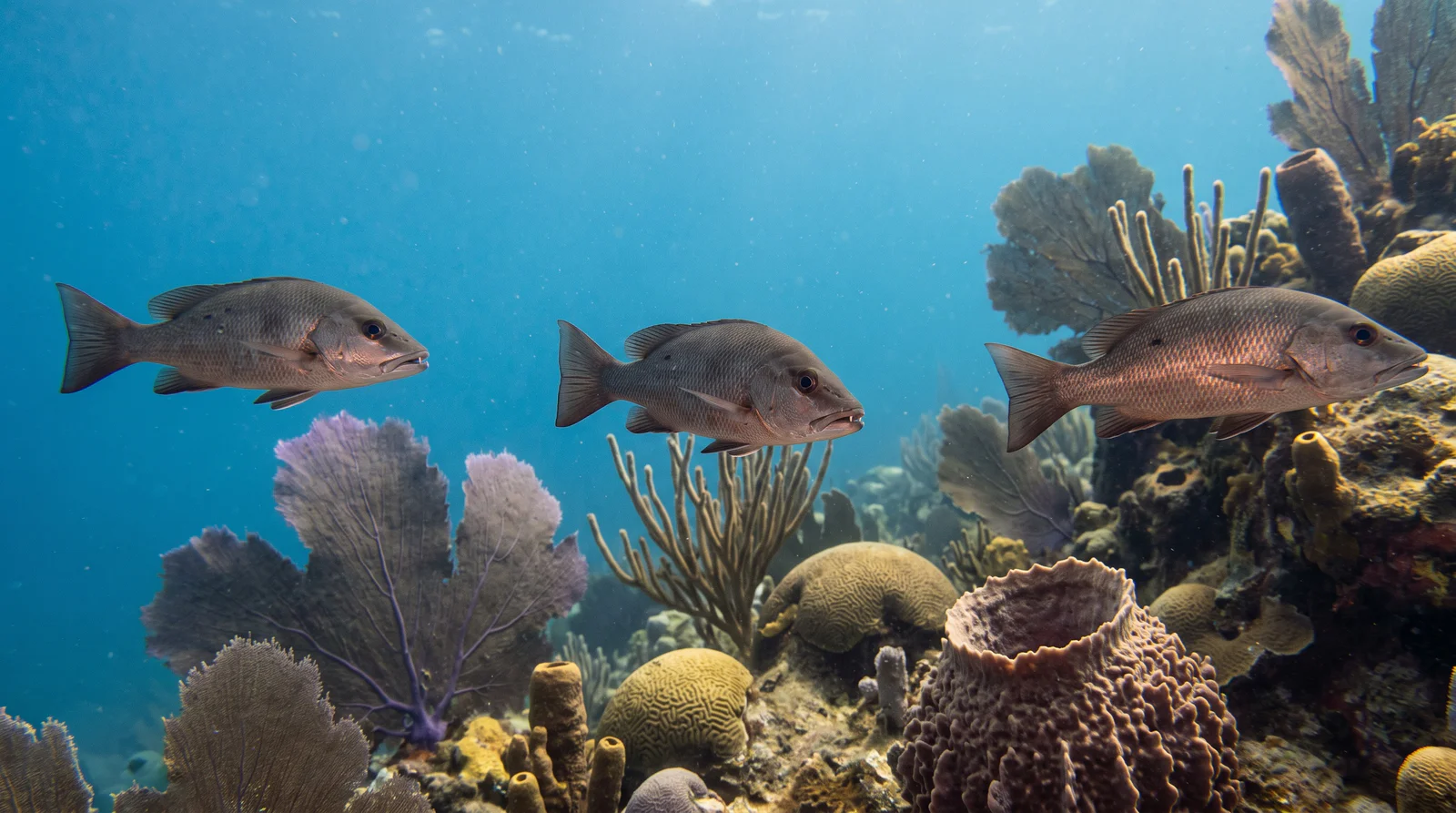 AI-generated
Image credit: AI-generated illustration · License unspecified · Source unspecified
Lutjanus griseus
About Grey Snapper.
The Grey Snapper, scientifically known as Lutjanus griseus, is a common and ecologically significant reef fish found throughout the western Atlantic. This species typically exhibits a body coloration ranging from dark brown to various shades of gray or green-gray, often with coppery or reddish-orange tinges and small reddish to orange spots that may form rows along its sides. While its name suggests a uniform grey, individuals can display remarkable variations, sometimes appearing bright brick red or copper red, especially in different life stages or environmental conditions. Juveniles often present a distinctive dark stripe extending from the snout through the eye to the upper opercle, accompanied by a less conspicuous blue stripe on the cheek below the eye.
Distinguished by its moderately compressed body, large mouth, and pointed snout, the Grey Snapper possesses prominent canine teeth in its jaws, with a particularly large and conspicuous pair in the upper jaw. Unlike some other snapper species, it lacks a distinct black spot on its sides and features a rounded anal fin. It can be confused with the Cubera Snapper (Lutjanus cyanopterus) and the Dog Snapper (Lutjanus jocu); however, a key differentiating feature is the anchor-shaped vomerine tooth patch on the roof of the Grey Snapper's mouth, as opposed to the V-shaped patch of the Cubera Snapper. The Grey Snapper is one of the smaller snapper species, though it can reach an impressive maximum length of up to 89 cm (35 inches) and weigh as much as 20 kg (44 pounds). However, most individuals encountered rarely exceed 40 cm (16 inches) in length or 4.5 kg (10 pounds) in weight. The dorsal and caudal fins often have dark or reddish borders, contributing to its variable appearance.
Where it lives.
The Grey Snapper (Lutjanus griseus) exhibits a broad distribution across the western Atlantic Ocean, ranging from Massachusetts south along the U.S. coast, encompassing Bermuda, the Bahamas, the Gulf of Mexico, and the Caribbean Sea, extending as far south as Brazil. This highly adaptable species is found in a diverse array of habitats, demonstrating a remarkable tolerance for varying salinity levels, from marine to brackish, and even occasionally in freshwater lakes and the lower reaches of rivers, particularly for younger individuals.
Throughout its lifecycle, the Grey Snapper undergoes an ontogenetic habitat shift. Juveniles primarily inhabit shallow, inshore areas which serve as crucial nurseries. These include mangrove thickets, seagrass beds, estuaries, and soft or sand-bottom areas, providing both abundant food sources and protection from predators. As they mature, subadults and adults migrate to deeper coastal and offshore waters. Here, they are commonly associated with complex hard-bottom structures such as coral reefs, rocky ledges, shipwrecks, and artificial reefs. They can be found from very shallow intertidal zones down to depths of approximately 180 meters (585 feet), with some reports extending to 300 feet. Adults often remain in the same established offshore areas for extended periods, showing little long-range movement once settled. Their prevalence across these varied ecosystems underscores their importance as a bellwether species for overall reef health.
How it behaves.
The Grey Snapper (Lutjanus griseus) is primarily a nocturnal forager, a behavior that defines much of its daily activity. During daylight hours, these wary predators typically seek shelter in shaded overhangs, rock ledges, or within the intricate structures of reefs and wrecks, often forming large aggregations of similar-sized individuals. As dusk approaches, they disperse from their daytime refuges to hunt over adjacent sand flats and seagrass meadows.
As opportunistic predators, Grey Snappers have a diverse diet that shifts with their life stage. Larvae consume zooplankton, including copepods and amphipods. Juvenile Grey Snappers actively feed during the day within seagrass beds, preying mainly on small crustaceans, such as shrimp and crabs, along with smaller fish, polychaete worms, and mollusks. Adult Grey Snappers, consistent with their nocturnal habits, primarily feed at night on a wider range of prey, including small fishes, various species of shrimp and crabs, gastropods, and cephalopods.
Reproduction for Grey Snappers occurs during the summer months, typically coinciding with the full moon. Spawning aggregations form in shallow offshore waters where individuals release large clouds of gametes in a "spawning rush" behavior. While generally wary, particularly of spear fishermen and baited hooks, Grey Snappers are known for their cunning, often learning to avoid fishing gear after initial encounters. Natural predators include sharks, barracuda, groupers, moray eels, and other snapper species.
Where to see it.
Evidence for philippines · No dive sites
General range is not evidence of occurrence at a specific dive site.
No documented dive-site associations in this destination yet.
Gallery.
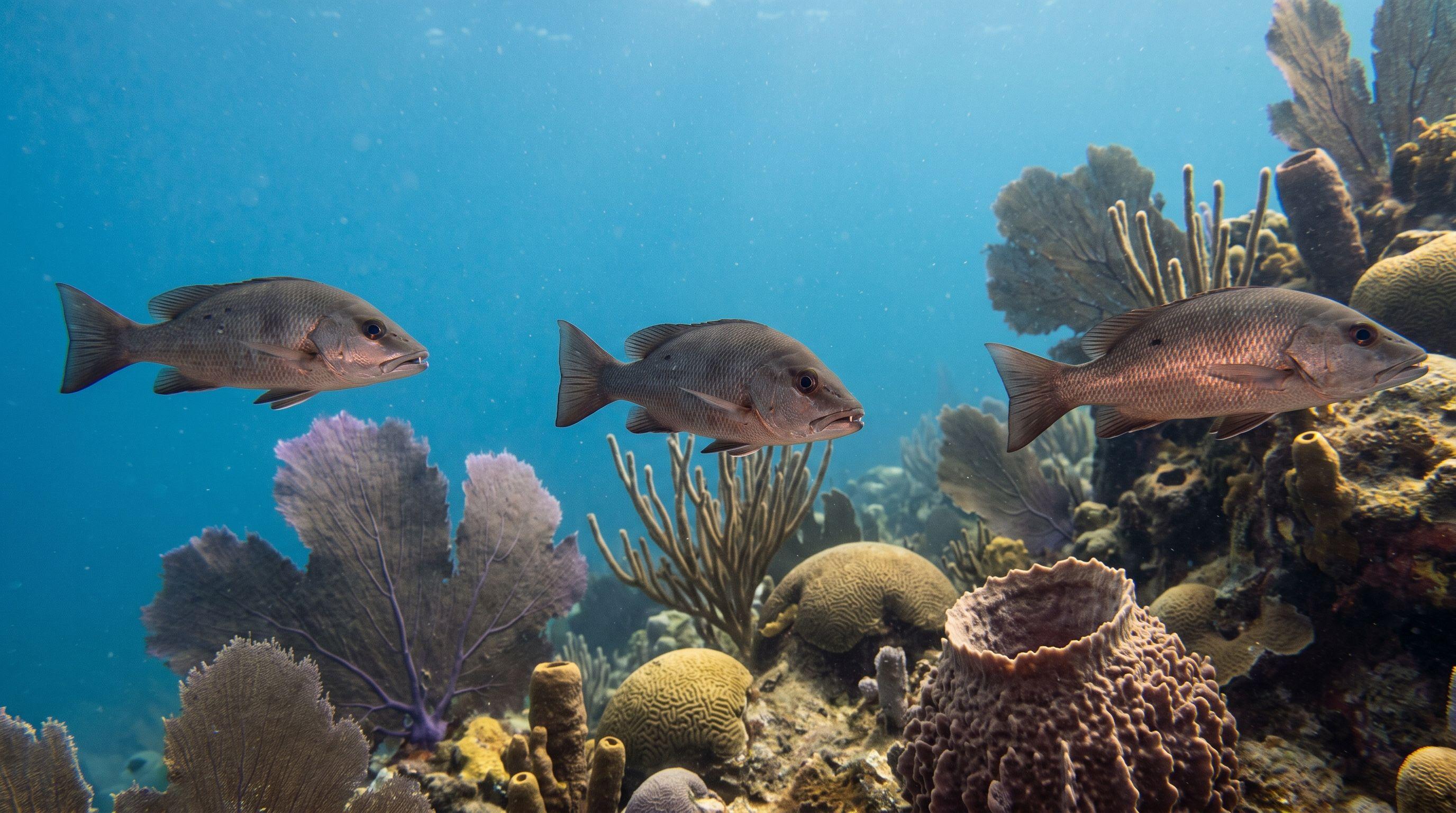 AI-generated
AI-generated illustration
Image credit: AI-generated illustration · License unspecified · Source unspecified