Grouper (assorted)
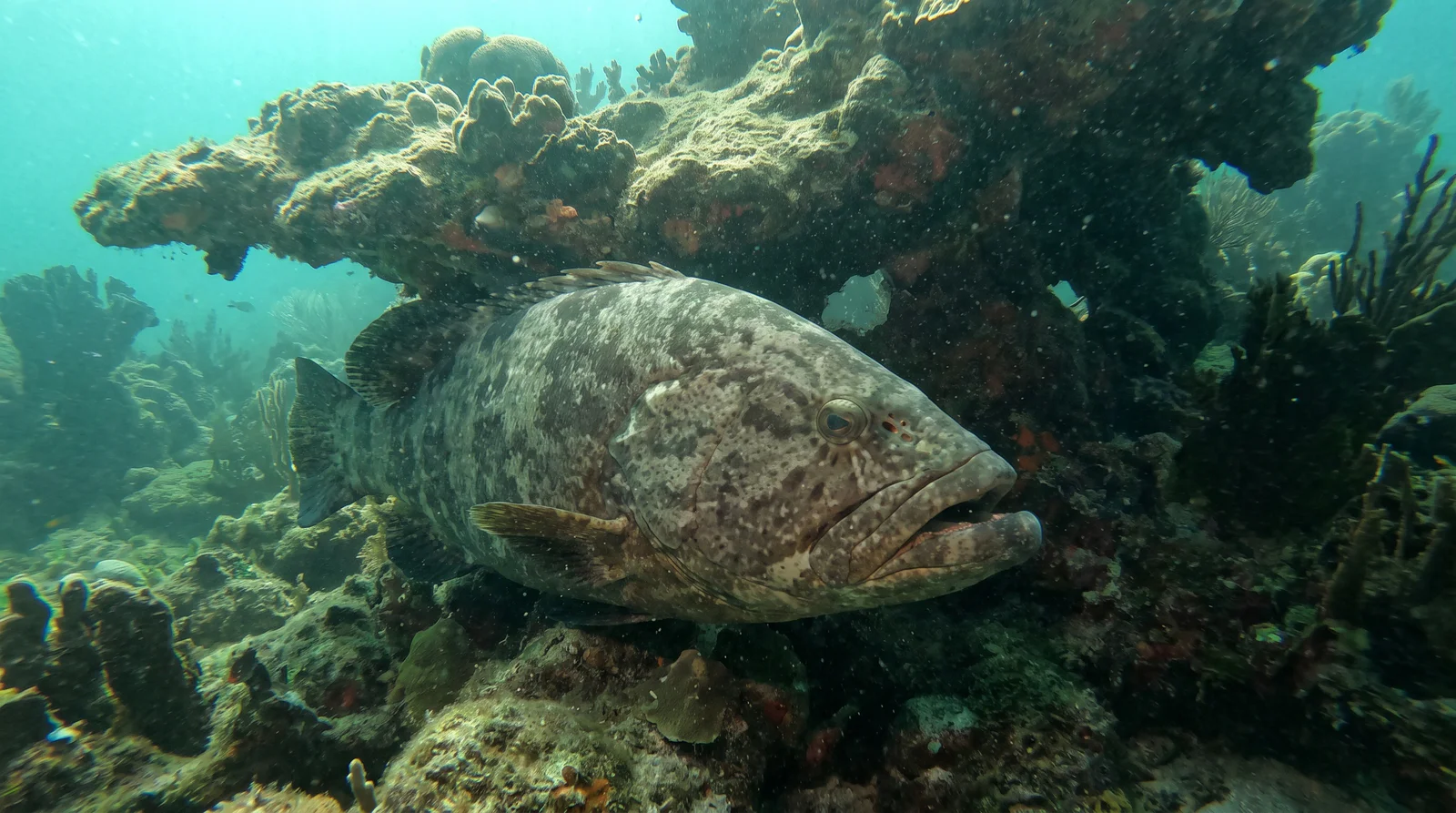 AI-generated
Image credit: AI-generated illustration · License unspecified · Source unspecified
Epinephelinae spp.
About Grouper (assorted).
"Grouper (assorted)" covers grouper sightings where the species was not identified. Groupers are heavy-bodied, large-mouthed predators that live on or near the bottom of reefs and coastal waters. When the species can be identified, use a dedicated entry such as Giant, Malabar, Potato Cod, Coral Trout, Tiger, Nassau, Goliath or Black Grouper.
Family placement varies between references. FishBase's Serranidae page treats groupers as the subfamily Epinephelinae within Serranidae (sea basses, groupers and fairy basslets), while FishBase species pages place groupers in a separate family, Epinephelidae, listed with 172 species in 16 genera. Both labels refer to the same fishes. Groupers are highly commercial food fish, and large, slow-growing species are especially vulnerable to overfishing.
Identification
- Body: Robust body with a large mouth, usually seen resting on or near the bottom or close to shelter.
- Size: Varies by species. The largest groupers reach about 3 m and 400 kg; FishBase lists the giant grouper at up to 270 cm and the goliath grouper at up to 250 cm.
- Pattern: Spots, bars and blotches differ between species and are the main clues for identification; a clear photo helps.
Biology
FishBase describes groupers as protogynous hermaphrodites, which start life as females and later become males. This is not universal: in the Nassau grouper, fish pass through a juvenile bisexual phase and then mature directly as male or female, and natural sex change has not been confirmed. Large groupers can be long-lived; the oldest verified goliath grouper was 37 years old.
Conservation
Conservation status varies by species, and several large groupers are threatened. The Nassau grouper is listed as Endangered by the IUCN and as Threatened under the US Endangered Species Act. The goliath grouper is listed as Vulnerable (FishBase, 2016 assessment) and has been protected from harvest in US waters since 1990. The giant grouper is listed as Data Deficient, but has nearly disappeared from heavily fished areas.
Where it lives.
Groupers are reef-associated fishes that generally live on or close to the bottom. Most divers find them on coral and rocky reefs, but several species also use wrecks, estuaries and mud bottoms. The wider family Serranidae occurs in tropical and temperate oceans, and a few species enter brackish or fresh water.
Typical Habitats
- Reefs and shelter: Groupers often stay close to caves, ledges and wrecks. The giant grouper is found in caves, wrecks and estuaries and is common in shallow water.
- Inshore and brackish water: The goliath grouper lives in shallow inshore waters over rock, coral and mud bottoms, and is one of the few groupers that tolerates brackish water.
- Nursery areas: Juvenile goliath groupers live in mangroves and brackish estuaries; juvenile Nassau groupers use nearshore seagrass and macroalgae habitats before moving to deeper reefs.
- Spawning sites: Some species travel to traditional spawning aggregation sites. Nassau grouper aggregation sites range from about 6 to 60 m deep.
Depth and Distribution
Depth ranges differ widely between species. The goliath grouper is recorded to about 100 m but is usually found shallower than about 46 m. The giant grouper is listed from 1 to 200 m, usually down to about 50 m. The Nassau grouper lives mainly on shallow reefs but has been found as deep as about 130 m.
Distribution also varies. The giant grouper ranges across the Indo-Pacific from the Red Sea and South Africa east to the Hawaiian and Pitcairn Islands, north to southern Japan and south to Australia. The Nassau grouper, by contrast, is found in the Caribbean and the western North Atlantic, including south Florida, the Bahamas and Bermuda.
How it behaves.
Groupers are bottom-dwelling predators. Many stay close to a favoured cave, ledge or wreck and hunt from there, so divers often see them resting near shelter rather than swimming in open water.
Feeding
Diets are broad and include fishes and large crustaceans. The goliath grouper is an ambush predator that eats spiny lobsters, shrimps, crabs, fishes (including stingrays and parrotfishes), octopus and young sea turtles. The giant grouper takes spiny lobsters, fishes, small sharks, rays, juvenile sea turtles and crustaceans.
Territory and Sound
Large groupers often keep a limited home range. Goliath groupers defend areas near caves, wrecks and ledges with a threat display, opening the mouth and quivering the body, and produce a loud rumbling sound with the swim bladder that carries over long distances.
Spawning Aggregations
Several species gather to spawn at predictable times and places. Nassau groupers aggregate in groups of hundreds to tens of thousands from November to February around the full moon, and some adults travel several hundred kilometres to reach these sites. Goliath groupers spawn from July to September, with aggregations of 100 or more fish at wrecks, rock ledges and patch reefs. These predictable gatherings have made groupers easy targets for fishing.
Underwater Encounter Behavior
Many groupers are easy to approach, which makes them popular with divers but also vulnerable to spearfishing. Large individuals deserve respect: FishBase notes that larger goliath groupers have been known to stalk and attack divers, and lists unconfirmed reports of fatal attacks by giant groupers.
Diver Tips
- Respect territory: Back away if a large grouper opens its mouth and quivers its body at you.
- Do not touch or hand-feed: Large groupers can injure people.
- Check shelters: Look into caves, under ledges and around wrecks, where groupers often rest.
- Protect aggregations: Follow local rules at spawning sites and keep disturbance to a minimum.
Where to see it.
Evidence for mactan · 3 dive sites
General range is not evidence of occurrence at a specific dive site.
Nalusuan Island Sanctuary
Mactan
Documented site occurrence
Season not yet documented
Source reviewed on 2026-10-14 · Source: Scotty's Dive Center (live page retrieved 2026-10-07) · Observation date not documented
Talima Marine Sanctuary
Mactan
Documented site occurrence
Season not yet documented
Source reviewed on 2026-10-14 · Source: Philstar, "Adventure Olango" (2009-07-09), quoting the Talima Beach Villas and Dive Resort website · Observation date not documented
Tingo Point
Mactan
Documented site occurrence
Season not yet documented
Source reviewed on 2026-10-14 · Source: Scotty's Dive Center (Wayback snapshot 2024-04-24) · Observation date not documented
Gallery.
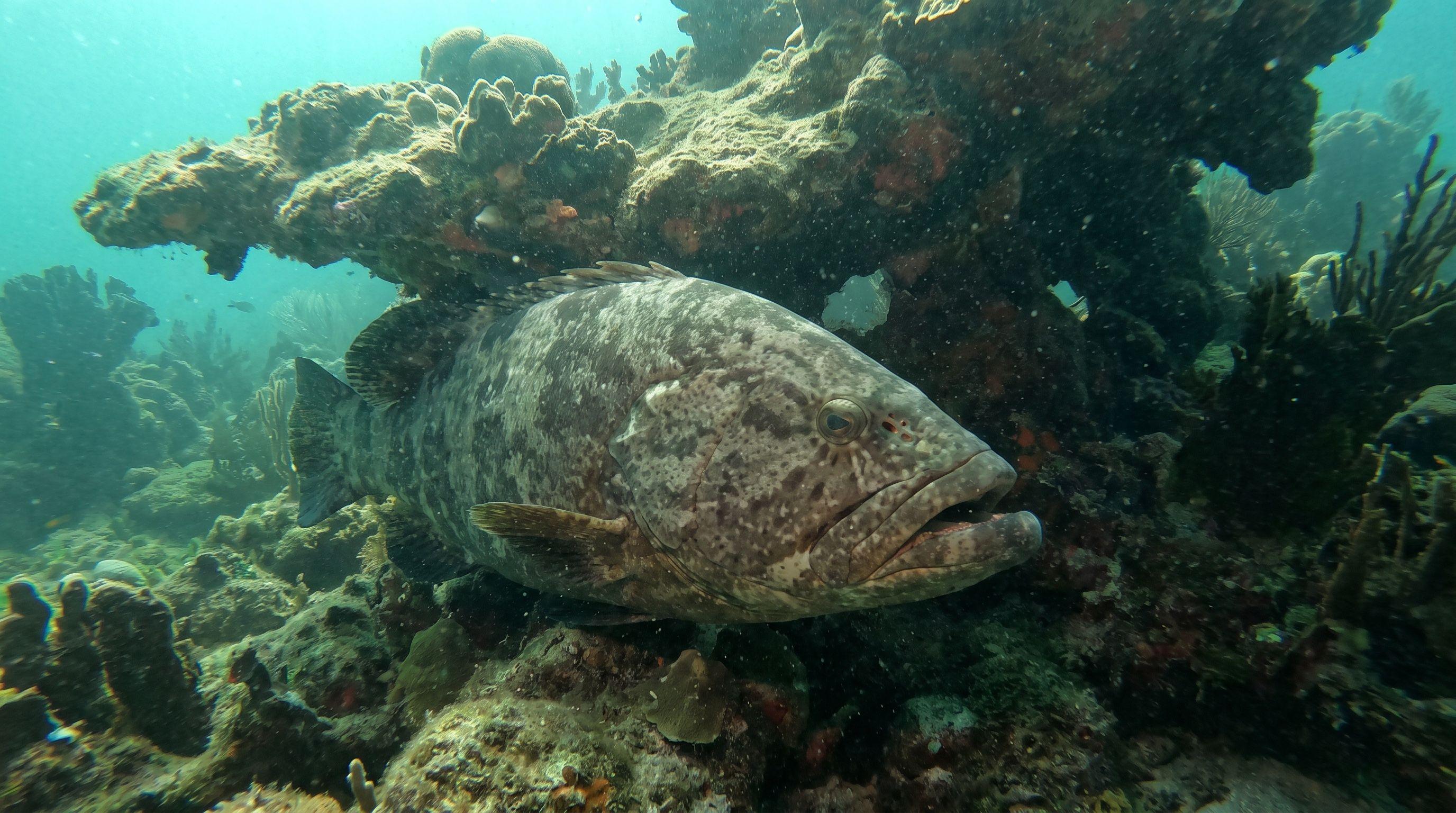 AI-generated
AI-generated illustration
Image credit: AI-generated illustration · License unspecified · Source unspecified