Hairy Squat Lobster
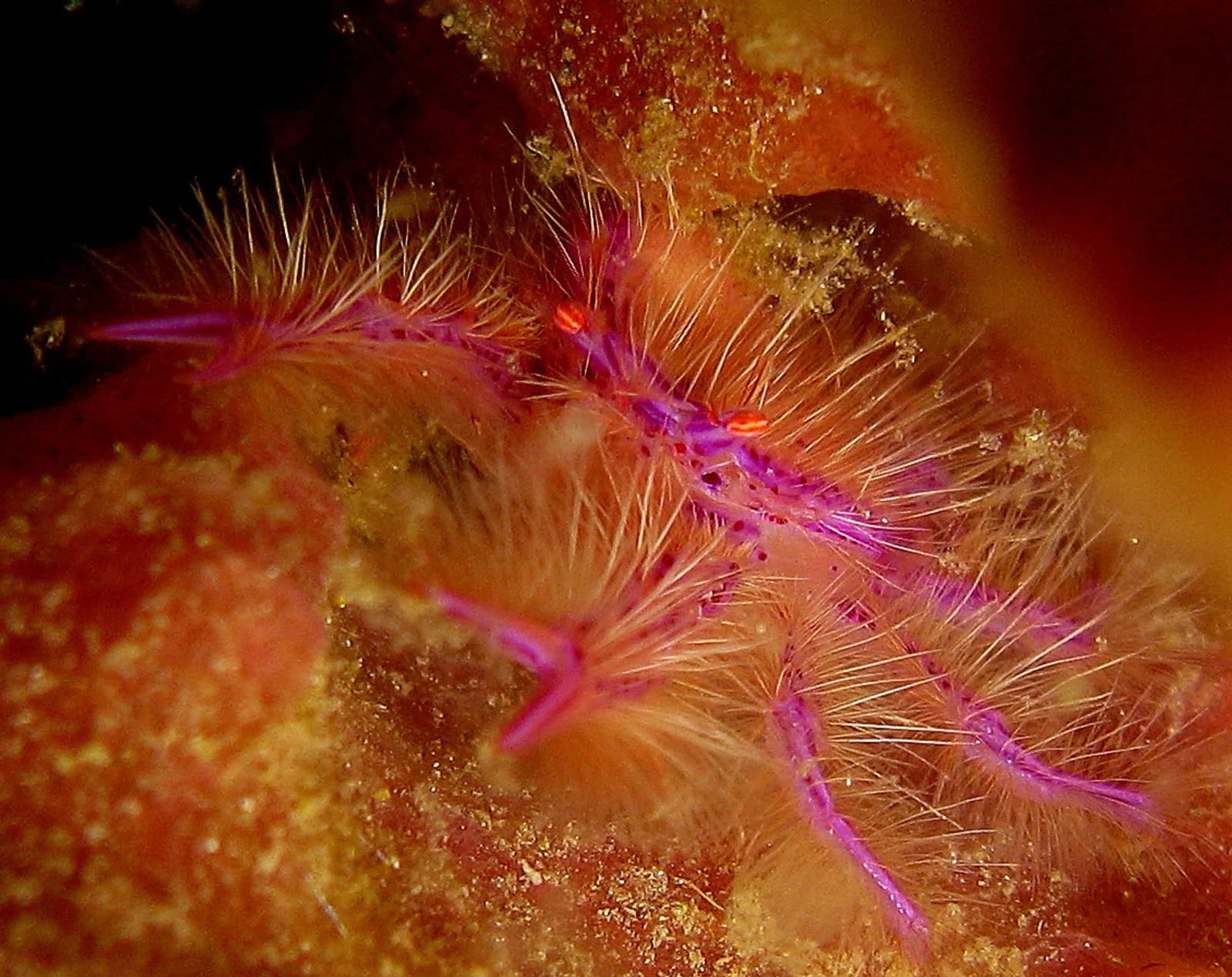
Image credit: Source unspecified · License unspecified
Lauriea siagiani
About Hairy Squat Lobster.
The Lauriea siagiani, commonly known as the Hairy Squat Lobster or Pink Hairy Squat Lobster, is a captivating macro species belonging to the family Galatheidae. Despite its common name, this fascinating creature is technically a type of crab, not a true lobster. Renowned for its vibrant coloration and distinctive fuzzy appearance, it is a highly sought-after subject for underwater photographers and divers in the Indo-Pacific region.
This species is typically found in tropical Indo-Pacific waters, with observations recorded across the Asian Pacific, including Indonesia, the Philippines, and Japan. It inhabits coral reefs, often found at depths of approximately 7–50 m. The Hairy Squat Lobster exhibits a specialized commensal relationship, living almost exclusively within the channels and on the surfaces of giant barrel sponges, particularly those of the genus Xestospongia testudinaria. While often described as cryptic and solitary, it is not uncommon to find a pair or small group sharing a single sponge. Its conservation status is currently listed as Data Deficient, highlighting the need for further research into its populations and ecological role.
Identification
- Size: The Hairy Squat Lobster is a tiny macro invertebrate, reaching a maximum size of up to 2 cm (0.8 in).
- Coloration: Its body and legs display a brilliantly pink to magenta hue, often adorned with purple stripes along its legs and body, or reddish-orange markings that can appear almost fluorescent. Some individuals may also exhibit dark purple "freckles". Its eyes are typically bright orange.
- Texture and Hairs: A defining characteristic is its "hairy" appearance. The entire body is covered in numerous long, fine white hairs, or setae, which can form distinctive "pom-poms" at its joints. These hairs are not merely decorative; they play a functional role in trapping detritus, which the squat lobster then consumes.
- Body Shape: As a member of the Galatheidae family, it possesses the characteristic flattened body and often tucked-under abdomen typical of squat lobsters. Its rostrum (the pointed projection between its eyes) is generally triangular.
- Habitat Association: A key identification clue is its consistent presence on giant barrel sponges. Divers should carefully inspect the ridges and crevices of these sponges, as the Hairy Squat Lobster's small size and excellent camouflage allow it to blend seamlessly with the sponge's textured surface.
Where it lives.
The Hairy Squat Lobster (Lauriea siagiani) is a captivating macro species highly sought after by divers for its vibrant coloration and intricate association with its host. This tiny crustacean, reaching a maximum size of 1 cm, is an exclusive inhabitant of the Indo-Pacific's coral and rocky reef ecosystems.
Its habitat is remarkably specific:
- Host Association: Lauriea siagiani lives in a commensal relationship, found almost exclusively within the channels and on the surfaces of giant barrel sponges, particularly Xestospongia testudinaria. These sponges provide both shelter and a feeding ground for the squat lobster, which utilizes its hairy body to trap detritus and plankton, sometimes even feeding on particles filtered by the sponge itself.
- Depth Range: Divers can typically spot the Hairy Squat Lobster at depths ranging from 10–50 m, though observations frequently occur in the shallower end of this spectrum, often between 7–20 m.
- Geographic Distribution: This species is distributed across the Western Indo-Pacific. Key regions where it has been observed include Indonesia (such as the renowned dive sites of Lembeh and Wakatobi), the Philippines, Japan, Malaysia, and Taiwan. The dive site Bethlehem is one known location for occasional sightings.
- Ecosystem: Thriving in tropical waters, Lauriea siagiani is an integral, albeit small, component of healthy coral and coastal reef environments where its host barrel sponges flourish. It is often found in pairs or small groups sharing a single sponge.
How it behaves.
The Hairy Squat Lobster (Lauriea siagiani) is a captivating macro species, highly sought after by divers for its vibrant appearance and unique behavior. Reaching a maximum size of only 1–2 cm (0.4–0.8 inches), this tiny crustacean is often almost invisible without a keen eye and a macro lens.
- Underwater Encounter Behavior: Divers will typically encounter the Hairy Squat Lobster in the western Indo-Pacific, particularly on coral reefs, at depths ranging from 7–20 m, though observations extend to 50 m. This species exhibits a highly specialized commensal relationship, living exclusively within the channels and on the surfaces of giant barrel sponges, primarily Xestospongia testudinaria. Its bright pink-magenta body, adorned with purple stripes and long white hairs that form distinctive "pom-poms" at its joints, provides excellent camouflage against its sponge host. Due to its cryptic nature and tendency to hide within the sponge's recesses and crevices, spotting and photographing it can be challenging. While generally considered cryptic, some individuals have been observed moving around more openly during night dives.
- Feeding Habits: The Hairy Squat Lobster is primarily a filter or suspension feeder. It utilizes the long, hair-like structures (setae) covering its body and legs to trap microscopic food particles from the surrounding water. Its diet consists mainly of zooplankton, detritus, and even fish waste that settles on the sponge surface. Observations suggest that it uses its hairless hind legs with remarkable dexterity, much like a "knife and fork," to collect and consume these captured particles. Like other members of the Galatheidae family, it may also employ its third maxillipeds to sweep the substratum or water column for finely divided organic material.
- Social Structure: While some sources describe the Hairy Squat Lobster as solitary and cryptic, it is commonly observed living in pairs or small groups within a single barrel sponge. General squat lobster behavior indicates that they are typically unaggressive towards each other, and aggressive interactions, often related to competition for mates or food, are frequently ignored or met with submission rather than prolonged conflict. They do not typically establish lasting dominance hierarchies or exhibit territorial behavior.
- Notable Seasonal Patterns: Specific seasonal reproductive patterns for Lauriea siagiani are not extensively documented. However, squat lobsters in general reproduce by having the female carry eggs under her tail (pleon) until they hatch into free-swimming larval stages that feed on plankton. Given its commensal relationship with barrel sponges, which are stable, year-round habitats, the Hairy Squat Lobster is generally considered to be present and observable throughout the year at dive sites where it occurs.
Where to see it.
Evidence for philippines · 1 dive site
General range is not evidence of occurrence at a specific dive site.
Gallery.
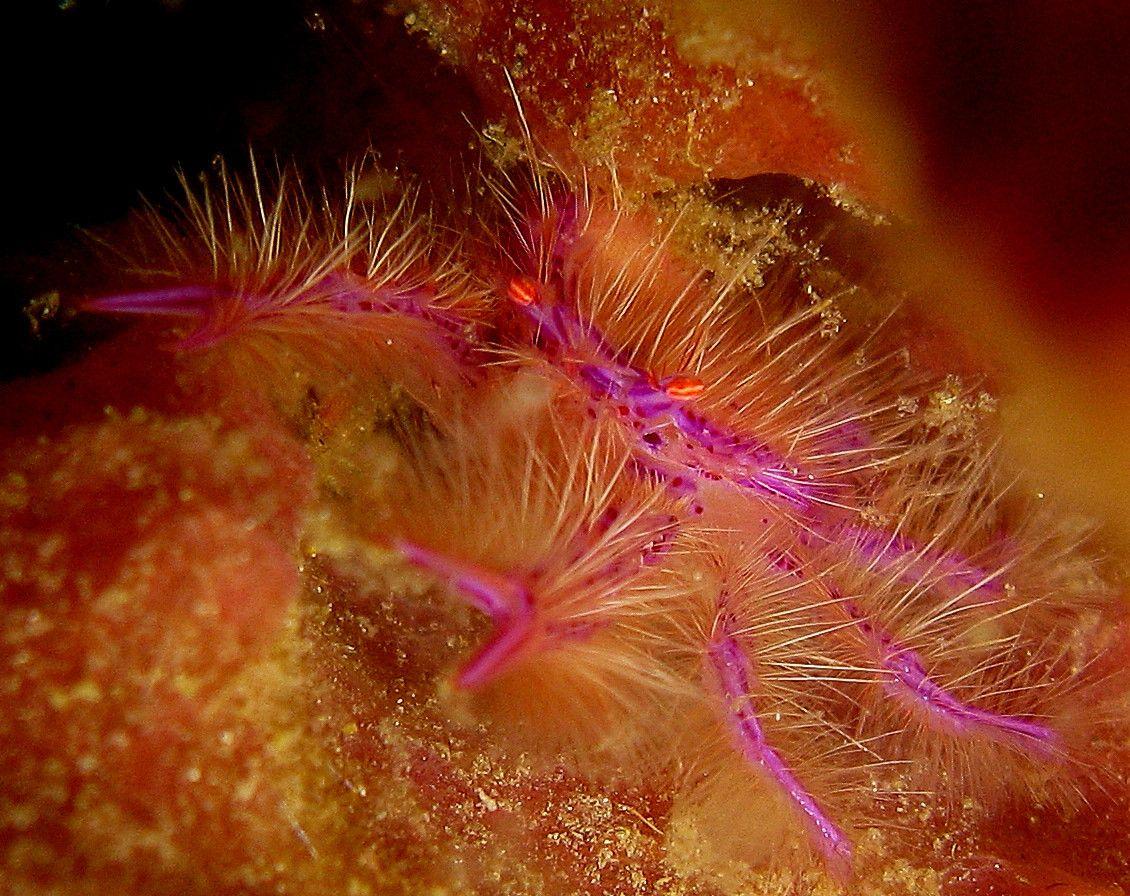
Photo: Steve Childs / CC BY 2.0 via Wikimedia Commons
Image credit: Source unspecified · License unspecified