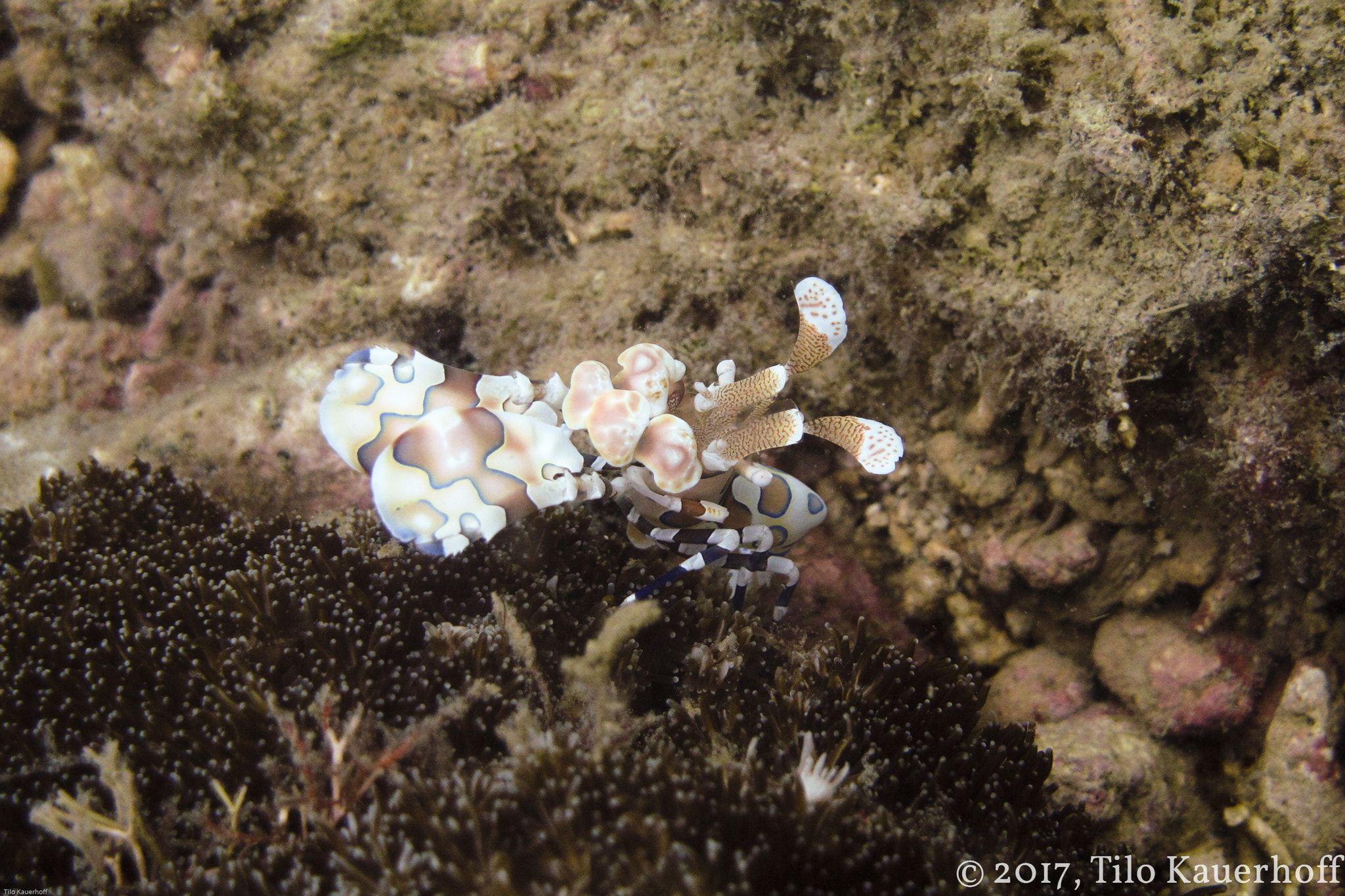
Harlequin Shrimp
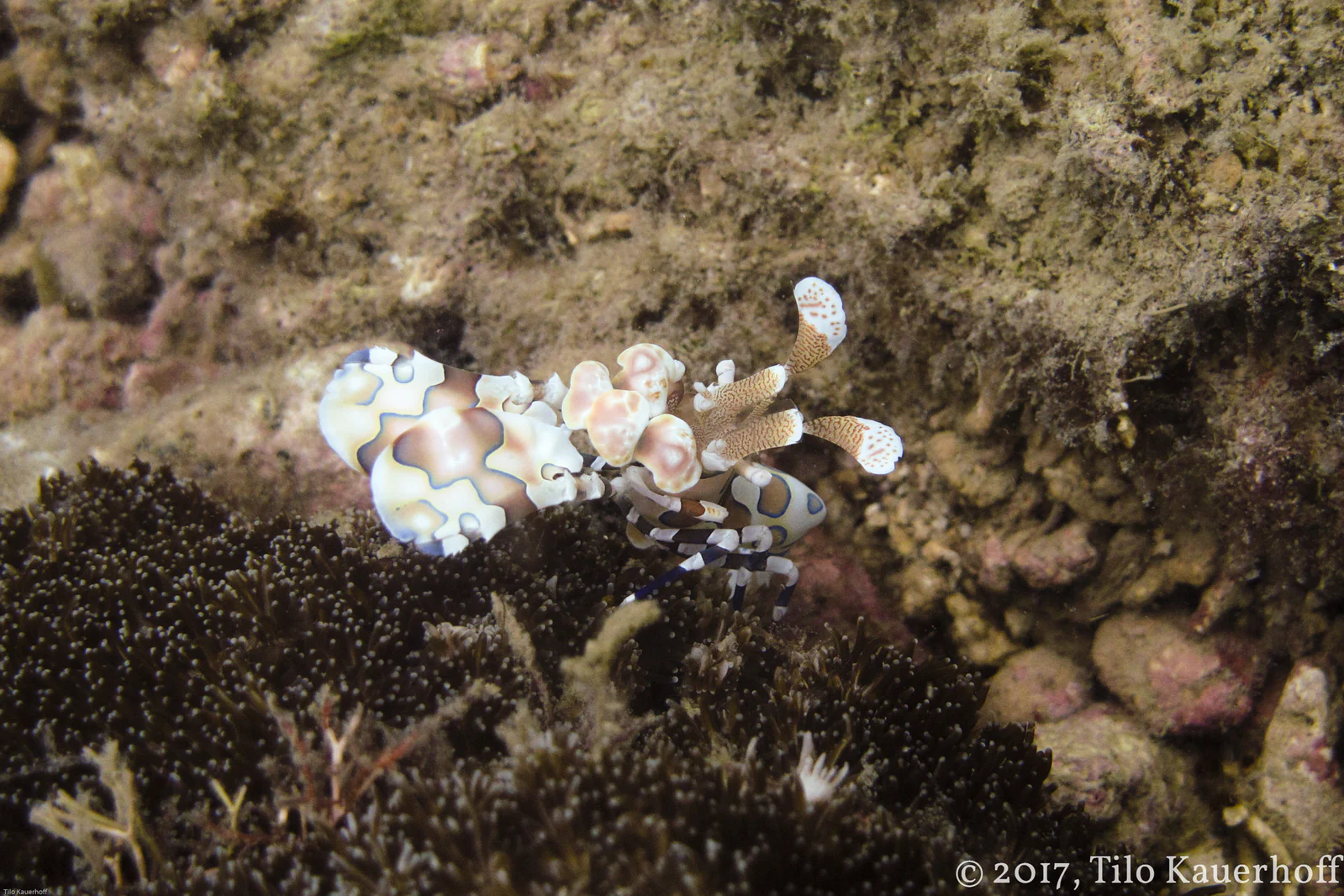
Hymenocera picta
About Harlequin Shrimp.
The Harlequin Shrimp (Hymenocera picta) is a captivating macro species renowned for its striking appearance and highly specialized diet. Belonging to the family Hymenoceridae, this small but formidable crustacean is a favorite among divers for its vibrant coloration and fascinating behaviors.
Found across the tropical Indian and Pacific Oceans, including regions like Hawaii, Australia, and the Red Sea, Harlequin Shrimp typically inhabit coral reefs, where they seek shelter in crevices and among coral formations. They thrive in warm waters, generally preferring temperatures of 22–28°C (71–82°F), and can be observed at depths ranging from shallow waters down to 40 meters. This species is often found in monogamous, pair-bonded relationships, with male and female shrimp frequently seen hunting and living together for their entire lifespan, which can be up to seven years. While currently listed as Least Concern, their populations may be vulnerable to coral reef degradation and the aquarium trade.
One of the most remarkable aspects of the Harlequin Shrimp is its exclusive diet of sea stars (starfish). They are skilled predators, using their keen sense of smell via petal-like antennules to locate prey. Once a sea star is found, the pair cooperates to immobilize it, often by flipping it onto its back with their strong pincers. They then proceed to feed on the sea star's tube feet and soft tissues, a process that can take days or even weeks, as they strategically keep their prey alive to ensure a fresh food source.
Identification
- Size: Harlequin Shrimp are relatively small, reaching a maximum size of approximately 5 cm (2 inches). Females are typically slightly larger than males.
- Coloration: Their bodies are predominantly white or cream, adorned with bold, irregular spots. The color of these spots can vary geographically, ranging from deep pinkish-purple with yellow edges (Central and East Pacific populations) to more brownish spots with blue edges (Indian Ocean and West Pacific populations), or combinations of red, orange, and blue. This vibrant, almost flamboyant patterning serves both as a warning to potential predators, possibly indicating toxicity absorbed from their prey, and as camouflage within the colorful reef environment.
- Appendages: A key identification feature is their unique, flattened, and often leaf-like appendages. They possess large, flattened claws (chelipeds) that they frequently hold out in front of them, resembling flower petals. Their eyes are situated on prominent stalks, and they have distinctive petal-like sensory antennules on their head, which are crucial for detecting prey. Their overall body shape is often described as delicate and ornate, sometimes likened to orchid blossoms.
- Movement: Harlequin Shrimp move slowly with a graceful, almost ballet-like motion, constantly waving their claws and antennae.
Where it lives.
The captivating Harlequin Shrimp (Hymenocera picta) is a sought-after macro subject for divers, known for its striking coloration and unique behaviors. This fascinating crustacean inhabits the warm, tropical waters of the vast Indo-Pacific region, with its range extending from East Africa and the Red Sea across to Indonesia, northern Australia, Hawaii, and even into the Central and Eastern Pacific, including locations like the Galapagos Islands and Panama.
Typically found in shallow, protected inshore areas, Harlequin Shrimp are intrinsically linked to healthy coral reef ecosystems. They exhibit a strong preference for sheltered environments, often seeking refuge within the intricate network of coral branches, rock crevices, holes, and small caves. While the fact sheet mentions coral rubble and muck bottoms, their primary association is with the structural complexity of reefs, where they can hide and hunt. Some observations suggest that variations with blue spots might be found in sedimentary seabeds, though coral reefs remain their quintessential habitat.
Divers can typically encounter Harlequin Shrimp at depths ranging from 1 to 40 m, though they are frequently observed between 3 and 30 m. They thrive in tropical temperatures, generally preferring waters between 22–32°C, with optimal breeding conditions often noted around 28–32°C.
As obligate feeders on starfish, Harlequin Shrimp play a specialized role within their coral reef habitats. By preying on various starfish species, including the notorious crown-of-thorns starfish (Acanthaster planci), they contribute to the natural regulation of these echinoderm populations, indirectly supporting coral health and biodiversity. These shrimp are typically found living in monogamous pairs, diligently defending their chosen territory within the reef. Dive sites like Basura occasionally offer glimpses of these elusive and beautiful creatures.
How it behaves.
The Harlequin Shrimp (Hymenocera picta) is a captivating macro species, highly sought after by divers for its striking appearance and unique behaviors. Growing up to 5 cm (2 inches) in length, this vibrantly colored shrimp is typically adorned with patterns of white or cream and vivid pink, orange, or purple spots, which can also serve as camouflage amidst the coral reef environment.
- Underwater Encounter Behavior: Divers often encounter Harlequin Shrimp in pairs, nestled within the intricate structures of coral reefs, rocky crevices, or small caves, typically at depths ranging from 1 to 30 meters. These shy crustaceans move with a distinctive slow, ballet-like motion, constantly waving their flattened, paddle-like claws and sensory antennules. While generally reclusive, they are not usually skittish around divers, especially when engaged in their primary activity of feeding, offering excellent opportunities for observation and underwater photography. Their bright coloration may also act as a warning to potential predators, possibly indicating toxicity absorbed from their prey.
- Feeding Habits: Harlequin Shrimp are highly specialized predators, feeding almost exclusively on starfish. They locate their prey using their keen sense of smell. Once a starfish is found, the pair cooperates to subdue it. One shrimp may clip the starfish's tube feet, while the other works to flip the starfish onto its back, rendering it immobile. They then drag their prey to a sheltered spot, such as under a coral head or rocky ledge, and slowly consume its soft tissues and tube feet. Remarkably, they often keep the starfish alive for days or even weeks, ensuring a fresh food supply. While starfish are their preferred diet, they may occasionally prey on sea urchins if starfish are scarce. This predatory behavior plays a crucial role in maintaining coral reef health by controlling starfish populations, including the destructive Crown-of-Thorns starfish in some regions.
- Social Structure: Harlequin Shrimp are known for their strong, monogamous pair bonds, often remaining with the same mate for their entire lifespan, which can be up to seven years in optimal conditions. These pairs are territorial and will cooperatively defend their chosen den and hunting grounds. Aggression between individuals of the same sex is extreme, with males documented to fight to the death. This strong pair-bonding is vital for both hunting efficiency and reproductive success.
- Notable Seasonal Patterns: Reproduction in Harlequin Shrimp can occur throughout the year, with females observed carrying eggs almost continuously in the wild. Mating typically takes place shortly after the female molts. A female can lay between 100 and 5,000 eggs per season, depending on environmental conditions. These fertilized eggs are carried by the female under her abdomen for approximately two weeks until they hatch into planktonic larvae, which then drift in ocean currents before settling onto the reef as juveniles. While there isn't a strict seasonal breeding pattern that significantly alters their observable behavior for divers, the presence of egg-carrying females can be noted at various times.
Where to see it.
Evidence for philippines · 1 dive site
General range is not evidence of occurrence at a specific dive site.
Gallery.