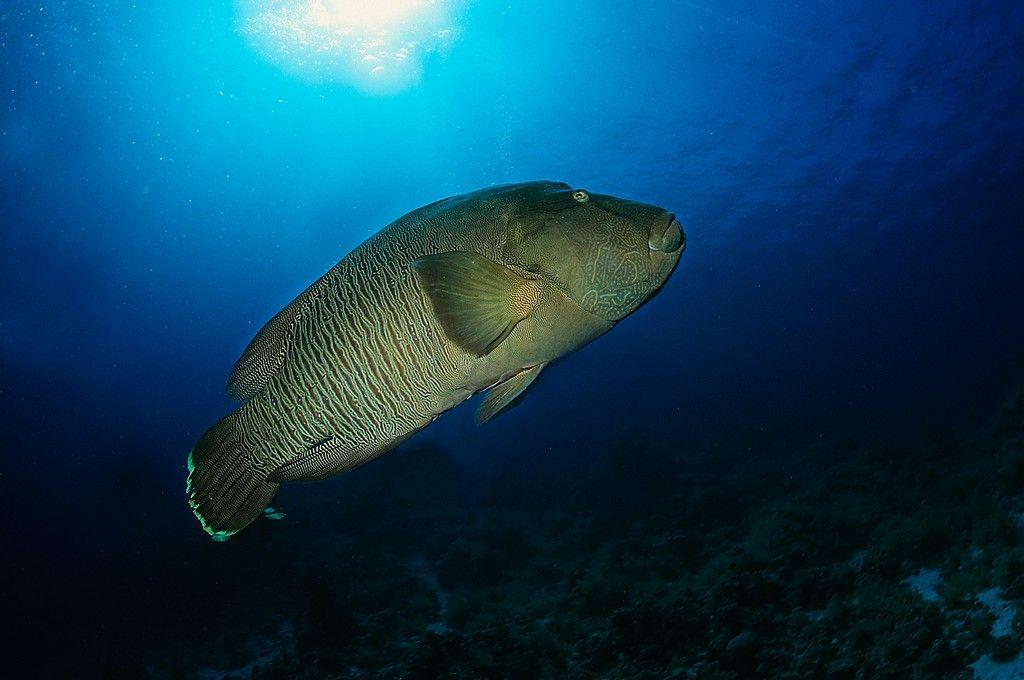
Humphead Wrasse (Napoleon)
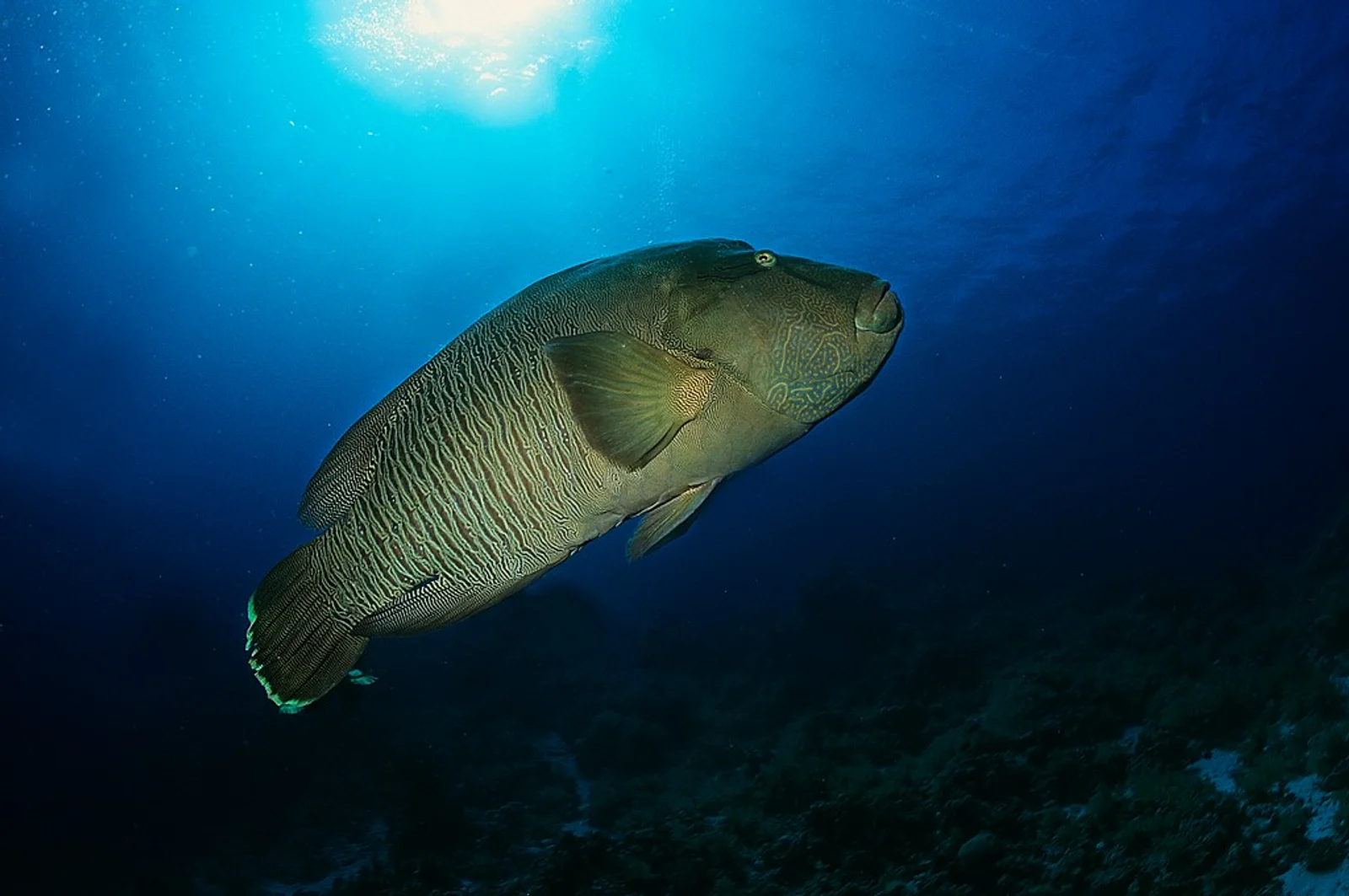
Cheilinus undulatus
Acerca de Humphead Wrasse (Napoleon).
El pez napoleón, Cheilinus undulatus, también conocido como pez napoleón o pez maorí, es el miembro vivo más grande de la familia de los lábridos (Labridae) y uno de los peces más icónicos y reconocibles de los arrecifes de coral del Indo-Pacífico.
Esta carismática especie es famosa por su apariencia distintiva y su naturaleza curiosa, a menudo acercándose a los buceadores con una calma confianza. Sin embargo, su impresionante tamaño y su lenta tasa reproductiva lo hacen particularmente vulnerable a la sobrepesca, principalmente para el comercio de peces vivos de arrecife para consumo. En consecuencia, el pez napoleón está actualmente catalogado como En Peligro por la UICN, con poblaciones que han disminuido significativamente en las últimas tres décadas.
Los peces napoleón desempeñan un papel ecológico crucial en el mantenimiento de la salud de los arrecifes. Son uno de los pocos depredadores capaces de consumir invertebrados de caparazón duro, incluidas especies tóxicas como liebres de mar, peces cofre y la estrella de mar corona de espinas, que destruye el coral, sin verse afectados por sus toxinas. Utilizan sus dientes duros y fusionados, que se asemejan a un pico de loro, para aplastar a sus presas e incluso pueden morder ramas de coral o usar chorros de agua para descubrir animales escondidos.
Estos magníficos peces habitan los arrecifes de coral en toda la región del Indo-Pacífico, desde el Mar Rojo y África Oriental hasta el Pacífico central, extendiéndose hacia el norte hasta las Islas Ryukyu y hacia el sur hasta Nueva Caledonia. Los adultos suelen preferir las pendientes pronunciadas de los arrecifes exteriores, las pendientes de los canales y los arrecifes de las lagunas, que se encuentran a profundidades de 1 a 100 m, mientras que los juveniles a menudo buscan refugio entre densos corales ramificados o lechos de pastos marinos en áreas menos profundas. Aunque generalmente son solitarios, a veces se pueden observar en parejas macho-hembra o en pequeños grupos sociales.
Los buceadores encuentran con frecuencia peces napoleón en sitios de buceo de renombre como:
- Norman Reef (común)
- SS Yongala (abundante)
- Batu Bolong (ocasional)
- Crystal Rock (ocasional)
- Black Forest (Isla Balicasag) (ocasional)
- Shark and Yolanda Reef (común)
- Daedalus Reef (Abu el-Kizan) (común)
- SS President Coolidge (común)
- Blue Hole (Dahab) (ocasional)
- Ras Mohammed National Park (ocasional)
Identificación
- Tamaño: El pez napoleón es verdaderamente un gigante del arrecife, alcanzando una impresionante longitud máxima de 2,3 m y pesando hasta 191 kg. Las hembras son generalmente más pequeñas, rara vez superando 1 m de longitud.
- Joroba frontal: Su característica más distintiva es la joroba prominente y bulbosa en su frente, que se vuelve más pronunciada con la edad y el tamaño, particularmente en los machos más grandes. Esta joroba es el origen de sus nombres comunes, incluyendo "Humphead" (cabeza jorobada) y "Napoleon", este último se dice que se asemeja al sombrero bicornio de Napoleón Bonaparte.
- Coloración: La coloración varía significativamente con la edad y el sexo. Los machos suelen mostrar tonos vibrantes de azul eléctrico, verde, azul violáceo o azul verdoso opaco. Las hembras y los juveniles son generalmente de color rojo anaranjado dorsalmente, desvaneciéndose a una superficie ventral pálida o blanca.
- Marcas faciales: Patrones intrincados y ondulados o "garabatos" adornan la cara, particularmente detrás de los ojos y debajo hacia el labio superior. Se dice que estas marcas se asemejan a los tatuajes faciales del pueblo maorí, dando origen al nombre común "Maori Wrasse".
- Forma del cuerpo: Los adultos tienen cuerpos profundos, labios gruesos y carnosos, y una aleta caudal (cola) redondeada. Poseen escamas grandes, a menudo con una marca oscura alargada en cada escama, que puede formar un patrón de diamante hacia la parte trasera del cuerpo en los machos.
- Locomoción: Como muchos lábridos, utilizan principalmente sus aletas pectorales para la propulsión, lo que les da un movimiento elegante, casi deslizante a través del agua, en lugar de depender en gran medida de su aleta caudal.
- Esperanza de vida: Los peces napoleón son peces longevos, con individuos que se sabe que sobreviven al menos 30 años, y algunas hembras potencialmente alcanzan hasta 50 años. Son hermafroditas protóginos, lo que significa que muchos individuos comienzan su vida como hembras y pueden hacer la transición a machos más tarde en la vida, típicamente alrededor de los 9 años de edad.
Dónde vive.
El pez napoleón (Cheilinus undulatus), también conocido como pez napoleón, es un majestuoso habitante de los vibrantes ecosistemas de arrecifes de coral del Indo-Pacífico. Este icónico pez está ampliamente distribuido, desde el Mar Rojo y la costa este de África a través del Océano Índico hasta el Pacífico central, extendiéndose hacia el norte hasta las Islas Ryukyu y hacia el sur hasta Nueva Caledonia y las Islas Tuamoto.
Sus preferencias de hábitat varían con la edad:
- Juveniles: Los peces napoleón más jóvenes suelen buscar refugio en áreas costeras menos profundas y más protegidas. Estas incluyen densos arrecifes de laguna ricos en corales, particularmente entre matorrales de corales duros ramificados como las especies de Acropora, así como en lechos de pastos marinos y áreas con macroalgas arbustivas. También se pueden encontrar en áreas arenosas poco profundas que bordean las lagunas de arrecifes de coral e incluso en áreas de manglares costeros.
- Adultos: A medida que maduran, los peces napoleón se trasladan a aguas más expuestas y profundas. Se encuentran predominantemente en pendientes pronunciadas de arrecifes exteriores, pendientes de canales, pasos de arrecifes y arrecifes de laguna. Estos grandes individuos a menudo patrullan los bordes de los arrecifes y canales, utilizando cuevas, grietas y salientes de coral como refugio, especialmente cuando descansan por la noche.
Los buceadores pueden encontrar peces napoleón en un rango de profundidad significativo, típicamente de 1 a 100 metros. Mientras que los juveniles se encuentran en el extremo menos profundo de este espectro, los adultos se observan comúnmente entre 2 y 60 metros, a menudo en áreas con abundante cobertura de coral duro. Son diurnos, nadando activamente por los arrecifes durante el día en busca de presas.
El pez napoleón desempeña un papel ecológico crucial como depredador superior dentro de su ecosistema de arrecife. Su dieta incluye una variedad de invertebrados como moluscos, crustáceos y erizos de mar. En particular, es uno de los pocos depredadores que consume especies tóxicas como liebres de mar, peces cofre y la estrella de mar corona de espinas, que se alimenta de coral, contribuyendo así a la salud y el equilibrio de los arrecifes de coral.
Cómo se comporta.
Comportamiento en encuentros submarinos
Los peces napoleón son conocidos por su naturaleza curiosa y a menudo dócil, lo que los convierte en uno de los favoritos entre la comunidad de buceadores. Aunque a menudo se les observa nadando lentamente y solitarios, también se les puede ver en parejas macho-hembra o en pequeños grupos sociales. A diferencia de muchos peces de arrecife que huyen de los buceadores, los peces napoleón se acercan con frecuencia, a veces incluso empujando a los buceadores con la nariz. Este comportamiento inquisitivo permite excelentes oportunidades para fotos y videos, particularmente en sitios de buceo con tráfico regular de buceadores donde se acostumbran a la presencia humana. Son diurnos, activos durante el día, y buscan refugio en cuevas de arrecife o bajo salientes de coral por la noche. Los adultos suelen habitar pendientes pronunciadas de arrecifes exteriores, pendientes de canales y arrecifes de laguna, a profundidades que van de 1 a 100 m, mientras que los juveniles prefieren áreas menos profundas y ricas en corales, a menudo entre corales cuerno de ciervo o lechos de pastos marinos.Hábitos alimenticios
Como depredadores oportunistas y carnívoros, los peces napoleón desempeñan un papel crucial en el mantenimiento de la salud de los ecosistemas de arrecifes de coral. Su dieta consiste principalmente en invertebrados de caparazón duro como moluscos (incluidos caracoles marinos y almejas), crustáceos y equinodermos como erizos de mar y estrellas de mar. Poseen dientes duros y fusionados, que se asemejan a un pico, que utilizan para perforar conchas o desprender presas de corales y rocas. Una estrategia de alimentación notable implica morder ramas de coral o soplar chorros de agua para perturbar el sedimento y descubrir presas ocultas. También son uno de los pocos depredadores conocidos de animales tóxicos, incluidas las liebres de mar, los peces cofre y la notoria estrella de mar corona de espinas, que puede devastar los arrecifes de coral si sus poblaciones no se controlan. Los buceadores incluso han informado haber escuchado los sonidos y visto nubes de polvo creadas por los lábridos al demoler corales duros mientras se alimentan.Estructura social
Los peces napoleón son generalmente solitarios, pero su estructura social puede incluir parejas macho-hembra o pequeños grupos compuestos por un macho dominante, varios adultos más pequeños de ambos sexos y juveniles. Esta especie es un hermafrodita protógino, lo que significa que todos los individuos comienzan su vida como hembras y pueden hacer la transición a machos más tarde en la vida, típicamente alrededor de los nueve años de edad o cuando un macho dominante está ausente. La transición a macho a menudo resulta en un aumento de tamaño, una joroba en la cabeza más pronunciada y una coloración vibrante. Los machos dominantes pueden participar en exhibiciones agresivas durante el desove, lo que a veces resulta en cicatrices y labios partidos por peleas territoriales.Patrones estacionales notables
La reproducción en los peces napoleón implica agregaciones de desove, donde grupos de individuos se reúnen para liberar gametos en la columna de agua. Estas agregaciones pueden variar de 10 a más de 100 individuos y típicamente ocurren en ubicaciones específicas de arrecifes exteriores. Si bien el desove puede ocurrir durante todo el año en algunos lugares como Palau, a menudo muestra variaciones estacionales y lunares, generalmente coincidiendo con temperaturas del agua favorables y abundante alimento. Los eventos de desove suelen ocurrir en parejas dentro de la agregación más grande, a menudo unas pocas horas después de la marea alta. Los buceadores pueden observar estas reuniones, que son cruciales para la reproducción de la especie, aunque su naturaleza predecible también las hace vulnerables a la sobrepesca.Dónde verlo.
Evidencia para philippines · 2 sitios de buceo
La distribución general no demuestra la presencia en un sitio de buceo concreto.
Galería.