Loggerhead Sea Turtle
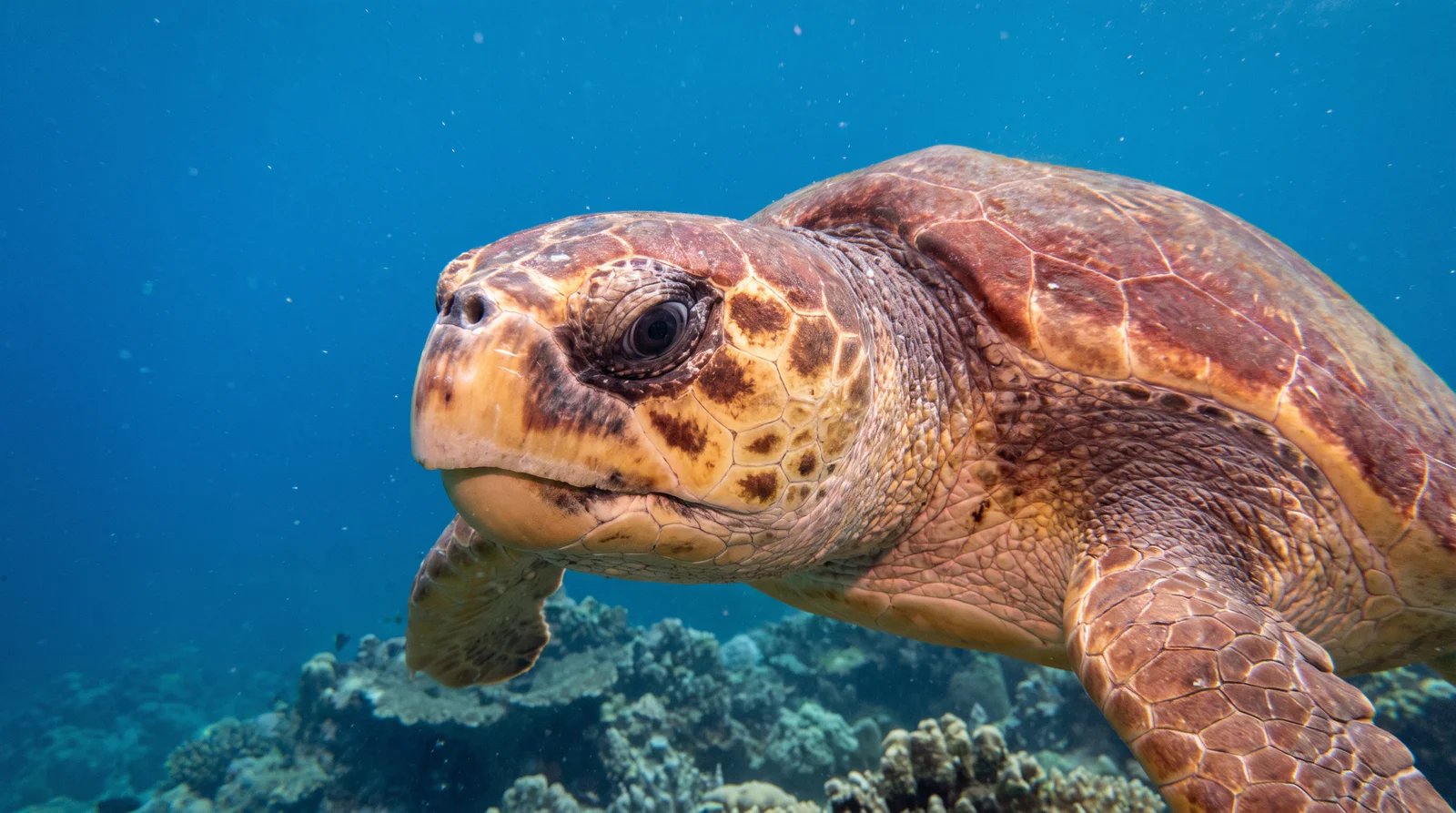 AI-generated
Image credit: AI-generated illustration · License unspecified · Source unspecified
Caretta caretta
About Loggerhead Sea Turtle.
The Loggerhead Sea Turtle (Caretta caretta) is a magnificent marine reptile belonging to the family Cheloniidae. Named for its distinctively large head, this species is a familiar sight in temperate, subtropical, and tropical waters across the globe, including the Atlantic, Pacific, and Indian Oceans, as well as the Mediterranean Sea. While the global conservation status for the Loggerhead Sea Turtle is currently listed as Vulnerable, it is important to note that the status of individual subpopulations can vary significantly, ranging from Critically Endangered to Least Concern in different regions.
Loggerheads are primarily carnivorous, utilizing their powerful jaws to crush the hard-shelled prey that constitutes the majority of their diet. They are often observed cruising open reef and wall habitats, as well as foraging in coastal bays, estuaries, lagoons, salt marshes, and along continental shelves. Their diet includes a wide variety of bottom-dwelling invertebrates such as mollusks (clams, conchs, whelks, mussels), crustaceans (crabs, horseshoe crabs), and sea urchins, though they will also consume jellyfish, fish, and occasionally seaweed. These turtles can reach a maximum carapace length of 1.1 meters and typically weigh between 70 and 187 kilograms. Divers frequently encounter this species at dive sites such as Maracaibo Deep.
Identification
Identifying a Loggerhead Sea Turtle underwater is relatively straightforward due to several key physical characteristics:
- Head: The most distinguishing feature is its exceptionally large, block-like, and broad head, which is disproportionately larger than other sea turtle species. The head features two pairs of prefrontal scales.
- Jaws: They possess incredibly powerful jaws, specifically adapted for crushing the hard shells of their prey.
- Carapace (Top Shell):
- The carapace is typically heart-shaped, broad near the head and tapering towards the rear.
- Its coloration ranges from orange to a distinctive reddish-brown.
- The horny scutes (plates) covering the carapace are non-overlapping.
- Look for five vertebral scutes down the midline and typically five pairs of costal scutes along the sides. The first costal scute is in contact with the nuchal scute (the small scute at the front of the carapace, behind the head).
- There are usually 11 or 12 pairs of marginal scutes around the outer edge of the carapace.
- It is common for Loggerheads to carry encrusting organisms, such as barnacles, on their carapace.
- Plastron (Bottom Shell): The underside of the turtle is typically yellowish-brown to creamy yellow.
- Flippers: The front flippers are notably shorter and thicker compared to other sea turtle species, and each flipper typically has two claws.
- Tail: Adult males can be distinguished by a longer tail that extends beyond the rear edge of the carapace.
Where it lives.
Loggerhead Sea Turtles exhibit a cosmopolitan distribution, inhabiting tropical and temperate oceans worldwide, including the Atlantic, Pacific, and Indian Oceans, as well as the Mediterranean Sea, generally avoiding the coldest waters. They are resilient and capable of enduring water temperatures as low as 13°C. This species spends the majority of its life in diverse saltwater and estuarine environments. Adults typically favor coastal habitats such as bays, estuaries, lagoons, and shallow coastal waters, and are frequently found foraging in coral reefs and rocky areas along the continental shelf. In contrast, hatchlings and juveniles embark on a pelagic (open ocean) existence for their initial 7 to 15 years, often seeking refuge within floating mats of Sargassum algae. As they mature, they migrate to nearshore waters. Female loggerheads briefly come ashore only for nesting, preferring high-energy oceanic beaches or occasionally estuarine shorelines to construct their nests and deposit eggs, with major nesting aggregations found in locations like Florida.
How it behaves.
Loggerhead Sea Turtles are predominantly solitary marine animals, renowned for their powerful jaws that enable them to effectively crush and consume a wide array of hard-shelled prey. Their omnivorous diet primarily consists of benthic (bottom-dwelling) invertebrates, including various mollusks such as clams, conchs, and mussels, as well as crustaceans like crabs and horseshoe crabs. They also feed on sponges, corals, sea urchins, starfish, fish, jellyfish, and squid, and occasionally supplement their diet with seaweed and algae. These turtles often forage by digging into sandy ocean bottoms with their beaks to locate buried prey.
Loggerheads are strong swimmers, capable of diving to impressive depths exceeding 1,000 feet (approximately 305 meters). They spend around 85% of their day submerged, with typical dives lasting between 2 and 45 minutes, though they can remain underwater for up to seven hours when in a state of hibernation. The species undertakes extensive, long-distance migrations, often traveling thousands of miles across ocean basins between their feeding grounds and nesting sites. Female loggerheads display a remarkable natal homing instinct, returning every two to four years to the specific beaches where they were born to lay multiple clutches of eggs, each containing about 100 to 126 eggs. Their extraordinary navigation capabilities are attributed to an internal compass system, aided by magnetite in their brains, which allows them to perceive Earth's magnetic field and remember geographical areas. While adults face few predators beyond large sharks and killer whales due to their formidable size, eggs and hatchlings are highly vulnerable to a variety of terrestrial predators. Loggerheads also engage in self-grooming behaviors to remove epibionts such as barnacles from their shells.
Where to see it.
Evidence for bonaire · No dive sites
General range is not evidence of occurrence at a specific dive site.
No documented dive-site associations in this destination yet.
Gallery.
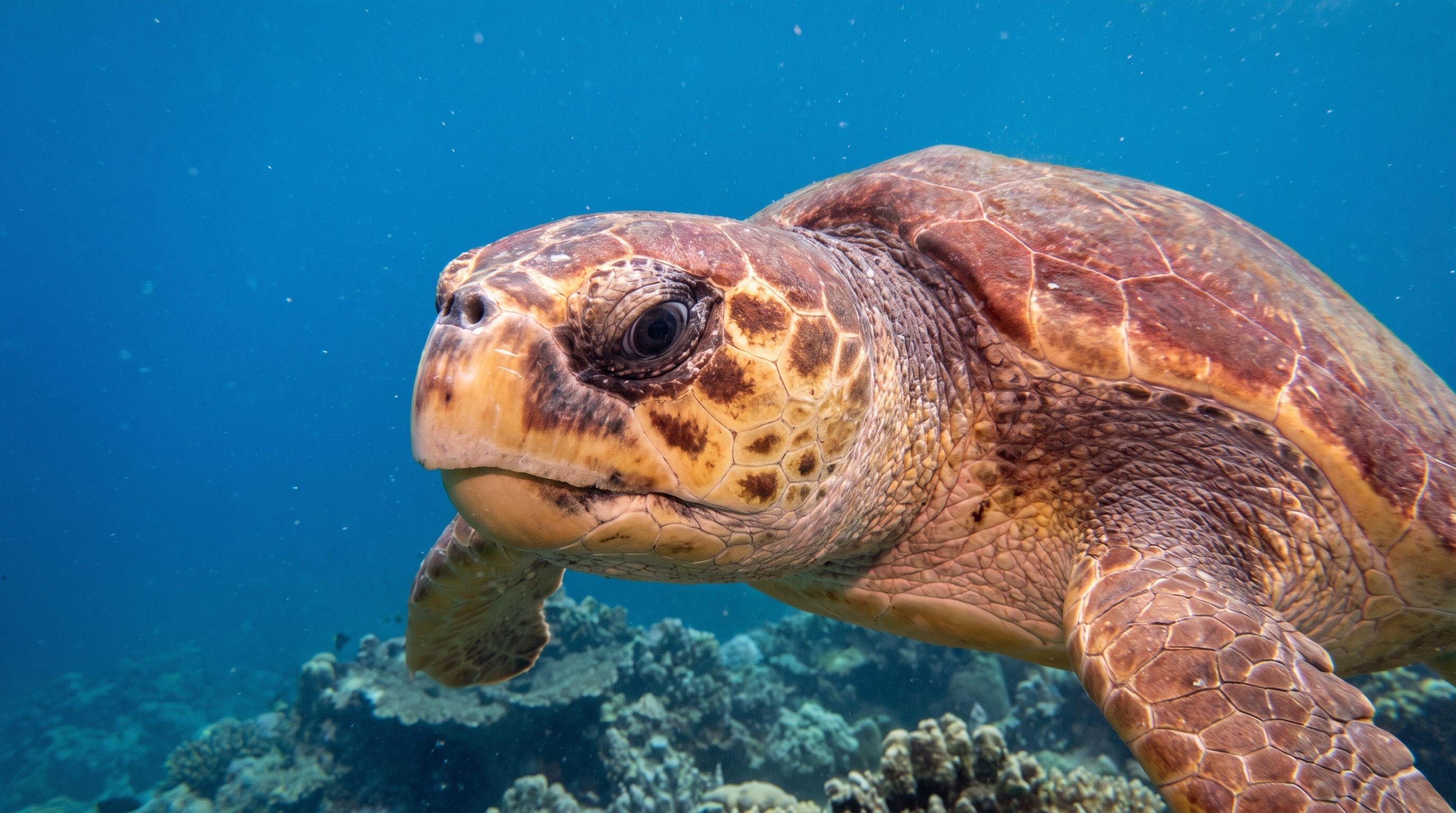 AI-generated
 illustration
Image credit: AI-generated illustration · License unspecified · Source unspecified