Longlure Frogfish
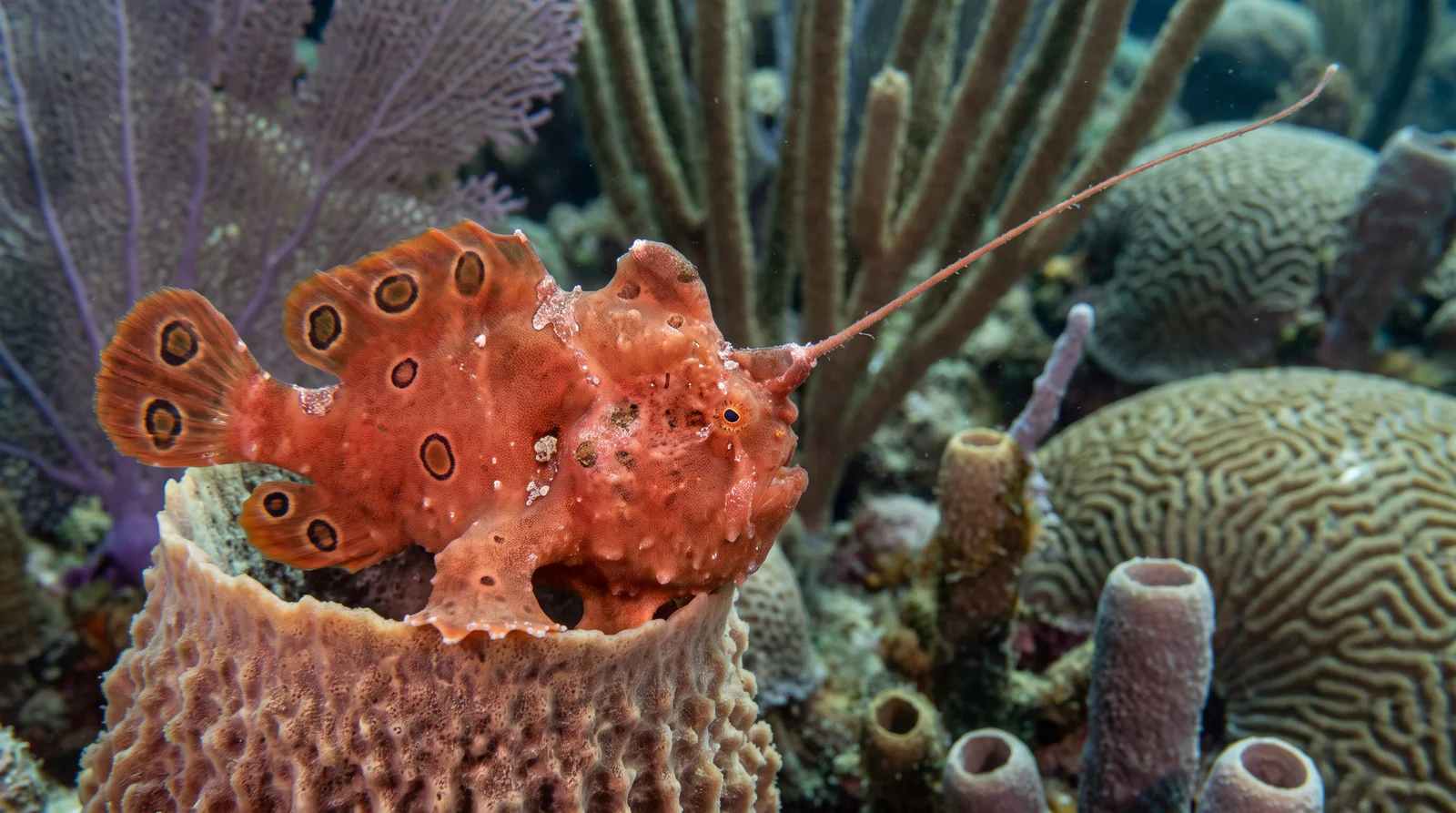 AI-generated
Image credit: AI-generated illustration · License unspecified · Source unspecified
Antennarius multiocellatus
About Longlure Frogfish.
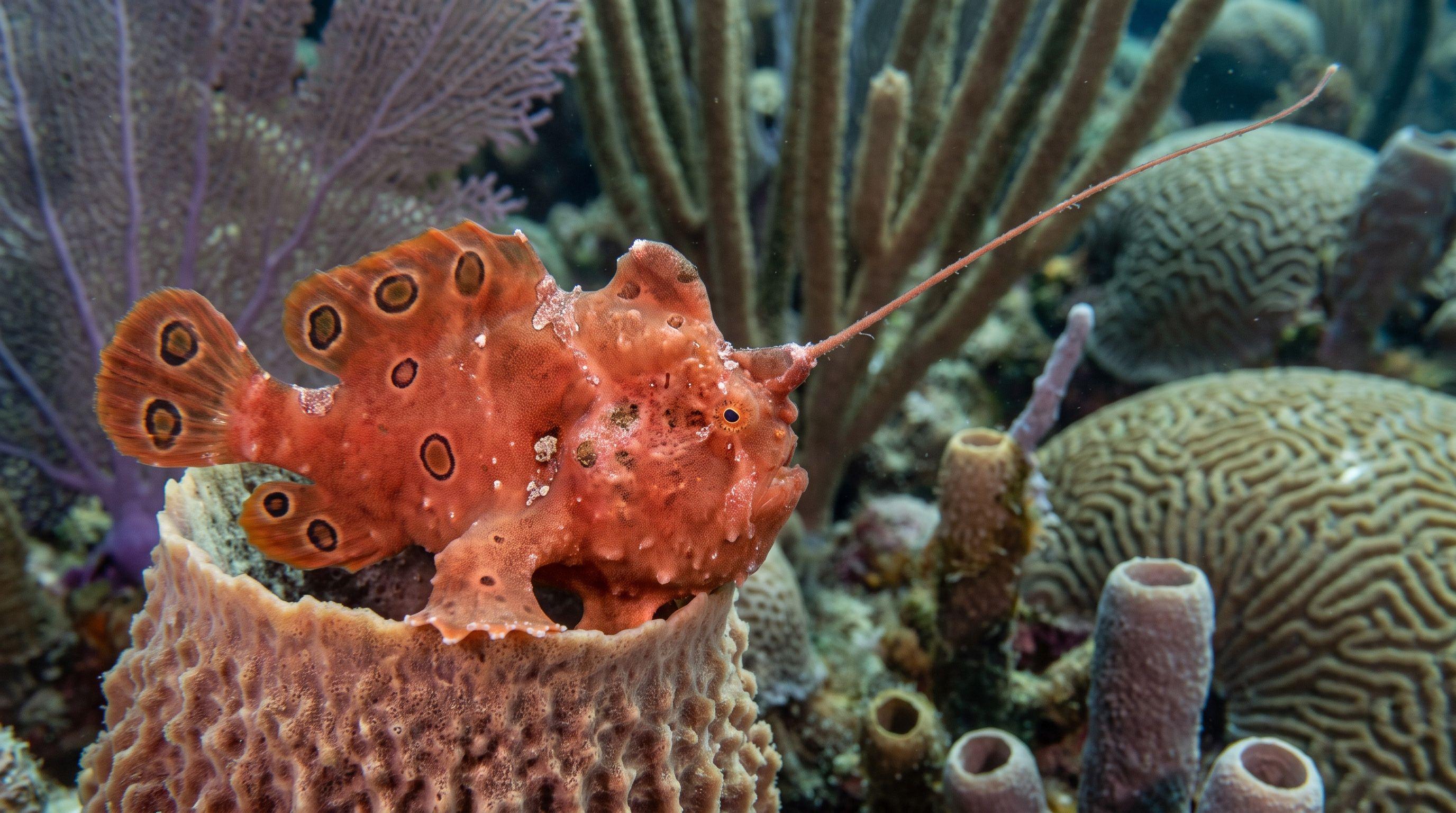
The Longlure Frogfish, Antennarius multiocellatus, is a fascinating bottom-dwelling fish renowned for its extraordinary camouflage and distinctive appearance. Often described as short, round, and globular, its body is thick and covered in dermal spicules, giving it a warty, toad-like texture that aids in blending seamlessly with its surroundings. Its name, "multiocellatus," is derived from Latin, meaning "many eye-like spots," referring to the numerous ocelli (eye-like markings) on its flanks which mimic the openings in sponges, further enhancing its disguise. These masters of disguise can dramatically alter their skin color and texture to perfectly match the dominant sponges, corals, or rubble in their habitat, making them incredibly difficult to spot by both prey and divers alike.
A hallmark feature of the Longlure Frogfish is its specialized "fishing rod," known as the illicium, which is an elongated first dorsal spine. At the end of this rod is a fleshy lure, or esca, which is meticulously wiggled to resemble a small worm, crustacean, or even a tiny fish, irresistibly attracting unsuspecting prey. The illicium is notably about twice as long as its second dorsal spine. The frogfish possesses small, laterally-directed eyes but an impressively large, upturned mouth that can expand to the width of its body, enabling it to swallow prey often larger than itself. Its gill openings are surprisingly small and located discreetly behind its modified pectoral fins, which are stalked and resemble feet, allowing the frogfish to "walk" rather than swim. The color palette of the Longlure Frogfish is highly variable, ranging from pale yellow to bright red, dark green, or reddish-brown, invariably adorned with scattered black spots.
Where it lives.
The Longlure Frogfish (Antennarius multiocellatus) is endemic to the tropical western Atlantic Ocean, showcasing a broad distribution that spans from Bermuda and the Bahamas, south along the coasts of Central and South America, including regions like Belize, the Florida Keys, the Gulf of Mexico, the Greater and Lesser Antilles, and as far south as Brazil. This species can also be found in the Eastern Atlantic, specifically around Ascension Island. As a predominantly bottom-dwelling species, it thrives in warm, shallow marine environments, favoring coral reefs and areas rich in sponges. These habitats provide the ideal backdrop for its camouflage, allowing it to blend almost perfectly among the intricate textures and colors of sponges and coral rubble. While typically found in shallower waters, the Longlure Frogfish has been observed at depths ranging from 0 to 66 meters (0 to 217 feet). Its preference for specific structures like sponges is crucial, as it relies on these surroundings for both concealment and as an advantageous ambush point.
How it behaves.
The Longlure Frogfish is a classic sit-and-wait ambush predator, exhibiting a specialized and highly efficient hunting strategy. Instead of actively pursuing prey, it anchors itself among sponges or coral, utilizing its remarkable camouflage to become virtually invisible. Once concealed, it employs a modified dorsal spine, known as the illicium, which acts as a "fishing rod," complete with a fleshy, worm-like lure (esca) at its tip. The frogfish subtly wiggles this lure to mimic potential prey, drawing in small fish and crustaceans that mistake it for an easy meal. Its strike is among the fastest movements in the animal kingdom, often lasting only milliseconds—reported to be as quick as 1/6th of a second, or even 0.006 seconds—where it rapidly expands its enormous mouth to create a powerful vacuum, sucking in its unsuspecting victim with incredible speed.
Movement for the Longlure Frogfish is equally unique; lacking a swim bladder and not being a frequent swimmer, it primarily "walks" across the seafloor using its modified, limb-like pectoral and pelvic fins, which act like small legs. While it can propel itself short distances by expelling water forcefully through its gill openings, it mostly remains motionless, conserving energy for its ambush attacks. This solitary species is harmless to humans and often lives alone. Interestingly, frogfish have been observed to inflate themselves by filling their stomachs with air or water, possibly as a defense mechanism or to adjust their buoyancy. If fishing proves unsuccessful in one spot, it will "walk" to a new location, much like a human angler.
Where to see it.
Evidence for bonaire · No dive sites
General range is not evidence of occurrence at a specific dive site.
No documented dive-site associations in this destination yet.
Gallery.
 AI-generated
 illustration
Image credit: AI-generated illustration · License unspecified · Source unspecified